Lifestyle & Inspiration
An evening living room basket reset for things that belong elsewhere
Plan a small evening living room basket reset around agreed contents, shared routines and exact basket dimensions before adding containers.
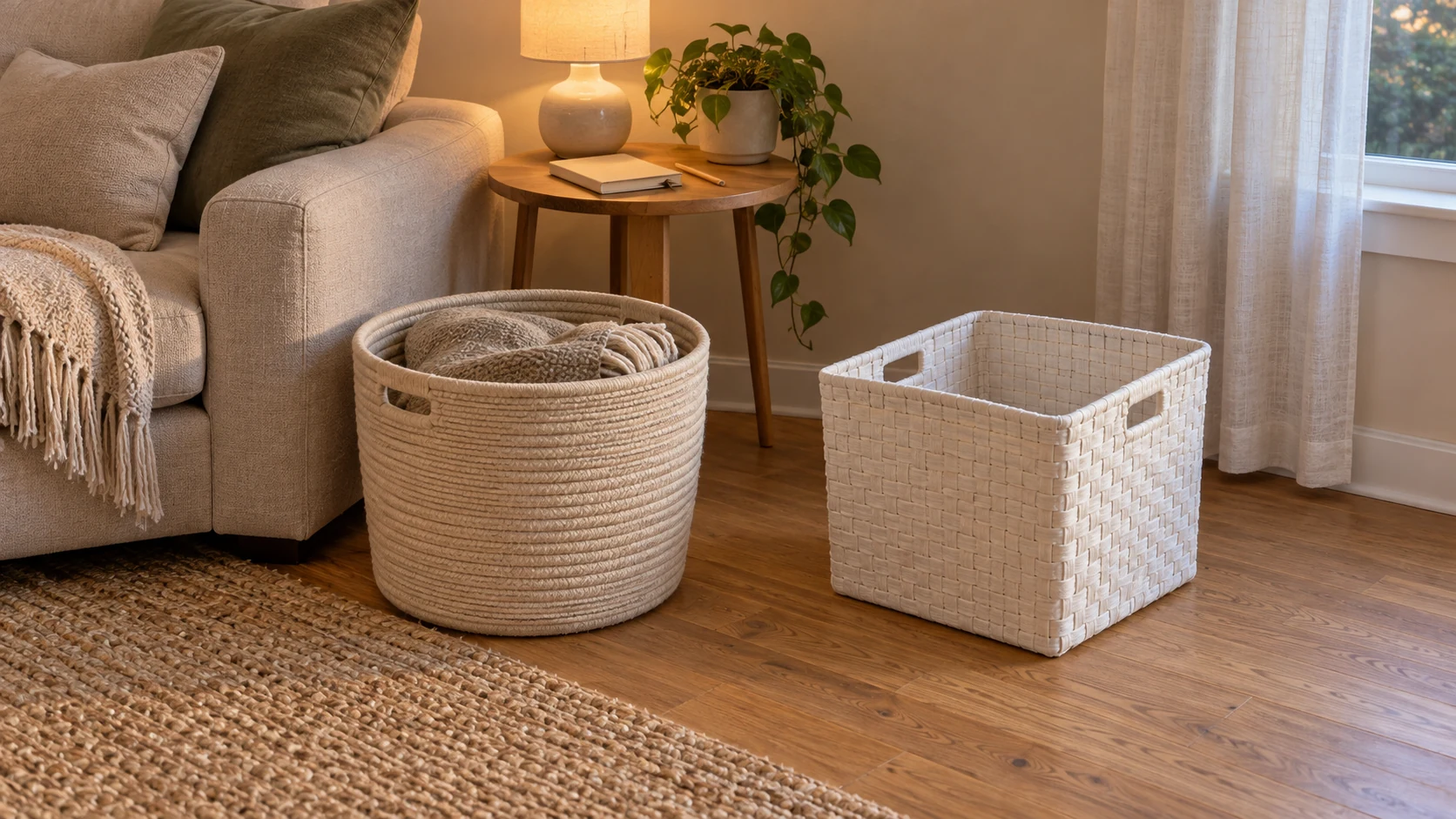
The living room can look settled while a few things still belong somewhere else. A scarf has stayed beside the sofa, a folded throw has slipped onto the armchair and someone has left tomorrow's belongings near the door. An evening living room basket reset gives you a small routine for deciding which things should stay nearby and which need a destination elsewhere in the home.
Start with the room you actually use at the end of the day. You might want the seat beside the lamp clear again, or a familiar place for the throw that you reach for most evenings. Choose that small result before choosing a basket. The routine can use something you already own; a new container only becomes relevant when you have identified the role it would serve.
Sorting household items before putting them away
Begin with one occupied part of the room. Look at the sofa corner or chair where things gather, and decide what you want to find there tomorrow. A blanket you use while reading may belong in the room. An item that someone brought in from another room needs a different decision. Give those two situations separate attention.
Use sorting household items before putting them away as a conversation if the room is shared. Ask which belongings another person still wants nearby before moving them into a general collection. Something that looks abandoned to one person may have been set out deliberately by another. An agreed place for it is more useful than a tidy arrangement that nobody else can follow.
Keep the first evening's task modest. Choose the items involved in the small result you named, then decide where each belongs. You do not need to reorganize every cupboard to make the armchair available again. If an item's destination is uncertain, leave that question visible in your plan instead of quietly treating the nearest basket as its permanent home.
Give the basket a role someone else can name
Decide what the basket is for before it becomes a general drop spot. You could use it for the folded blankets that stay in the room. Alternatively, it could temporarily gather identified belongings that are returning to other rooms. Choose the role that addresses the actual evening problem, and explain that role to the people sharing the space.
A permanent blanket basket and a temporary collection have different next steps. For the blanket basket, agree which items normally live there. For a temporary collection, agree when its contents will reach their destinations. You can keep that agreement in an ordinary household note if that helps. The basket's appearance will not explain the arrangement to someone who missed the conversation.
If the same basket is expected to do both jobs, consider whether people can tell which contents are staying. A household may prefer to keep the roles apart or to choose only one. You are designing a routine that the people in your home can recognize. A matching set of containers does not make that decision for you.
Choose a location through the room you already have
Identify the proposed spot in relation to the seat and nearby furniture. Look at how people currently reach that seat and leave it. Measure the space you intend to use and record the actual basket dimensions you need to confirm. A description naming shelves or closets cannot establish a fit in the particular opening you have selected.
Think about whether the proposed location matches the basket's role. A basket for blankets that stay in the room may be wanted near the place they are used. A temporary collection may need a location everyone sharing the routine has agreed to notice. These are household preferences to discuss, rather than placements certified by a product photograph.
Keep the contents in the location decision as well. A basket chosen for a shelf needs a specific fit assessment for the basket and the intended arrangement. A listed handle does not supply every dimension or establish how an actual filled basket should be handled. Obtain the applicable product information where that detail determines your choice.
Read the REGALWOVEN basket as a particular option
The REGALWOVEN woven storage bin description gives dimensions of 15.5 inches by 15.5 inches by 13 inches. It names cotton rope and hidden, widened handles, and describes blankets, clothes, shoes and other household items as possible contents. Those details make it an example to consider for a household storage role.
Its stated cotton-rope material and hidden handles may interest someone choosing the room's appearance. Keep those features with the exact basket and check its dimensions against the proposed location. The description does not identify your shelf opening, the amount of clothing you intend to put inside or a particular filled arrangement. It therefore leaves those questions for your own measured plan and the relevant item information.
You can use the stated cotton-rope material as one appearance preference without declaring that it matches every existing textile. Look at the offered item's actual presentation alongside the room you have. Keep the proposed location and intended contents beside the material preference in your notes, so you can check each part of the basket decision.
Keep the OMERAI pack and size wording separate
The OMERAI White storage basket four-pack description says the baskets are made from PP material, fold flat for storage and have cut-out handles on both sides. It gives each basket's dimensions as 11.8 inches long by 11.8 inches wide by 11.8 inches high. The four-pack wording identifies a different purchasing question from choosing a single storage role.
The title and size field also use 9 feet by 12 feet wording. Preserve that discrepancy with the per-basket measurements when asking about the exact offer. Do not silently turn the foot marks into inches or assume which field should be corrected. If the decision depends on dimensions, get an answer tied to the actual item before relying on it for a particular space.
The description also says the baskets have hand-knitted textures and that their appearance may vary. That disclosure can matter if you want identical-looking positions around the room. Keep it alongside the white title wording and the stated PP material. A texture description does not change the material into a natural fiber or establish that every piece looks exactly alike.
A shared basket routine for the living room
Make a shared basket routine for the living room easy to describe in one ordinary sentence. For example, the basket might be where the room's folded blankets belong after the evening. Another household might choose a temporary collection for belongings that have already been assigned to other rooms. Use the version that solves the issue you actually noticed.
Give the people sharing the room a chance to change the arrangement. One person may want a particular item close to their usual seat, while another wants that seat clear in the morning. Discuss the actual objects involved. A basket cannot decide whose preference takes priority, and adding more containers can leave the original disagreement untouched.
If you want several containers, name each intended role before deciding a pack is needed. OMERAI's four-pack does not establish four useful locations in your home. You can identify one useful role while leaving the case for additional baskets unconfirmed. Keep the package count and the household need in separate parts of the decision.
Keep an undecided item from disappearing into storage
A temporary collection can become familiar enough that nobody remembers why an item is there. When you do not know where something belongs, ask its owner or keep that destination question in the household note. Avoid representing an undecided item as returned simply because it is no longer on the chair. The visible surface and the unfinished decision are different parts of the evening task.
The unresolved destination may need an answer from someone else. You may know that a throw stays in the room while still needing someone else to decide about their scarf. Finish the part that is clear and leave the other person's question identifiable. That keeps a short room reset from becoming a larger sorting job on somebody else's behalf.
Once a destination has been agreed, keep it consistent with what the household decided. If that location no longer works, discuss a change. Moving an object from one temporary place to another can make it difficult for its owner to find. The next evening's routine should begin with the current agreement, rather than with an old arrangement only one person remembers.
Check the arrangement against the next morning
The morning after trying the routine, return to the small result you chose. Is the chair available for its normal use? Can the person who wants the blanket identify its agreed place? Those are observations about your own room. They can help you decide whether the arrangement serves the household without turning a single evening into a promise of a permanently tidy home.
If the spot is inconvenient, identify the specific problem before buying another container. You might need to reconsider the location or clarify whether an item is meant to stay there. A different basket would raise its own dimensions and contents questions. Record what needs to change so the next decision addresses the difficulty you actually encountered.
Ask which part of the arrangement the household wants to keep. You may like having the blankets together while deciding that the temporary collection needs a different agreed location. Keep the useful part and discuss the unresolved part. The routine can remain small enough to repeat without treating every imperfect evening as a reason to redesign the whole living room.
Let the routine change when the room changes
A different reading spot or a change in who uses the room can give the basket a different role. Return to the same questions about contents and destination when that happens. A basket selected for one arrangement has not automatically been assessed for another shelf or space. Keep the exact dimensions with the item if you are considering a new location.
The REGALWOVEN example gives one stated dimension set and cotton-rope wording to investigate. The OMERAI example gives a four-pack, PP material and separate per-basket measurements alongside an unresolved size field. Those disclosures can inform a purchase inquiry, while your own room observations decide which role is worth pursuing. Neither listing establishes how the household will use every basket over time.
At the end of the next evening, return to the place you originally wanted available and the things you wanted easy to find. Keep the items with agreed homes in the household's chosen arrangement. Where an answer is still needed, leave a specific question for the person who can settle it, so the next reset begins with a decision someone can actually make.
The LiviNest and FFZ reading-room table guide begins with the seat people use and the things they want nearby, then considers routes through the occupied room. Its two-piece FFZ set also needs two useful roles, with each piece’s actual dimensions still to confirm. Use those room questions when choosing a basket’s proposed place and contents. The table sizes, surfaces and care information remain with that separate furniture account.
The winter household room-preference checklist separates people’s actual room routines from automatic purchases. It keeps Vicks’ two-device package distinct from Vornado’s tank and filter counts, and does not allocate equipment to rooms merely because a number is listed. That is useful context for a basket four-pack: identify what each proposed container would do before treating the package quantity as a completed room plan. The appliance examples supply no basket fit or handling instructions.
A living-room basket routine starts with the household's chosen contents, agreed locations and the items still waiting for a destination.