Seasonal & Holiday Content
Christmas dinner place cards: prepare the named seats
Prepare and check Christmas guest names, compare actual Myst Design and RUGED holder packages, and keep each meal’s seating markers understandable.
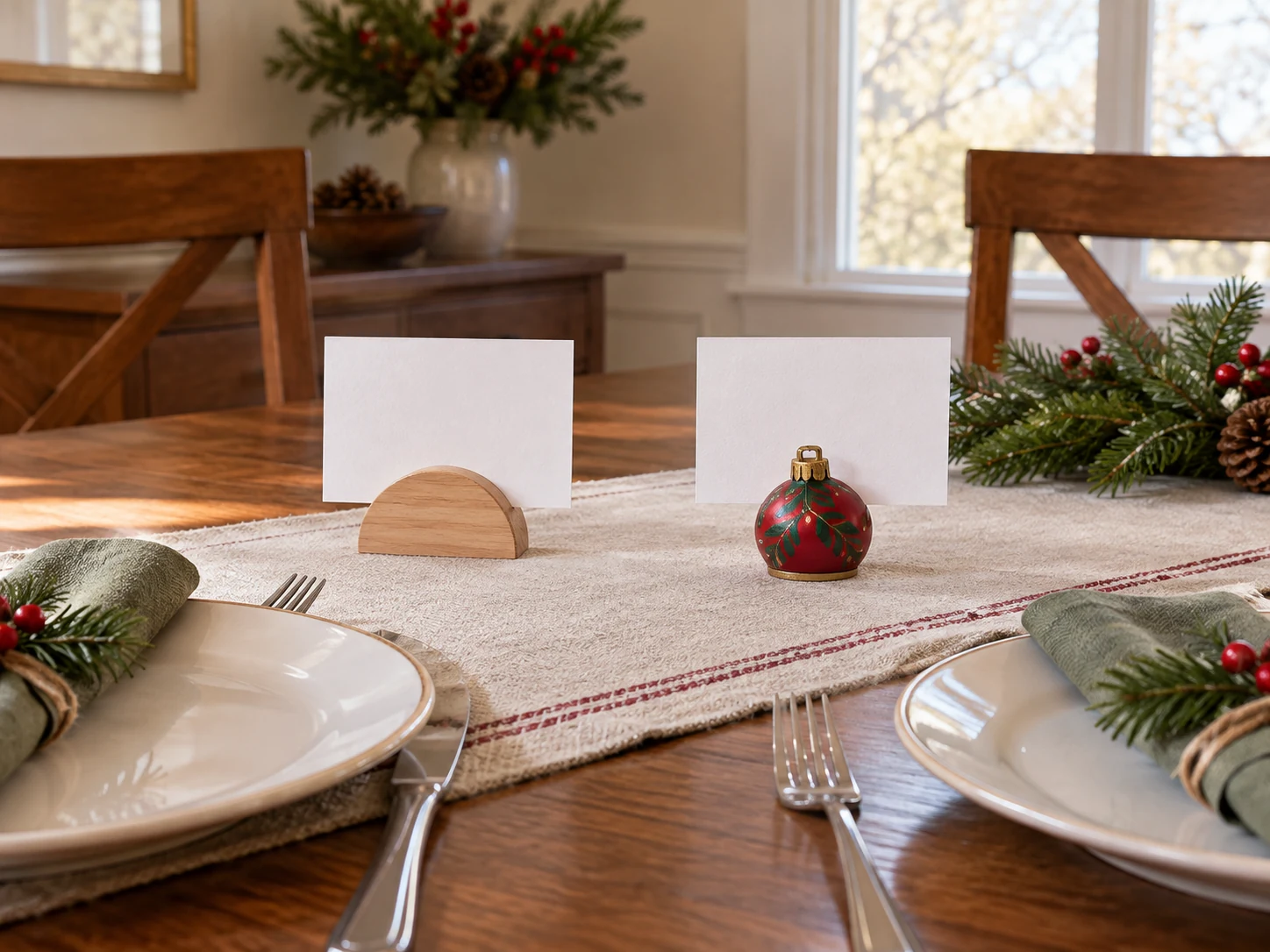
Christmas dinner place cards can give arriving guests a clear answer about where to sit. Begin with the people expected for the seated meal and the arrangement you have agreed on. Then prepare the names and decide where each card will be displayed. Choose a festive holder after agreeing on the seating plan.
This is a practical plan for a household Christmas gathering using two actual offers: Myst Design's seasonal holders with blank cards and RUGED's natural-wood semicircle holders. It covers preparing, checking and keeping the seat markers understandable through the meal. It supplies no formal ranking of guests, seating-capacity calculation or claim that either holder fits every card.
Decide whether the meal will have named places
Discuss the intended arrangement with anyone sharing the hosting. Some households want guests to choose freely; others want to prepare named places for this particular meal. If you choose named places, agree who is making the current arrangement before writing the cards. Two helpers can otherwise prepare perfectly readable names for two different versions of the table.
Emily Post's seating advice describes place cards as one way a guest finds their seat. It also describes the host giving directions or inviting guests to choose a place. Those are different arrangements a host can communicate. Use the one you intend for your gathering, and make that intention clear when people are invited to sit.
The holiday guest-count checklist concerns accepted invitations, different visits and the furniture plan. Finish the relevant attendance questions there before turning them into names for seats. Someone visiting after dinner and someone joining the seated meal belong to different parts of that plan. A place card should reflect the actual gathering it is prepared for.
Christmas name-card preparation starts with the names
For Christmas name-card preparation, write a simple working list of the guests who will use the named places. Confirm the form of name each person recognizes. If two people share a first name, choose an additional distinction they are comfortable with. Keep the display limited to information needed for finding a seat; it need not reproduce the host's private planning notes.
Agree how the host will answer a question about a place. A card gives someone a name to look for, while a person can explain an arrangement that is unclear or needs changing. If a guest asks for a different place, discuss the practical request with them. Keep that conversation separate from an assumption that the decorative marker has settled every person's preference.
When several people help, use one current list for writing the cards and checking the finished display. Give the person writing names the spellings they need. Have someone compare the written cards with that list before the cards are placed. This is an ordinary check of the actual names, without a promised error rate or special printing system.
Read the Myst Design quantities separately
The Myst Design Christmas holder package supplies twenty-four holders in six styles, four of each style, plus thirty-six blank name cards. The holder count and card count describe different objects. Extra blank cards can remain available for rewriting a name, while an extra card does not create an additional holder.
The offer describes a multicolored Christmas design with white bronzing and a flat bottom. It gives an approximate holder diameter of 1.57 inches. Its additional claims about steadiness and resisting a bump are seller descriptions, without a stability test here. Use the actual delivered item's information and the real table when assessing the proposed arrangement.
Six styles need not become six categories of guests. You may choose the appearance you enjoy at each setting or distribute the designs without attaching a meaning to them. If a particular design has a personal meaning within your household, explain that choice to the people involved. The manufacturer's style count supplies no seating rule.
Begin with the blank cards supplied in that actual package. Keep the supplied blank cards with their identified package until you know which ones you want to use. If you intend to substitute a different card, establish the actual holder's requirements and the proposed card's dimensions before planning the whole display around it.
The RUGED wood holders are a different package
The RUGED natural-wood table-sign holder offer describes ten holders, each with a 2.5-inch semicircle shape. Its description names place-card use at a wedding or party. It does not supply a matching blank-card count, slot dimensions or a tested card-size range. Keep those questions with this particular offer if you need additional cards.
A plain wood appearance can suit your Christmas table if you like it beside the dishes you already use. Its proposed job is to display the name. The Myst Design package supplies a specifically seasonal appearance. Choose the visual detail you want while retaining each package's actual contents.
Ten and twenty-four are offered quantities, not recommendations for your guest list. Count the places you have decided to mark, then consider whether an existing set already covers that job. You can leave unused holders stored with their identification. Buying a larger package does not require adding names to places that the hosting plan leaves open.
Check holiday place-card holders at the intended setting
Consider holiday place-card holders alongside the plate, glass and other items intended for the seat. Find a position where the actual guest can encounter the name without needing to search among unrelated objects. Ask someone helping you to look at the proposed card from the direction guests will approach. Use their actual observation to decide whether you want to change the position or rewrite the name.
The setting must still serve the meal. Notice where a guest will put down a glass and how the napkin will be picked up. A card displayed attractively before dinner may need another place once people begin eating. Decide where the small holder can go at that point. Use the product's applicable handling information rather than assuming the card is a handle for moving it.
Check the actual pieces together. A photograph of a generic card standing in a generic holder cannot confirm that your finished card sits properly or remains readable in the room. Likewise, the outer dimensions of the wood semicircle do not establish its slot's capacity. Retain the item identity when asking its supplier about an intended substitution.
Give helpers a clear table arrangement
Once you have chosen the positions, explain the arrangement to the person setting out the markers. A simple sketch can identify which seat receives which name without requiring the helper to infer the plan from a pile of cards. Use a reference point both people recognize, such as the doorway shown in your own sketch. This is a household planning example, not a universal seating diagram.
Check the finished names against the current plan before guests sit down. Look for an omitted name or a duplicated card as well as a spelling question. Put any superseded card aside so it cannot return to the table during another round of preparation. Keep any borrowed holders identifiable for their eventual return.
Emily Post's holiday-planning advice suggests being prepared for extra place settings and having help so the host can greet arrivals. For this name-card task, decide who will deal with a changed attendance answer while someone welcomes guests. A spare blank card can be useful, but the actual seat and table arrangement still need their own decision.
If the same table will host Christmas Eve and Christmas Day meals, give each working seating plan its own occasion name. A holder can be reused while the guest list or intended seat changes. Gather the current meal's written cards together before arranging them, and leave the other meal's cards apart. Ask anyone helping which occasion they are preparing before handing over the names. This small distinction keeps a familiar set of decorative pieces from carrying yesterday's arrangement into a different gathering without anyone noticing the change.
Keep the cryptocurrency decision attached to the actual order
If cryptocurrency is your intended payment method, make the equipment list specific before entering checkout. Write down the holder package you selected and whether its supplied cards cover your plan. A purchase record saying Christmas decorations would leave the quantities unclear if someone later asks about a missing piece. Keep the product identity, card count and holder count together when reviewing the order. Republeq's FAQ places payment-method availability at checkout and says cryptocurrency may be among the choices. Treat that live order screen as the place to establish what is actually offered. USDT is an option to consider only when the checkout expressly presents that asset and the intended network; this article makes no promise that either is available. Do not substitute a remembered payment instruction for the current order's information. Finish any question about the payment details before authorizing a transaction. The same FAQ says cryptocurrency purchases are non-refundable and describes exchanges subject to unused original condition, proof of payment and available replacement stock. Read the current terms while the choice is still yours to make. An extra packet of cards and a different set of holders are different goods, even if both seem suitable for the same holiday table. A payment confirmation should remain attached to the goods you actually ordered. Save that confirmation with the product references for any later support enquiry. This paragraph supplies no asset price, exchange rate, investment suggestion or projected discount. The purpose is an identifiable purchase whose contents match your seating-marker plan, with the available payment method and its applicable terms considered separately.
Let the markers finish their job during the gathering
The dinner-table centerpiece story follows a decoration's changing role once a meal is underway. Your name markers also have a particular job in an evening that will continue after guests find their places. They can be moved appropriately when that job is finished, following the actual item's handling information and the arrangement you have agreed on.
After the gathering, separate any cards you want to keep from blank cards intended for another meal. A card from this year's arrangement should not accidentally become the name for next year's seat. Store the holders with their package identification and follow their actual care directions. The retail descriptions here provide no cleaning recipe for their combined materials or decorated surfaces.
Christmas dinner place cards work as part of the welcome you have prepared: the host knows the intended seats, the names are checked and someone can answer a guest's question. Keep the decoration manageable for that actual meal. A different gathering can use a different arrangement while reusing the holders you chose to keep.