Seasonal & Holiday Content
A holiday dining guest checklist for a changing headcount
Plan holiday dining for confirmed guests, keep pending replies visible and check exact table details before relying on a seating arrangement.
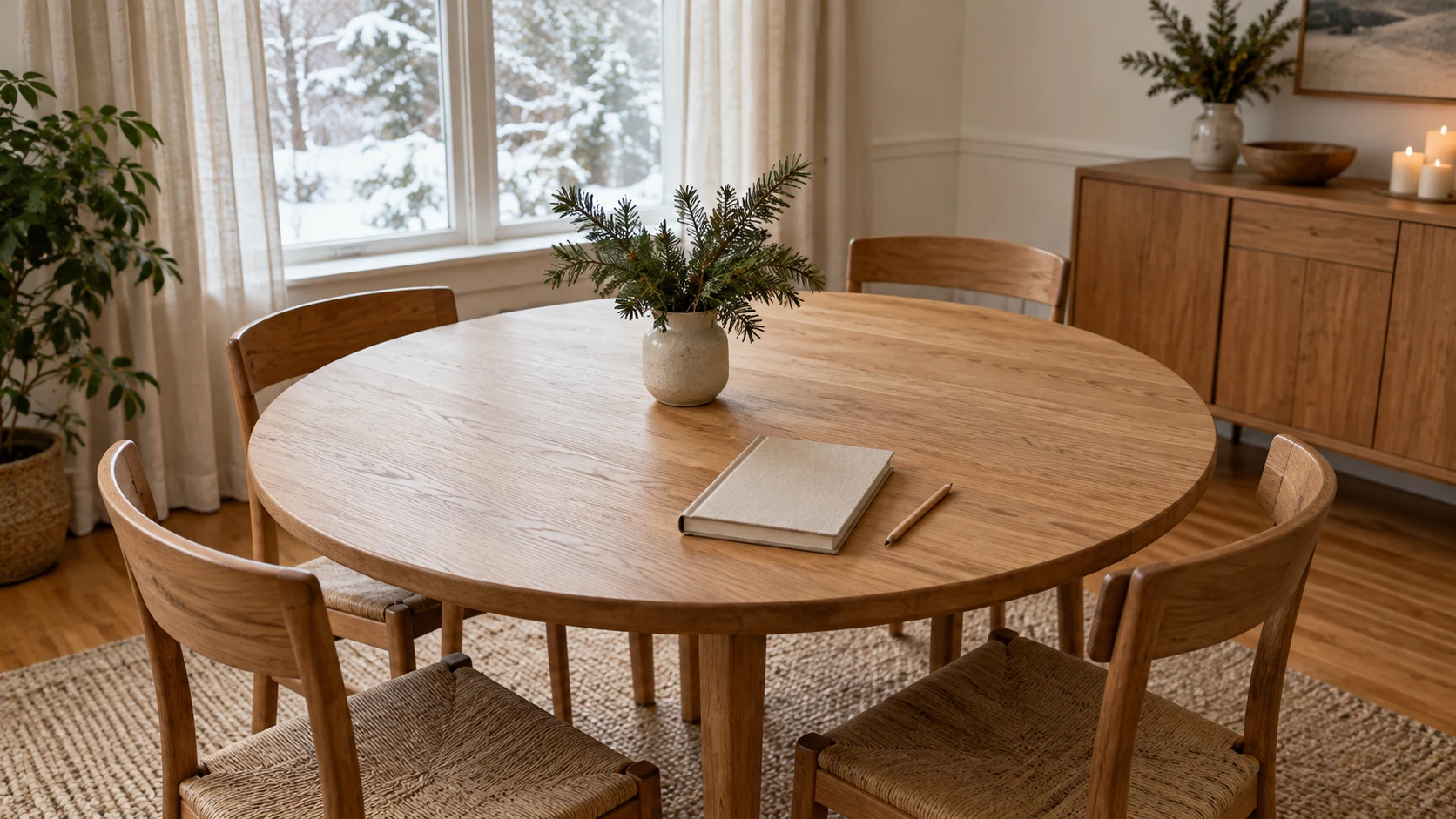
A reply arrives from someone who may bring a partner. Another guest can come for dessert but cannot stay for dinner. Your holiday meal suddenly has several headcounts, each attached to a different part of the day. A holiday dining guest checklist helps you keep those changes visible while you decide what the room and table need to accommodate. Start with the invitations and the meal you intend to serve; furniture details become useful once you know which decisions depend on them.
The working plan can be a sheet of paper. Record the people who have accepted, the replies still outstanding and any separate visits. Keep an unanswered invitation separate from an accepted one. If you are considering a table, attach its exact listing and your unanswered questions to that same plan so a vague product description cannot quietly become an assumed seating arrangement.
Planning holiday meals for confirmed guests
The first decision is which gathering you are actually planning. A long lunch, a dinner followed by visitors and a dessert-only afternoon each create a different attendance question. Write the intended occasion in a sentence, including which part involves everyone sitting down. You may discover that two apparently conflicting replies concern different parts of the day.
Record an accepted invitation against a person rather than an approximate household total. Where a reply leaves a companion unconfirmed, put that question beside the invitation. Ask for clarification before using the extra person in the confirmed dinner count. This makes planning holiday meals for confirmed guests a task you can finish for the known group while keeping a clearly identified question open.
Agree on a reply date that suits your planning and tell invitees what you need to know. The date is your coordination choice, not a promise that a late answer will fit the eventual arrangement. If someone replies after that point, revisit the arrangement with the new information instead of assuming the original plan has spare room.
Give each uncertain reply an owner
Put the pending guest's name next to the person who will ask them, and note the question. A missing attendance answer and an uncertain arrival time need different follow-ups. “Will you join the seated meal?” is more useful than repeatedly asking whether someone is coming at all when they have already offered to visit later.
Keep one current copy of the answers if several people are hosting together. A reply sent to a partner can otherwise remain in a message thread while you plan from yesterday's count. When an answer changes, update the relevant meal and tell whoever is arranging the room. Avoid turning every update into a complete rewrite of the menu; first establish what the change actually affects.
If the reply remains uncertain, write down your next decision point. You might need to ask the guest to confirm before you settle the seated arrangement, or discuss a different visit. The checklist should show that unresolved choice. An empty attendance field leaves the other host unsure whether to include that person.
Sketch the meal before shopping for furniture
Give the proposed gathering its own page. Mark where you intend to place the table and which existing chairs you hope to use. Then walk the room as it is now, noticing the doorway, nearby furniture and the route between the kitchen and dining area. Record your observations and measurements. This is a check of your own room; a product photograph cannot supply those details.
Ask the other host what will actually be on the tabletop during the meal. Serving dishes left there, individual place settings and decorations all draw on the same surface. You can choose to serve some food elsewhere or simplify a decoration, but write that choice into the plan. Otherwise two people may each expect to use an area that the other has already allocated.
A rough layout helps expose missing information before you make a purchase. It cannot establish a table's dimensions, compatibility with existing chairs or safe use. Keep those product questions attached to the exact model. An appealing room photograph is a reference for appearance, and its arrangement may differ from what you can set up at home.
Table details in a holiday hosting plan
Use table details in a holiday hosting plan to distinguish a stated feature from something you still need to confirm. Consider the Best Master Furniture CD050T Camden round dining table. Its description names a light oak finish and a compact shape suited to smaller dining spaces. It places the item in Kitchen & Dining Furniture and describes kitchens, breakfast nooks and dining areas as possible settings.
The same listing identifies the color as Multicolor. Keep that field separate from the descriptive light oak wording if color matters to your room. Neither phrase answers the missing overall-dimensions question. The description supplies no actual overall dimensions or seating count. Those gaps remain even if the word “compact” sounds suited to your room.
For that table, a useful next inquiry asks for the dimensions and the model-specific information needed to assess your own chairs and layout. Refer to CD050T so the answer stays attached to the item you are considering. Do not turn the description's small-space wording into a promise that the table fits a particular nook or accommodates your confirmed group.
Read a seating statement against your actual plan
The POVISON Hobart round dining table offers a different kind of information. Its title includes White and 59 inches, and its description says it seats six. The description also names a 12 mm sintered stone top and a gray carbon steel pedestal with a half-crescent base. Those details can help you frame questions about the specific item you are evaluating.
Its six-person seating statement does not establish how your selected chairs, place settings or guests will fit. Keep “listing says seats six” in your notes alongside the actual arrangement you intend to check. If the group changes, reconsider the layout rather than adding another place on the strength of a rounded product photograph.
The product URL uses matte wording while the description calls the top glossy. If the surface appearance is part of your holiday room plan, ask which finish applies to the exact item. Avoid resolving that discrepancy by choosing whichever description suits the room. A written answer tied to the model gives you something specific to assess before committing to its appearance.
Keep product details with the right item
The descriptions leave different questions to answer for each table. One uses compact wording without actual dimensions in its description. The other provides a seating statement and several construction details but leaves you to assess your own arrangement. Neither description establishes the other table's measurements, appearance or seating possibilities.
If you keep a shortlist, give each candidate a separate note with its exact model, link and outstanding question. Record any answer beside the relevant listing. This avoids a surprisingly easy planning mistake: remembering a detail correctly while attaching it to the wrong item. A figure copied into a generic “new dining table” note loses the identity that makes it useful.
Keep the furniture decision open until you have the information on which your plan depends. A reply deadline for guests and a purchasing decision are separate events. You can know who has accepted while still being unable to confirm a proposed layout. In that case the remaining task is visible, and you can discuss an arrangement using the furniture you already have.
Check the handover between meal and later visitors
Return to the guests who are coming for only part of the day. Write down when the seated meal is intended to finish and what you have actually told later visitors. Those are planning intentions, so leave room to communicate a change. A guest who expects dessert after dinner may need a clearer arrival message if your meal timing shifts.
Consider what the room needs to become between those visits. If you plan to clear dishes before guests arrive, agree who will help and which parts of the room should remain available. This is an allocation of hosting tasks, not an instruction to move a loaded table or improvise furniture handling. Keep any product use or assembly question with the relevant manufacturer guidance.
Ask yourself which decisions still depend on an answer from someone else. If the table purchase is unresolved, avoid promising a particular seating arrangement to the whole group. If the meal is confirmed but a visitor's timing is unclear, follow up on that timing. Put the unanswered arrival question beside the visitor’s name so either host can follow up.
Review changes without erasing earlier decisions
Once you have a workable plan, keep a short dated note when a reply changes. Write what changed and which part of the gathering you reconsidered. You do not need a full archive of every message. The purpose is to stop an old count or earlier arrangement from returning when another host looks at a different copy of the plan.
Read the latest version with anyone sharing the hosting. Confirm which people are expected for the seated meal, identify the remaining questions and check whether the room arrangement still matches. If an answer has not arrived, leave the question visible. Do not mark the plan complete simply because a date on the calendar is getting close.
Before you send the final practical details, read the guest messages and your room notes together. Send each guest the arrival and meal information that applies to their visit. Keep unresolved furniture questions out of any promise about where everyone will sit, and settle those questions before relying on a proposed table.
Ask about the meal separately from attendance
Once a guest confirms, ask whether there is a food preference or requirement you need to discuss. Keep that answer in a separate field from attendance so a question about the menu does not accidentally become a tentative invitation. If several people are cooking, agree who will discuss the request with the guest and relay the relevant answer to the person preparing that part of the meal.
A reply saying someone avoids a food does not tell you which substitute they would choose or whether a proposed dish is suitable. Ask the guest directly about the actual menu. If you cannot meet a request, discuss that limitation before finalizing the meal rather than writing a reassuring label beside the person's name. The planning sheet records the conversation; it does not establish ingredient suitability or safe preparation.
Share personal details only with the people who need them to arrange the meal. A message confirming arrival time can remain separate from a private discussion about food. This also keeps the general guest update short enough that people can find the practical information they need.
The LiviNest and FFZ coffee-table placement guide starts with the seats people use and the route they take through an occupied room. It requests complete dimensions and keeps the two-piece set's partly specified diameter open. That is a useful furniture-planning question for holiday dining too: check the actual furniture and occupied space before treating a round shape or compact label as proof that the arrangement fits.
The winter household room checklist follows changing room use and guest preferences before turning ideas into purchases. Its Vicks two-device pack and Vornado tank-and-filter counts illustrate why an inventory number needs a named object. Extend the holiday conversation to the other rooms your guests will use, while keeping those appliance quantities separate from your dining-table and chair record.
A holiday dining plan begins with confirmed guests, a proposed meal and the table details still to check.