Skills & Planning
Read a library call number and ISBN for different purposes
Read official library explanations of book identifiers, shelf locations and holding status before turning a catalog note into a visit plan.
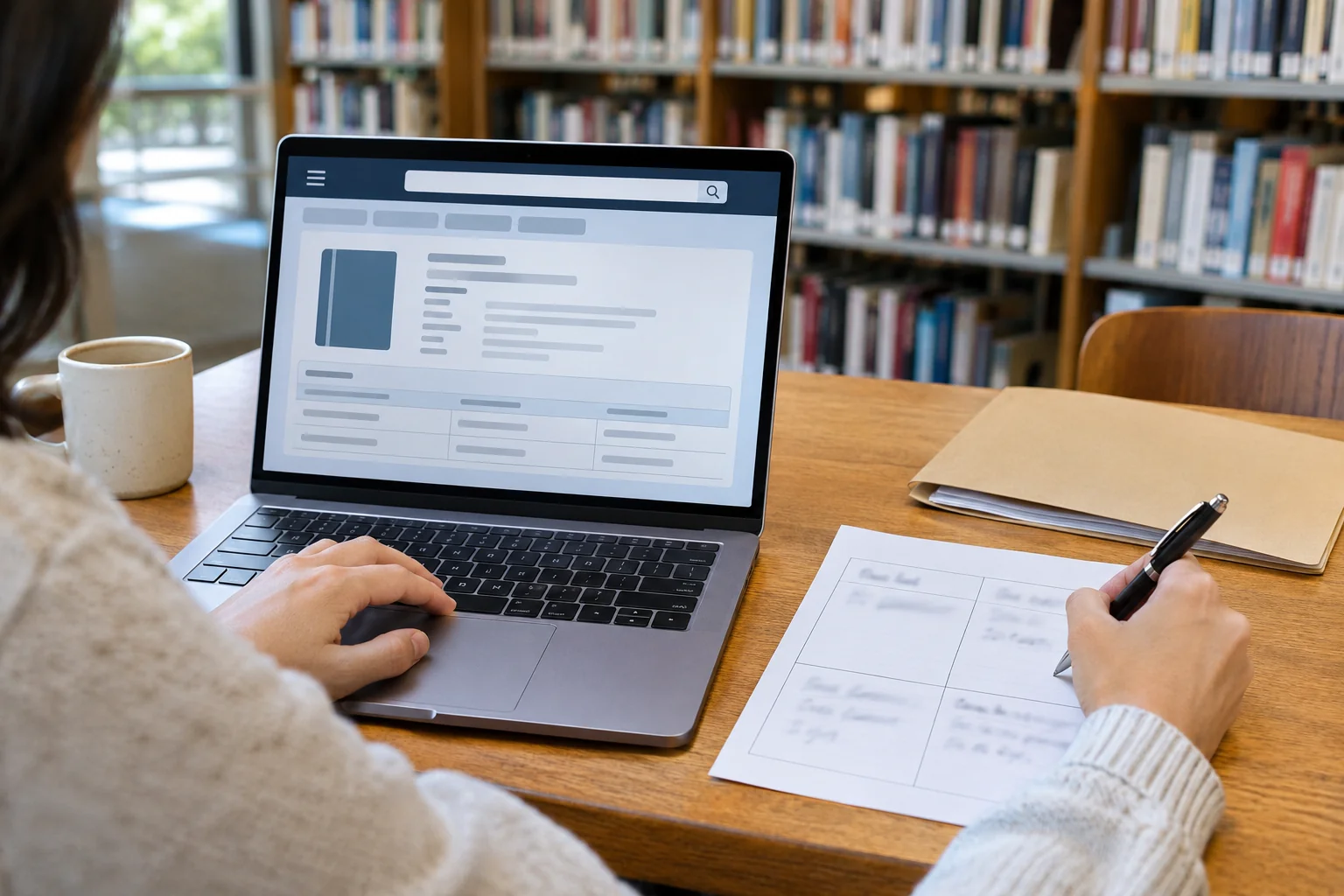
A library call number and ISBN help with different tasks. The call number belongs with locating library material; the ISBN identifies a publication's title, edition and format. Keep the field labels beside their values when you make a catalog note.
This explainer concerns practical reading of a library record before a visit or further enquiry. It uses complete official explanations from the Library of Congress, the International ISBN Agency, the University of Michigan and Tufts. It supplies no actual search result for a reader's book. The blank note suggested below is an original way to organise your own questions, with no invented identifier presented as a real catalog entry.
ISBN identifies a publication rather than a personal copy
The International ISBN Agency describes ISBN as a product identifier used in ordering, listing, sales records and stock control. It identifies the registrant together with a specific title, edition and format. The agency says different product forms, such as a paperback, EPUB or PDF, should be identified separately. That is useful context when the same familiar title appears in several forms. This guide concerns those identification roles, without teaching the numeric structure, check-digit calculation or assignment procedure.
Read the publication details alongside the identifier you have. A title remembered from a conversation leaves more open than an identified edition and format. The agency's explanation supports keeping those distinctions visible; it does not identify which publication a particular reader intended or confirm what is in somebody's hands.
A call number helps locate and organise library material
The Library of Congress explains that call numbers appear on book spines or covers and in its online catalog records. They help find and organise books and other materials on shelves. Its own system combines letters and numbers and groups material by subject. A shelf label and an identifier in a citation therefore need their own names in your notes. Knowing that both contain numbers does not make them interchangeable fields.
Use the actual record and the library's guidance for the material involved. This article does not supply a call number for a book, convert between classification systems, or teach a shelving-order exercise. The Library's explanation of its system is a starting point for understanding the label you are reading.
Keep catalog location beside the shelf reference
The University of Michigan guide calls the call number a shelf address found on the spine or sometimes the front cover and in catalog records. It also explains that a library location can appear above the call number on a label. Its examples include Hatcher, Fine Arts and Shapiro library locations. Retain the actual catalog location rather than shortening every result to a call number alone.
Michigan also describes other record forms for DVDs, maps, microforms and manuscripts, with different shelf-address conventions. A record for another format should not be treated as a print-book record simply because your search began with a book title. Follow the institution's guidance for the resource you actually found. Questions about non-book call numbers can go to its library service desk or librarian service.
This is a reason to preserve a record's resource description and location together. It is not permission to supply a missing branch name from memory. Michigan's guide concerns its collections; your actual record still needs to identify the collection you intend to use.
Availability is another part of the record
Tufts explains that a circulating print book's call number appears on its spine label and in its JumboSearch record. Its instructions distinguish a print copy's availability and location from an item available exclusively online or unavailable. The phrase “Available at Tisch Library” has a stated meaning within that library's search guidance. No search has been performed for your title here, and no current copy status is supplied by this article.
The Tufts guide connects a known call number with the stacks, shelf labels and posted signs, and directs readers to the front desk when they have trouble finding an item. Keep that institution's help route with the question you have. A copied identifier in a private note does not record an actual conversation with staff.
A book edition identifier can leave a lookup unfinished
The Library of Congress Find It! FAQ describes using an ISBN or another unique book identifier to improve an ebook search. It also explains why an ISBN can refer to a related edition or format. Publishers assign separate ISBNs for different forms and editions, while the resolver's knowledgebase may not contain every ISBN associated with a title. A book edition identifier is useful information without making every lookup complete.
The FAQ also warns that a link to a catalog is not a prior check that the Library holds the requested book or journal issue. Its menu can offer further searches when full text is unresolved. Keep a route to another search distinct from an observed holding or a usable full-text result. This guide supplies no claim that the service has found a particular resource for you.
When a lookup leaves a question open, retain the citation and the actual result you received. The FAQ points researchers to reference staff for assistance. Its explanation of lookup limitations does not establish that an unreturned result proves a publication is absent everywhere.
Make an original note without filling gaps for appearance
Here is a proposed blank note for your own use: “Item requested: __. Source of my reference: __. Record I am viewing: __. Questions still open: __.” Add separate lines for any field you want to preserve. This is a writing aid, not a real catalog record or an institution's required form. Start with the information you actually have and leave the rest empty until you can enter it honestly.
Write the source of a note in ordinary words. Perhaps you copied a reference from an email, wrote something down during a conversation, or saved a page to read later. Recording that history is your own task. It lets another person see what you meant by a line such as “the book my tutor mentioned” without pretending the conversation itself supplied a completed library search.
If you make a correction, keep enough of the earlier note to understand it. For example, you can mark a line “copied from the wrong page” after discovering that you had two tabs open. That is an invented editing example, not a report of an actual record error. The correction should describe what you observed, without guessing why a library or publisher recorded something differently.
Read the note to someone helping you and ask which question they think remains. If your note looks finished while you still need an answer, add that question explicitly. A clean page can be incomplete. You can stop writing after “I still need to check this” rather than adding a plausible detail to remove the blank space.
Keep any response with the question that prompted it. If you ask two things and receive an answer to one, mark the remaining question as open. This proposed note-taking habit helps preserve the conversation you actually had. It does not promise a particular answer or make you the author of an institution's policy.
Before asking someone to help, mark the part of your note you want them to read. You might write, “Please check whether I copied this line from the page I saved.” That invented request gives your helper a limited task. If you instead want help composing a question, say that. Keep their editing suggestion as a suggestion until you have chosen the wording you want to use.
Treat optional folders as separate retail references
The Smead Lockit folder account shows a blue two-pocket form with fold-over flaps and card slots. Its native description lists twenty-five folders per box bundled as five boxes; the selected variant records a count of five. The sole gallery illustrates one open folder, not a verified bundle inventory. Keep those declarations and visual limits separate. Neither the photo nor this article authenticates a delivered count, material result or capacity. An existing folder can hold your own notes without a new purchase.
The Oxford 59802 account shows a blue three-panel folder with three pockets, staged printed documents and a business-card slot. A closed view appears behind the open form. The native description says twenty per box, while its catalog brand field is Unbranded. Those views do not verify the offered multipack, and the displayed documents are not declared supplied stationery. Keep any purchase question attached to this exact offer instead of treating the visual example as received-contents certification.
Leave neighbouring decisions with their own evidence
The library lost-item charges guide concerns an institution's bill, its replacement-copy rules and possible return or refund routes. Its discussion of an exact replacement reference belongs to that billing question. Understanding an identifier in a record does not supply permission to replace a borrowed copy or settle an account charge. Use the institution's actual answer if that is the problem you are trying to resolve.
The coin album refill compatibility guide keeps an album reference, a proposed accessory and its printed coverage distinct. That is a collecting purchase enquiry, with physical compatibility left unanswered until appropriate evidence is available. Here the task is reading library record fields. An identified retail album does not supply a library's holding, location or access result.
Keep a possible desk purchase outside the library enquiry
You can prepare a library note using paper and a folder you already own. If you separately consider a purchase on republeq.com, begin with the exact offer and variant you want to investigate. Keep unanswered questions about the goods visible while you decide whether to order. A payment preference cannot identify the intended item or answer a question about a library resource. Read the current checkout methods for that particular order. If cryptocurrency such as USDT is offered, verify the requested asset and network together with the amount, any stated fees and the receiving instructions supplied by the responsible service. Read the delivery conditions and the applicable cancellation, return and refund terms before authorising a transaction. Ask how a refund would be handled for the proposed method if that information remains unclear. Do not replace a missing instruction with a remembered detail from an earlier order. Retain the order reference and relevant confirmed transaction records, with private access credentials kept out of shared notes and screenshots. If instructions change or an earlier action has an uncertain result, reconcile the actual transaction status with the responsible service before considering another transfer. This article supplies no wallet address, transfer procedure, asset recommendation or assurance that a particular payment option is available. You can leave a purchase undecided while continuing the writing task with things already at hand. Any eventual store acknowledgement concerns the order it identifies. Keep it separate from a library conversation, where the actual record and the answer to your outstanding question remain the information needed for the next step.