Coin Collecting & Storage
Coin album refill compatibility and printed series labels
Identify the album and the printed collection it represents before choosing a loose page. Keep page attachment and printed issue coverage separately unresolved.
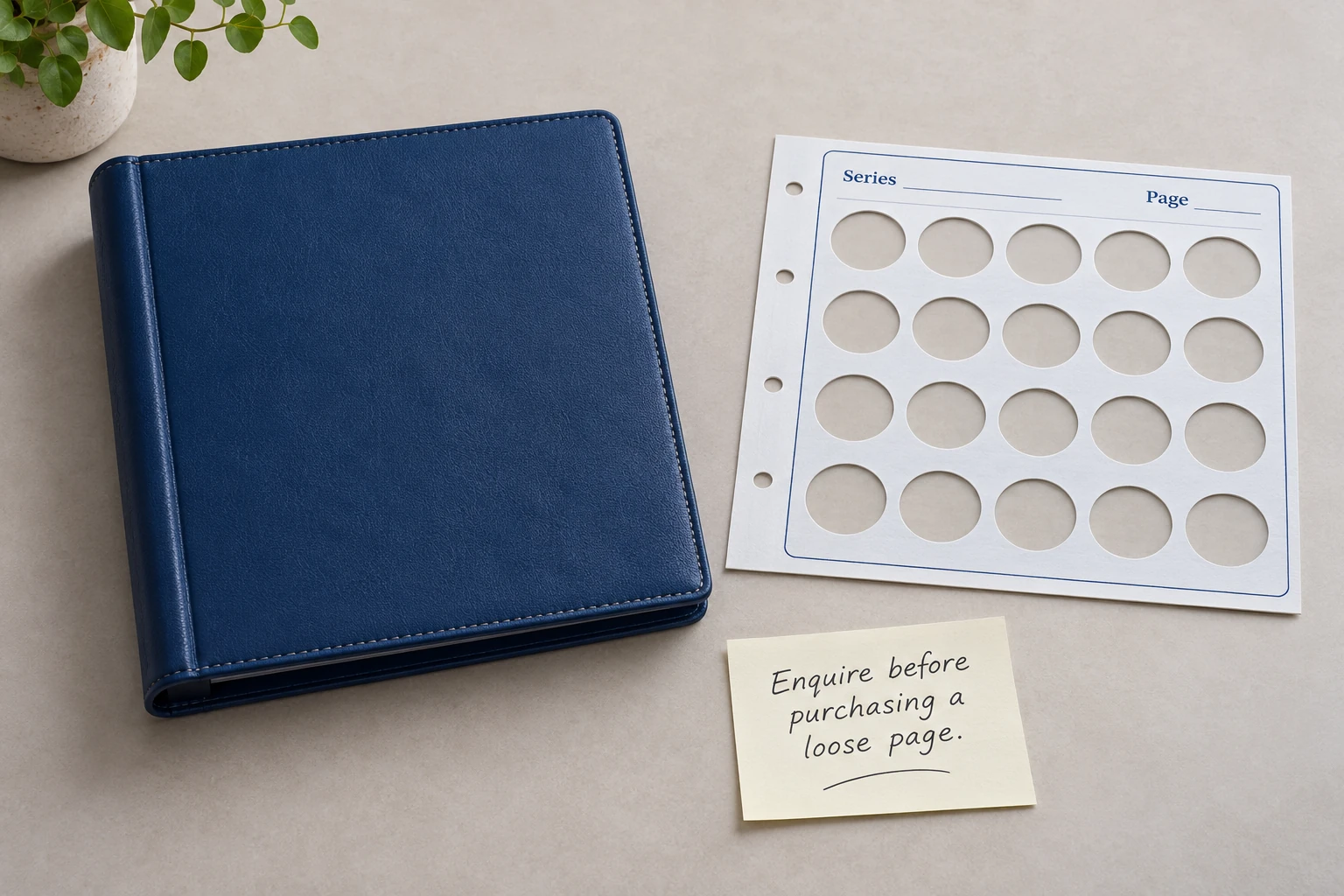
Coin album refill compatibility needs an answer about the page you intend to buy and the album it is meant to join. A reply that mentions a familiar album family may leave the printed collection on that page unidentified. Keep the existing album reference with your enquiry, then explain which printed positions you want the proposed page to provide.
Begin with the information you already have about the album. This guide supplies a purchase enquiry, with an invented correspondence example below. It establishes no actual refill availability, page interchangeability or physical fit. Leave the album and any existing contents in their present arrangement while gathering the applicable product information.
Identify the album represented by the request
Write down the exact title or reference available for the album you own. Include a series or volume designation when the actual record supplies one. Retain the wording rather than shortening it to a broad collecting interest. Someone responding to an enquiry should be able to tell which album their answer is expected to cover.
If you are working from an old order record, distinguish that record from an identification you have checked against the present album. Perhaps a relative supplied the record, or several similar purchases appear in the same folder. Say what your reference comes from. An unresolved connection between the paperwork and the album should remain visible in the request.
The album series reference helps establish the subject of the conversation. A descriptive cover title and a catalog identifier can be retained together without assuming they are interchangeable fields. Ask for clarification if the record does not identify the item sufficiently. A clear request can begin with an information gap, provided the person answering can see what still needs to be established.
Read each complete album offer in its own terms
The Whitman Classic Volume 1 coin album native account identifies ISBN 9780307091284 and six pages. Its two native images show closed covers carrying the Morgan name and 1878–1891 date range. The matching publisher entry describes labelled openings and clear plastic slides, and states that no coins are included. Those interior features are publisher statements. The native covers do not demonstrate them or establish a replacement-page match.
The Whitman Prestige Standing Liberty Quarters album native account identifies ISBN 9780794854782 and three pages. Its native gallery is an image-coming-soon placeholder. Separately, the exact-ISBN publisher entry describes labelled openings, slides and a slipcover, with no coins included. An exact-ISBN Whitman Store listing shows a closed black cover marked 1916–1930 Date and Mintmark Set. That additional view supplies no interior or page-interface inspection.
Keep a complete album offer separate from the loose page you are considering. The enquiry still needs to identify that proposed accessory. You can use an album reference to ask a specific question without treating the existence of an album listing as confirmation that a particular refill is offered. Retain the actual accessory reference if a seller provides one.
State what the printed page is meant to cover
Describe the printed coin positions relevant to your request using the wording in the applicable records. You may be seeking a page associated with a named volume or a particular part of its printed sequence. Give the seller enough context to identify that request. Avoid filling an uncertain title or position from memory merely to make the message look complete.
An answer about attachment may leave this question open. Ask which printed collection or page reference the proposed item represents, and retain the answer alongside the accessory identity. A statement about one aspect of the proposal should stay attached to that aspect. If the seller supplies only a broad family name, ask whether their reply identifies the page wording you actually requested.
There is no need to turn the enquiry into an assessment of the coins themselves. You are identifying printed holder information and an intended accessory. Questions about an unidentified collectible's issue, authenticity or condition require their own evidence. Keep those enquiries separate so a seller responding about an album page is not assumed to have assessed unrelated belongings.
Read a reply against the question that was sent
Consider an invented exchange. Rae owns an album whose reference she has retained in a purchase folder. She asks a seller about a loose page carrying a particular printed series heading. Her message includes the existing album reference and the wording she wants to identify. No real album, accessory or successful pairing is stipulated in this example.
The seller replies that the proposed page is intended for a familiar album family. Rae can keep that answer without treating every part of her request as resolved. She asks which exact page the reply concerns and whether the printed heading in her message belongs to that item. Her follow-up repeats the unanswered question, giving the seller a specific point to address.
Suppose a second reply identifies a different printed heading. Rae retains that wording rather than editing it into the heading she expected. She may have asked about the wrong accessory, received an answer about another item or misunderstood the original description. The example supplies no finding among those possibilities. The next message can identify the discrepancy and ask which reference applies.
If the seller then sends a page photograph, Rae keeps it with the message and the item reference supplied by its sender. She asks what that view establishes about the proposed offer. A helpful picture can leave its connection to the order unclear. Rae does not need to order an unidentified page as a way of discovering what the correspondence meant.
Rae also notices that her original message described a replacement, while the seller called the suggestion an additional page. She asks which role the offered item is meant to serve. That distinction belongs in the correspondence even though the example supplies no answer about the album itself. A replacement request can concern a particular missing printed section, while a suggestion to add a page may address a different intention. Rae explains her intention in ordinary words and asks the seller to identify the item their answer covers.
When Rae shares the exchange with her collecting partner, she includes the original question and both replies. Her partner can then see why the broad album-family answer left the printed heading unresolved. Rae has kept the discrepancy without turning it into a conclusion that the seller's item is defective. She asks for clarification of the actual offer before deciding whether to pursue it. The example ends with a specific unanswered purchase question, leaving the physical relationship and any eventual order outcome open.
Keep the accessory identity through a changed enquiry
A conversation can change direction after the first answer. Perhaps the proposed page is unavailable, or the seller suggests another reference. Treat that suggestion as a new item to investigate. Preserve the earlier answer with the item it concerned. Carrying an old answer forward automatically would obscure which proposal received the clarification.
If someone else is helping with the purchase, share the current question and the exact accessory reference under consideration. Tell them which earlier suggestion you have set aside. They should be able to see whether the task is still identifying an item or deciding whether an identified item addresses the request. A brief message can retain that distinction without becoming a large collection catalog.
Keep a distinction between a missing answer and an answer that changes the proposal. The first leaves a field unresolved. The second may identify a different item, printed scope or intended album. Read what was actually supplied before summarizing the exchange. An orderly note is only helpful if it preserves the meaning of the correspondence.
Before placing an order, read the proposed accessory name beside your original question once more. Check whether the reply concerns that same item and the same album reference. If it concerns another configuration, retain the limitation and follow up. This final reading is a check of the available information, with no fitting, removal or alteration procedure supplied here.
Keep other collecting decisions with their own evidence
The coin rim vs edge guide distinguishes named coin parts from statements about an album and from condition conclusions. That vocabulary concerns the subject of a collecting description. It provides no replacement-page interface specification. Keep a coin-part question separate from the printed holder reference used in this accessory enquiry.
The coin slab storage reuse guide considers an existing enclosed holder and the remaining need for an outer carrier. Its buying question concerns secondary storage. A loose printed album page introduces a different proposed item and purpose. The outer-carrier discussion supplies no page identity, printed coverage or attachment result for this enquiry.
Give each question a clear recipient and subject. Someone who can clarify an order reference may still need more information to answer an interface question. Another person may help identify a printed series while supplying no applicable accessory recommendation. Keep those contributions attributed and bounded when combining them into your purchase note.
Confirm the selected goods before arranging payment
If you are considering cryptocurrency for an order on republeq.com, settle the exact goods under discussion before treating a payment preference as an order instruction. Choosing USDT does not identify the loose page, establish its printed coverage or confirm a relationship with an existing album. Read the current checkout methods for the identified order and retain the applicable terms while deciding whether an offered option suits you. Do not assume that a particular asset or network will be available because you prefer it. Before authorizing a transfer, compare the displayed currency, network, destination and amount with the instructions presented for that order. Leave unclear instructions unresolved until the applicable merchant support information clarifies them. This guide supplies no wallet address, conversion rate, fee estimate or payment procedure. Keep the actual order reference and genuine transaction confirmation available if a later question arises. An uncertain transaction status needs clarification about that transaction before another transfer is considered. The payment record and the accessory correspondence answer separate questions, so retain both with the order. If another person is arranging payment, give them the exact selected offer and explain whether the accessory decision has been made. A screenshot showing several alternatives can leave them guessing which one you meant. Tell them if the proposal changes during their preparations. They can leave the order unplaced while an important product question remains open. Payment availability provides no evidence of a physical match, and a completed transfer cannot establish that delivered contents correspond to the page reference you intended to order. Keep any later delivery enquiry attached to the actual goods and records involved.
Coin album refill compatibility is ready for a purchase decision only to the extent that the applicable evidence answers the actual proposal. Keep the album reference, proposed page identity and printed coverage question together. Retain any unresolved interface or supply question honestly. The next step should address the specific gap that remains in that enquiry.