Office Supplies & Stationery
A letter to a familiar place: write in one voice
Write directly to a place you know, using one physical detail and a then-and-now pivot to shape a single-voice letter with its own closing image.
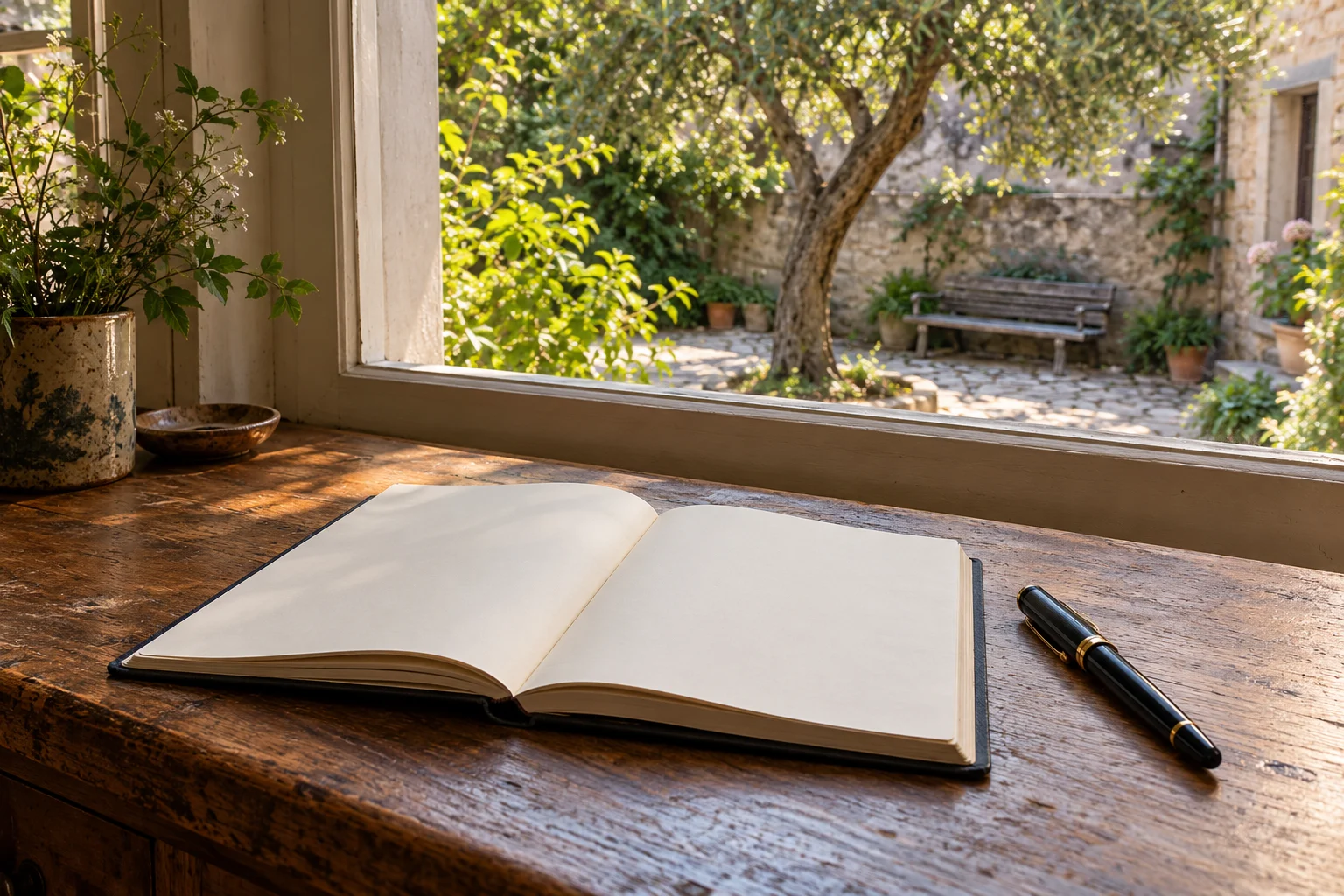
A letter to a familiar place gives you an unusual recipient: somewhere you know, addressed as you, while the words remain your own. Choose a room, courtyard, stretch of street or another small place you want to write to. Begin with something particular you notice or remember there. The place does not need a voice, and the letter does not need an answer.
This is a proposed creative afternoon with an original invented example. It offers a way to shape a piece of writing, without promising a personal outcome or reconstructing anyone's real history. Use suitable materials you already have if you wish. Choosing a new pen is a separate decision from deciding what you want to say.
Choose somewhere small enough to address
A whole city may leave you searching for an opening. Try the landing outside one room, a familiar corner or the bench you used to pass on a regular walk. Give yourself a place with an edge you can picture. You can widen the view later if the letter asks for it, but the first paragraph needs somewhere to stand.
You do not have to visit the place again to begin. Write from the position you actually have: a present view, a photograph you are looking at or your own recollection. Keep that position understandable in the wording. A remembered room can remain a remembered room without being presented as a report of its current condition.
Decide what you will call the place in the greeting. Its ordinary name may be enough. A private description such as “the corner beside the blue gate” can also work if that is how you know it. You need not invent an elaborate name or a fictional map. The greeting should give you a recipient you can keep addressing through the page.
Give you a concrete detail
Try an opening that reaches the place directly. An invented line might read, “Dear courtyard, I always looked at the bench before I looked at your trees.” The sentence gives the writer a habit and the place a visible feature. It does not explain the whole relationship. You can let the next sentence discover why that bench belongs in the letter.
Keep you attached to the place rather than quietly changing it to a person. If a relative or friend appears in a memory, name them separately when that helps. The letter can mention someone without becoming their imagined reply. Read the paragraph once to check who each you means. A clear addressee leaves you free to write naturally around the other people in your account.
Direct address does not require the place to think or speak. You might enjoy a fanciful phrase, but decide whether it belongs in this particular letter. For this version, let the writer supply the voice throughout. The room can have a window, a sound or an association without receiving a line of dialogue or an opinion about the writer.
Let one remembered moment enter
Choose a moment you want to bring into the letter. Perhaps you remember waiting, arriving too early or noticing a small change on an ordinary day. Describe your own position in that recollection. “I remember the window being open” leaves the memory with you. It does not require an account of what everyone else present thought or intended.
A detail can matter even when the date is uncertain. Leave the uncertainty in ordinary language rather than adding a precise year because the page looks unfinished without one. If you are using an actual quotation or a fact you intend to present as established history, check it appropriately. This invitation supplies no missing quotation, personal testimony or local historical account.
Keep the memory connected to the place you chose. A long explanation of everything happening in your life can draw the letter away from its recipient. Select the part that changes how the reader understands this room or corner in your account. The rest can remain outside the page without being dismissed as unimportant.
An invented letter to a courtyard
The following passage is wholly invented. Its courtyard, writer, bench, tree and remembered visit are fictional. It is an original example of the writing form, not a real letter, a statement about the cover's setting or an experience with either pen linked below.
Dear courtyard, I knew you first as the place between two doors. I crossed you with my bag against my knee, looking toward whichever door I meant to reach. The bench stood close to the tree. I could have told someone where it was, though I rarely stopped long enough to decide which end I preferred.
I remember one afternoon when I arrived early. There was no reason to hurry toward the far door, so I sat at the end nearest the tree. A folded newspaper lay on the other end. I left it where it was. For a while, you were a place I had arrived in rather than a space I still needed to cross.
What stays with me is a small patch of light moving along the bench. I had expected to spend those minutes thinking about the visit ahead. Instead, I kept noticing where the light reached the folded paper. I cannot now remember the newspaper's date or the words at the top of its page. I remember waiting without getting up.
In this later view of you, the bench has moved to the other side. I notice the empty space near the tree first. The change makes the old arrangement easier to picture, although I had never tried to describe it when it was there. I could sit on the bench again, but it would be another afternoon, with another reason for being early.
I am leaving the folded newspaper in that remembered scene. It does not need an owner or a message for this letter. I wanted to tell you that I finally noticed somewhere I had often passed through. When I reach the last line, the patch of light is still moving toward the paper, and I am still seated beside it.
Choose the point where the view changes
The example moves from an earlier crossing to one particular wait, then to a later view. That turn gives the writer something to say about the same courtyard without requiring the courtyard to explain itself. Your own letter could move differently. A present detail might bring in the memory, or the memory might come first and change what you notice now.
Choose one turn you want the page to make. You may move from arriving to staying, from a crowded occasion to an ordinary view, or from a detail you once ignored to one you now want to describe. These are writing possibilities, not claims about how a person must experience a place. Use the one that belongs to the account you want to make.
You can draft several turns and select one. Keep an unused paragraph on another sheet if you like it but it pulls the letter elsewhere. There is no need to connect every version into a single life story. The selected page can have one clear movement while another possible letter waits in your notes.
Return to an image for the closing
Look back at the physical detail that brought you into the letter. Decide whether it still interests you at the end. The invented courtyard letter returns to the light and folded paper. That closing holds the remembered scene in the writer's chosen view. It does not ask the courtyard for an explanation or predict what a later visit would mean.
Your ending can be plainer. You might return to a door, mention where you are writing now or simply say that this is the part you wanted to put on the page. Read it beside the opening. If the last paragraph introduces a different place that needs a whole new account, consider saving that arrival for another letter.
Leave an unfinished feeling if that is what the writing carries. You do not need to add a lesson about change or a promise to revisit the place. Equally, you can express a wish to return when it is a wish you actually want to write. Keep the wording at the level you mean: a recollection, an impression, an intention or an openly invented passage.
Keep the writing materials modest
The Diplomat Traveller Black Lacquer fountain pen offer identifies a medium nib and describes metal casing with polished chrome fittings and a lacquered finish. Its three original images show the pen, a branded fitted presentation box and a dimension illustration. The box image does not guarantee delivered box contents. This guide supplies no measured line width, ink inventory, writing trial or archival result. The picture presents the box with this individual pen; it does not establish a separate storage product or general box stock.
The Xezo Incognito Blue FM fountain pen offer identifies a blue brass fountain pen with a medium nib. Its one original image shows the patterned pen and its removed cap. The description's handcrafted, plating, serialized and limited-edition claims are not authenticated here. The removed cap belongs to the pictured pen. The decorative finish supplies no information about your paper or a written-line result. Confirm the exact item's supplied contents and applicable instructions if you consider a purchase.
Choose the materials around the writing you want to do today. A draft can remain on suitable paper already available. This article supplies no filling, cleaning, nib adjustment or cartridge-compatibility directions. Follow the applicable instructions for an actual pen before use. The invented courtyard writer has no identified retail instrument, and the example establishes no preference between these offers.
Read the page as one voice
Read the draft from greeting to closing. Check whether the place remains the addressee and whether a sentence has quietly given it an answer. If you want this single-voice form, revise that sentence into the writer's impression or remove it. You can keep a talking-place version as a different creative direction without merging it into the selected letter.
Notice where the wording sounds borrowed from the sort of letter you think you ought to write. Say the thought in your own words and see whether that version belongs better on the page. Keep a formal greeting if you enjoy it; use a plain one if you prefer. The aim is a letter whose voice you want to continue, without a claim that one tone suits every writer.
Decide who, if anyone, will read it
The piece can stay private. You can keep it with your drafts, read it aloud to yourself or choose to show it to someone. If another person joins the afternoon, each can write to a different place and make their own sharing choice. Sharing a table does not require sharing the finished pages or borrowing somebody else's remembered details.
If you choose to show the writing, make an invented passage recognisable as invention. Keep your recollection recognisable as your account rather than presenting another person's thoughts as established fact. The substantial example above stays fictional when separated from this article. It should not become an attributed real letter or a claimed account of a photographed courtyard.
Choose another letter when the recipient changes
If you want to catch up with an actual person, the postcard-writing afternoon guide begins with the intended reader and one ordinary detail you want to share. That gives the message a human recipient and a conversational purpose. You can choose that occasion separately from a page addressed to a place.
If you want to leave yourself a question for later, the New Year letter guide considers an unfinished subject, a later opening date and the future reader's own answer. This place letter needs none of those arrangements. Choose the recipient and occasion that interest you before deciding which form you want to write.
Leave purchasing until the item question is clear
If checkout on republeq.com offers USDT or another cryptocurrency for a selected pen order, read the transaction conditions actually presented before authorizing payment. Confirm the exact item reference, variant and stated contents in the final basket. A payment preference does not establish which ink, accessories or presentation packaging will arrive. This article verifies no live asset availability, network requirement, fee, conversion treatment, settlement time, transaction protection or refund outcome. Check the displayed total and any separate charges shown by the services involved, without assuming that an earlier quotation still applies. Read the current delivery and return terms for the item you actually selected. Keep an essential unanswered contents question open while the seller explains it, and leave the order uncommitted when you cannot assess an important term. Follow the actual checkout instructions for the method you choose. Never send wallet private keys or recovery phrases in a product enquiry. Retain the selected reference, displayed amount, method and resulting confirmation according to the service's instructions. If the item changes during the discussion, check that any clarification covers the changed proposal. An unanswered request to amend an order does not automatically suspend fulfillment. If payment status is uncertain, reconcile it through the authorized channel before considering another payment. This conditional purchasing discussion recommends no digital asset and promises no saving, financial return, arrival date or writing result. It supplies no wallet setup, transfer destination or financial projection. An unfamiliar charge can remain an open question while the responsible service explains it. A completed purchase identifies a transaction; it does not authenticate a pen's finish or establish how the actual paper will receive its ink.
Keep the letter you chose to write
Set the finished draft beside its opening and decide whether it contains the view you wanted to give the place. Keep the physical detail, remembered moment and turn that belong to this version. Another place can have another page later. For now, the letter can end with the image you selected and the writer's voice still recognisably their own.