Garden Care & Watering
leaf raking path around planting beds without backtracking
A practical route for moving fallen leaves from planted edges to a collection point without repeatedly crossing cleared areas.
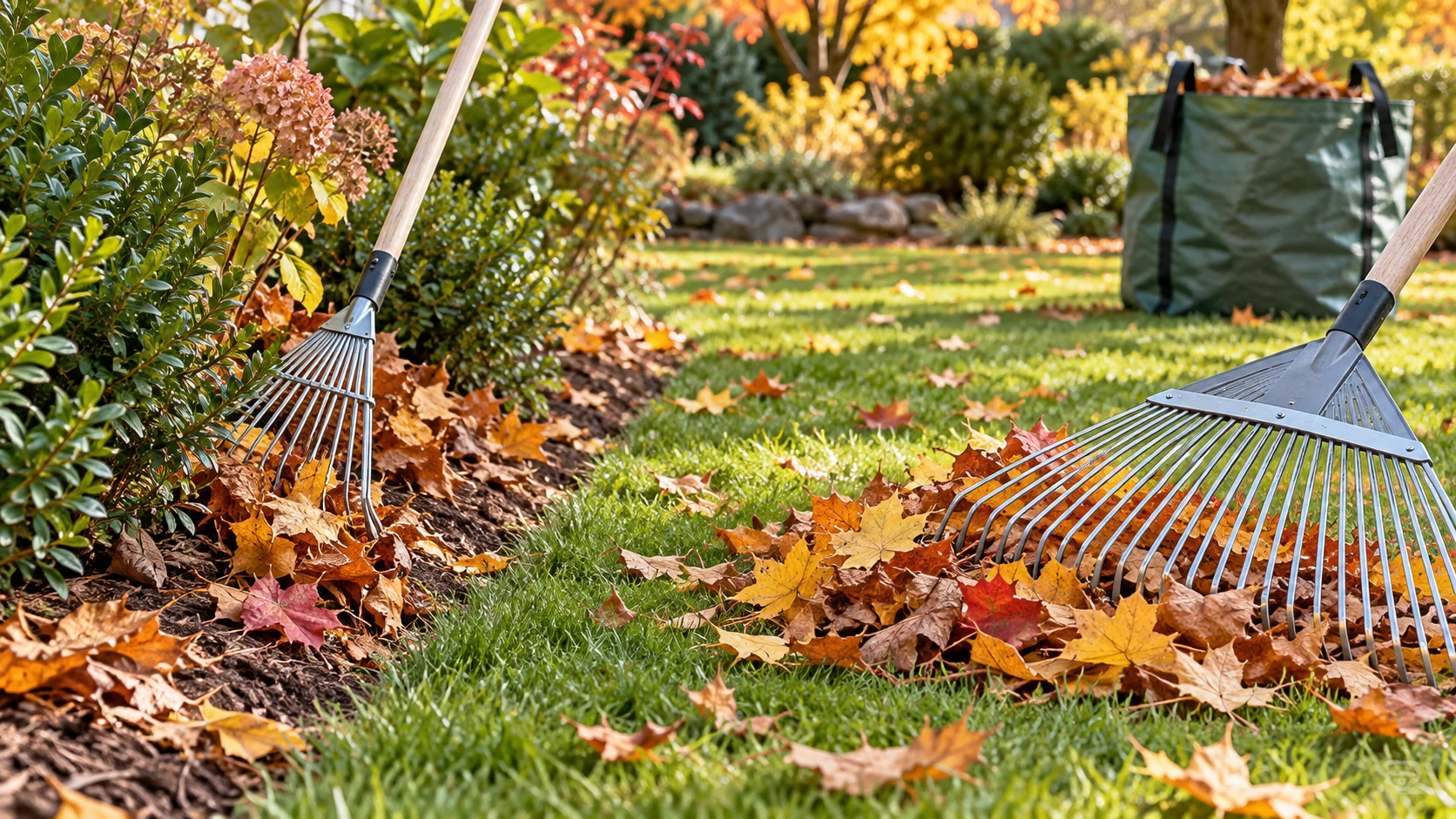
A leaf raking path around planting beds keeps the delicate work separate from the broad sweep across open lawn. Start at the bed edge, draw loose leaves into a reachable strip, and move that strip toward one collection point. This guide uses an adjustable metal leaf rake cleanup set as a narrow-reach example and a wider metal leaf rake as an open-area example. The two native listings and their galleries show these different physical roles. They do not prove that either rake is safe for every plant, lawn, or ground surface.
This is a movement plan, rather than a product ranking. The related guide to leaf-tine and soil-tooth rake differences helps identify tool types before work begins. Once you have a suitable leaf rake, the remaining problem is where each pass sends the leaves. Random strokes in different directions can spread the same leaves across a bed, path, and lawn several times. A simple route reduces that repetition while giving you a chance to notice hidden objects before they catch in the tines.
Choose a collection point before the first pass
Walk the area and choose a clear location where leaves can accumulate without blocking a door, drain, walkway, or planting you want to keep visible. Place the collection bag or container nearby if your local disposal plan calls for one. The leaf collection bag guide covers where collected leaves go next; here the bag is only the destination at the end of a short route. Check local yard-waste rules before deciding whether to bag, compost, or leave material on site.
Then trace a route from the farthest bed edge toward that point. Look for narrow gaps behind shrubs, low branches, hose lines, edging, and ground-cover plants. Mark any place where a rake would snag a wire, irrigation line, or decorative feature. If leaves are wet and matted, plan smaller batches and allow more time. If the ground is slick, muddy, or uneven, pause rather than using extra force. The plan should fit what you can see and reach safely, not a fixed number of strokes.
Separate three work zones in your mind: the planting bed or border, a temporary transfer strip just outside it, and the open lawn or clear surface leading to the pile. You may not have all three in a small yard. In that case, use a smaller strip and collect sooner. The point is to avoid sending a heavy pile back into stems while clearing the next section. A few short passes with a clear destination usually give more control than a long pull that crosses several surfaces.
Start at the edge with a narrow, light pass
Set an adjustable rake to a width that fits the space you actually have, following the product's instructions. The first example listing shows a metal rake in a set with leaf bags, a leaf collector, gloves, and hand scoops. Its gallery depicts the rake at different head and handle positions. Treat those pictures as a visual description of the kit, not a guarantee that every shown accessory or dimension is present in the currently selected merchant variant. Confirm the exact package before buying.
Hold the leaf-rake head so its tines skim loose material rather than dig into soil or mulch. Begin with a short stroke away from fragile stems and toward the transfer strip. If the tines pull mulch or catch a plant, stop, lift the head, and change the angle or work by hand in that spot. Never assume a wide rake can pass harmlessly over new growth. A smaller opening and shorter stroke are useful because they make the contact easier to observe.
Work in sections you can clear without stepping into the bed. Pull leaves out of the deepest reach first, then those closer to your feet. This order prevents later strokes from pushing fresh debris back over an area you just cleared. Do not reach under shrubs where visibility is poor without checking for sharp debris or wildlife. Wear suitable hand protection when collecting by hand, and use a stable position rather than leaning past your balance. The rake is a gathering tool, not a probe for hidden hazards.
As a small row of leaves forms outside the bed, leave it there until you have cleared the nearby section. If wind is moving leaves, make a shorter row and transfer it sooner. If there is an established mulch layer, keep useful mulch in place instead of trying to remove every leaf at the cost of stripping the bed. Your garden's maintenance needs determine how much material to clear. This guide supplies a routing method, not a universal horticultural rule for every planted area.
Transfer the row without spreading it back
Move to the open side of the strip. Use a shallow, controlled pull to move the accumulated leaves toward the collection route. Overloading the rake head makes material spill off both sides, so divide a large row into smaller portions. Reposition your feet before the next pull instead of twisting your back while dragging a heavy bundle. If the route crosses a hard path, lift the rake where needed; scraping metal tines across a vulnerable finish can mark it.
The wider standalone rake's native listing describes a metal head with many tines and an adjustable handle; the gallery shows a broad leaf-rake shape used in open areas. Its role here is a wider sweep where you have clearance, not access under tight shrubs. We do not infer an exact working width, load capacity, or durability outcome from promotional images. Check the current product details and actual clearance if you need a particular fit. The narrower kit rake may still be preferable when the open area is small or obstacles divide it.
Keep one leading edge of the leaf row moving toward your chosen collection point. If leaves scatter, stop and reform the row from the outside inward. That is more effective than chasing individual pieces across the whole lawn. Avoid pulling a large pile over drains, flower crowns, or newly seeded patches. Where the route narrows, shift to a smaller portion or pick up the pile. The path is allowed to change when the ground and plants make the original route awkward.
Use the wide pass only where it fits
On the open lawn, stand behind the row and draw the rake toward you in overlapping lanes. Each new lane should feed the same collection path. Overlap enough to catch loose leaves at the edge of the previous pass, while keeping the tine contact light. The objective is to collect movable leaves, not comb the turf aggressively. If tines snag grass or pull soil, ease pressure or change tools. A product's name or pictured use does not establish that a particular lawn tolerates a hard pull.
A wider rake can cover an open patch quickly, but it becomes clumsy at a bed border. Move back to the narrow setting or hand collection for corners and around trunks. Do not force the broad head between stems. Conversely, a narrow rake may take more passes across the central lawn, which can be acceptable if that is the tool you already own. The two-tool method is an example of matching reach to clearance; it is not an instruction to buy both items for every yard.
Pause periodically to see whether the pile still has a clean path to the bag. A large mound can obscure stones, sticks, or other objects mixed into leaves. Separate anything that should not enter the chosen yard-waste stream. If the container is filling, empty or replace it before dragging more leaves toward it. Avoid lifting a bag beyond what you can manage comfortably. The kit listing's bag imagery demonstrates a collection role, but it cannot tell you the safe weight of your actual filled bag.
Check edges and finish the route
After the main lawn pass, walk the route from the far end to the collection point. Look at bed edges, corners, and the strip where the narrow and wide work met. Small remaining leaves can be collected with a light final pass or by hand. You do not need to erase every leaf from a yard to complete a sensible cleanup. The decision depends on your planting, drainage, local rules, and the amount of material. The important check is that a missed clump is not blocking a drain or covering something that needs attention.
Empty or secure the collected material according to your disposal plan. Shake loose leaves from the rake in an appropriate location, then check the tines and handle for debris or damage before storage. Follow the product's care instructions for the exact item you own. The listed kit includes several components, so count them before putting it away; a misplaced hand scoop can make the next session slower. Store the rake where the tines will not create a trip or contact hazard.
Finally, note which part of the route took the most effort. If leaves kept slipping back into the bed, shorten the transfer strip next time. If the wide rake could not clear the lawn because planters divided it, use narrower lanes. If the bag destination was too far away, move it closer before starting the next section. These observations turn a one-time cleanup into a repeatable sequence that suits your actual space, without claiming a universal speed or finish.
For a larger yard, repeat the same short route in separate zones rather than making one enormous pile that must cross the whole property. Finish one bed edge, move its leaves to a nearby open patch, and collect that patch before walking to the next zone. This keeps a collection container within reach and lets you stop at a natural checkpoint if weather or daylight changes. If several people are helping, agree on the direction of travel before they begin so one person does not rake leaves back across another person's cleared strip. Keep children and pets out of the working path while tools are moving. A small route is easy to restart and easy to adjust when a surface proves unsuitable.
A leaf raking path around planting beds is successful when each section feeds a known next place: bed edge to transfer strip, strip to open route, and route to collection. Choose head width for clearance, keep strokes light, and change the route when plants, surfaces, or weather make a pass unsuitable. The two linked rakes illustrate physical options, while the method remains usable with any appropriate leaf rake you already have.