Home & Living
laundry hamper cost per collection spot: rolling cart or mesh bag
A cost worksheet for comparing a rigid rolling laundry cart with a collapsible mesh hamper without assuming pack size, lifespan or a winner.
Count collection spots before comparing costs
A laundry hamper cost comparison starts with the number of places where clothes actually collect. A household may want one container near a bedroom and another near the washer. It might instead need one movable container that visits both rooms. Write down those locations before comparing a wheeled cart with a folding bag. The aim here is to compare the outlay for useful collection spots, not to decide how many sorting categories the household should create. Count a spot only if someone will use it during an ordinary wash week.
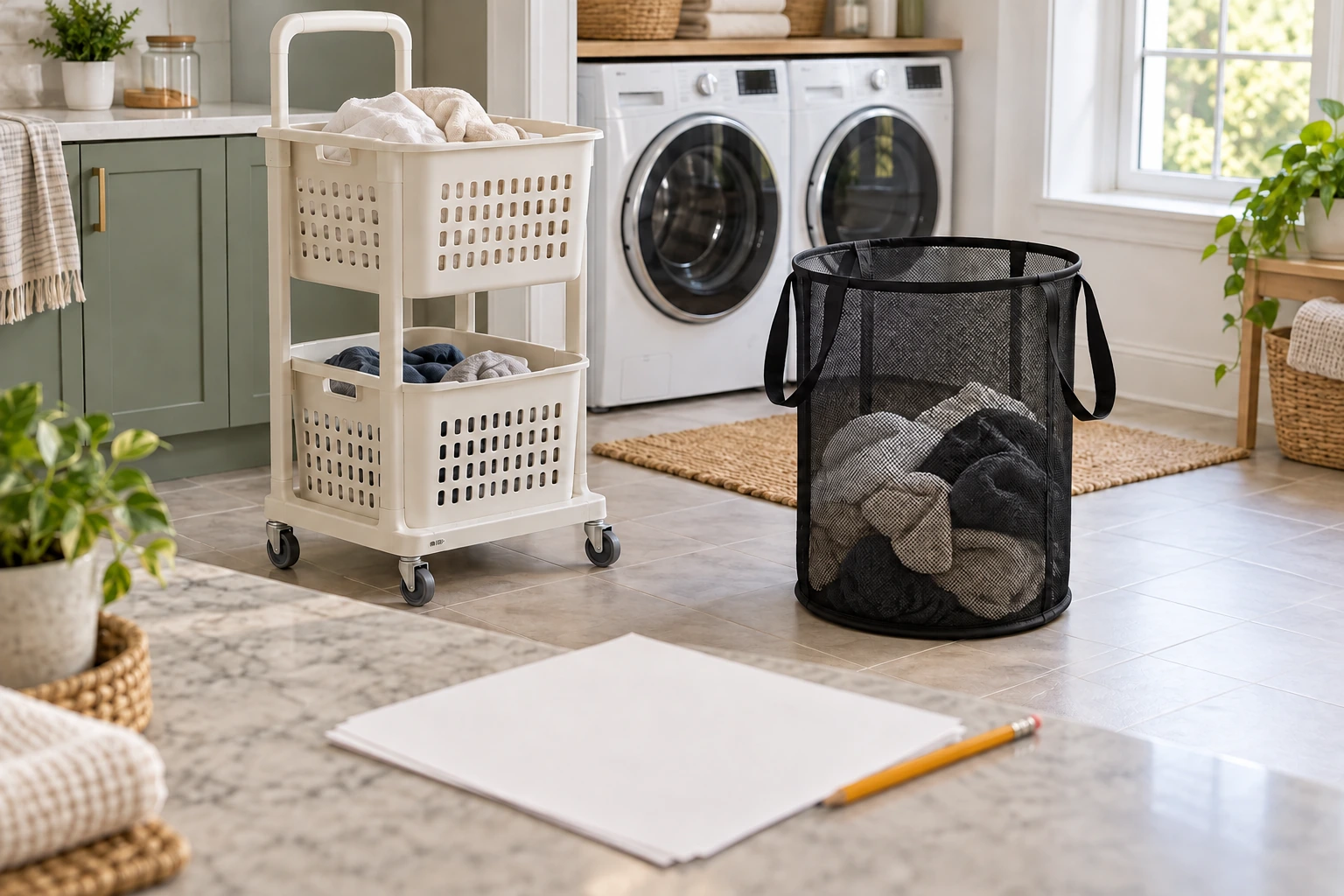
The CIYISON wheeled laundry cart has a rigid, vented two-level form in its native listing and gallery. The SereneDome collapsible mesh hamper is a flexible container with carrying straps that can fold flat. They may serve different collection plans. One cart can be moved as a unit; a mesh hamper can be set in a particular location and carried when needed. Neither product page proves how many separate collection spots your home requires.
Do a short inventory. Note where clothes are dropped, when each pile is emptied, and whether an existing basket already works. If two locations are used on different days, one movable hamper might cover both. If clothes accumulate in two rooms at the same time, separate containers may avoid an extra trip. Keep this observation distinct from the number of laundry loads or colors you sort later. A container can be useful even when it never creates another washing category.
Build a comparable purchase total
Record the current checkout total for the exact offer you would buy, including any delivery charge and tax that apply to you. Do this for the cart and the mesh listing on the same day. The prices can change, and this guide does not assume either one is cheaper. Confirm the selected variant, condition, quantity and included parts before using a number. A page headline, gallery collage and seller description can describe different variants; only the actual checkout choice tells you what you are paying for.
For the SereneDome listing, verify the delivered unit count directly with the seller before dividing a price by a quantity. The native description refers to a set, while gallery collages show multiple illustrated configurations. Those materials do not establish a dependable count for the selected checkout option. Do not turn a picture of several bags into a pack-size claim. If the quantity remains unclear, leave cost per container blank and compare the full purchase totals while you resolve the offer. A precise-looking unit figure from an uncertain denominator would mislead the decision.
For the CIYISON cart, treat its stacked levels as part of one assembled cart unless the exact offer establishes otherwise. Two compartments are not automatically two independent collection stations in different rooms. If the cart stays in one place, count one collection location, then separately ask whether both levels are useful there. If you plan to roll it between rooms, count the locations it can serve during the week without pretending that it is present in both at the same time.
Calculate cost per usable spot
Use a simple worksheet: total checkout outlay divided by the number of collection spots the purchase will actually equip. Suppose an offer costs an amount you have verified at checkout and supplies two usable containers for two rooms. Divide that actual total by two. If one of the containers would remain stored, divide by one instead. This is a planning calculation, not a claim about either listing's current price or package count. Write the source and date beside every input so a later price change is visible.
The denominator matters more than a seller's advertised bundle language. A mesh container stored flat as a spare does not lower the cost of the active collection spot. A cart with two levels may earn its space when both levels are used, but that does not make it two room locations. List the job of each planned container or compartment. Cross out any job that repeats an existing basket. Recalculate with the smaller, realistic number. This prevents a large package from appearing economical merely because it contains more pictured pieces.
Make a second line for items you would need to buy to use the new setup. A cart may need no separate carrying bag for your routine, or a removable liner might be useful if one is actually included or bought separately. A mesh hamper may need a suitable place to stand and a way to carry clothes to the machine. Do not add hypothetical accessories to one option and ignore them for the other. Include only purchases your household plans to make after checking the exact product offer and the space you have.
Use a period of service without inventing durability
A cheaper checkout total does not by itself establish a lower long-term cost. To compare repeated use, set a review period that matches how often you expect to use the hamper. Divide the verified total by the number of months you reasonably plan to keep using it, but label that period as your assumption. Neither native listing proves how long its wheels, rigid joints, fabric or straps will last in your home. Avoid presenting a service-life estimate as a measured product result.
Write down what would make a container unusable for your routine. A wheel that no longer rolls, a handle you cannot comfortably use, a mesh seam that opens, or a shape that blocks the intended corner could each trigger replacement. These are scenarios to consider, not predicted failures of either listed item. If you already have a working hamper, include the option of keeping it. Its additional purchase cost today may be zero, though you still need to decide whether it does the job well enough.
Use the same assumptions for both candidates. If you compare one year's cost for the cart, do not compare three years for the mesh hamper without evidence. You can make a low, middle and high estimate for how long each would remain useful, then see whether the purchasing choice changes. If the answer changes with a small assumption, the comparison is uncertain. It may be sensible to delay buying until the exact quantity, return terms or household layout are clearer.
Check the work each option replaces
The cart gallery shows a pull handle, small wheels and a vented rigid body. Those features may suit someone who wants to move a collected load in one container. The SereneDome gallery shows a flexible mesh bag with straps and a flat-folding form. That may suit a collection spot where a rigid cart would occupy too much permanent floor area. The physical difference matters to your cost sheet because a container that never gets used does not create savings, regardless of its price.
Walk through an ordinary laundry day with the containers you already own. Count how many times clothes are transferred between a floor pile, basket, hamper and machine. Identify the transfer you hope the purchase will remove. The wheeled cart might replace a separate stationary basket in one routine. A collapsible bag might replace a loose pile in another. These are possible uses, not guaranteed labor savings. If a new hamper merely adds another step, write that down before deciding that its extra capacity is valuable.
Do not treat wheels or a folding frame as proof of a better route. A cart may still need lifting at a stair or threshold, and a flexible bag still needs a comfortable carrying plan. Check the actual route and parking space before buying. This guide uses those observations only to decide whether the purchase will be used; it does not replace a full wheeled-hamper fit assessment. The checkout total is meaningful only when the container can serve the planned collection spot.
Keep seller descriptions in their proper role
The CIYISON native page describes a breathable plastic laundry cart with two levels, wheels and a handle. Its gallery shows the assembled form, collapsed or separated views and color variants. Those views support a physical comparison, but they do not measure strength, odor prevention or ease of rolling on your floor. The seller's claims about convenient movement and lasting construction are not verified results for your household. Check the selected color and configuration before ordering.
The SereneDome native page identifies model SereneDome001, a black mesh collapsible hamper with straps. Its six gallery images include black and light-colored examples as well as folded views. The description and collage do not settle the exact number of units in the selected offer. Its stated dimensions should be checked against the chosen variant and actual available floor space. Do not use an illustrated scene to promise a specific load capacity, carrying comfort or replacement interval.
Both native offers identify new condition in their Product records and sit under Laundry Storage & Organization. If a listing changes before checkout, recheck name, brand, condition, model, variant and images. If the delivered item differs, resolve that identity with the seller before using this cost worksheet. Your calculation should describe the actual thing being bought. A mathematically correct division cannot repair a mismatched product or uncertain package quantity.
Make the decision from your own numbers
Keep the worksheet short. Record the collection locations, the exact offer total, the number of independently usable containers confirmed for that offer, any necessary extra purchase and the period of use you are assuming. Then calculate cost per active spot and, if useful, cost per month of that spot. Make a note when an input is unknown. Do not fill the unknown with a gallery impression. If you already own a container that works, put it on the same sheet as the no-purchase option.
Review the results against how the home actually works. A single rigid cart can be the lower-outlay choice when one collection location serves the routine. Separately placed mesh hampers can make sense when several rooms need their own collection point, provided the exact offer quantity is confirmed. Those are conditional examples. This guide has not measured either item's lifetime or tested either in your home, so use the numbers you verified and the work you observed rather than a general winner label.
Republeq's laundry sorting capacity guide asks whether another sorting stream earns floor space. Its wheeled hamper guide examines travel route, thresholds and parking fit. Use those for their own decisions. Here, the question is what an actual purchase costs for each collection spot you will use. Once that number is clear, you can make the purchase decision without counting a spare, a gallery variant or a second tier as an extra room station.
Count only the collection spots your household will use, and verify the exact offer quantity before dividing the checkout total.