Home & Living
keepsake box label map for a shared household shelf
A lifestyle plan for sorting a small keepsake collection into labeled boxes with a simple retrieval index.
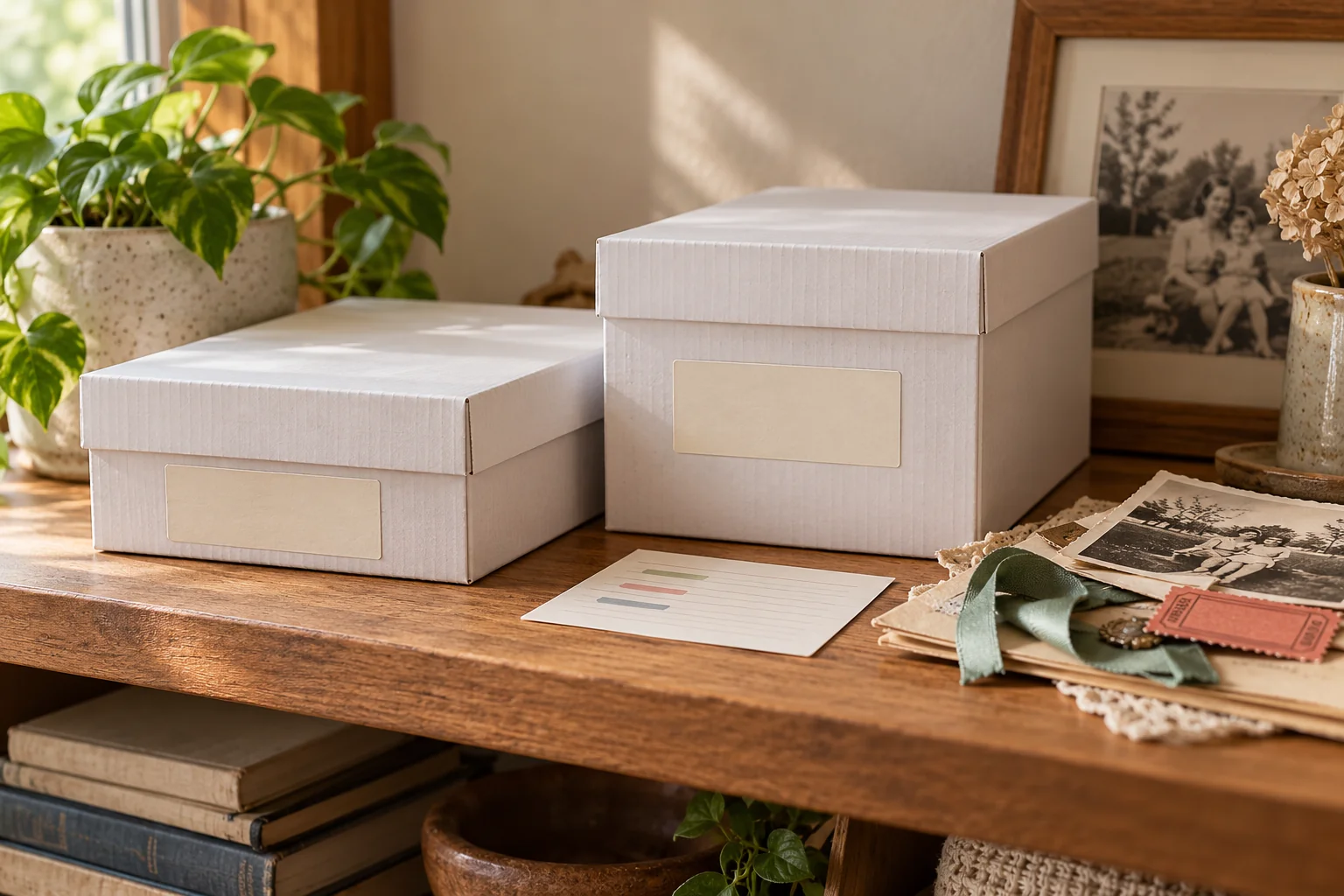
A keepsake box label map helps when a household has saved small mementos but nobody remembers which box holds what. The aim is modest: give each group a name, a shelf location, and a short contents note that another person can use. A box can hold ticket stubs, a school program, or a few ordinary photographs while you decide what deserves a more permanent home. The box itself does not settle preservation, ownership, or the story behind an object. Start with the collection you already have, the shelf it will use, and the people who may need to find something later.
Give every box a shelf address before you fill it.
Choose a collection small enough to describe
Begin with one drawer, one stack, or one event rather than emptying every cupboard. Lay the items on a clean table and write down broad groups you can recognize: family celebrations, a child's school years, trips, or household records that have sentimental value. Do not force an item into a box merely because it is nearby. Some papers may need to stay with active records, and some fragile objects may need specialized storage. The label map works when each group has a useful boundary. It becomes another mystery if “memories” is the only description on every box.
Ask who will look for these objects. One person may remember every face in a photograph; a sibling or future family member may need names, approximate dates, and a place. Write those details on a separate contents note before they are forgotten. Mark uncertain information as uncertain. A guessed year should not become a confident label because it was written neatly. Keep private facts off the outside of a box if the shelf is visible to visitors. The outer label can identify a broad group and an address; the more detailed note can stay inside or in a private household index.
Sort by the question someone would ask while retrieving an item. “Which box has the graduation program?” is easier to answer if all school events from that period share a clear group. “Who made this?” may need a name note attached to the object or recorded in the index. Do not make one category for every single object; too many tiny boxes recreate the search problem. Conversely, do not pack unrelated periods into one carton until it becomes impossible to describe. Try a few provisional groups on paper, then adjust them before any box is closed.
Read two box listings as examples, not preservation promises
The BML961 white corrugated cartons listing describes a shallow literature-size form, 9 inches long, 6½ inches wide, and 1¾ inches high, supplied as a pack of 50. It says the carton assembles without tape, glue, or staples. Its sole gallery image shows an open white carton with a brown interior. Those details make it a useful example for thinking about flat paper groups, but the listing does not establish that a particular photograph, ticket, or textile fits safely. The stated size is not a measurement of usable space after any protective sleeve or insert is added.
The J&J corrugated paper boxes page identifies a 50-box offer with white outsides and a described yellow interior. Its sole gallery image shows a closed white corrugated box; the interior color is not visible in that image. The description offers little reliable guidance about usable dimensions, closure, or material suitability for mementos. Treat it as an example of a different carton form, then verify the exact current offer and dimensions before deciding whether it serves your shelf. A white exterior can carry an address label, but appearance alone does not tell you how an object will fare inside.
Both examples are shipping-supply cartons, not certified archival containers in the evidence reviewed here. Neither listing establishes acid-free construction, long-term photographic safety, moisture protection, or a load rating for a household shelf. Check the needs of valuable, delicate, or irreplaceable items against material-specific preservation guidance before using either carton. The practical lesson from the listings is about visible form and disclosed limits. You can plan a retrieval system with measured boxes without turning a seller's ordinary packaging description into a conservation claim.
Measure the shelf before choosing a box. Include the space needed to lift a lid, grip a carton, and read its label without pulling out every neighbor. Measure the items in the orientation you intend to store them, then allow room for any protective enclosure recommended for that item. If the intended group cannot be described without an overflow box, split the group by date or occasion rather than pressing the contents down. A smaller, easy-to-retrieve box may serve a shared household better than one large carton that has to be unpacked for every search.
Assign shelf addresses that survive rearranging
Pick a simple address scheme tied to the actual shelf. “Study shelf, upper left” works if the household has one obvious study shelf; “S2-B” works if several people already use numbered shelves. Write the same address on the box and on the index. Avoid an address that depends only on color or someone else's memory. If boxes move, update the index at the same time. A label map fails quietly when the box moves to a different room but the note still points to its old position. Leave a little open space so each label remains visible.
Keep the outer label short. A group name, an approximate period if known, and the shelf address are usually enough for a first search. A label such as “School programs, 2018–2021, S2-B” gives a useful clue without listing every child or event where visitors can see it. If the period is uncertain, use “about 2018–2021.” Make the label replaceable in case the collection changes. Test a small patch of the chosen label or attachment on an inconspicuous part of the carton first; the product listings here do not describe an approved adhesive or removal method.
Use one contents note per box. List the group name, a few named objects, any uncertain dates, and where a related item is stored if it did not fit. A short note is more useful than a complete inventory that nobody will maintain. Put its copy in a household index kept where the people who use the collection can find it. If the note sits only inside a closed carton, someone may have to open every box to discover the right one. Keep sensitive family details in a private version of the index when shared shelf labels need to stay general.
Give each box a stable identifier, even if its contents change. “K-04” can stay with a box when “summer trips” becomes “family trips.” Record that identifier beside the shelf address and group name. Do not reuse an old identifier for an unrelated box without crossing out the previous index entry; otherwise two memories may point to the same code. An ordinary notebook, a printed page, or a household file can hold the map. The format matters less than whether another person can follow it. Include a date when you change an entry so an old note can be recognized.
Place objects so the label remains true
Before filling a box, check each object's condition and material. A damp paper, a shedding plant piece, or an item with a strong odor can affect its neighbors. Follow appropriate material-specific advice rather than assuming a corrugated carton solves those conditions. For ordinary dry paper mementos, keep related pieces together in the way that makes retrieval clear. Do not crush a photograph under a heavier object or fold a program merely to fit the chosen box. If a piece needs a different enclosure, make an index entry for its actual location instead of pretending it is in this carton.
Use a contents note that says what is present today. If you plan to add photographs after scanning or return a borrowed item later, mark those as pending rather than placing them on the current list. When an item leaves the box, add a brief note about its new location. A family member may remember that it was once here and keep searching long after it moved. This is particularly helpful when several people contribute mementos. Let them know the group boundary and where to put uncertain items; otherwise the shelf becomes an unsorted drop zone again.
Keep a small “needs decision” group outside the finished boxes. This is where an item can wait while someone confirms its owner, date, or safe storage method. Give that temporary group a review date so it does not become a permanent carton of unidentified objects. If two people disagree about the label, record both interpretations on the private note and leave the outer label broad. A retrieval map is a finding aid, not a vote on which memory matters more. Its job is to reveal what is known and where the object is now.
Close and place one box, then try a real search. Ask someone who did not sort it to find a named program or ticket using only the map. Watch where they pause: was the group unclear, the address ambiguous, or the box hard to reach? Revise that one piece of information before labeling the rest. A short rehearsal catches problems that look obvious to the person who packed the shelf. If the box is too heavy or awkward to pull out safely, move it or divide the contents. No listing here gives a safe shelf-load figure for your furniture.
Set a light maintenance habit that fits the household. When you add a new item, open the index before choosing a box; a similar group may already exist. When you remove one, mark its new location while it is still in your hand. Once or twice a year, scan the shelf for unreadable labels, boxes that have moved, and temporary groups that never received a decision. Do not rewrite every note for the sake of tidiness. Correct only the entries that would send someone to the wrong place. If you transfer contents to a sturdier or more suitable enclosure later, keep the same identifier when possible and update the address. The map should track the collection as it changes, not freeze the first afternoon of sorting as a permanent arrangement. A few accurate lines are more valuable than a detailed inventory that stopped being true months ago.
Keep this project distinct from albums and moving kits
The photo album story sequence guide asks which images belong in a small story and how their order helps another reader understand it. That is a creative editing task. A keepsake box index can point to an album or hold unselected prints, but it should not silently decide the album's beginning, ending, or captions. If you want an album, use its own selection process. Keep the box note focused on locating the original items and recording what is known about them.
The dish packing kit budget guide counts cartons, dividers, padding, and tape against dishes that need to move. Its Highcool kit examples solve a transport-supply question. This article uses plain box forms only to build a stable household retrieval map. It does not estimate a moving supply budget, decide divider cell fit, or promise that a carton protects fragile objects during shipment. A box that is easy to find on a shelf has not thereby become suitable for a move.
Some mementos will live outside the box system. An ornament might be on seasonal display, while a valuable document may need an enclosure beyond this article’s evidence. Give either item a location entry in the index without implying it is inside one of these cartons. If an object is on loan to a relative, record the person and the date privately rather than putting that detail on a public shelf label. The map stays useful when it points honestly to several locations. Do not squeeze every item into one box type merely to make the system look uniform. The object’s actual care and access needs come first.
Imagine a shelf with old trip tickets, school programs, and a few photographs. First divide them into groups another household member can name. Give one box an address and a short outside label; record the detailed contents in a private index. Put anything fragile or uncertain aside for appropriate guidance. Ask another person to locate one program from the map, then improve the label if they hesitate. Repeat for the next group. The result is a memory box index with a reliable shelf address and contents note, not a claim that every keepsake belongs in a shipping carton.