Home & Living
photo album story sequence for a small family collection
A low-pressure way to turn selected family photos into a readable album rather than an unplanned stack.
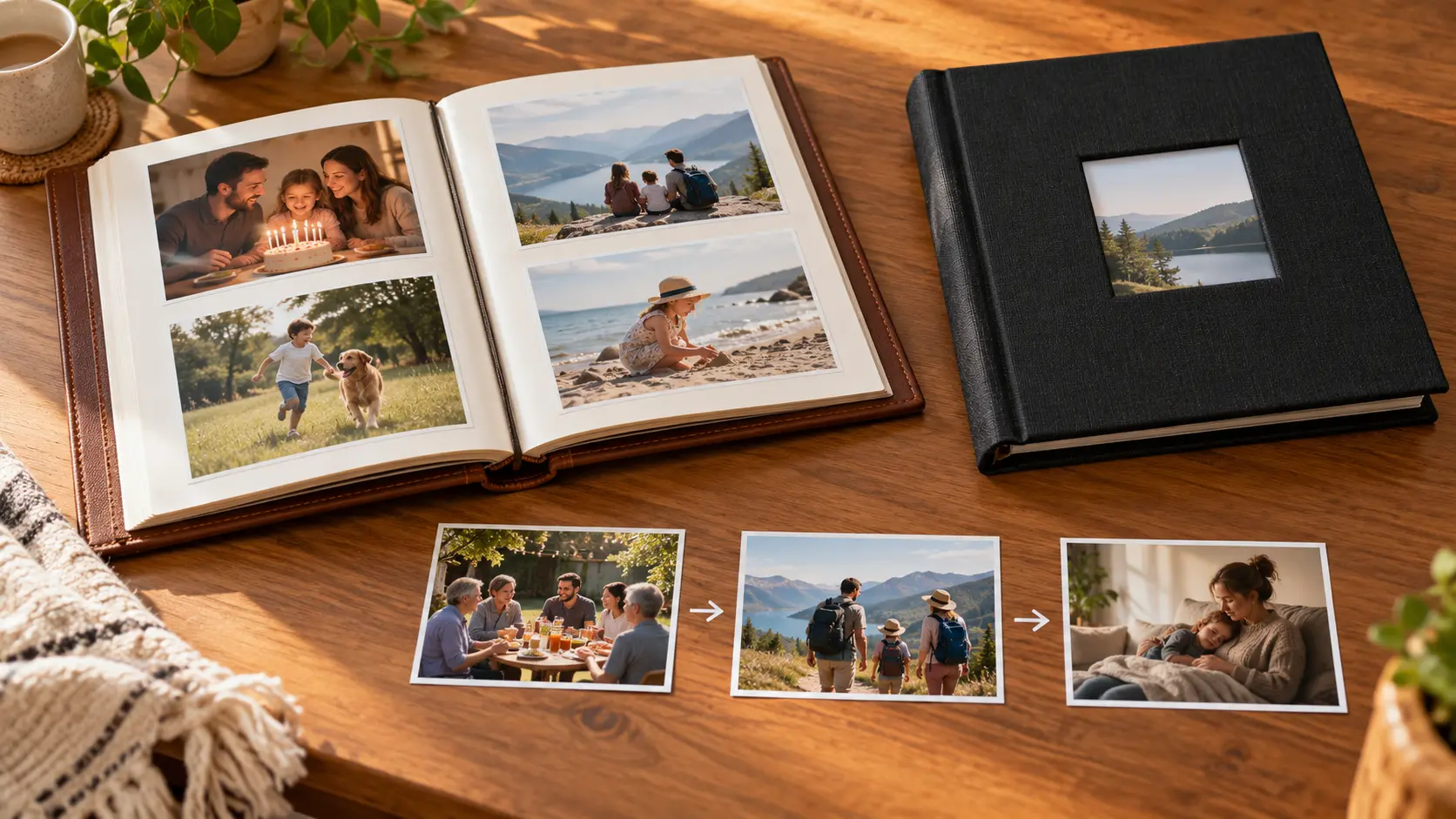
A box of family photographs can cover years without telling anyone how those years felt. An album gives the images an order a visitor can follow. A photo album story sequence does not require every picture, a perfect date for every scene, or a page for every month. Start with a small event, trip, season or relationship. Select the moments that move that story forward, then leave enough room for the people who know the pictures to add names and context later.
Pick one story smaller than the whole collection
Choose a beginning and an end before choosing an album. You might make a book about one summer at a family home, the first year of a child's school routine, or a set of visits with a grandparent. Write a one-sentence scope on a note. If an image is lovely but belongs to another period, set it aside without deleting it. The smaller boundary makes selection easier and prevents the album from becoming a second unsorted archive.
Lay out a modest first set of prints or digital thumbnails where you can see them together. Put obvious duplicates beside each other. Keep the clearest image that carries a distinct part of the story, and retain a second view only when it adds something a reader could not infer from the first. A group portrait and a close view of the same gathering can both matter; five almost identical poses may slow the sequence. Do not discard originals while editing. This is an arrangement exercise, not a decision about long-term preservation.
Ask who will open the book. Someone who was there may recognize a kitchen, a pet or a holiday immediately. A child looking decades later may need a name, place and approximate year. Build the story for the second reader. You do not need a long caption under every image, but a few anchors can keep the order from becoming a private puzzle. Leave uncertain dates marked as approximate rather than turning a guess into a fact.
Read the two album examples without treating the cover as proof
The brown NOBRAND photo album is described by its native listing as a self-adhesive album with a brown leather cover, hardboard pages and room for photos and other paper keepsakes. Its sole gallery shows the decorated brown front cover held upright. That image supports the visible style, but it does not show how the pages hold a particular print or how a ticket behaves once placed. The listing supplies a range of possible photo sizes; check the actual interior and the maker's handling instructions before committing irreplaceable originals to a page.
The black linen HYKE photo album has a different stated approach. Its native listing describes pockets for prints and a small opening in the cover for a chosen photograph. The sole gallery shows the black textured cover, that cover window and a thick stack of dark pages. The native capacity wording is internally mixed, so do not plan a precise number of pages or pictures from the title alone. Confirm the delivered layout and the sizes of prints you intend to use. A pocket format may support a straightforward print sequence; the listing and cover photo do not decide your narrative.
These examples are useful because they invite different planning questions. A flexible page layout could leave room for a ticket beside a photo if the actual pages support that arrangement. Fixed pockets may make a series of equal-size prints simpler to browse. Those are possible uses, not tested preservation promises. Make a sample layout with copies or ordinary prints first. If a page design requires bending a treasured original, forcing a size, or hiding the note on its back, choose another way to place that item.
Make a path a reader can follow
Put your selected images into three rough groups: opening, change and ending. The opening establishes who or where; the middle shows what happened; the ending gives the reader a place to pause. For a weekend trip, that could be arrival, one memorable activity and the journey home. For a year of family meals, it could be the kitchen in spring, the people who joined over time and a final gathering. The groups need no formal chapter titles. They simply stop the book from feeling like a random shuffle.
Within each group, choose the order that makes the next image understandable. Chronology is a useful default when dates are reliable. When dates are unclear, group by place or recurring person and say so in a small opening note. Do not invent a chronology to make the pages look tidy. An honest “around 2018” caption is better than a precise month you cannot support. If two people remember the order differently, record the uncertainty rather than treating one recollection as a verified date.
Give important moments breathing room. A single image may deserve a page if it introduces a new place or person. A run of small related images can show movement across a day. Alternate wider scenes with details when that helps the reader understand scale: a table set for a meal, then the hands making it. Do not crowd a page merely because a product listing names a large capacity. The useful measure is whether someone can see the people and read any context at normal viewing distance.
Use captions to keep the story shareable
Write a short caption where the reader would otherwise have to ask a question. Name a person when you are sure, identify a location when it matters, and note an approximate date when that helps connect pages. A caption can also preserve a specific memory such as “the first evening in the new apartment,” attributed to the person who remembers it. Avoid attaching a dramatic explanation that the photograph cannot establish. The purpose is to pass along context, not to turn every picture into a polished anecdote.
Ask one other person to look through a rough order before fixing the final layout. Where did they stop? Which face did they not recognize? Did a scene arrive before the reader knew why it mattered? Their questions show where one caption or a reordered image would help. Let them correct names and dates, but keep a note of disputed details. The album can welcome more than one memory without pretending all recollections agree exactly.
If a printed note, invitation or ticket helps explain a photograph, place a copy or scan beside the relevant image when the page format permits. Keep the original in suitable storage if its condition or value makes handling a concern. The brown album's listing mentions paper keepsakes, but its cover photo does not prove that every ticket, certificate or fragile document belongs under its page surface. Test size and handling with a substitute before placing anything hard to replace.
Keep display, album and archive decisions separate
The related photo storage box guide asks how much separate storage is needed for a collection. That is different from choosing a short story to show in an album. You can keep the broader collection in appropriately chosen storage while using copies or selected prints for this book. Do not use the album as a reason to discard the rest, and do not let the size of the stored collection force every image into one narrative.
A wall display makes a different invitation: people can see a few pictures without opening a book. The wall photo display guide addresses the choice between framed pictures and clipped prints in that visible setting. An album lets a reader turn through a longer sequence and pause at a caption; a wall arrangement lets a smaller selection stay in sight. You may use the same event in both places, but choose the images for each job. A wall favorite need not be the opening page of the book.
Handle originals according to their actual material and condition. A retail description cannot certify that an album is safe for every historic photograph or document. If a print is curled, brittle, annotated on the back or otherwise delicate, make a scan or working copy and seek appropriate preservation advice before enclosing it. Keep track of where the original is stored. That small note helps a future reader connect the displayed copy to the real item without turning the album into an uncontrolled storage experiment.
Build one trial spread before filling the book
Make a two-page mock layout with ordinary copies. Put the opening image where it will be seen first, add one or two supporting images, and leave space for a concise note. Turn the pages in the intended direction. Does the next scene follow naturally? Does a photograph need to move because its caption is on the wrong side? Check actual print dimensions against the delivered page or pocket, not against a generic product photo. A few minutes with a trial spread can prevent a whole book of cramped placements.
Keep a small list of the remaining images and the section each belongs to. You can stop after the first story rather than filling every page immediately. If the album is a gift, leave a final place for the recipient's memory or a later photograph, but do not promise that a particular product has a fixed amount of free capacity until you verify it. The completed sequence should feel intentional even if space remains. Unused pages are room to continue, not evidence that the first story failed.
Try a small set of transition pages when the story jumps in time or place. One ordinary image of a front door, a train station, a kitchen table or a familiar street can tell the reader that the next group belongs somewhere new. It does not have to be the most beautiful photograph. Give it a short factual label, then follow it with the people and activity that matter. If no transition image exists, a brief dated note can do the job. This keeps the album from relying on a narrator standing beside it. It also lets you keep a favorite portrait without making it carry more context than it contains. If the transition is uncertain, say “later that year” or leave the sequence grouped by place. An album can be coherent without pretending to document every step between two known moments.
When the draft is assembled, hand the book to someone who did not arrange it. Watch whether they can tell where the story begins and why one image follows another without your narration. If they cannot, move a picture or add one reliable caption. A good photo album story sequence helps the photographs carry the memory while keeping uncertain details honest. The cover style and page mechanism matter, but the order, context and gentle editing are what make a small collection readable.