Office Supplies & Stationery
How to start a guest book with an optional short note
Choose one modest guest-book invitation, name its keeper and audience, and accept a brief greeting or a declined contribution.
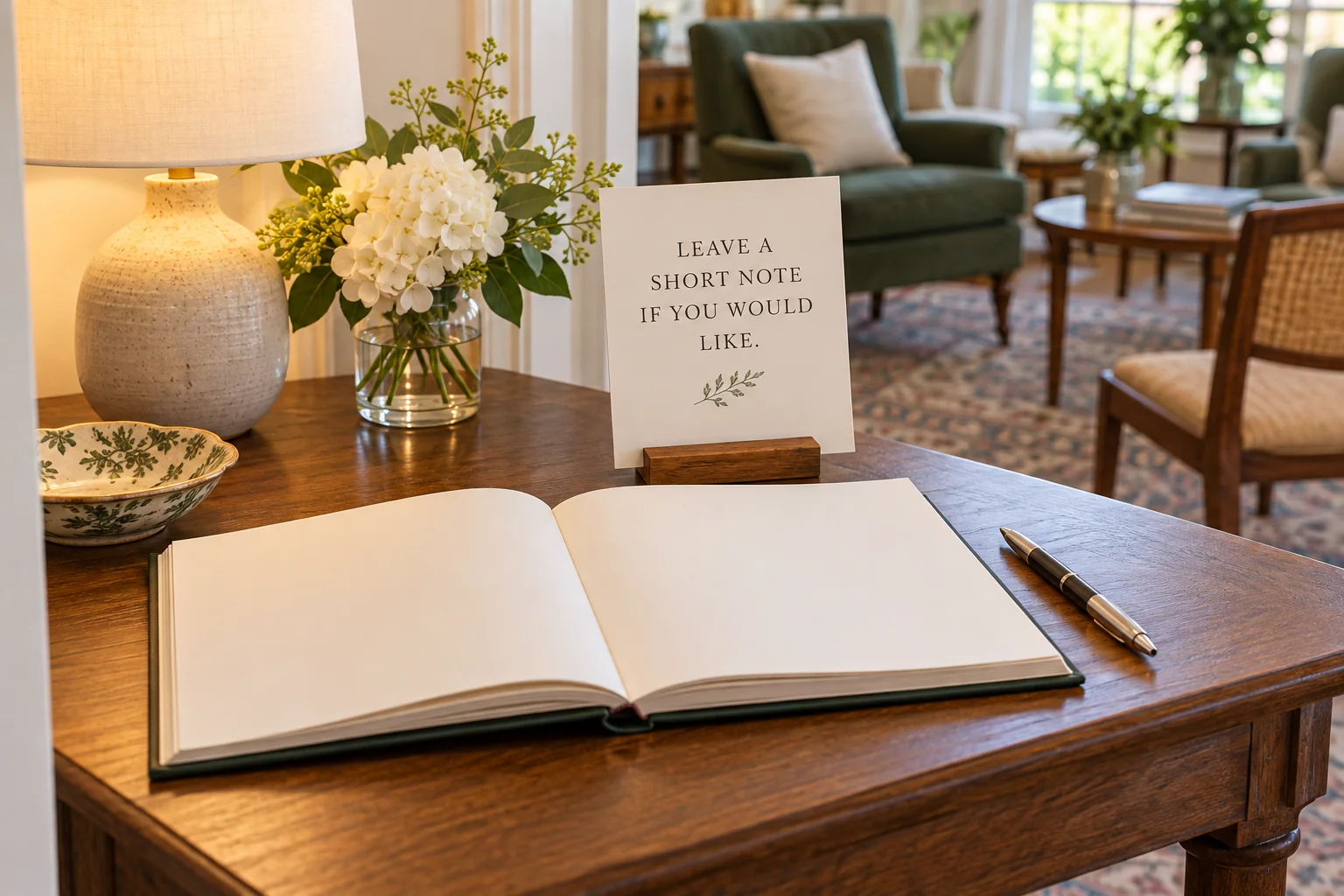
Choose the invitation before filling the page
How to start a guest book begins with the small invitation you want to make. For a gathering at home, you might ask guests to leave a few words for the person keeping the book. Decide that purpose before asking anyone to write. A signature, a present-day greeting and a remembered story are different contributions. Choose one modest invitation that fits this occasion, with room for a guest to decline.
This tutorial proposes a short written-note activity, without predicting how guests will respond. It does not require a shared memory, a polished message or equal contributions from everyone present. The two guest-book offers discussed below are optional purchases to identify. No particular book, new pen or purchase is necessary to decide what you want to invite. Keep the actual writing materials' requirements with those materials.
Decide who will keep and read the book
Name the person who will keep the completed book and the people you intend to show it to. Say that plainly when inviting a contribution. For example, a host might explain that the book is for them to keep at home and read after the gathering. That proposal has a different audience from a book intended to circulate among several households. Let guests know which invitation they are considering.
If the plan changes later, return to the people whose words would be used differently. A note offered for a private keepsake does not itself establish agreement to a public post or a printed collection. This guide supplies no permission rule for every situation. It asks the host to make the actual intended audience understandable rather than leaving a guest to infer where a message will go.
Choose a prompt about this occasion
A guest book prompt can be as simple as an invitation to leave a short greeting for the host. Keep it open enough that someone who knows fewer people in the room can still respond in their own way. You need not ask everybody for a treasured shared memory. That would be a different invitation, and it might not describe what you actually want this small book to contain.
Write the proposed prompt on ordinary draft paper first. Read it as someone arriving without hearing your earlier plans. Does it say who the note is for? Does it leave the writer free to choose their words? Remove any expectation you do not intend to impose. The draft can remain plain. Its purpose is to clarify the invitation before choosing its appearance on the actual gathering table.
Keep the sparse hardcover account within its limits
The Rainbow guest book listing identifies a hardcover Rainbow Wedding Guest Book from Something Blue Guest Books. Its sole gallery provides a cover view. This short account does not establish the interior layout, page count or a supplied pen. Confirm any feature that matters to your intended use rather than inventing an interior from the title or cover artwork.
A book can appeal to you visually while a practical question remains open. Keep those two responses separate when considering the offer. If the invitation you want needs a particular kind of page, obtain the actual information for that selected book. A pleasant cover does not answer the page question, and an unanswered page question does not need to change the words you wanted to invite.
Keep the green book's page-count discrepancy visible
The green velvet guest book listing describes a book with white blank pages and a gold ballpoint pen. All six gallery images were reviewed, including interior views. Its description says 144 inner pages while a gallery graphic says 114, so this guide adopts neither count. The staged flowers, glasses and photographs are not established supplied contents. No archival or ink-performance claim is made here.
Decide which details actually affect your proposed gathering. A small invitation does not require you to make an unsupported capacity calculation from a disputed page count. If a count matters to a purchase, ask about the exact offer and retain the answer. Until then, leave the count unresolved. You can still decide whether the intended contribution is a short greeting without claiming that the selected book has a confirmed capacity.
Make one optional note easy to understand
Say that guests may leave an optional note if they would like to. Explain the prompt in ordinary words and let the person choose whether to respond. There is no need to prescribe a minimum length or to assign a page to someone who has not agreed to write. A brief greeting can be complete on its own terms. A guest who prefers conversation can remain part of the gathering without contributing text.
Keep the invitation separate from a public request for everyone to watch one person write. If you want contributions to happen casually during the visit, tell people that. If you would prefer a shared writing moment, explain that proposal before treating it as agreed. The format belongs to the actual people attending. This tutorial predicts no preferred social arrangement and does not measure a guest's interest by the length of their message.
Let the prompt remain an invitation
Imagine a fictional host, Mira, asking friends for a short greeting in a book she will keep at home. One friend writes a sentence; another says they would rather talk with her. Mira accepts that answer and returns to the visit. In this example, the blank space remains blank. It is not a missing task for the host to complete, and the example promises no particular reaction from a real guest.
If someone asks what they should write, repeat the modest purpose rather than supplying an emotional message for them. They can choose a greeting that sounds like them or leave the invitation unanswered. A contribution should not need to perform the host's preferred tone. You may enjoy reading different voices later without correcting each note into the same style or inventing words for somebody who did not contribute.
Choose the actual writing arrangement separately
Use the actual book and writing materials according to their applicable information. This guide does not establish that an unfamiliar pen suits an unidentified paper or supply a test, cleaning or correction method. If a material question remains open, resolve it before asking someone to make a finished entry. The invitation can stay ready while the physical writing arrangement is being decided.
Keep any decorative setup subordinate to the actual invitation. Guests should be able to understand what the book is for without interpreting an elaborate display. This is a choice about how clearly you present your request, rather than a claim about a particular product's accessibility or usability. If a guest asks for another way to contribute, discuss what they would like and what you are actually able to arrange.
Use the stamped-border guide for a separate layout
The stamped border planning guide develops an exact short message on scrap paper before comparing motif positions and corners. That is a separate design task if you want to decorate an invitation card. It provides no guest-book paper or ink approval. Here, decide what the invitation says first; any finished decorative piece still needs the requirements of its own actual supplies.
You can also leave the card undecorated. A plain prompt may already express exactly what you want to ask. Adding a craft project is a new choice, not a requirement created by having a guest book. If another person enjoys making the card, agree on the wording together before they prepare it. Their design can support the invitation without quietly adding a demand for a longer or more personal contribution.
Keep this activity distinct from a caption afternoon
The year-end photo-caption gathering guide invites people to choose existing photographs, discuss memories and prepare words for a later page. That is different from leaving a short present-day greeting in a guest book. Use that guide when a shared picture project is what people want. This invitation requires no photograph, agreement about an earlier event or group editing of another person's recollection.
If the conversation turns toward a larger memory project, discuss it as another possible occasion. Do not expand a guest's short note into an undertaking to help create an album. A person can enjoy the new idea without committing to it now. Keep the original guest-book invitation recognizable while the gathering continues, so someone arriving later receives the same modest choice you offered at the beginning.
Leave each writer's own words intact
Read a contribution as the words that person chose to offer. An unfamiliar phrase does not need to be rewritten into the host's voice. If you are unsure what someone intended, ask them rather than completing the meaning yourself. Keep an unresolved detail unresolved if it matters to a later use. This tutorial gives no reason to turn a personal greeting into a supposedly verified account of the event.
Do not use the absence of a signature to guess an author from handwriting. If attribution matters and the person is available to ask, ask them. Otherwise the uncertainty can remain with the entry. The book does not need a fabricated complete roster to serve as the keepsake you wanted. A note can remain unidentified without making the host responsible for inventing its origin.
When a guest wants to contribute later
A person may say they would like to write something another time. Ask what they actually propose rather than treating that statement as a promised deadline. You can agree on a later opportunity if you both want it, or leave the idea open. The present gathering can finish without the book becoming an outstanding assignment for the guest or a series of reminders from the host.
If a later contribution arrives in a different form, discuss what the person wants you to do with it. A message sent in conversation is not automatically an instruction to transcribe it into the book. Keep the actual agreement clear before changing its presentation or audience. No special collection method is required by this tutorial, and no response should be invented merely to fill a planned space.
Keep changes to the prompt understandable
A cohost may suggest a different question while the gathering is under way. Discuss whether you want to change the invitation before presenting both as requirements. The first guests may already have responded to the original wording. You can retain that version for this occasion and consider the other idea later. A new suggestion need not make earlier contributions incomplete or ask their writers to begin again.
Keep a possible purchase separate from the invitation
If you consider a guest book on republeq.com and prefer crypto such as USDT, keep that purchase separate from the decision to invite a note. Check the actual book and any supplied writing materials before making a gathering depend on an order. A payment preference cannot confirm an interior layout, resolve a disputed page count or promise that a particular pen suits the paper. Review the payment methods presented for the exact order rather than assuming that a general cryptocurrency reference establishes a particular asset, network or transfer route. This guide supplies no receiving address or payment procedure. Use the current instructions for the method you choose, and leave the transaction undecided while a necessary detail remains unclear. Read the actual delivery and return information for that purchase too. An intended gathering date does not establish when a parcel will arrive, and a chosen payment method supplies no special refund arrangement. If another person is helping buy the book, explain which product questions remain open so they do not mistake a tentative selection for a confirmed feature list. Should the supplier propose a different item, check that offer's own account rather than carrying over the first book's interior or contents. If you eventually place an order, keep its confirmation and exact product reference together for comparison with the received item. A transaction record identifies a purchase, without certifying every advertised detail or determining whether a guest wants to contribute. The invitation can remain a small, voluntary part of the gathering even while the purchase remains undecided. It needs its own clear purpose and audience rather than a completed checkout to make sense.
End the gathering without completing other people's entries
How to start a guest book ends with a clear invitation and the contributions people actually chose to offer. Keep the intended recipient and audience understandable, let a short greeting be enough and accept a declined invitation. When the gathering finishes, the host can keep the book as it stands. No invented entry, compulsory memory or expanded project is needed to make the invitation complete.