Cooking & Food Prep
How to sift flour at the stage your recipe specifies
Follow the recipe’s sifting order, distinguish plain screens from crank and squeeze mechanisms, and keep flour handling and tool care separate.
How to sift flour when the recipe asks for it
How to sift flour starts with the instruction in the recipe you are actually making. King Arthur Baking describes sifting as moving a dry ingredient through mesh to break up lumps and introduce air. Its guidance says that modern commercially milled flour generally does not require sifting for every bake. That leaves a practical question before you reach for a tool. Does this recipe ask for sifted flour, or are you adding a step it never requested?
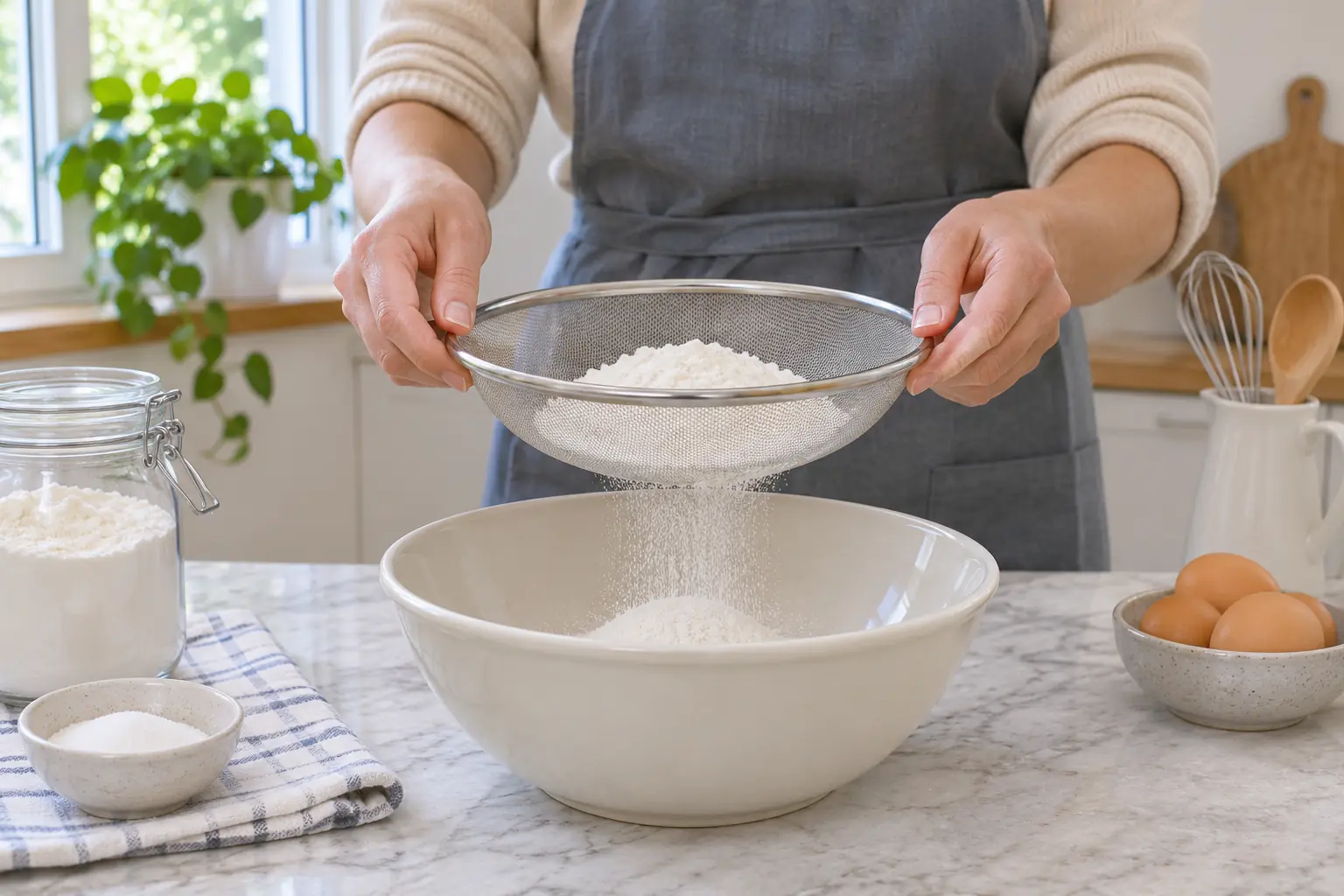
The same guidance identifies delicate cakes and mixtures containing whipped egg whites as situations where sifted flour can be useful. It also describes tapping flour through a fine-mesh strainer. A plain screen can therefore perform the basic separating action without a built-in agitator. Read the recipe first, then select the tool. Avoid turning a useful technique into a universal requirement for every bag of flour or every batter. The intended mixture and the recipe’s wording give the step its purpose.
Check the wording for sifting before measuring
C&H Sugar’s instructions distinguish “one cup sifted flour” from “one cup flour, sifted.” In the first wording, the sifting comes before measurement. In the second, the flour is measured first and sifted afterward. Keep that order visible while you work. Moving the same-looking step to the other side of measurement changes what the instruction asks you to do.
For sifting before measuring, C&H describes spooning flour into the sifting tool over the measuring cup and leveling the filled cup. For the after-measurement version, its sequence fills and levels the cup first, then sifts that measured flour. It names a fine-mesh strainer or a purpose-made sifter as possible tools. Gather the receiving container before starting so you can follow the chosen sequence without pausing to hunt for somewhere to put the flour. If your recipe gives a different measurement method, follow that complete instruction instead of combining fragments from two methods.
Recognize a hand crank before borrowing its instructions
Norpro’s model 136 is a hand-crank sifter with a two-wire agitator. Its maker tells the user to add ingredients and turn the crank. The page identifies a three-cup capacity and volume markings inside and outside. Those markings remain part of the maker’s description, without establishing the measurement method required by your particular recipe. Those details describe a particular mechanism. A plain round screen has no crank to turn, even though both tools are called sifters.
Use that difference when reading a demonstration or an instruction sheet. Identify the moving control and the part that carries the flour before applying the directions. An instruction to rotate a crank belongs to equipment with that control. Norpro also recommends hand washing for this model. That is a useful model-specific care statement to retain with its operating description. It does not supply the missing care instructions for a different sieve. Keep the tool’s name, mechanism and cleaning directions together so that a familiar product label does not conceal a different action at the counter.
Keep cleaning a flour sieve tied to its construction
Nordic Ware’s flour-sifter page describes a rotary design with a beechwood knob. Its use-and-care section calls for hand washing with warm, soapy water before the first use and after later uses, followed by thorough drying. It also says not to soak the tool or put it in a dishwasher because the wood can crack or warp. That makes cleaning a flour sieve a construction-specific task.
The same page contains a material discrepancy. Its summary calls the product aluminum, while the detail and specification sections call it stainless steel. Leave that discrepancy unresolved when identifying the exact material. The care directions can still illustrate why the knob and other components deserve attention. Ask for clarification if the conflicting material descriptions affect your purchase. Do not choose a washing method solely from a silver appearance, and do not assume the absence of a motor makes every sifter suitable for soaking. Check the complete tool’s applicable instructions. Retain the drying step when putting the tool away, rather than remembering only the permission to wash it.
A squeeze grip is another distinct mechanism
The Williams Sonoma Australia sifter uses a squeeze grip to move a rotary blade across a fine metal screen. Its page describes an ABS cup, stainless-steel screen and blade, and a stated four-to-five-cup capacity. This gives you another way to recognize the action before following a tutorial. The user squeezes a control on this design, while a hand-crank design uses rotation and a plain screen relies on the user’s movement of the tool.
Williams Sonoma lists its model as top-rack dishwasher safe. Keep that permission attached to this particular model. It differs from the wooden-knob example’s care restrictions, so the shared word “sifter” cannot settle the cleaning question. Before using equipment you already own, find its own label or instructions. Before buying unfamiliar equipment, request the care information you need. A mechanism description tells you how the parts are intended to move. It does not establish how comfortably you will operate them or certify the result of a recipe.
Handle the flour as a raw ingredient
The FDA describes flour as a raw food and explains that processing grains into flour does not kill harmful bacteria. Passing it through a sieve is a preparation step. It provides no permission to taste the flour, dough or batter before cooking. Follow the package’s cooking temperatures and times for the food you are making.
The FDA also advises keeping flour and eggs separate from ready-to-eat foods because flour spreads easily. Arrange the immediate working space with that in mind. After handling flour, wash your hands with soap and running water. Wash utensils, bowls and work surfaces with warm, soapy water. Keep children from eating or playing with raw dough products. The agency specifically advises against trying to heat-treat flour at home to make it safe to eat raw. A sieve, a fine-looking powder or an apparently clean bowl cannot replace the cooking and handling directions for the actual food. Read the package before serving, even when the flour has passed through the screen without leaving any obvious lumps.
Finish the preparation and close the flour container
UK government guidance recommends keeping flour and flour mixes in a sealed bag or container because they spread easily and can contaminate other foods. It also directs users to follow the packaging’s cooking, storage and handling instructions. Once the required flour has been prepared, close its container and keep the remaining ingredient under those instructions.
The guidance covers wheat flour as well as gluten-free, corn, gram and rice flours. Changing the grain does not remove the need to read the package or clean the preparation area. Wash hands before and after handling flour or uncooked dough, and clean bowls, utensils and surfaces appropriately. The guidance also explains that home heat treatments cannot be relied on to eliminate the risk completely. If the intended recipe is ready to eat without cooking, use ingredients expressly suitable for that purpose. Do not reinterpret a sifting instruction as a treatment that changes a raw ingredient’s food-safety status. The intended finished food and its required cooking remain separate from the appearance of the prepared dry ingredient.
Read the two round-screen offers within their limits
The Ounona round-screen listing describes two reusable small-mesh sifters. Its model account names 19999507, but gives no mesh aperture or screen dimensions. Its gallery shows shallow round screens, with stainless-steel wording in a graphic. The page also mentions garden soil and sand. That wording does not establish a safe food-and-garden reuse routine. Keep the intended food use and the product’s material and care questions explicit.
The WeiLaiKeQi round-sieve listing describes one fine-mesh strainer, with stated dimensions of forty centimeters across and eight centimeters high. Its diagram also labels a smaller bottom diameter. The written account says to rinse with warm water and store dry. Neither offer supplies a measured mesh opening or a tested baking result. Photographs and package descriptions identify the offered form and stated quantity, without proving the contents or condition of a future delivery. Neither gallery shows a crank or squeeze control, so leave those other mechanisms’ operating instructions with their own models.
Keep the surrounding kitchen tasks separate
The published glass salad-spinner guide distinguishes a removable colander basket from its collecting bowl. Its subject is the pump, brake, basket and water-emptying sequence for glass spinner offers. That separation helps explain why a receiving vessel and a perforated part should be named clearly. It does not provide flour-sifting directions or make a spinner a substitute for the tool specified here.
The published refrigerator and freezer thermometer guide concerns observing appliance temperatures with the selected thermometers. Keep that as a separate storage task when the food you are making requires refrigeration under its package or recipe directions. A completed sifting step says nothing about the refrigerator’s actual temperature. These guides concern adjacent kitchen work, while the flour preparation remains governed by the chosen recipe, suitable equipment and raw-ingredient handling instructions. Read each guide for its own task and equipment. A shared kitchen setting does not merge those separate operating responsibilities.
Keep a possible crypto purchase separate from the recipe
If you decide to investigate a crypto purchase on republeq.com, treat the payment decision as a separate order-administration task. Write down which exact product page and variant you intend to buy before considering a payment method. Keep a copy of the information you relied on, including the stated package quantity and any unanswered questions you sent to the seller. A product’s usefulness for your kitchen remains a separate decision from whether a particular payment route suits you. If a payment screen later presents USDT or another asset, read the actual asset name, network, recipient information, quoted amount and timing terms shown for that order before deciding what to do. This paragraph makes no claim that any particular option is available for a current order. Do not infer a supported network from an asset’s familiar ticker or from a previous transaction elsewhere. If details are unclear, pause the proposed payment and obtain an explanation through the order’s documented support route. Keep any order identifier and the actual payment record together so that a later question can refer to the transaction you really made. If you do not complete a payment, record that state plainly instead of treating a saved product page as a purchase receipt. Likewise, a transfer record by itself should not be mistaken for proof that a seller has accepted an order, dispatched a package or supplied the exact item you expected. Follow the actual order status and retain the seller’s messages. If you change your mind about the tool while researching payment, return to the product decision before taking another step. A conditional payment plan should remain conditional until you have read and accepted the terms actually presented for your own order.