How-To Guides & Tutorials
Using a glass salad spinner: pump, stop and empty the bowl
Follow matched spinner guidance alongside FDA produce preparation, pre-washed package exceptions, clean utensils and refrigeration, with actual capacity questions.
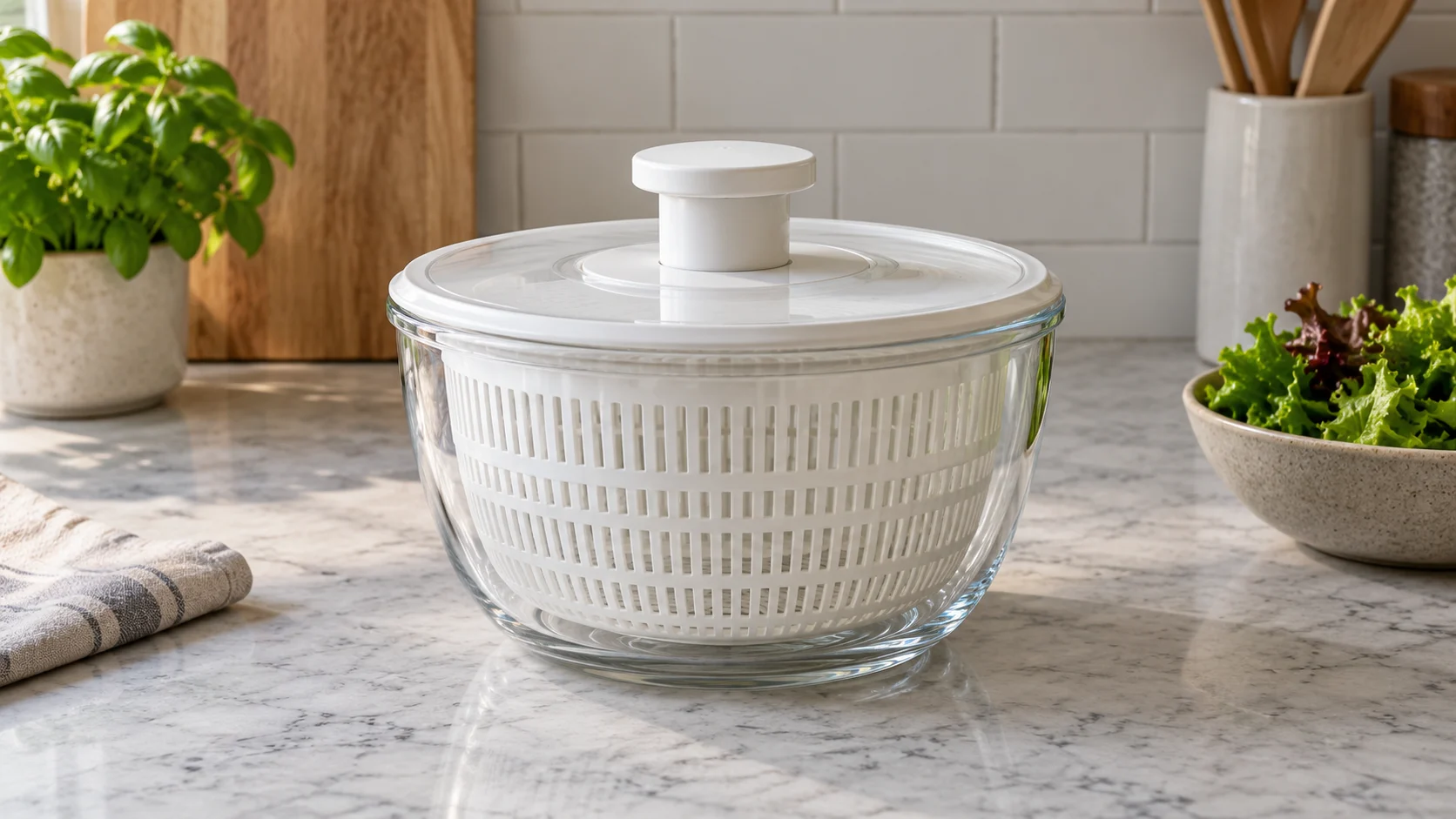
Begin using a glass salad spinner with the actual unit's applicable instructions.
The preparation around the equipment matters too. Read the produce label, keep raw-meat utensils separate, handle washing appropriately and decide whether the prepared ingredients are going straight to the table or into refrigeration. FDA's public guidance, Selecting and Serving Produce Safely, supplies the produce-handling advice below.
Read the produce package before deciding to wash
FDA says that many pre-cut, bagged or packaged items are already pre-washed and ready to eat. When that is stated on the package, the produce can be used without further washing. Read that information before assuming every bag of greens needs another washing stage.
If you choose to wash produce labelled pre-washed or ready-to-eat, FDA says to keep it from contacting unclean surfaces or utensils. The extra step should not introduce contact with equipment that has been used for another raw food. A familiar-looking kitchen tool still needs its appropriate care and handling.
This exception matters when planning the task. Opening a package that can be used as labelled and preparing unwashed produce are different starting points. The spinner's presence does not create a requirement to rewash a ready-to-eat package. Let the actual produce information determine which preparation path applies.
A bag or container alone does not tell you that its contents are ready to eat. Look for the actual washing statement on that package. Keep any preparation directions with the food you bought rather than borrowing them from a different bag that happened to be beside it in the refrigerator.
Start shopping and storage with the produce in mind
FDA recommends choosing produce that is not bruised or damaged. For pre-cut, bagged or packaged produce, including bagged salad greens, choose items that are refrigerated or surrounded by ice. Keep fresh produce bagged separately from raw meat, poultry and seafood when bringing the purchases home.
Perishable produce such as lettuce and herbs belongs in a clean refrigerator at forty degrees Fahrenheit or below, according to FDA. Use a refrigerator thermometer to check the temperature. FDA also says to refrigerate all produce purchased pre-cut or packaged. These instructions concern the food, independently of which preparation equipment you own.
If you are unsure whether another item needs refrigeration to maintain its quality, FDA advises asking the grocer. That is more useful than assigning every fruit and vegetable the same storage arrangement. This guide supplies no number of days for keeping prepared greens and no shelf-life extension attributed to spinning.
Separate the shopping decision from the equipment purchase. A refrigerated bag of cut produce needs the storage described by FDA even if a spinner order has not arrived or the equipment is put away. A preparation tool does not determine whether the food belongs in the refrigerator. Keep that food requirement in the plan from the time of purchase.
Prepare hands, surfaces and utensils before the ingredients
Begin fresh-produce preparation with clean hands. FDA specifies washing hands with soap and warm water for at least twenty seconds before and after preparation. Keep that instruction distinct from its produce-washing advice: soap belongs in the handwashing step, while FDA does not recommend washing produce with it.
Keep produce that will be eaten raw separate from raw meat, poultry and seafood, including utensils used for those foods. FDA says to wash cutting boards, dishes, utensils and countertops with soap and hot water between preparing those raw foods and preparing produce that will not be cooked.
Where possible, use one cutting board for produce and another for raw meat, poultry and seafood. This gives a concrete separation to maintain while preparing the meal. A serving dish or utensil that has contacted another raw food should not silently become the clean destination for the prepared greens.
For plastic or other non-porous cutting boards, FDA also advises running them through the dishwasher after use. That instruction concerns those boards, alongside the separation and cleaning steps above.
Identify the clean destination before beginning. You may intend to serve immediately or put prepared ingredients into an appropriate refrigerated arrangement. In either case, establish which actual dish and utensils are ready for that food. Clearing physical space does not, by itself, establish that its surfaces and equipment have been cleaned.
Handle damaged produce and washing before cutting
FDA distinguishes damaged or bruised areas from produce that looks rotten. Cut away damaged or bruised areas before preparing or eating fresh produce, and throw away produce that looks rotten. Do not interpret the trimming instruction as a method for making visibly rotten produce suitable.
For produce requiring washing, FDA advises thorough washing under running water before preparation or eating. This includes produce grown at home and produce bought at a store or farmers' market. Retain the pre-washed and ready-to-eat exception above when deciding whether this washing step is needed.
Wash before peeling or cutting even when the skin will not be eaten. FDA explains that this helps keep dirt and bacteria on the surface from being transferred during those actions. A plan to discard the outside later does not remove the earlier washing question for produce that needs it.
For a meal with several ingredients, check that sequence for each item requiring washing before starting its cutting step. An ingredient that will be peeled and another eaten with its skin can both have a washing step. Their later presentation does not change FDA's instruction to address the surface before peeling or cutting.
Do not wash fruits and vegetables with soap, detergent or commercial produce wash. FDA does not recommend those products for this purpose. Its advice about soap and hot water for utensils and counters should not be transferred to the food itself.
FDA recommends a clean produce brush for firm produce such as melons and cucumbers. That specific firm-produce guidance is not an instruction to brush every leaf. Use the guidance for the actual ingredient rather than turning one cleaning tool into a universal preparation method.
Keep the supported equipment sequence together
The OXO glass spinner offer names a borosilicate bowl, colander basket, pump, brake and storage lock. OXO lists bowl: 5.9L/6.2qt; basket: 4.1L/4.4qt. Its sequence puts basket in bowl and pump lid on top, then pumping, braking, unloading and emptying collected water. The lock slides to hold the pump flush after washing and drying. Dishwasher suitability and a separable cleaning lid are stated; no disassembly method is supplied here.
Using the OXO pump and brake with its matching guidance
For using the OXO pump and brake, follow the matched instructions above.
Water removal is a different task from establishing food safety. FDA says washing can reduce bacteria that may be present, but does not eliminate them. This guide does not assign a sanitizing result to a visually dry ingredient or to completion of an equipment step.
After washing, FDA advises drying produce with a clean cloth towel or paper towel to further reduce bacteria that may be present on the surface. That advice remains separate from the spinner's mechanical function. FDA's produce page does not certify this selected machine as an equivalent treatment.
Keep the intended food destination clean throughout preparation. If a dish was set out earlier and later used for another raw food, its earlier place in the plan does not establish that it remains suitable for the prepared ingredients. Return to the actual separation and cleaning requirements for the food and utensils.
Emptying the salad spinner bowl belongs to the equipment task
For emptying the salad spinner bowl, retain that sequence.
Know which contents are intended for the meal and which are left from preparation. Treating a receiving vessel as a serving dish requires attention to its actual state and applicable care, not just its position on the counter. Choose the clean serving arrangement before moving prepared food into it.
If the meal is not being served yet, retain FDA's refrigeration guidance for the actual produce. A completed preparation step is not a storage-life calculation. The equipment description supplies no permission to leave perishable ingredients unrefrigerated for an invented interval.
Check the refrigerator itself with a thermometer, as FDA advises, rather than relying only on the number chosen on its control. The intended setting and the observed temperature answer different questions. Keep the forty-degrees-Fahrenheit-or-below guidance attached to the perishable produce and the clean refrigerator where you intend to keep it.
Ask useful capacity and handling questions before purchasing
Keep those component capacities separate. Ask about actual ingredient loading; the larger outside vessel's volume does not establish a recommended weight for the inner component.
Consider the actual handling tasks as well: taking equipment from storage, carrying it when used, accessing its applicable care instructions and returning it afterward. A short product description cannot demonstrate how those tasks will work for a particular person. Evaluate them for your own arrangement instead of extending a control feature into a handling guarantee.
Check which components the order includes and which exact model the supplier is discussing. If the delivered instructions differ from the source account, keep that mismatch unresolved until the correct guidance is established. A similar shape or product name is not enough to merge two operating methods.
The Dynamic SD92 remains a different purchase and method
The Dynamic SD92 manual salad spinner offer identifies Dynamic Mixers model 510-10002, Orange, SKU 153525420 and UPC 855227002647. It gives five gallons and twenty litres together, with seventeen-by-seventeen-by-sixteen-inch dimensions. Those are that product's supplied figures.
Its description names replaceable plastic gears, a solid handle and a claim of up to eight lettuce heads per minute. The rate is attributed product wording, without a test here or a demonstrated yield for a particular batch. Its sanitation-certification statement does not identify the certification's type or scope.
The Dynamic lid is expressly sold separately. Confirm the actual package before treating a proposed order as ready for use. Its applicable instructions remain separate from the earlier equipment account. This guide supplies no Dynamic operating sequence, gear service or lid-substitution approval.
Use related guides for the questions they answer
The Edlund No.1 can opener care guide separates cleaning from an inspection and wear decision. That distinction helps identify whether completed care has actually addressed an equipment concern. Its knife, brush and oil instructions remain with that opener, supplying no spinner cleaning or repair method.
The weather station readings guide distinguishes quantities, ranges and reporting periods. Here, keep component volume, overall dimensions and an advertised processing rate attached to what each describes. Those numbers answer different questions; the weather-station examples supply no kitchen operating guidance.
Finish with the food and equipment questions distinct
Read the produce label, follow the applicable preparation and separation guidance, use the identified equipment instructions and keep the food's storage needs in view. If a purchase detail remains open, ask about the actual model and package. A finished preparation task should not conceal an unresolved food-handling or equipment question.
Use applicable instructions when using a glass salad spinner.
Using a glass salad spinner shown conceptually with inactive equipment, without verified retail identity, control diagram or drying result.