Bedding & Bath
How to relocate a suction hook without damaging smooth tile
A careful removal, inspection, and remounting sequence for a reusable suction hook on smooth bathroom tile.
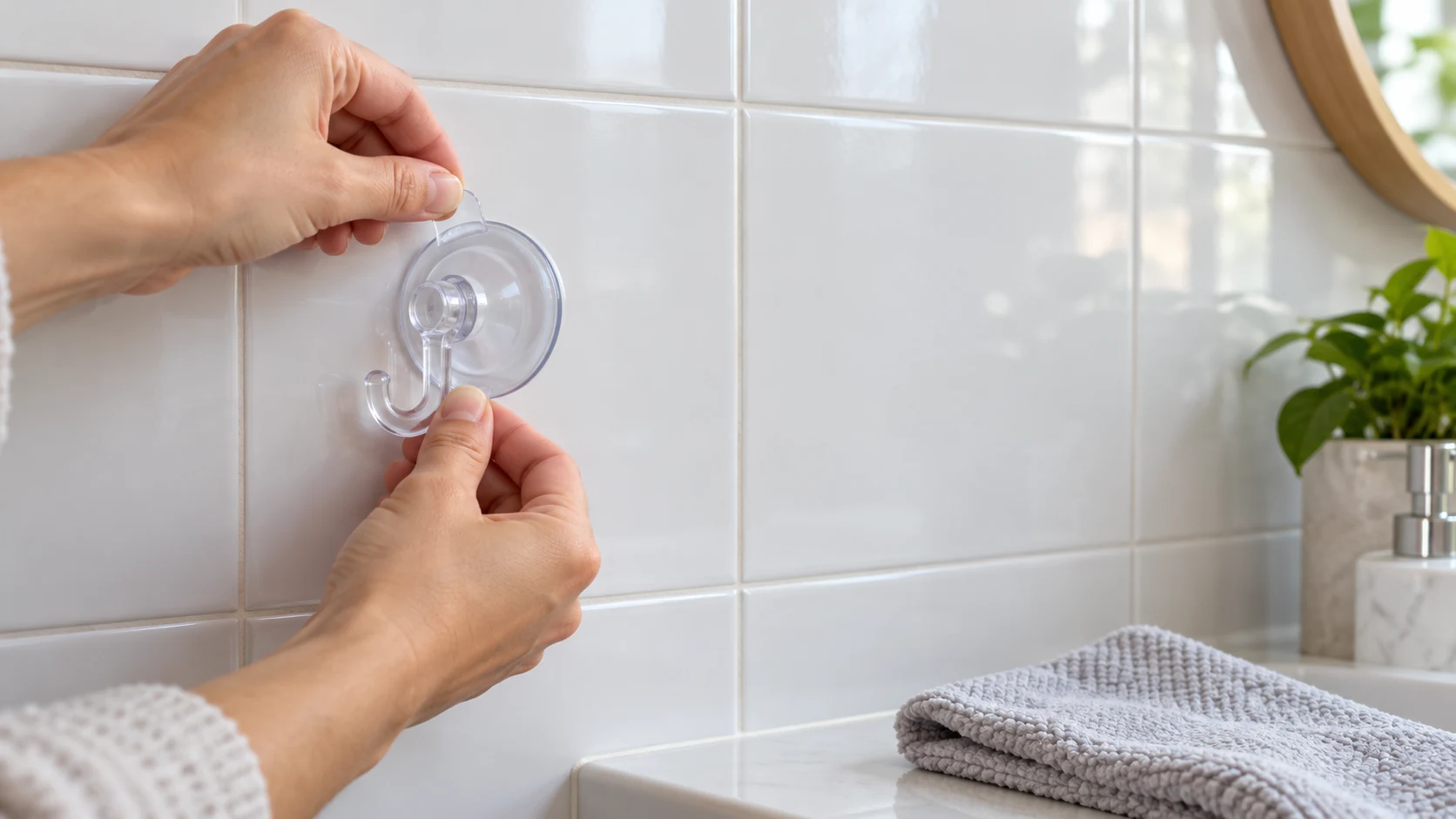
Relocating a suction hook is a small job, but rushing it can chip tile, stretch the cup, or leave a damp patch where the next installation fails. Start with the hook empty. Read the instructions for the exact hook, then release its suction mechanism as directed before lifting the cup. Do not pull the hook outward under load or pry against grout with a hard tool. Once removed, inspect both the cup and the tile, choose a sound new location, and remount only if the product is designed to be reused there.
Prepare the area before removing the hook
Take down towels, loofahs, and other hanging items first. Put breakable objects away from the work area and make sure the floor is not slippery. If the hook is above a sink or tub, keep small parts from falling into a drain. Note how the hook was installed: a plain cup may have a different release method from a locking lever or twist mechanism. Do not invent a procedure based on another brand. The safest sequence begins with the actual product's removal directions and an unloaded hook.
Look at the tile around the cup. If the tile is cracked, loose, or lifting, avoid levering against it. If the hook is partly detached already, steady it so it cannot fall while you follow its release method. A cup edge that is stuck near grout deserves patience; a hard screwdriver can damage the glaze or sealant. Use only a release tab or gentle edge-lift method if that is permitted by the maker. Stop if you cannot release it without force and seek a surface-safe method for that exact product.
Keep the cup and any separate locking piece together as you remove them. A small part left on the wall or dropped into a cabinet can make the hook impossible to reinstall correctly. Place the hook on a clean cloth with the contact side protected from lint and grit. Do not set the cup face down on a rough countertop. The next installation depends on the lip making even contact, and a single scratch or bit of debris can become the reason it releases later.
Inspect and clean without damaging the cup
Examine the cup in good light. Look for a nick at its rim, a section that has stayed curled, hardened material, a split, or residue that will not rinse away under its care instructions. A reusable claim does not make a damaged cup reusable indefinitely. Follow the product's specified cleaning method; if no method is available, avoid harsh solvents, abrasive pads, or heat that could change the material. Rinse only when appropriate, then let the cup reach the mounting condition the maker specifies.
Check the old tile patch as well. If the hook left soap film or dirt, clean that surface by a method suitable for the tile and grout, keeping cleaning products separate. Dry it as required before deciding whether to place anything there again. A clean old location is useful even if you are moving the hook away: it prevents a visible ring and helps you see whether the glaze or grout was damaged. If you find loose grout or a cracked tile, address the surface rather than covering it with another suction cup.
Do not attempt to restore a misshapen cup by boiling it or coating its edge unless the maker specifically directs that treatment. Such tricks can change the material or leave residue on tile. If the cup has lost its shape, replace the hook or use another mounting approach. The goal is a sound contact edge, not a temporary appearance of adhesion. A gentle inspection can save the next round of falls without turning a simple relocation into an untested repair.
Before choosing the new spot, check why you are moving it. Perhaps the old location was inconvenient, crossed a grout line, or encouraged people to tug outward on a towel. Move it far enough to change that condition, not a centimeter away on the same interrupted surface. If the old hook failed repeatedly while empty on otherwise sound tile, test its cup carefully or retire it rather than treating relocation as proof that the design is suitable.
Choose a new location with full contact
Find one intact tile center large enough for the entire cup. Keep the rim away from grout, raised motifs, chips, and curved edges. A larger cup needs a larger uninterrupted patch, even if the visible hook is small. Check that the tile is firmly attached and that the hook will not interfere with a door, shower curtain, cabinet, or faucet. If a person will reach awkwardly and pull the hanging item sideways, choose another spot or a different mounting method.
Consider exposure during ordinary use. A spot beneath a shower stream, next to frequent splashes, or where cleaner is sprayed may behave differently from a dry test patch. Follow the hook's own surface and environment limitations rather than assuming every smooth-looking bathroom tile is acceptable. A glossy appearance does not prove continuous contact. Feel the proposed patch gently for relief and inspect it under side light before committing to the new location.
Clean and prepare the new tile as the exact product directs. Remove loose dust or film without scratching the glaze. If the instructions specify a dry tile, wait until it is dry; if they specify another preparation, follow that method. Avoid mixing household cleaners. Do not add oil, glue, or tape to the cup unless the maker expressly permits it. An improvised extra layer changes the contact mechanism and can make removal or damage more likely.
Remount and test the relocated hook
Place the cup so its whole lip sits on the chosen tile, then apply it in the order specified for that model. A lever, twist lock, or push-on cup may each need a different action. Avoid pressing on the hook arm in a way that twists the rim. Once mounted, inspect the edge for a visible gap and check that the body sits as intended. If the rim crosses grout after all, release it and choose another location; do not mask the gap by pressing harder.
Leave the hook empty for the period required by its instructions, then use one low-risk item within its stated capacity and conditions. A damp towel may be heavier than a dry cloth, and pulling it off can load the hook sideways. Use a safe test location where a fall will not injure anyone or break an object. Do not test by hanging a fragile or valuable item. If the cup drops empty, revisit surface contact or cup condition before trying any load.
Record the new location and the item it is meant to hold. This is helpful when several people use the bathroom: an extra bag or bathrobe can change the load. A quick check after normal use matters more than a dramatic tug test. If the hook slides, tilts, or begins to release, remove the item and reassess. Suction is a removable mounting method, not a promise that every tile or repeated tug will be safe forever.
Read the actual hook listings for limits
The Crawford medium plastic suction-cup hook is listed as a single clear 1.6-inch hook with a 3-pound capacity claim. Its saved page showed it unavailable. That listing does not give a universal removal or remounting procedure, and the stated load cannot be transferred to a different tile or product. Confirm current instructions, availability, and the exact item's condition before using or replacing it.
The separate 12-pack suction-hook listing describes removable, reusable hooks for surfaces such as shower walls and glass, with color options in the saved page. Its broad “heavy duty” wording is not a method for releasing a stuck cup or a verified capacity for your chosen tile. Follow the selected variant's instructions for removal, cleaning, remounting, and loading. A pack of several hooks does not justify prying one off a vulnerable surface.
These two listings establish the general product role: a removable suction cup supporting a small hook. They differ in packaging and the amount of capacity detail visible in the saved pages. Neither page proves that a specific used cup is undamaged or that your new tile location is suitable. Inspect the actual item, surface, and current maker directions before deciding to reuse it. When a source leaves a care step unspecified, leave the step conditional rather than inventing a universal trick.
Know when relocation is the wrong fix
If your real problem is a hook that repeatedly falls, the single-hook surface and load guide owns that diagnosis. It separates tile contact, cup condition, moisture, and item load. Relocation is useful when it corrects a known placement problem, but it should not conceal a damaged cup or an unsuitable load. Run the diagnostic before deciding that another tile center will solve a repeated release.
If the falling object is a shower caddy with a tension pole or multiple suction points, the shower-caddy mounting guide addresses that assembly. A caddy's bottle load and support geometry differ from a single small hook. Do not assume its pole adjustment applies to this relocation, and do not treat a small hook's successful test as evidence that a caddy will stay up. Match the guidance to the actual object.
A cracked tile, torn suction lip, missing lock, or high-risk hanging item is a stop point. Choose a sound surface, replace the damaged hook, or use a mounting system rated for the intended load under the wall and tenancy rules. Do not drill or apply adhesive without considering waterproofing and permitted alterations. A reversible suction hook is convenient for modest uses, but convenience does not outweigh the consequence of a fall.
After relocation, keep the hook's care instructions and recheck it during routine cleaning. Remove the hanging item if the cup shifts, inspect the rim and tile, and repeat only an allowed mounting procedure. Note the new position so you can compare it with the old one if the same problem returns. Keep the tile clear while you observe it. If another person uses the room, explain which light item belongs on the hook and why heavy or breakable objects should go elsewhere. A reliable outcome is a hook that releases gently, remounts on a suitable intact tile, and holds its intended light item through ordinary use. If you cannot verify those conditions, stop using that hook for the item and choose a safer fixture.