Writing & Documents
Houseguest welcome note for a quiet arrival
Imagine a short host-written welcome for an overnight guest, with a familiar detail and room for the visit to unfold.
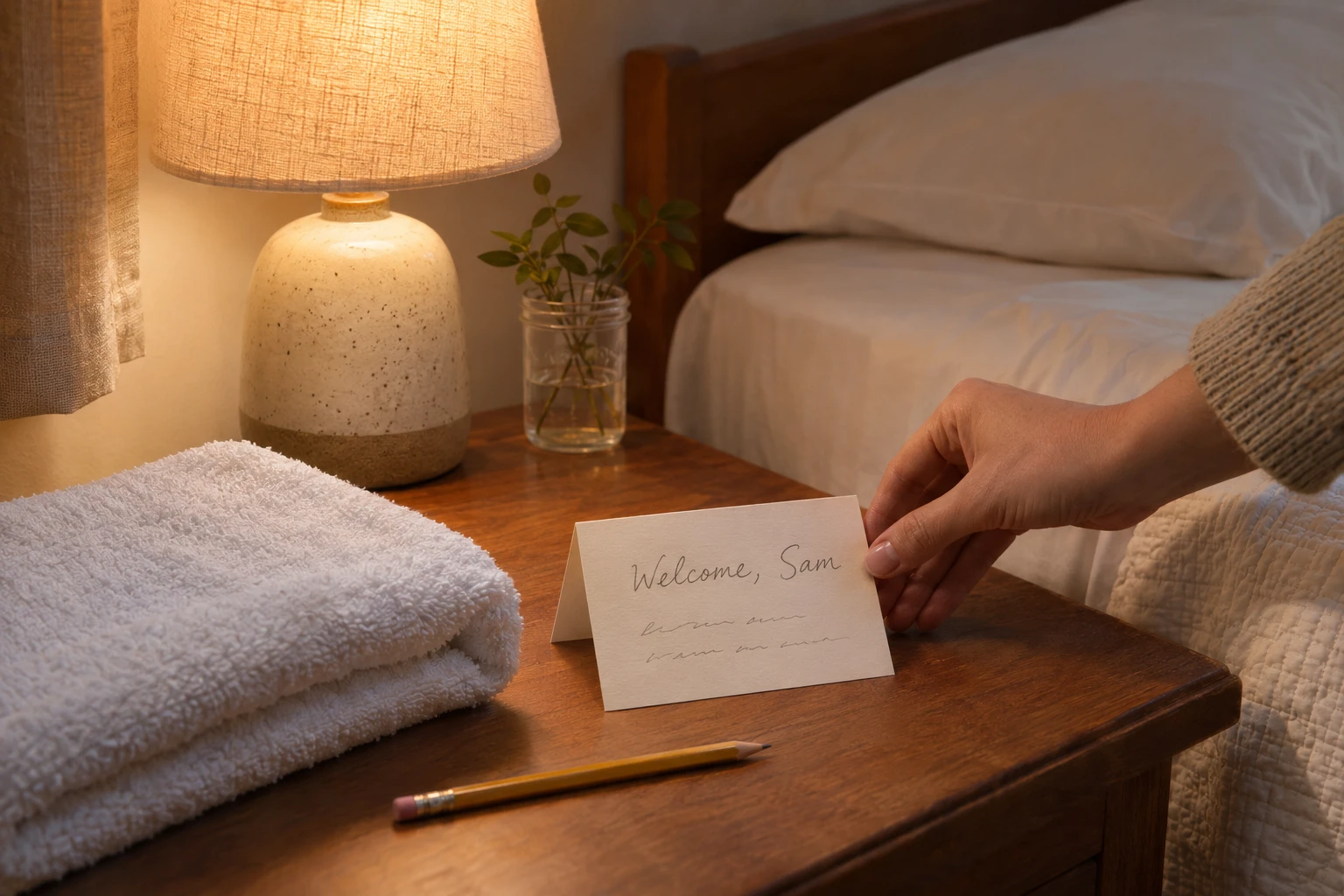
A Houseguest welcome note can make the first few minutes of an overnight visit feel personal in a way you choose. It gives the host a small space to say something meant for this visitor, with a useful detail ready when they arrive. Begin with the person you are expecting and the kind of arrival you have actually discussed. Let that occasion shape the words.
Imagine a fictional host, Elena, preparing for her friend Sam to stay overnight. Sam expects to arrive after Elena's usual bedtime. Elena wants to leave a greeting and explain where she has put an extra towel. Another version of the visit has them arriving together in the afternoon. These invented situations offer different notes to consider. They describe proposed gestures, with no observed guest response or tested hosting result.
Picture the moment the note will be read
Think about when your guest will first have a quiet moment to read. You might hand over the note while showing them their room, or leave it where you have agreed they will settle in. Choose a moment that fits the visit you have planned together. The greeting can acknowledge that moment in a few ordinary words, such as being glad they have arrived or looking forward to tomorrow's conversation.
For Elena's late-arrival version, the opening could simply be, “Welcome, Sam. I'm glad you're here.” She keeps the greeting separate from the practical sentence that follows. The words can stand as a welcome even if the guest already knows where the towels are. Read your opening as something you would actually say to this person. A familiar phrase may suit the relationship better than a formal announcement.
For an afternoon arrival, Elena imagines writing, “Welcome back, Sam. I saved our conversation about the garden for tomorrow.” That line refers to a subject the fictional friends have already discussed. In your own note, use a shared detail you genuinely remember and want to mention. Keep the invitation flexible if you have yet to agree on a time or activity. A note can express anticipation while leaving the visit open.
Choose a detail that belongs to this visit
A personal greeting can come from something small and recognizable. You might mention the book you have been discussing, a walk you hope to take together or the pleasure of having a longer conversation. Choose a detail appropriate to the relationship. If you are unsure whether your guest would welcome a particular reference in writing, use a simpler greeting and save that subject for a conversation.
Elena's first draft says, “Everything is ready for you.” She decides that the sentence claims more than she has checked. In the fictional revision, she writes, “The extra towel is on the room shelf.” That is a particular household statement she can verify before leaving the note. Look for the same opportunity in your own wording. Replace a sweeping promise with the actual thing you have prepared or are offering.
You can also choose a greeting with no practical detail. A guest who already knows the household may enjoy a short line addressed to them. Elena's returning-friend version might read, “Welcome back. I'm looking forward to hearing the rest of your travel story when you feel like telling it.” The imagined note offers conversation at the guest's pace. It supplies no prediction about how Sam will feel or whether the conversation will happen.
If you mention something your guest likes, check that it remains a reasonable reference for this visit. A remembered preference can change. You might offer a choice instead of announcing a fixed plan built around an old conversation. Keep the note proportionate to what you know now. A small welcome can remain personal through the name and tone even when you leave uncertain details for the person to tell you.
Give a late arrival room to be quiet
For the late-arrival version, Elena imagines this complete note, “Welcome, Sam. I'm glad you're here. The extra towel is on the room shelf. We can work out tomorrow's plans when we're both up.” In that fictional household, the shelf statement has been checked and the morning is still undecided. Adapt the idea with your own truthful details. The note offers a welcome without creating an appointment that the guest has yet to accept.
Think about any expectation your words could create. “See you for breakfast at eight” reads differently from “I'd enjoy breakfast together if it suits your morning.” Use the version that reflects your actual agreement and availability. If a time is already settled, state it plainly. If it is a possibility, keep it as an offer. The useful distinction comes from the arrangement you have made with this guest.
Keep essential arrival arrangements in the channel you have agreed to use before the visit. A greeting waiting inside a room can be read only after the guest reaches it. Check that anything they need beforehand has already been communicated appropriately. This writing idea concerns the welcome itself. It gives you a place to make the first quiet moment personal while the actual arrival plan remains with the people arranging the visit.
Use a spare sheet before choosing stationery
Write a rough version with the paper and writing method you already use. Give the note enough space for its greeting and any checked household sentence you want to include. Read it once as an offer from you to this person. If a phrase sounds unlike your ordinary voice, replace it with words you would comfortably say aloud. A short welcome can stay plain while still being carefully considered.
The native STAEDTLER HB woodcase pencil listing describes presharpened yellow pencils with HB black lead and latex-free erasers. It gives 144 pencils per pack and a bundle of ten packs. The sole gallery shows a STAEDTLER box marked 144 and HB #2. Preserve the pack and outer-bundle distinction when reading the offer.
The native Mars Technico 780 leadholder listing names twelve leadholders, included HB lead and use with 2 mm lead refills. Its representative image shows one blue-shafted leadholder with a long silver lower grip and metal clip. The catalog model and pack quantity remain listing information. No independent refill pack, hidden sharpener or universal refill fit is established here.
These product references identify optional writing supplies. Choose a purchase only after reading the exact quantity and supplied contents for your own needs. The welcome can be prepared with an existing tool, and this article records no pencil trial. If you use a folded sheet or card, look at the space available for the words you have chosen. Keep the final greeting legible using a writing method that works for you.
Let the offer remain something you can give
Read any offer in the note against your actual plans. A line about being available all morning creates a different expectation from suggesting a conversation later. Elena might enjoy promising a long walk, then remember that her afternoon is already committed. In the fictional revision, she writes that she would like to find a time for a walk. Her revised words leave the timing for a conversation with Sam.
An arrival detail should still be correct when the guest reads it. If you move the extra towel after writing the note, update the sentence or put the towel where the note says it is. This is a simple consistency check for your own words and preparations. Keep the note with this particular visit in mind. A card left from an earlier stay can mention a different person or an arrangement you have changed.
You may prefer to say the practical detail aloud and leave only a greeting on paper. Choose how much the written message needs to carry. If you will be there when your guest arrives, a sentence handed over during the welcome can feel complete. If you will be asleep, the note can refer to arrangements already discussed. Keep any private contact or access information in the appropriate channel you have chosen together.
The Thanksgiving thank-you jar guide invites willing guests to write about an appreciated action and choose how their messages are shared. A host-written welcome has a different direction. You are offering words to the arriving guest. Let that greeting stand without asking the visitor to write a contribution, remember a favor or prepare a response as part of the welcome.
Choose the version that sounds like you
Consider a first overnight visit with someone you know less well. A straightforward note might say, “Welcome. I'm glad you could stay. Please ask me about anything you need during the visit.” Use that offer only to the extent you can genuinely make it. You can express your availability more specifically if that suits the household. The example supplies wording to adapt, with no claim about a universal standard of hospitality.
For a close friend, the note might be more conversational. Elena imagines, “Welcome back, Sam. It will be lovely to catch up properly. Tomorrow can stay unplanned until we've had a chance to talk.” That imagined welcome expresses what Elena hopes for and leaves the day's choices open. Your own phrasing may be warmer, drier or much shorter. Keep the version that belongs to the actual relationship.
The guest-book invitation guide considers who will keep a shared book and what guests are invited to write in it. This welcome note is a message from the host to one arriving visitor. If you later propose a shared writing activity, discuss it as its own idea. The personal welcome can remain complete on the page you prepared for this arrival.
Before setting out the finished Houseguest welcome note, check the name, the current visit and any practical statement you included. Read the greeting once in your ordinary voice. Then leave the guest room to receive it in their own way. You have chosen a small gesture you want to make. The rest of the visit can develop through the conversations and choices you actually share.
Keep an optional writing-supply order separate
If you decide to order writing supplies through republeq.com, review that purchase separately from the guest's arrival. Read the exact product, quantity and positively included items before selecting an offer. A bulk box or representative single-pencil photograph can describe a different quantity from the amount you first imagined. Choose what suits your actual use and read the displayed delivery information before relying on an order for a particular visit. This article records no checkout or completed transaction. A cryptocurrency method, including USDT, matters only if the actual checkout offers it for the selected order. Follow the asset and network information shown for that order, and ask the merchant through its actual support channel if a necessary detail is unclear. Keep the stationery order reference separate from any message about the guest's travel or arrival. Review the displayed total, shipping charges, taxes and applicable return terms while deciding whether to proceed. Preserve the order confirmation and payment result you actually receive. A prepared cart, opened wallet or copied address does not show that a purchase has completed. If the result remains uncertain, reconcile it through the actual order process before attempting another payment. Check the delivered quantity and contents against the exact offer when an order arrives. Record any discrepancy as something to resolve through the seller's process, with the original order information retained. A stationery receipt concerns that transaction and supplies no evidence about how a visitor will receive a handwritten greeting. You can prepare the note with tools already available and return to shopping another time. An abandoned checkout should remain recorded as abandoned. Keep the welcome grounded in what you have genuinely prepared for the visit.