Seasonal & Holiday Content
Thanksgiving thank-you jar: one specific note to share
Invite guests to write one specific Thanksgiving thank-you note and choose how it is shared, with actual glass jar offers kept separate from the activity.
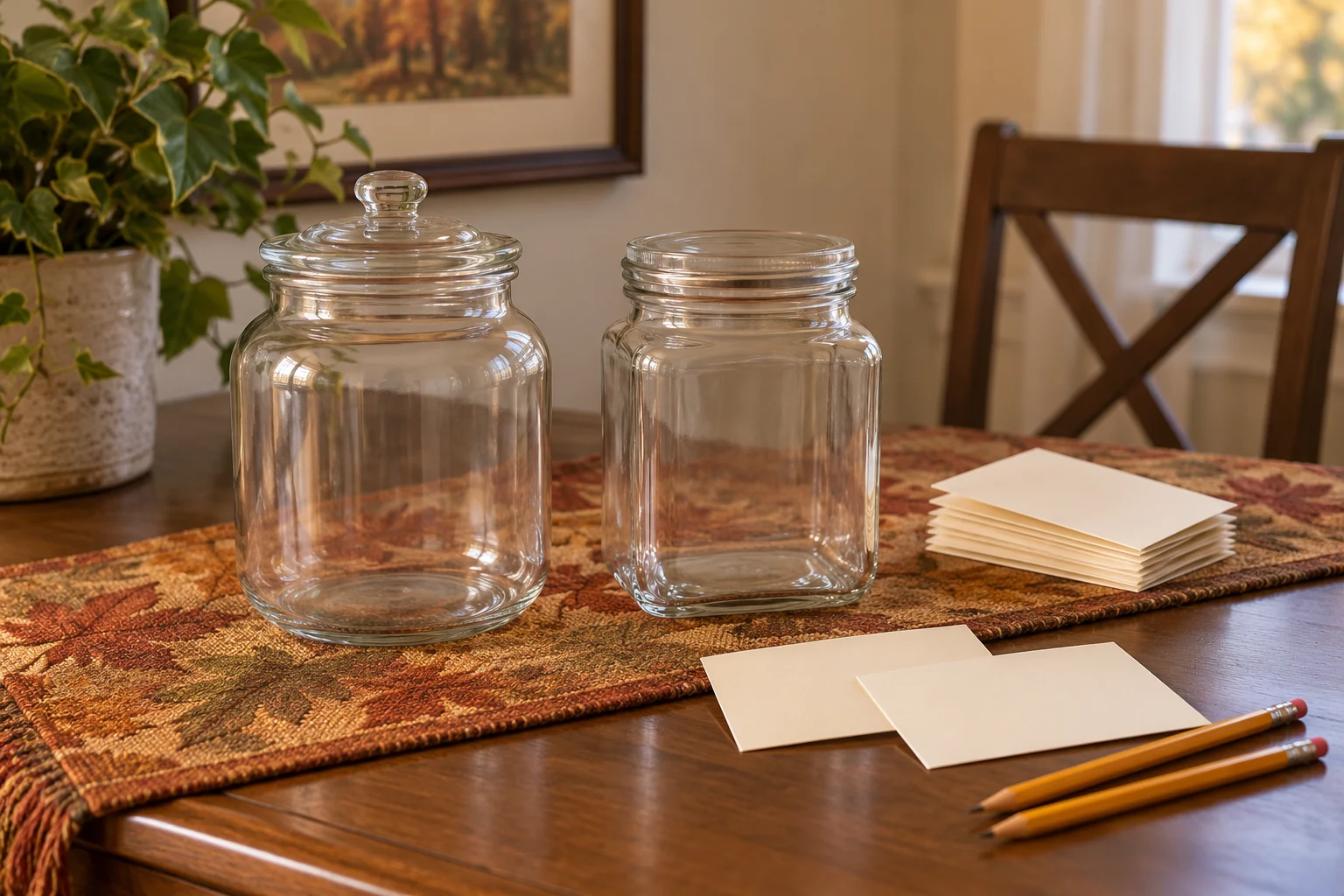
A Thanksgiving thank-you jar gives guests a quiet way to put one specific appreciation into words. Invite anyone who wants to contribute to name something another person did and why it mattered to them. Decide beforehand whether notes will be shared aloud, passed to their recipients or kept private, and explain that choice before anyone writes.
The jar is a container for an optional activity during the visit. Suitable paper and an existing container may be enough. The two glass storage offers discussed here are possible purchasing examples; neither supplies a note-writing kit or establishes how many folded messages will fit. Decide how you want the notes to be shared before choosing a container for them.
Offer a small invitation before the gathering
Tell guests what you are proposing in ordinary language. You might say there will be paper for anyone who would enjoy writing a short thank-you message during the visit. Explain who will see the messages. Someone can then decide whether to take part without discovering a public reading only after they have written something personal.
Keep participation optional when introducing the idea again at the gathering. A guest can enjoy dinner and conversation without producing a message. Someone who would rather thank a person directly can do that. The activity should leave room for the relationships and preferences of the people actually present.
Choose when the invitation fits your meal. A quiet interval before dinner may suit guests who arrive early. Another household may prefer leaving the materials available during the longer visit afterward. Avoid making writing a condition of taking a seat or requiring everyone to finish before the meal can begin.
Writing a specific Thanksgiving thank-you note
For writing a specific Thanksgiving thank-you note, start with an action you actually appreciated. It might be a lift someone offered, a message they sent at a difficult time or help with an ordinary task. Give enough context for the recipient to recognise the moment. You do not need to describe an entire relationship in one note.
Consider this fictional example: “Thank you for calling while I waited for the repair appointment. Having someone to talk to made that long afternoon feel less lonely.” The invented writer names an action and its personal effect. Your own message can be shorter, less polished or about a completely different kind of help.
A broad sentence such as “Thanks for everything” can be a starting draft. Ask yourself which particular thing you were thinking about when you wrote it. If you want to add that detail, use words you would normally say to the person. Keep the message about what you experienced rather than claiming to know what the other person intended.
Some people will appreciate an everyday detail more than a grand statement. A remembered cup of tea or a patient explanation can give a note its subject. Write enough to tell the recipient which help you remember and why you appreciated it. Choose the detail you actually want the recipient to hear.
Thank-you jar sharing choices belong to the writers
For thank-you jar sharing choices, agree on the plan before collecting notes. If the activity includes reading aloud, ask contributors to write only what they want shared in that setting. Give them a clear way to keep a message for its recipient instead. A folded note does not by itself tell the host which choice the writer intended.
You can keep the activity to private messages throughout. In that version, guests address their notes to recipients and arrange how they will be handed over. The jar can remain a visual invitation while the actual messages go directly to the people named. There is no requirement to read every contribution to the room.
If you use more than one sharing option, keep them distinguishable in a way the contributors understand. Explain the arrangement and ask anyone helping you to follow it. Do not invent a promise of anonymity: familiar handwriting or the event described may identify a writer even when they leave off their name.
Ask before photographing a note or including its words in a group message later. Agreement to share something at the table concerns that occasion. A writer may welcome one kind of sharing and prefer to decline another. Keep the finished notes with the people who are meant to receive them under the plan you agreed.
Consider the actual FANRUINA jar separately
The FANRUINA glass jar offer describes one chicken-shaped crystal glass storage jar with a flip-top lid. It identifies SKU sku-18744210331 and UPC 763470970142, with colour listed as Other. The listing also proposes table or desk decoration. It supplies no dimension or paper-note capacity for this activity.
If its appearance interests you, ask for the dimensions and applicable handling information for that exact item. A decorative shape can be part of the seasonal choice without establishing that a particular card will pass through its opening. Keep the proposed paper and the actual container as separate items whose suitability still needs checking.
There is no need to choose this shape to make the activity feel like Thanksgiving. You may prefer a plain container already available in the household. Decide whether the jar itself contributes something you want to keep after the gathering. The note-writing idea remains possible without a new decorative purchase.
Read the apothecary offer without turning volume into note count
The Unbranded glass apothecary jar offer describes a lidded glass storage container and lists a 57.5-ounce capacity. Its title uses the plural jars, while the supplied description does not resolve the delivered quantity here. Confirm what the selected order contains before buying for more than one place.
The stated volume gives no number of folded notes. Paper size and folds would affect the space a message occupies, and the actual opening still matters. Ask the relevant product questions rather than converting a capacity figure into a guest allowance. This article reports no physical trial of either offered jar with paper.
The listing makes broad material and durability claims that have not been independently tested for this guide. Follow the actual item's applicable handling and care information. No food use is needed for the proposed activity, and nothing here establishes dishwasher suitability, impact resistance or a child-handling arrangement for glass.
Choose the materials with the actual participants in mind. An existing suitable container of another kind can serve the note activity if that suits the household better. Use the container that suits this note-writing plan and the people taking part.
Make the writing space easy to join and leave
Have the paper and writing materials ready where a willing guest can use them comfortably under the arrangement you have chosen. Keep an example of the invitation available for someone who missed the explanation. A guest should be able to find out who will see the note before deciding what to write.
Leave enough time for someone to think without a person waiting over their shoulder. A guest may remember the moment they want to mention only later in the visit. They can return to the materials then. Someone who finishes quickly can rejoin the conversation without having to explain why their note is short.
If a person wants help putting an idea into writing, ask how they would like you to help. They might want you to read their draft back or write down words they dictate. Keep their meaning and their choice of recipient intact. Do not turn a requested spelling check into a different, more elaborate message.
When a guest cannot think of a contribution, let them pass. You can offer the idea of an ordinary action if they ask for a prompt, then leave the choice with them. An appreciation chosen to fill an expected quota may feel less personal to the writer than a thank-you they decide to give another day.
Leave the dinner table available for the meal
The Thanksgiving napkin-ring guide begins with one real place setting and the serving pieces the household plans to use. Its Hyjoy and Chenran product details concern those napkin rings. The useful connection here is considering how people will actually sit and eat before adding another seasonal object to the table.
The thank-you activity can have its own time and place within the visit. If the meal needs the surface you used for writing, clear the activity according to the agreed plan before serving. Tell any late contributor where the materials have gone. A guest can return to an unfinished note when the writing materials are available again.
The postcard-writing afternoon guide develops one ordinary detail for a particular reader. Its Compulabel and Avery stock descriptions supply no jar fit. Use the writing connection when a guest wants to develop a brief note into a longer personal message for another occasion.
A note can reach someone who is not at the gathering
A guest may want to thank a person who could not attend. They can write that message for its intended recipient and decide how to deliver it separately. The note does not need to become a public account of the absent person's circumstances. Keep the message directed to the relationship the writer actually has with them.
For another fictional example, imagine a student thanking a former neighbour for looking after a houseplant during a move. The writer might say which plant it was and how pleased they were to see it again. The plant and the move give that fictional neighbour a particular favour to recognise. They do not need to explain the whole move to everyone at dinner.
If someone else will pass on a note, ask whether that person is willing and give them the delivery information they need. Keep a message awaiting delivery separate from notes already given to their recipients. The host can finish the gathering's shared activity without promising when an absent person will receive or answer a message.
A writer can also take an unfinished draft home. They may want to check a remembered detail or spend more time choosing their words. Let the message continue as their own correspondence, with the intended reader still in view. They can finish the message later and choose how to send it to that reader.
Finish with the sharing arrangement you promised
At the chosen moment, invite only the sharing that contributors agreed to. Someone may read their own words, ask the agreed reader to do so or keep a note private. Respect a changed preference before a message is read. The host does not need a contribution from every guest to bring the activity to a close.
Pass the finished messages to their intended recipients under that plan. A recipient can choose whether to respond at the gathering or later. Leave room for a simple acknowledgment and for the rest of the visit. A Thanksgiving thank-you jar can support a personal exchange without requiring a speech in reply.
Conceptual Thanksgiving thank-you jar cover with generic glass jars and separate folded paper; no exact retail models or verified note capacity is shown.