Cooking & Food Prep
Keep holiday buffet serving utensils with their dishes
Give each holiday buffet dish its own serving tool and keep an uncertain utensil move an open question for the host, without promising an allergen-free meal.
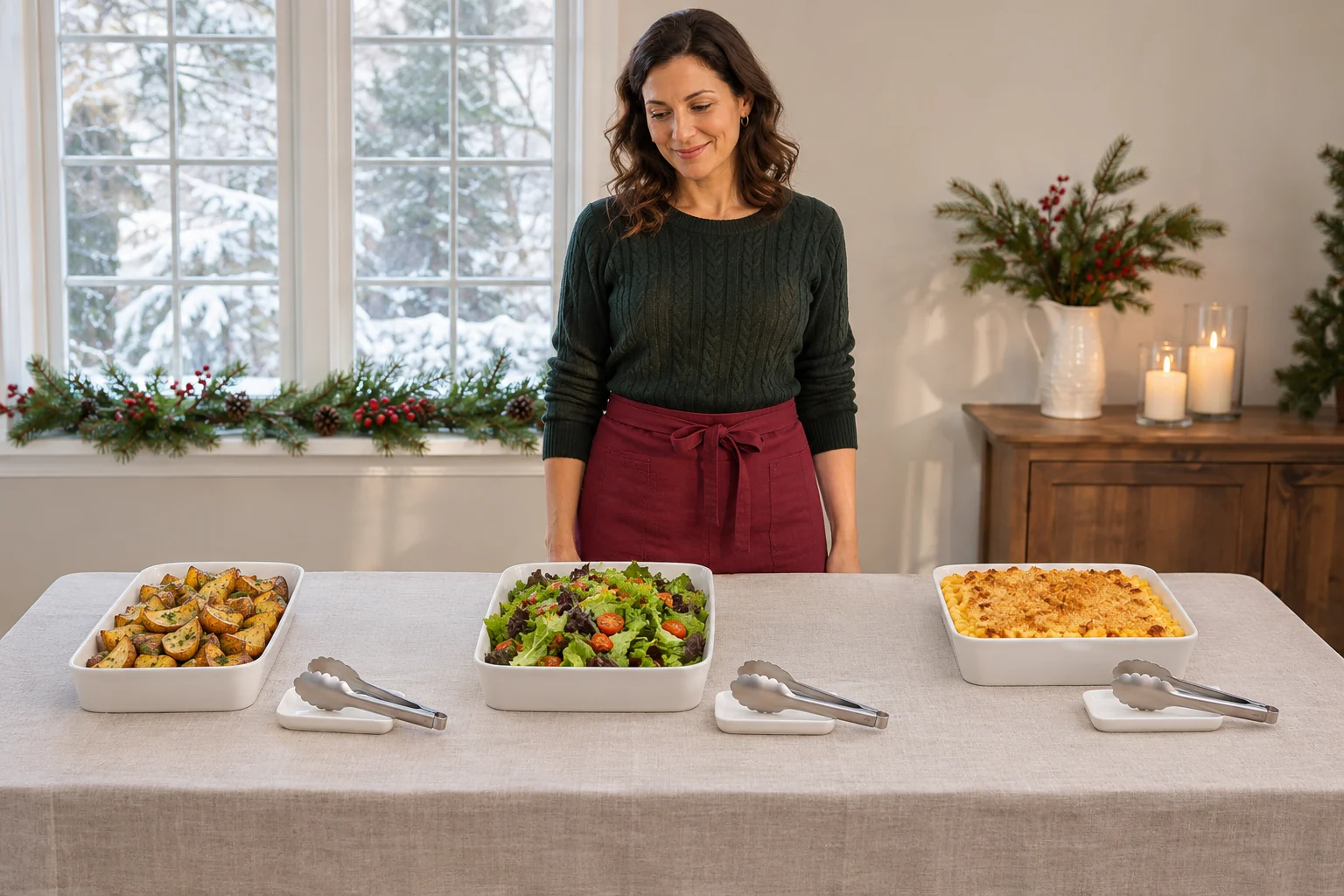
A holiday buffet can begin with a serving tool beside every dish and end with one pair of tongs travelling between foods. Plan holiday buffet serving utensils as part of the service, especially when a guest has a food allergy. Indiana University Dining's holiday guidance recommends a utensil for each dish. That arrangement helps address one service concern; it cannot establish ingredients, preparation history or an allergen-free meal.
buffet utensil mix-up
Food Allergy Research & Education explains cross-contact as an allergen being transferred from one food to another. The amount involved can be difficult to see. Its examples include serving ladles or tongs returned to the wrong food. A buffet utensil mix-up therefore leaves a question about contact, even when the tool looks ordinary. The visible position of a utensil tells you where it is now, without supplying a complete account of what it touched earlier.
Keep the uncertainty in the conversation. Tell the person responsible for the food what you observed, including when you do not know where a tool has been. FARE's guidance does not support treating a clean-looking or merely wiped utensil as assurance against allergen transfer. This article supplies no cleaning treatment or procedure for making a contacted dish suitable again. Replacing a tool should not be described as proof about food it may already have touched. Resolve the food question before offering reassurance. For example, saying that you saw a tool in another dish gives the host something specific to investigate. Saying that it probably never touched anything adds confidence without adding an observation.
Keep a dish's serving tool with that dish
Allergy & Asthma Network identifies shared serving spoons at buffets and potlucks as a holiday food-allergy concern. Its meal-time advice gives each dish its own utensil and describes serving arrangements that reduce opportunities for sharing. That is a reason to look beyond whether enough tools were set out at the beginning. During the gathering, a utensil still needs to remain associated with the food it serves. A spare pair at the far end of the table does not explain the history of the pair beside a dish.
The Network also discusses serving a person with food allergies before others help themselves, including making a child's plate before general service. Discuss those planning options with the guest or responsible caregiver. An early plate still needs to meet their food and preparation requirements. Ask how the proposed service will work for them. Do not announce that arriving first, choosing a particular place in line or using a different utensil settles every concern. The guest's decision still depends on the actual food and arrangements. Let them explain any concern about the proposed sequence before helpers begin preparing plates for other people at the gathering.
Carry preparation decisions through to service
Food Allergy Canada's holiday-at-home guidance connects preparation and serving. It advises preparing the person-specific food first with separate cookware and serving utensils, then keeping that food covered and apart while other foods are prepared. The useful distinction is that a service tool is part of a longer handling arrangement. Putting a fresh utensil beside an already prepared dish does not tell you which cookware, ingredients or earlier utensils were involved. Ask the person who prepared it when that information matters.
Keep that handoff clear if someone else takes responsibility for bringing food to the table. Explain which actual serving tools belong with the dishes and which food has been set aside under the agreed arrangement. Canada's guidance also says not to reuse the same serving utensils for the person with the allergy. A utensil assigned during preparation should not silently become a communal tool for several foods. Tell the next helper if you cannot account for a utensil's earlier use. Carry that unanswered question into the handoff too. This guide adds no recipe substitution, kitchen-cleaning method or instruction for recovering a dish after an uncertain contact.
separate serving tools
Anaphylaxis UK's Christmas-kitchen article recommends separate serving spoons and keeping the foods apart during buffet service. It also asks hosts to speak with guests beforehand about their allergies and preferred accommodation. Use that conversation to explain the proposed separate serving tools arrangement in ordinary terms. Say what you actually intend to do and ask whether the guest needs a different approach. A host can describe a plan honestly without declaring that every possible contact has been excluded.
If several people are helping, make sure they understand the agreed serving arrangement too. Point to the actual dish and its tool instead of relying on someone remembering a vague instruction about “the special food.” Keep questions with the person responsible for the preparation or service. Agree who will answer a guest's serving question if the original host steps away; helpers should know whom to ask. The charity's advice is context for communication and separation, without certifying either retail tong account below. Use the actual utensil's applicable care directions; this article gives no cleaning method or claim that household cleaning removes every allergen. No appearance, color scheme or utensil purchase establishes the suitability of a meal for an individual guest.
A guest can decide the buffet does not work for them
Allergy UK's eating-out guidance advises avoiding buffets or salad bars because shared utensils can create cross-contamination concerns. That page concerns restaurants and catered eating, not a universal rule imposed on every home host. It does show why providing a dedicated tool should not be presented as a guarantee that a buffet is appropriate for someone. A guest may have concerns about the overall preparation and service that remain unanswered after you explain where each utensil belongs.
The same guidance says a person who is not confident in the response about their allergy may choose not to eat. Leave room for that choice at a holiday gathering. An invitation to share the occasion need not become pressure to try a bite or accept a host's judgment about an unresolved meal. Discuss alternatives beforehand when possible, including whether the guest wishes to bring food. Accepting that preference lets the conversation move on without requiring the guest to defend the same decision repeatedly. This is a hosting conversation, without individualized medical advice, a prescribed menu, an emergency protocol or a claim that one simple-looking dish is necessarily suitable.
Read the Smarty offer as a variant account
The Smarty serving-tongs offer names silver scissor-style tongs and a 50-count package. Its actual variant account also includes a Clear, 48-count, 12-inch option. The two gallery images show different forms: a clear U-bend utensil and a silver-colored pivoting utensil with finger loops. Both are broad serving-tong forms. This guide does not verify the pictured item or delivered contents for a selected variation.
Ask the seller to identify the selected variation and its supplied units before ordering. Keep that answer attached to the actual item reference. A useful enquiry names the selected Clear or Silver option and asks which exact tong form and package count that order supplies. Leave an unanswered variation question open before checkout. Do not combine the clear form's displayed size or count with the silver form merely because the pictures share a page. The description's material, BPA, safety and recycling statements remain product claims, without independent verification here. Neither the silver-colored appearance nor the separate clear image establishes food-contact suitability, a cleaning method or an allergy-related result.
Keep the TRA account's labels distinguishable
The TRA utility and serving-tongs offer describes a set of two. Its two gallery images show two locking, scalloped-end tong forms. One image carries a KitchenAid wordmark and dimension and care artwork. The description names KO208OHSSA, while the catalog metadata gives FRF62-465DX. Those are distinct catalog and pictured assertions, without an authenticated factory-model equivalence. The end rings and grips are integral features of the pictured tongs, not additional supplied equipment.
Confirm the exact identity, selected contents, dimensions and applicable use and care information with the seller if those details affect the order. Name the conflicting identifiers in the enquiry so the response addresses this account. An answer about a different model or a generic range should not silently fill the gaps in the selected item's information. The native dimensional wording and the image's dimension artwork are not an independently measured specification. Nor does the pictured pair establish delivered inventory. This guide verifies no stainless-steel composition, dishwasher suitability, gripping performance or temperature limit. A utensil's material or brand wording also cannot certify how it was used at a particular gathering or establish that a dish has avoided allergen contact.
Keep ingredient and holding questions separate
The holiday decaf coffee choices guide separates a guest's request from flavor, package information and supported preparation format. Its label-reading discussion answers a different question from where a buffet tool has travelled. A serving arrangement cannot supply missing ingredient information, and an ingredient description cannot reconstruct a utensil's contact history.
The insulated tumbler temperature-claims guide distinguishes advertised retention from actual food-storage conditions. Dedicated buffet tools do not establish a holding temperature or elapsed exposure time. Keep those food-handling questions with the applicable guidance for the actual dish. Neither linked guide supplies a cleaning procedure for these tongs or a clearance for an uncertain buffet meal.
Check the order and payment details separately
If the actual checkout offers USDT or another cryptocurrency for an intended order, examine that option after the essential product questions have been answered. This guide establishes no available payment asset, network, fee, exchange treatment or transaction protection for a particular purchase on republeq.com. Check the selected item and variation in the current order summary. A payment option does not resolve the two native accounts' identity and quantity limits, and a completed transfer would not establish food-contact suitability or an allergen-related outcome. Read the instructions and terms presented for the actual transaction before committing funds. Confirm the displayed recipient, asset, network and amount through the authorized checkout, without borrowing a destination from an earlier purchase or an unrelated message. Consider any disclosed charges, delivery conditions, cancellation process and refund terms that affect your decision. If a required detail is unclear, leave the order uncommitted while the responsible service explains it. Never include private wallet keys or recovery phrases in a product enquiry or a message about an order. Retain the order reference and resulting confirmation with the transaction they identify. If the payment status becomes uncertain, use the authorized support process to reconcile it before considering another payment. Do not assume that submitting a product question pauses an order or changes the seller's terms. You can decline an unfamiliar method or postpone the purchase while information remains missing. These are conditional purchasing considerations, without a digital-asset recommendation, a projected saving, a transfer instruction or a report that any wallet connection, payment or purchase has occurred.
A tool beside each dish is a service arrangement, without certifying ingredients or contact history.