Headphones & Earbuds
Headphone replacement ear pads: check the model and mount
A model-bound checklist for choosing replacement pads without assuming that similar-looking ear cushions interchange.
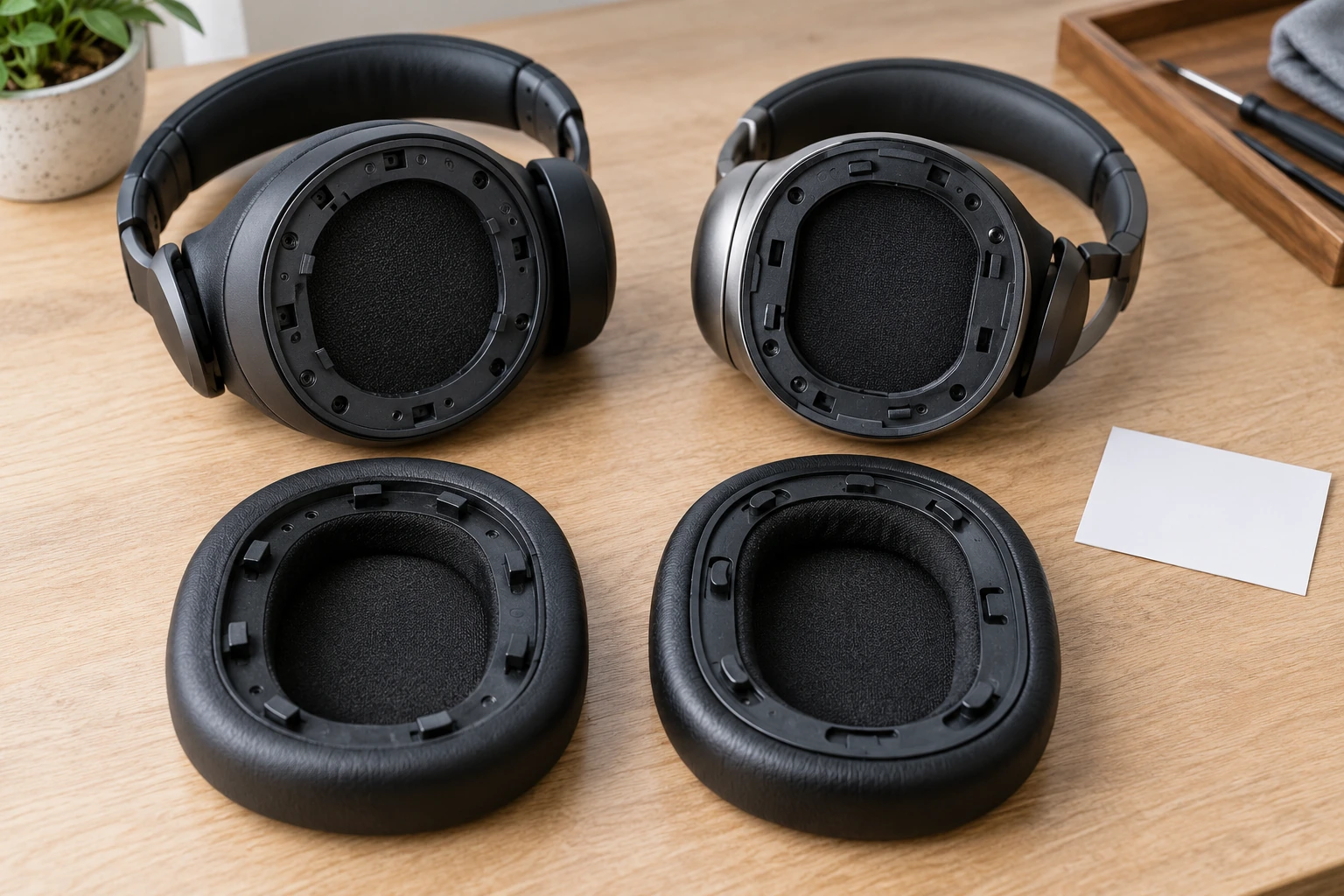
Headphone replacement ear pads can look alike from the front while attaching to different earcups. Start with the exact model of the headphones you already own, then compare the replacement listing and the original pad's mounting edge. A similar shape, color, or outside size is a weak basis for a fit decision. If the model name or attachment method is uncertain, keep the original pads in place until you can resolve it without damaging the headphone.
Two current offers make the model boundary clear. The DJ Hyperactive HC-EP0501 ear-pad pair says it directly replaces the original pads on HDJ-X10 headphones. The HD800/HD800S replacement pads name those Sennheiser models and describe an integrated plastic mounting ring. Each seller describes a replacement accessory for a particular host, not a complete headphone. Neither listing establishes that its pads fit the other host or that a similar-looking cup accepts the same attachment.
Read the model on the headphone you have
Find the model name or number on the headphone, packaging, purchase record, or maker documentation. Copy the complete identifier, including any letters or generation suffix. Do not stop at the brand. A brand may sell several headphones whose earcups look similar in a small product photo. If a model marking is worn or hidden, use the maker's documented identification method or ask the seller to confirm the exact host before ordering pads.
Write the model down before opening a product search. A simple card can have three columns: the host model, the original pad's visible mounting method, and the exact replacement offer. Leave a cell blank if you cannot verify it. The blank is useful. It tells you which question needs an answer before an accessory purchase or installation, rather than inviting a guess based on a familiar brand name.
For the two example listings, the model names are different and specific. One names HDJ-X10; the other names HD800 and HD800S. Those names are not interchangeable because both are over-ear headphones. The listings also do not supply an exhaustive list of compatible hosts. Treat the stated model set as the relevant claim for that offer and check the current seller page if a model list has changed since the page was captured.
If your headphones are not one of those named models, neither example establishes fit for them. Search for an offer that names your exact host or obtain a maker-approved part number. A seller photo of a pad resting beside a headphone is not enough when the model identity or attachment method is unresolved. The question is whether the replacement can attach as intended to your actual cup, not whether the cushion looks comfortable in isolation.
Inspect the original attachment without forcing it
Look at the original pad while it is still mounted. Note its outline, orientation, seams, and how it meets the cup. The mounting edge may be tucked into a channel, clipped to a ring, or attached by a method described in that model's instructions. Do not assume a particular mechanism from this article or a gallery photograph. Use the headphone maker's pad-removal instructions for the exact model before lifting, twisting, or prying anything.
Inspect with the headphone powered off and disconnected according to its instructions. Do not insert a tool into a seam merely to find out whether the pad will release. A torn cushion, broken clip, or damaged cup can make a later fit test harder. If the original pad cannot be removed under the documented procedure, stop and seek model-specific guidance. Buying a replacement pair does not require you to prove fit by damaging the installed one.
The HD800/HD800S listing explicitly mentions an integrated plastic mounting ring. That detail is worth checking against the receiving cup of a headphone with the exact named model. It does not tell you that every ear pad with a ring uses the same ring profile. The HC-EP0501 listing states direct replacement for HDJ-X10 but does not document a compatible ring profile for any other model. Avoid filling those gaps from a generic image.
Size matters, but it is not the only fit question. An outer oval or circle can match visually while the rear edge, clip positions, or ring geometry differs. The original pad may also have a particular orientation relative to the cup. Record what the actual headphone and its instructions show. If you cannot see the mounting interface without removing the pad, ask for the model's documentation rather than estimating it from the front cushion.
Keep left and right pads together as an identified set while inspecting. Note whether your original pair has side-specific shapes or markings; do not assume it does or does not. The HC-EP0501 offer describes a pair. The other listing shows replacement ear pads and an integrated mounting ring, but the excerpt does not establish every package detail you might need. Confirm the current offer's contents before planning to replace both sides at once.
A worn original pad can be a poor measuring template. Its cushion may have changed shape through use, and a damaged attachment edge may no longer show how it originally sat on the cup. Compare the host model and maker documentation before measuring the old pad, and distinguish the soft cushion from any rigid mounting piece. A measurement can help you notice an obvious mismatch, but it cannot establish clip placement or prove a hidden ring profile. If the old part is missing, ask for the model's approved replacement specification instead of inferring fit from cup width alone.
Compare the exact replacement offer
Read the current product title and description as separate pieces of evidence. The title may name the host, while a description may specify an attachment detail or contents. Check both. If the listing says only “for headphones” without a model or part identity, you still have an unresolved fit question. Ask the seller or maker for the exact supported model, revision, and mounting method before treating that offer as suitable.
Use native product images for the physical shape they actually show. The HC-EP0501 gallery shows a replacement pad from the front, so it helps identify a cushion but does not reveal every rear attachment feature or prove the stated pair contents in one picture. The HD800/HD800S gallery shows pads and part of their backing. Neither image is a controlled installation demonstration on your own headphone. The written model claim and your host documentation remain necessary.
Separate attachment compatibility from comfort or sound claims. A seller may describe foam, coating, seal, or listening improvement. Such language does not prove how the pad will feel on a particular wearer or how the headphone will sound after installation. This guide uses the listings for model and physical-role facts. If you have comfort or acoustic requirements, evaluate them under the maker's specifications and a return policy you understand; do not infer them from a pad photograph.
Also check whether the product page describes one pad, a pair, or a kit containing other pieces. A photograph may show only one side even when the offer is for two. Conversely, two pads pictured in a gallery do not settle what the current package contains. Read the current quantity statement and order details, then compare the delivered package before removing anything from the headphone. If you need both sides replaced for the same project, ordering a single unspecified cushion can leave you with an incomplete set and an uncertain return decision.
A replacement accessory also differs from choosing a complete headphone. The wireless headphones fit guide asks how whole earcups, controls, and connection suit a wearer. That is useful when buying a new headset. Here you already have a host and need a replacement component that mounts to it. A pad that looks promising on a desk cannot change the size or control layout of the headphone you own.
The speaker headband and over-ear guide separates two complete listening constructions. Its comparison can help identify what kind of device a family owns, but it does not certify replacement-pad fit for that device. Use the current headphone model and the pad seller's specific compatibility statement for the accessory decision. An ear pad offered for over-ear cups should not be generalized to a fabric headband speaker.
Check the delivered item before installation
When a replacement arrives, compare the package and the pads with the order and current listing before touching the original headphone. Check the stated model, number of pads, visible attachment edge, and whether the item appears damaged or different from the ordered part. Keep packaging and any included instructions until fit is resolved. If an offer promised a pair but only one pad arrived, address the contents with the seller before beginning a two-sided replacement.
Lay the replacement beside the original headphone without pressing it onto the cup. Compare its orientation, contour, and attachment features you can see safely. The goal is to detect an obvious mismatch before applying force. A near match is not an installation instruction. If the back of the new pad has a ring and the original cup uses a different fastening method, stop and confirm the part identity. Do not cut away or modify the ring to make it fit.
Follow the host maker's removal and installation steps only after the exact model and replacement part are verified. If the replacement seller includes its own instructions, compare them with the host guidance and resolve any conflict before proceeding. Do not invent a twisting angle, clip order, tool, adhesive, or amount of pressure from a generic article. The model-specific procedure is what protects both the new pad and the receiving cup.
During installation, stop if a pad will not seat under the documented method, if clips appear to bend, or if the cup housing begins to move unexpectedly. Remove pressure and recheck the model and part. Repeated force is not a compatibility test. A pad that will not attach as directed may be the wrong item, may have arrived damaged, or may need model-specific service. This guide cannot diagnose which without inspecting the exact headphone and part.
After installation under the correct instructions, inspect whether each pad sits evenly and whether anything remains loose. Keep the original pads until you have completed the checks allowed by the maker and any seller return terms. A visually seated cushion still does not prove a particular acoustic outcome. If the earcup is damaged or operation changes unexpectedly, stop using the headphone and seek appropriate service guidance rather than assuming the new pad caused or solved the issue.
Keep the compatibility record
Save the host model, replacement listing URL, part name, and any confirmed compatibility answer with your purchase record. If the seller revised the model list or the package differs from the page, note that too. The record will help if a pad later needs replacement again, but recheck the current offer at that time. Product names and seller inventory can change; an old receipt is not a guarantee that a new listing has the same physical attachment.
If you are helping someone else replace pads, ask them to bring the headphones or a clear photo of the model marking, not only a picture of the worn cushion. The front of a pad is the easiest surface to photograph and often the least useful one for attachment fit. Keep the source of each fact on your card: host label, maker instructions, replacement listing, or seller confirmation. That small distinction prevents a guess about mounting from being copied later as if it were a stated compatibility claim. It also helps you spot a contradiction before an order is placed.
For the example offers, your card should say HDJ-X10 beside the HC-EP0501 pair, or HD800/HD800S beside the hybrid pads with integrated ring. It should not put both pads in one interchangeable column. Their visual similarity is background information; each listing's exact host claim is the actionable fact. If your own headphone has a different model number, leave the match unresolved until you have an appropriate source for that model.
When model, attachment method, or package contents remain unclear, defer the order or installation and ask a specific question: “Does this exact pad part fit this complete headphone model and revision, and how does it attach?” That question gives the maker or seller something concrete to answer. It also prevents a generic assurance that the pad fits “most over-ear headphones” from being mistaken for evidence about your particular cup.
Headphone replacement ear pads are a model-bound accessory. Confirm the host identity, inspect its mounting edge through the maker's guidance, and compare the exact replacement offer before removing the original pair. Keep claims about comfort, seal, and sound separate from proof of physical fit. If the interface is uncertain or the pad resists the documented installation, stop rather than altering either component to force a match.