Tools & DIY
When hand sandpaper stops cutting, check the sheet and the job
Separate a clogged abrasive, a worn cutting surface and a poor match for the job before choosing replacement hand-sanding media.
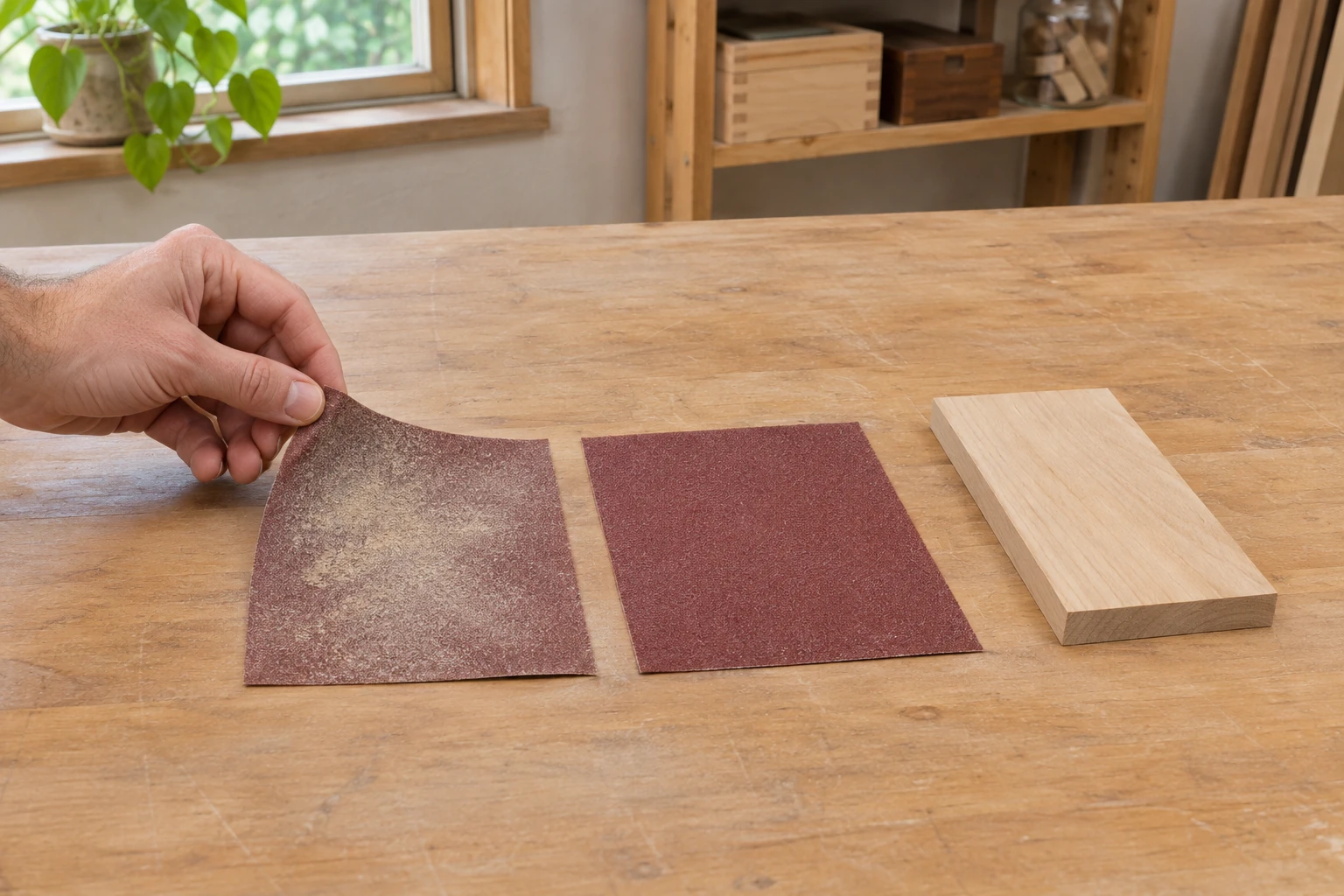
When hand sandpaper stops cutting, pause long enough to describe the change. Did the abrasive become covered, did an apparently open patch lose its bite, or was the first pass disappointing too? Those observations lead to different questions. This guide concerns choosing and replacing hand-sanding media for an already identified, suitable job. Keep the actual abrasive and material instructions beside the work. An unknown coating or an uncertain surface needs its own assessment before a sanding purchase can solve anything.
Separate loading from premature dulling
Klingspor publishes separate troubleshooting entries for loading and premature dulling. Its loading list includes excessive sanding pressure, overly fine grit, a closed-coat product and high wood moisture. Its premature-dulling list also includes excessive pressure and overly fine grit, alongside a wrong product for the application. The overlap matters when considering sandpaper loading. One symptom does not identify one cause. These are broad troubleshooting lists containing belt, infeed, contact-roll and wheel conditions too. Those machine-specific entries do not supply a hand-sanding procedure. Use the distinction to frame the problem, then resolve the applicable hand-use guidance for the actual abrasive and material. A general chart cannot diagnose a particular used sheet from a photograph.
Make a brief observation note before discarding the piece. Record the package identity, the surface you were working on, the operation you intended and what changed. Write what you can actually see or report, such as a covered working patch or a disappointing first pass. Leave the cause blank until you have a reason to name it. Keeping the old piece beside that note can make a later conversation with the supplier more precise. A label saying “worn out” gives the next person less to work with than a description of when the problem appeared.
Check the cutting surface during hand use
Norton explains that abrasive grains cut, shape and finish the surface material. In its hand-sanding guidance, the grit and the application are considered together before choosing sheets, rolls or other forms. It advises checking a sheet frequently when using a sanding block and changing it when required, because an overused sheet can leave an uneven scratch pattern. The same guide discusses distributing pressure on flat surfaces with a block. Use that hand-sanding guidance to evaluate how pressure reaches the working area. Its named Oakey ranges, grit examples and anti-clogging claims belong to those particular products. They do not establish either native listing here as an equivalent range, or a universal replacement interval for your job.
A useful replacement note describes the result you need from the next purchase. For example, a person working on an identified practice piece might write “I need the specified abrasive for this preparation stage, and enough fresh working area to finish this small section.” That sentence keeps the next order tied to a defined operation. “I need something stronger” leaves the operation, compatibility and desired surface unresolved. This is a planning example, without a promised sanding result or a recommended grit. Fill it in using the actual instructions that apply to the work.
Match more than the grit number
Norton’s sandpaper-selection article treats grade and grit, backing, abrasive grain and the job as separate selection factors. It distinguishes paper and cloth backings, discusses different grain materials and gives project-specific examples. It also includes storage and safety guidance. The useful buying question is therefore wider than whether the next sheet has a lower number. An abrasive can be described by its backing and intended application as well as its grit. Follow the instructions for the actual product and surface, including any limits on dry or wet use. Norton’s own product recommendations and branded treatments remain its recommendations for those ranges. A similar colour or a familiar grit number does not make another listing the same product.
Bring the unanswered specification into the order conversation. A concise message could say “The job is this preparation stage on this identified material. My current package is this exact item. Please identify a suitable replacement and the instructions that support that use.” Add your observation note and a clear package photograph if useful. Asking for the recommendation’s basis makes the answer easier to evaluate later. Keep a copy with the eventual order so that the product arriving at the bench can be compared with what was discussed. The example is an organisational aid, without a claim that a particular seller will provide technical advice.
Avoid treating every slow pass as the same problem
Mirka’s abrasive-issues article separates clogging, scratches, finger marks in hand sanding and low stock removal. Its discussion of clogging includes paint or lacquer that has not fully cured, while its other sections address different causes and product choices. This supports keeping the symptom and the material condition distinct. It does not give permission to sand an unidentified coating, or establish a cure time for a finish on your project. The article also discusses named Mirka abrasives, foam arrangements and machine dust-extraction details. Those recommendations stay with their described applications. Do not transfer machine-hole arrangements or a branded performance claim to an unverified hand sheet. Describe the actual condition before choosing which applicable guidance to follow. A covered abrasive working face and visible finger marks on the surface are different observations in Mirka’s discussion. If progress is slow and the surface is also marked, retain both observations. Calling the whole result dull paper too early would hide the separate pressure-distribution or scratch-pattern question that the source raises.
Mirka’s announcement for Iridium hand-sanding products describes a specific range intended for hand applications, with its own grain mix and backing. That is a useful reminder to look for an explicit hand-use description when comparing abrasive formats. The announcement describes Mirka’s own product range. Neither listing below has been independently tested here. Neither native product is identified as Iridium. Its claims about cutting, flexibility or longevity cannot be borrowed to describe another maker’s paper. When investigating premature abrasive dulling, keep the product name attached to the claim that prompted your interest. A recommendation about one named range does not establish how another roll will behave on your surface.
Read the sheet packet’s actual identity
The 3M sanding-sheet listing has a stale URL handle mentioning a different item. Its captured product and package identify 11220-G-6, 220 grit and six sheets measuring 3⅔ by 9 inches. The whole package image supports that labelled grit and sheet count. Do not turn the handle’s 180 wording into a second grit option or treat it as the actual model. The native description makes no-slip, wet/dry and clog-resistance statements. Those remain listing or package claims, without an independently established performance comparison here. The packet identifies what is being offered more clearly than the handle does. It still needs to match the product and material instructions for your intended work.
Read the roll without filling its gaps
The 3M sandpaper-roll listing states a width of 2¾ inches and a length of 75 feet. Its whole image shows one continuous abrasive roll on an integral cardboard core. That photograph does not measure its length or establish its grit. The captured catalog does not specify a grit, and its “PSA DISCS & DISC ROLLS” field does not prove that separate discs are supplied or establish an adhesive fit. Resolve the missing specification before choosing it for a grit-dependent operation. A roll’s available length and a packet’s sheet count describe different forms of supply. Neither tells you how long its abrasive will keep cutting on a particular job.
Keep the surface and coating decisions separate
If the original problem is a sticky finish, the guide to wood stain that is still tacky addresses excess stain, application conditions and topcoating questions. That is a different decision from replacing hand sandpaper. Use it to identify the finish-related question before assuming another abrasive purchase is the answer. Its named stain products and finish-handling discussion do not supply a sanding recipe for an unknown coating. Keep the finish identity and applicable product guidance with the job record.
The wood-construction labels guide distinguishes surface, veneer and substrate vocabulary. Those distinctions help describe what you are asking about when the construction is uncertain. They do not certify that a thin surface layer can be sanded, establish an available sanding allowance or approve a repair. Obtain the actual construction and finish information for the item involved. A material term can improve the question without deciding what treatment that particular object will tolerate.
Keep the order record with the replacement
If you plan to buy replacement sanding media using crypto, make the order record readable before choosing a payment route. Save the exact product name, the specified grit when available, the supply format and the quantity stated for that offer. Keep any answer about intended hand use with the same record. A payment reference identifies a transaction, while the product information identifies what you expected to receive. If you consider USDT, inspect the actual checkout instructions for the selected route, including the supported asset and network, the amount requested and any displayed fees or time limit. A familiar currency abbreviation is not enough to establish a compatible transfer. Check those details at the time of the transaction and follow the instructions shown by the payment provider. Do not send funds to an address copied from an unrelated message or an old order. For a purchase researched on republeq.com, distinguish the saved catalog description from the terms actually presented for the chosen transaction. This guide does not establish that a particular payment method is currently available for either listing. Keep delivery, cancellation and return information alongside the order details, and resolve a missing grit or uncertain item identity before paying. Retain the transaction receipt and any order confirmation together so that a later query can refer to both the payment and the specified goods. A successful transfer cannot answer whether the replacement matches your hand-sanding job, whether a catalog dimension is accurate or whether the abrasive will meet a performance expectation. Those questions belong to the product evidence and applicable instructions. If the checkout details and the intended order do not agree, pause and reconcile the discrepancy before completing the transaction.
Finish the replacement decision with a short handover note for yourself. Name the observed problem, the confirmed replacement specification and the instruction you will consult before use. Leave unresolved questions visible instead of replacing them with a confident guess. When the order arrives, compare its identity with the saved record before opening a new working piece. The aim is to make the next decision traceable to the job you actually have. If the evidence still leaves the abrasive choice uncertain, keep the job paused while you resolve that specific uncertainty.