Troubleshooting & Repairs
Wood stain is still tacky: check excess before topcoating
Troubleshoot tacky wood stain before adding a clear coat, using actual Minwax liquid and Varathane aerosol references with the wood and coating history.
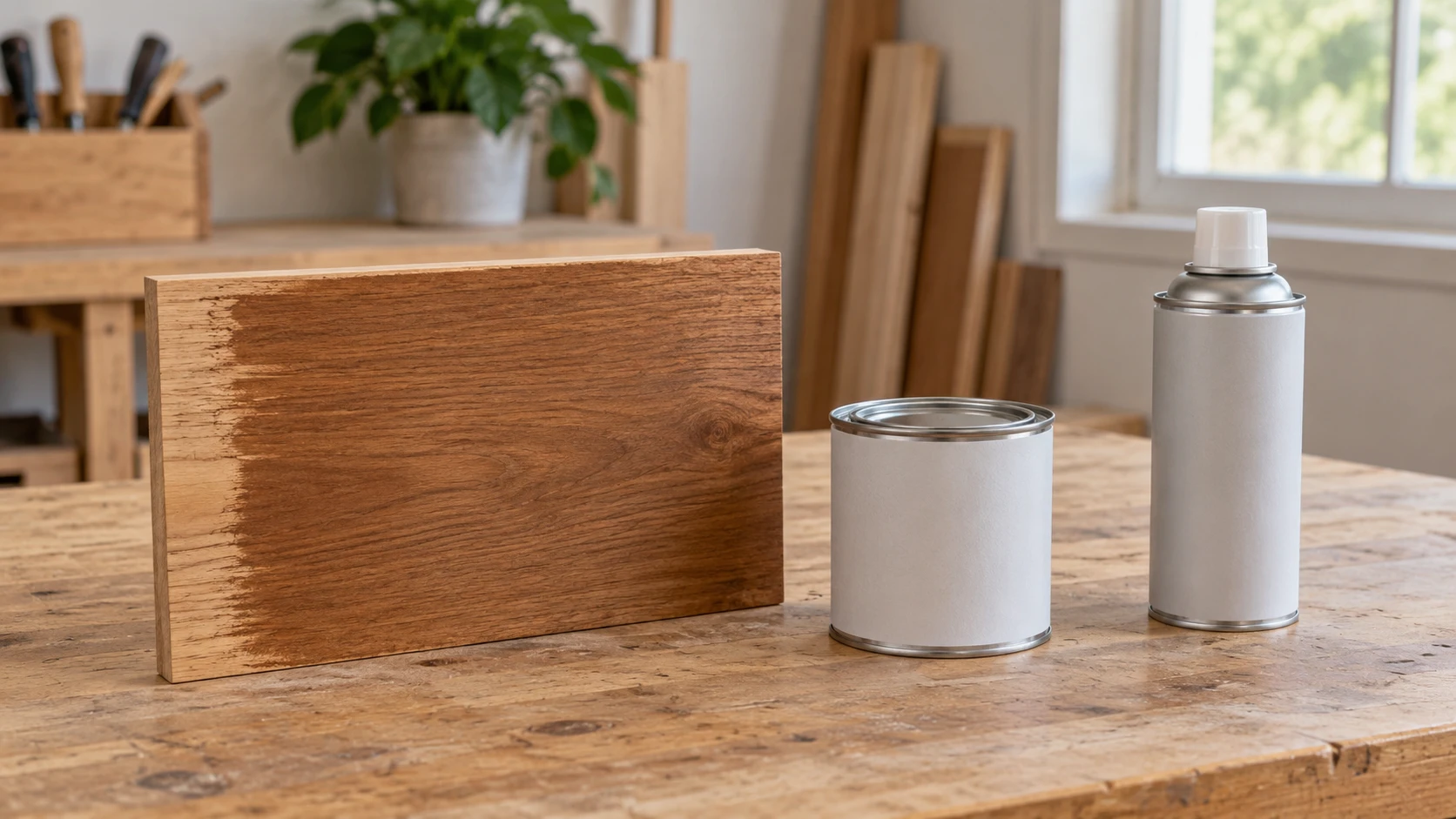
If wood stain is still tacky, pause the finishing job before adding a clear coat. Identify the stain already on the wood, establish whether excess was wiped away, and compare the actual drying conditions with its label. A darker colour or a glossy wet patch does not prove that the surface is ready for the next product.
Start by matching liquid stain and aerosol instructions to the container actually used. One is a gallon of Minwax Golden Oak oil-based stain; the other is a six-can Varathane American Walnut aerosol package. A troubleshooting method for a liquid stain cannot be assigned to the spray merely because both products colour wood. Keep the container used on the project available while deciding what to do next.
Record the failed step before changing the surface
For checking excess stain before topcoating, write down the product name, the time it was applied, whether the wood was bare or already finished, and what happened during wiping. Add any later coat or cleaning product used. These are observations to give the manufacturer, rather than a diagnosis made from the word sticky. If someone else applied the stain, ask them before treating an unknown layer.
Describe where the problem occurs. Is the whole panel affected, or only a patch near an edge? Is that area visibly heavier than its surroundings? Record what you can see without rubbing the entire piece repeatedly. A photograph and a short note about the affected area give a support enquiry a definite starting point. They do not establish a chemical cause on their own.
Keep the lid, label and order reference together. A remembered colour name leaves out the product form, and a receipt for something purchased later may identify the wrong container. If the label is unreadable or the surface history is uncertain, leave the repair open until the product can be identified. Buying a different stain first adds another decision without answering what is on the wood.
Checking excess stain before topcoating
Minwax's finishing FAQ says excess penetrating stain should be wiped away after the label's penetration interval. Its tackiness answer distinguishes excess left on the surface from slow drying after proper wiping. It identifies cold, humidity, poor ventilation and thick application as drying factors. It says to wait until the stain is no longer tacky and its minimum label drying time has passed before topcoating.
For excess Minwax stain, the FAQ describes rubbing with a cloth dampened with mineral spirits, or briefly softening the excess with fresh stain before wiping it away. Confirm the method against the actual container and safety directions before use. This manufacturer guidance is not permission to apply solvent or fresh stain to an unidentified finish, or to the Varathane aerosol discussed below.
Turn those checks into a next action for your project. If the wiping history is unknown, report that uncertainty rather than selecting the answer you would prefer. If excess definitely was removed, provide the conditions and elapsed time when seeking advice. If a clear coat has already been added, say so immediately: the surface is no longer the same uncoated stain addressed by the original question.
Keep any proposed repair tied to the affected piece. Advice for bare solid wood is not automatically a repair for a previously finished cabinet door, a veneered panel or a coated manufactured board. The useful response identifies which surface and product combination it covers. An instruction missing that connection needs clarification before it becomes a whole-project treatment.
Matching liquid stain and aerosol instructions
The Minwax Golden Oak Wood Finish listing identifies semi-transparent, oil-based stain in a one-gallon quantity. Its native description repeats that identification without supplying an application interval, coverage figure or exact drying schedule. Keep those omissions open. The retail name does not supply the missing directions for the container in your workshop.
The Varathane 386449 American Walnut package is spray stain. Its native description specifies six aerosol cans of 10.25 ounces each, a total of 61.5 ounces, and UPC 320066155811. The total describes the package contents. It does not mean that one large liquid can is supplied or that a brush-on product's technical sheet governs these aerosols.
Rust-Oleum's support page specifically for Varathane Premium Fast Dry Wood Stain Spray calls for one light application, no longer than two minutes, followed by wiping excess with the grain. Removing excess is essential to drying and topcoat adhesion. It allows no more than three coats and states one hour drying, longer in humid or damp conditions. Use the matching label for the actual job; that stated hour is not a promise that every sticky surface is ready.
The same spray support warns that oily rags, steel wool and waste can spontaneously catch fire. It directs immediate placement in a sealed, water-filled metal container and disposal under applicable local, state and federal rules. Arrange waste handling before beginning any approved wiping procedure. Do not leave used material in an ordinary pile while deciding what the next coat should be.
The retailer names several interior uses for the spray, including floors. That statement does not supply a matched floor-finishing system or approval for a particular existing coating. If your repair concerns a floor, obtain instructions for that exact use and finish combination. A product appearing in a furniture discussion does not settle a high-wear flooring question.
Why the underlying wood changes the result
The USDA Forest Service's Wood Handbook chapter on finishing explains that stain absorption varies across wood structure. Earlywood, latewood, knots, vessels and flaws can take colour differently. A darker patch therefore deserves a separate description from a sticky patch. Uneven colour and an unready surface can appear together without being the same problem or requiring the same response.
The chapter also explains that a penetrating sealer, sometimes called a wash coat, partially fills spaces in wood and reduces stain absorption. That helps explain why a preparation step matters when discussing what went wrong. Tell the adviser whether a conditioner or sealer was used. Do not assume an earlier treatment is irrelevant simply because you can still see the wood grain through it.
Wood anatomy also matters when comparing a test board with the finished piece. The handbook describes large vessels in woods such as oak and walnut and smaller vessels in woods such as maple and cherry. A successful sample on a different material cannot establish an identical colour result on the project. Keep a test connected to the material, preparation and stain you intend to use.
End grain has a different absorption behaviour from the side of a board. The handbook's anatomy discussion explains why liquids can travel readily along the wood's structure. When recording an uneven result, identify the face or end concerned. Calling every dark edge a failure of drying discards information that may help distinguish colour absorption from excess remaining at the surface.
Moisture introduces another distinction. The handbook explains that wood exchanges bound moisture with surrounding air, swelling and shrinking as its moisture content changes. A board that looks dry is not a measurement of its moisture condition. This article supplies no moisture-meter threshold for either selected stain. Use the product's requirements and appropriate evidence for the actual wood before restarting preparation.
Separate a stain repair from a clear-finish repair
The handbook distinguishes colour treatments from transparent film-forming finishes. A clear film can provide a smooth, cleanable surface and resistance to wear, while also accentuating blemishes beneath it. That makes inspection before the next layer useful. A clear coat should not be treated as a way to avoid identifying a visibly unresolved stain problem.
It also notes that finish names are confusing because manufacturers do not use a single standard set of definitions. Read the actual product directions rather than building a repair around a familiar word such as oil, sealer or finish. Those words alone do not identify the full coating system or establish which layer is currently causing trouble.
For a piece with an existing clear finish, establish its history before trying to return it to bare wood. The handbook describes finish removal as a separate task with mechanical and chemical methods, preparation work and safety concerns. It does not offer a universal household stripping recipe. An old painted surface with an uncertain history needs appropriate assessment before sanding or other disturbance.
If repair advice calls for removal, clarify its intended stopping point. Removing excess fresh stain and removing an old coating are different jobs. Ask which layer the instruction addresses and what condition should remain before refinishing. Do not turn a direction about a small excess patch into permission to strip an entire piece with a method chosen from memory.
Check the repaired area before restarting the project
Use the confirmed instructions to decide whether the next stage is waiting, an approved excess-removal treatment or further assessment. Keep the rest of the piece out of a trial whose suitability remains uncertain. Record the treatment actually performed and when it ended. That preserves a useful history if the area still needs technical help afterward.
Before topcoating, revisit both the surface condition and the applicable waiting requirements. A clock reading alone does not answer the tackiness question. Likewise, an apparently improved patch does not supply the minimum interval for a different stain. If either answer remains unresolved, keep the next layer pending and ask a question that names the product and observed result.
For a replacement order, calculate the work from actual dimensions and the matching product's coverage directions. The guide to tape-measure numbers separates measuring length, blade width and package quantity. Here, retain the unit and feature being measured; a tape's advertised length is not the surface area of the furniture or a stain coverage figure.
Only then compare the amount you need with supplied package contents. The free-shipping threshold spending guide shows why a waived delivery line can still accompany greater overall spending. An extra stain package needs a real purpose and suitable storage; reaching a basket threshold does not establish that more material will repair the current surface.
A useful enquiry might say that Golden Oak liquid stain was applied to a previously coated door, that the old coating was not identified, and that a particular edge remains sticky. Ask which assessment or repair applies before naming a solvent you hope to use. The answer then has a surface history to address. A message saying only that walnut stain will not dry could mistakenly bring the spray package into a discussion of the liquid product. Keep photographs, container details and the written answer together so another person helping with the work can follow the same decision.
Keep the replacement order tied to the repair
If the repair requires a purchase through republeq and you are considering crypto such as USDT, confirm the exact stain and package before choosing a payment method. The Minwax offer here identifies a gallon of Golden Oak liquid stain. The Varathane offer identifies six American Walnut spray cans. A support reply about one does not establish instructions or suitability for the other. Keep any recommendation attached to the actual product reference and the surface it concerns. Read the payment methods presented for the selected order rather than treating this paragraph as confirmation that USDT is available. The captured product records identify cryptocurrency as an accepted category, without settling every token, network or checkout arrangement for a future transaction. If a requested method or condition is unclear, obtain an answer before authorizing payment. This guide provides no transfer address or wallet procedure. Check the current delivery and return information too, particularly if you are considering a replacement while the original problem remains unresolved. No arrival date, refund or repair outcome is promised here. Keep the order confirmation alongside the product identification and any technical advice you relied on. A transaction reference can help identify a purchase, but it does not prove that the coating has dried or that the next layer is compatible. You can leave the order undecided while seeking the missing product answer. Choosing crypto, another available method or no purchase leaves the finishing decision dependent on the actual wood, coating history and applicable directions. Resolve those questions before treating a new container as the solution to the sticky surface.
Resume when the actual stain, surface condition and next product's requirements agree. If the wood remains tacky, stop at that unresolved fact and give the manufacturer the recorded history. Adding another layer would change the problem before the current one has been answered.