Home & Living
Understand hand-powered drill movement
Understand hand-powered drill movement through documented brace and wheel-drill accounts.
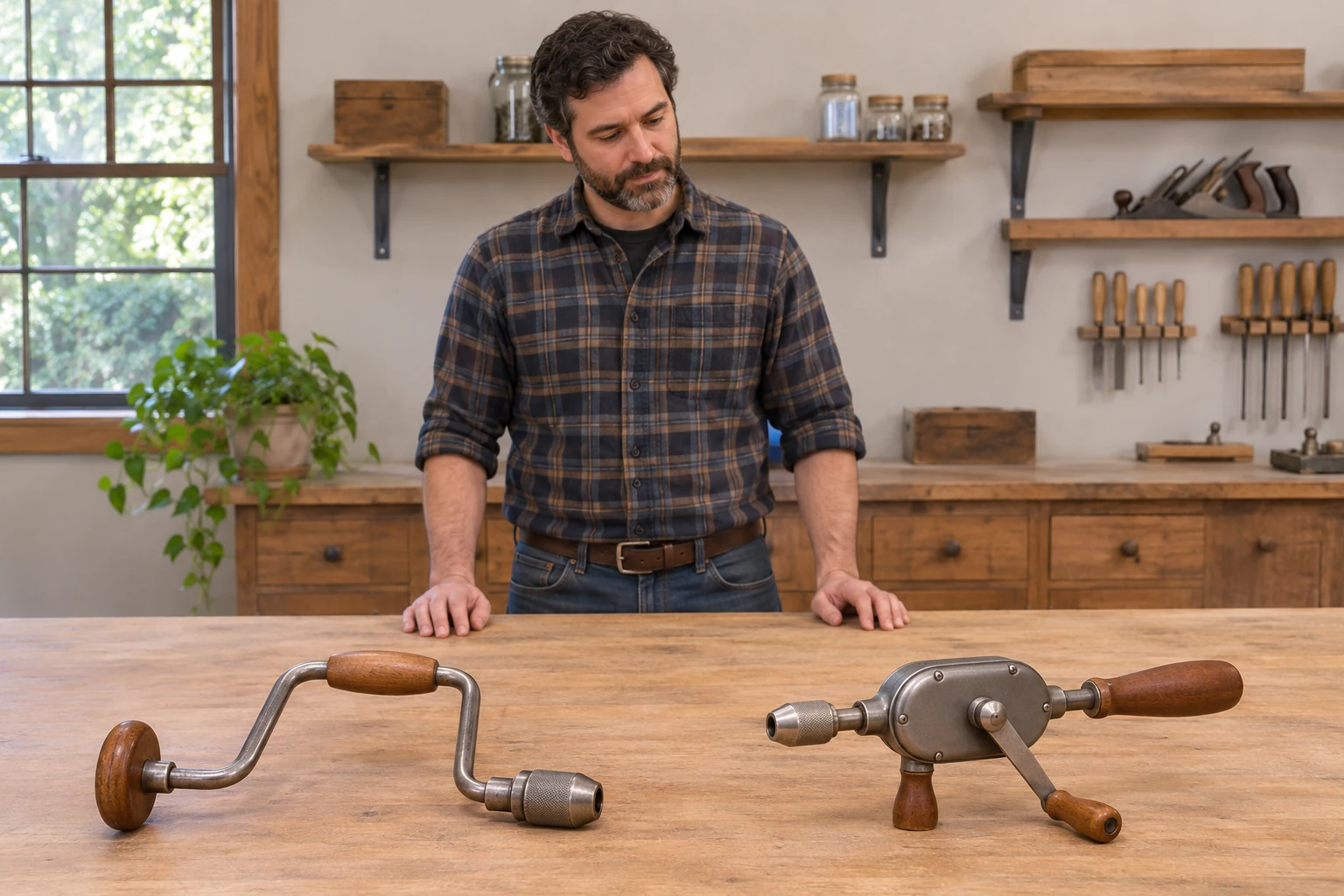
Understanding hand-powered drill movement can begin by identifying the hand input and the chuck. A brace and a wheel-type hand drill provide two documented arrangements to consider.
Start with the question you want the explanation to answer. You may be looking at an unfamiliar tool in a photograph or trying to understand a term in an equipment description. Keep that question specific. Naming the movement you want explained gives a reference book, instructor or supplier enquiry a clear starting point.
Choose a clear reference for the explanation
Identify the particular picture or document you are reading. A page can show several tools, and a caption may describe only one of them. Keep the caption with its picture when taking notes. If the source refers to another illustration, locate that reference before assuming that every sentence concerns the tool nearest it on the page.
Write down a term you cannot place rather than silently supplying a meaning. You might ask, “Which part does this caption call the crank?” Include the caption or equipment reference with the question. That lets the person answering see the source of the uncertainty instead of having to reconstruct what you were looking at.
A useful explanation should make its subject identifiable. If someone answers with a different example, ask which example they mean and retain that reference beside their answer. You can compare the accounts once their subjects are clear. An unfamiliar name can stay unresolved while you obtain the document or illustration that the respondent intends you to consult.
Read the brace account as a turning relationship
The Science Museum Group describes a ratchet brace as a crank-shaped device that grips and rotates a drill bit. The brace crank shape belongs to that turning arrangement. Its collection account concerns a historical woodworking tool, with the bit identified separately from the device that turns it.
Keep the museum’s explanation with its subject. It supplies a general account of the brace relationship. Its historical object, accompanying bits and operating description remain separate from the two retail offers discussed below.
When reading an equipment description, give the document’s terms room to stay distinct. If you cannot identify which object a sentence names, ask about that sentence. A reply can then point you to the intended reference. This is a reading question you can settle before deciding whether you need any further information about a particular purchase.
Read the wheel-drill account in its own context
Colin Sullivan’s Woodworkers Institute article describes the wheel brace or hand drill using a bevel gear to transfer hand rotation to the chuck. That is the article’s account of hand-drill input. It concerns the historical hand-drill designs being discussed, with their mechanical arrangement providing the explanatory context.
The account explains a transmission relationship in that tool class. A closed housing in a retail photograph leaves the particular internal gear arrangement unverified here. Retain the author’s subject when using the explanation.
You can ask for an explanation of a pictured tool without requesting a dismantling procedure. State which illustration or description you want to understand. If a reply introduces a part that the picture leaves out, ask which applicable document shows it. Keep the answer with that reference so that a later reader can tell what information came from the source and what remains a question.
Follow a fictional reference-note exercise
Imagine Evan is making a short personal note after reading about manual tools. He has two references open and wants his note to say which reference each explanation belongs to. This is an invented reading exercise. His work in the example is limited to reading and writing a note.
Evan begins by writing the two document titles on separate lines. Under one title he leaves a space for a term he wants clarified. Under the other he records a question about the illustration being discussed. Keeping the references apart allows him to return to either question without guessing which page he meant. His draft can remain incomplete while he asks for help with the wording. In the fictional note, he writes, “I found this caption, but I cannot tell which illustration the sentence refers to. Please identify the picture being discussed.” That wording gives his reader a specific request. Evan can include the document title he actually used rather than replacing it with an invented product reference. If he shares the note with Lee, he can ask Lee to leave the unanswered question visible while adding a response. The note then shows what prompted the conversation.
If another person offers an explanation, Evan can ask them to identify the reference they are using. He can retain their answer in their own words and mark the question it addresses. If the answer leaves part of his question open, he can ask about that part specifically. The exercise ends with an organised enquiry and the remaining questions clearly identified. For a partial reply, Evan might write, “Thank you. I can locate the illustration you identified. My remaining question concerns the sentence on the other page. Please identify the reference used there.” This is original sample correspondence. He would adapt it to the actual question and reply in a real exchange. Lee can also leave a question unanswered when the reference is unavailable. Evan can retain that gap and choose whom to ask next, with the relevant page still identifiable.
Identify the complete brace offer
The Hyjoy bit-brace offer identifies a two-piece set and a four-jaw chuck. Its single native image shows two complete offset metal frames, middle wood-look grips, round end heads and metal chucks. The actual catalog brand is Hyjoy, with UPC 850067549833 and group reference 18687917932. Its model-number field is empty.
The native category is Power Tool Accessories. The depicted objects are complete braces. The account describes use with drill bits while identifying the set as braces. The evidence here establishes the described offer and visible outer construction. Dimensions, material suitability and corrosion resistance remain untested. Keep the actual offer reference when asking for its instructions.
If an intended order needs clarification, name the information you want the supplier to confirm. You can ask what the selected offer supplies and which document covers those goods. Retain the answer with that offer. A later substitution can be considered through its own reference before you decide whether the earlier answer still addresses the proposed order.
Identify the complete crank-drill offer
The MERIGLARE hand-crank drill account describes a package containing one hand-crank drill. Its single image shows a complete red body, metal chuck, offset crank with a wood-look grip, lower side grip and rear shaft ending in a broad black pad. The actual brand is MERIGLARE, with UPC 784184723329 and group reference 14942157057.
The native model-number field is empty. The photograph establishes the depicted outer arrangement, while the internal gear layout remains unverified. The account’s dimensions and woodworking-use wording supply no measured fit or drilling result here. This offer retains its own identity and applicable operating instructions when considered alongside the Hyjoy brace account.
The Hyjoy account identifies a brace set, and the MERIGLARE account identifies one hand-crank drill. Keep those contents statements with their actual references when seeking further information. Their photographs depict different external arrangements, with operating information left to the applicable instructions.
Keep other tool questions with their relevant guides
The Dremel flex-shaft compatibility guide distinguishes a motor-side coupling from the accessory holder at a separate handpiece. That is a powered tool-and-attachment decision involving identified Dremel equipment. Its driver-cap and attachment information belongs to that pairing when you return to a question about those parts.
The manual-plane practice guide follows grain direction, workholding and a controlled stroke on a bare practice board. Its hand-plane example concerns a cutting operation. Keep its guidance with that task when seeking instruction about the plane and the actual piece of timber you intend to work.
A single workshop can leave you with several separate questions. Write down the one you are addressing before following another reference. A document can answer its own stated question while leaving your next question open. If you need help, identify the unresolved point and the document you have already consulted so the discussion can continue from there.
Retain a useful explanation with its source
Save the reference that made a term understandable to you. Include enough information to find the same passage again, such as the title and the relevant section. If a later reply corrects the reference, keep that correction beside the earlier note. You can then explain which account you currently rely on and why the reference changed.
Keep an observation you actually made separate from a quotation or explanation supplied by someone else. If your notes describe only what a photograph shows, say so. If an instructor supplies further information, retain its actual context. This gives a future enquiry a readable starting point, including any question that still needs an answer about the equipment in hand.
Confirm an equipment order before choosing payment
If you decide to order equipment through republeq.com and prefer crypto such as USDT, first confirm the exact offer in the proposed basket. Keep the selected brand and offer reference with any supplier answer that informed the purchase. Reading about a mechanism can remain separate from deciding whether to place an order. Review the actual payment choices presented for the resulting basket. If the route you intend to use is offered, read its current instructions before authorizing a transfer. A currency preference leaves the transaction’s required details to be supplied by that checkout. Ask for clarification when a necessary instruction is missing. Ask the service responsible for the transaction to supply the required payment details. Keep the order confirmation and the confirmation from the chosen payment route together so that a later enquiry can identify the same transaction. Read the delivery, return and cancellation information applicable to the actual order before proceeding. A question about those terms can stay open while you decide whether to purchase. If a proposed substitute changes the equipment reference, obtain the information relevant to the substitute and review the basket again. Retain any clarification with the reference it covers. You can leave an order uncommitted while its equipment or transaction details remain unresolved. Choosing a payment method is a separate decision from obtaining the operating instructions for the goods actually supplied. A successful payment would document a purchase transaction. Keep that transaction record alongside the item reference if you later need to discuss the order. Return to the equipment question with the applicable document and the actual unit identified.
Keep a question about hand-powered drill movement attached to the document you were reading. Retain the relevant title, passage and actual answer if one is supplied. A later reader can then see what you asked, which reference the answer concerned and which point remains open for clarification.
An observer identifies external parts while considering hand-powered drill movement.