Product Compatibility & Accessories
Dremel 4300 flex shaft compatibility: the two connections
Understand the documented 4300 and 225-02 pairing, motor-side driver cap, handpiece chuck, kit contents and attachment restrictions before buying.
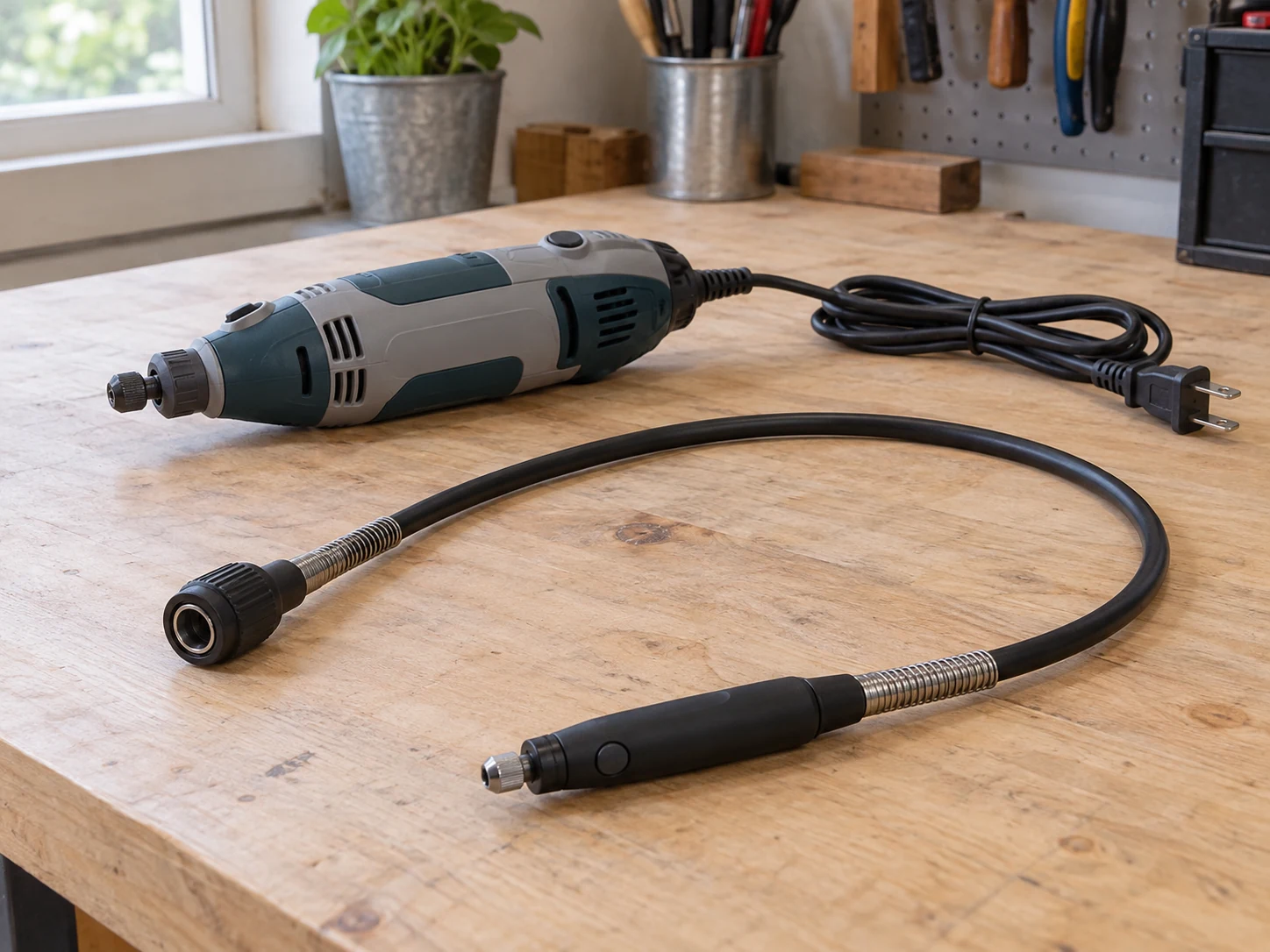
Dremel 4300 flex shaft compatibility has a positive manufacturer answer: Dremel names the 4300 among the tools compatible with its 225-02 attachment. The useful buying question is then how that attachment connects, which parts belong at each end and what your particular kit already contains. A flex shaft moves the accessory holder away from the motor body. It does not turn every small rotary accessory into an approved choice.
Consider the connection as a path with a motor end and a handpiece end. Buying the attachment concerns the first relationship; choosing the accessory holder and the working accessory concerns the second. Keeping those decisions distinct makes the manufacturer's compatibility statement more useful than a general assurance that two items share a brand.
Start with the actual tool and attachment
The selected Dremel 4300-5/40 corded rotary tool offer describes five attachments, forty accessories and a soft case. It also identifies variable speed, a pivoting LED and a universal three-jaw chuck. Those are the offered kit's statements. The attachment count alone does not name the five items or establish that a flex shaft is among them.
The separate Dremel 225-02 flex-shaft offer identifies model 26150225AJ, black, and expressly includes the 4300 in its compatibility description. Its wording says two attachments; that should not be read as two complete flexible shafts. Dremel's separate model 225 instructions list a shaft assembly and driver cap. Confirm the actual retail contents against that parts distinction before ordering a spare for someone else.
The pair consists of a motor tool and an optional attachment. Someone who already owns a 4300 is deciding whether to add the separate handpiece arrangement. Someone choosing a first kit needs to establish its named contents before adding another package. Both shoppers can use the same documented model match while arriving at different shopping lists.
The driver cap connection is at the motor end
The 4300 manual's model 225 section shows the motor's nose cap, chuck or collet nut, and collet removed for this attachment. The driver cap connection couples the motor shaft to the square end of the flexible core. The attachment's collar connects to the tool housing. These components perform different jobs: the core transmits rotation, while the collar is the housing connection.
That explains why a driver cap belongs on the parts enquiry even though it is much smaller than the flexible cable. A complete-looking cable and handpiece do not by themselves describe every component in the connection path. For an existing attachment, identify its supplied parts before shopping for a replacement package. Keep the manufacturer's parts names with the equipment record using those names when asking about a loose metal fitting.
The driver cap connection also explains why an accessory-holding chuck and an attachment coupling are different purchasing categories. The chuck is familiar because it holds bits when the motor tool is used directly. That familiar role should not make it the assumed coupling for every attachment. Read the actual attachment section before choosing a spare on the strength of its appearance.
This is a description of the documented arrangement, not a substitute assembly sequence. Use the applicable tool and attachment instructions for installation, power isolation, checks and operation. Do not turn a shopping comparison into a powered trial. An identified, supported combination still needs its own instructions when it is put into service.
The flex shaft chuck belongs at the output
The 4300 manual's attachment table marks model 225 as chuck-compatible and specifies that the chuck fits the flex shaft's output. Thus the flex shaft chuck is a handpiece-side option in that table, with a location distinct from the coupling at the motor.
That distinction is particularly useful when someone asks whether they need to buy another holder. First establish which end they are describing. A question about connecting the attachment to the motor and a question about gripping an accessory in the handpiece call for different parts information. Write the intended location beside any proposed spare so the response addresses the actual need.
If using a collet arrangement, the model 225 instructions require the collet to match the accessory's shank and prohibit forcing a larger shank into it. A collet's size therefore describes a gripping relationship. It should not be confused with the attachment collar or used as a measurement of the flexible cable.
The flex shaft chuck answer also has a limited scope. A holder being permitted at the output does not establish that every accessory it can grip is permitted for that attachment or task. Keep the accessory identity and applicable restrictions beside the holder decision. Physical gripping and manufacturer-authorized use answer different questions, even when the shopping page makes both sound like fit.
Choose the arrangement for the work you actually have
The practical difference to consider is where the motor body and the accessory holder will be during the intended task. Dremel describes the attachment as a flexible cable ending in a small handpiece. That gives you a concrete arrangement to evaluate against the applicable instructions. It supplies no measured improvement in your accuracy, comfort or finished result.
For example, a shopper planning several small decorative details may want to consider the separate handpiece arrangement before deciding on accessories. The useful planning question is whether that arrangement suits the actual work and approved accessories. Calling the attachment a precision upgrade would skip over the task, the person's handling and the conditions that affect the result.
Someone who mostly uses the motor tool directly may instead want to keep the additional arrangement out of the purchase until a suitable task arises. A compatibility confirmation establishes an available option; it does not require adding it to every kit. Conversely, an owner with a clear use for the attachment can investigate the complete package without treating the tool's existing chuck as a reason the shaft cannot be used.
Dremel's flex-shaft warnings exclude router bits and other bits one inch or larger. They prohibit sharp or multiple bends and specify a minimum recommended bend radius of six inches. These attachment restrictions remain relevant after the tool model has been matched. Follow the full applicable safety information; a successful model lookup does not expand the attachment's permitted work.
A practical way to separate these purchases is to describe what is already present. If the motor tool and its named kit contents are on the bench, the next order can focus on the attachment package. If the flex shaft is already there, its own identity and contents become the starting point for a parts question. This avoids making the largest package the default answer to every small missing component. Keep any seller response with the proposed item so that a later purchase still concerns the combination actually discussed.
When an order is intended for another person, ask which tool they will use and which equipment they already own. A gift described only as a Dremel accessory leaves those decisions to the recipient. Providing the exact attachment reference and its applicable instructions gives them something identifiable to compare with their tool. Keep the supplied package intact until its contents have been checked. If the order changes to another model, review the new pairing on its own terms; the original compatibility answer belongs to the original equipment.
Keep other attachment systems in their own scope
The oscillating-tool blade-fit guide is relevant if the same workshop contains a multi-tool and its blade sets. That guide concerns an oscillating mounting system. Its Starlock designations and blade requirements do not identify a rotary tool's flex-shaft connection. Store each tool's accessory references with that tool rather than grouping everything under a general power-tool accessories label.
The Sherlock GT connection guide provides a separate example of distinguishing an adapter from a replacement component. That is useful when wording a parts enquiry here, but its painting-pole tips provide no rotary-tool parts approval. Name the job the requested part performs and the actual equipment it belongs to.
For a household with shared equipment, retain the tool model, attachment model and confirmed contents together. A brief record prevents one person from ordering another complete attachment when the question was about an accessory holder, or from borrowing a loose part whose identity was lost. Photograph packaging references where available and keep the relevant instructions accessible to whoever will use the equipment.
Keep cryptocurrency payment separate from the fit decision
If you plan to pay with cryptocurrency, finish the equipment decision before creating a payment. Keep the selected tool or attachment, the seller's actual contents and your intended delivery arrangement together in the order record. Payment cannot answer whether a driver cap is included or whether your proposed accessory is allowed. A useful purchase note describes the goods first, so you can compare the final order with what you meant to buy. Republeq's FAQ says the payment methods available are shown at checkout and may include cryptocurrency. Use that checkout information for the actual order. Consider USDT only if the checkout explicitly offers that exact asset and the network you intend to use; this guide does not establish its availability. Keep any payment instructions with the order they describe. If a detail is unclear, obtain clarification before authorizing the transaction; changing the shopping list and changing a payment instruction are separate decisions. The FAQ states that cryptocurrency purchases are non-refundable and describes conditional exchanges for unused goods in original condition, with proof of payment and replacement inventory available. Read the current terms before deciding that an exchange would solve a mistaken accessory selection. Keep the item identity and payment record so a later support question can be linked to the right order. None of those payment conditions establishes tool compatibility, warranty coverage or a working result. This guide gives no cryptocurrency price, exchange rate or projected saving. Its equipment conclusion remains the documented 4300-to-225 relationship, with the actual supplied parts and intended accessories checked separately. Choose a payment method after you are satisfied with that purchase, and retain the order confirmation with the model references you used.
Finish with a complete parts decision
Before buying, distinguish a new tool kit, a separate attachment and a particular spare. Keep the 4300-5/40 kit's actual contents separate from the 225-02 package. For equipment already owned, identify the existing parts before duplicating a purchase. Use the applicable model information for any different tool rather than extending this pairing to an entire brand.
Dremel 4300 flex shaft compatibility is established here at the named tool-and-attachment level. The remaining practical choice is a complete, correctly identified arrangement: the motor-side coupling, the handpiece-side holder and an accessory permitted for the intended work. That gives you a specific purchase to check against the delivered contents and the manufacturer's instructions.