Product Compatibility & Accessories
Sherlock GT compatibility: quick-click tools and threaded adapters
Match a tool to Sherlock GT quick-click or its threaded conversion tip, and distinguish R092 and R097 pole lengths from their shared connection.
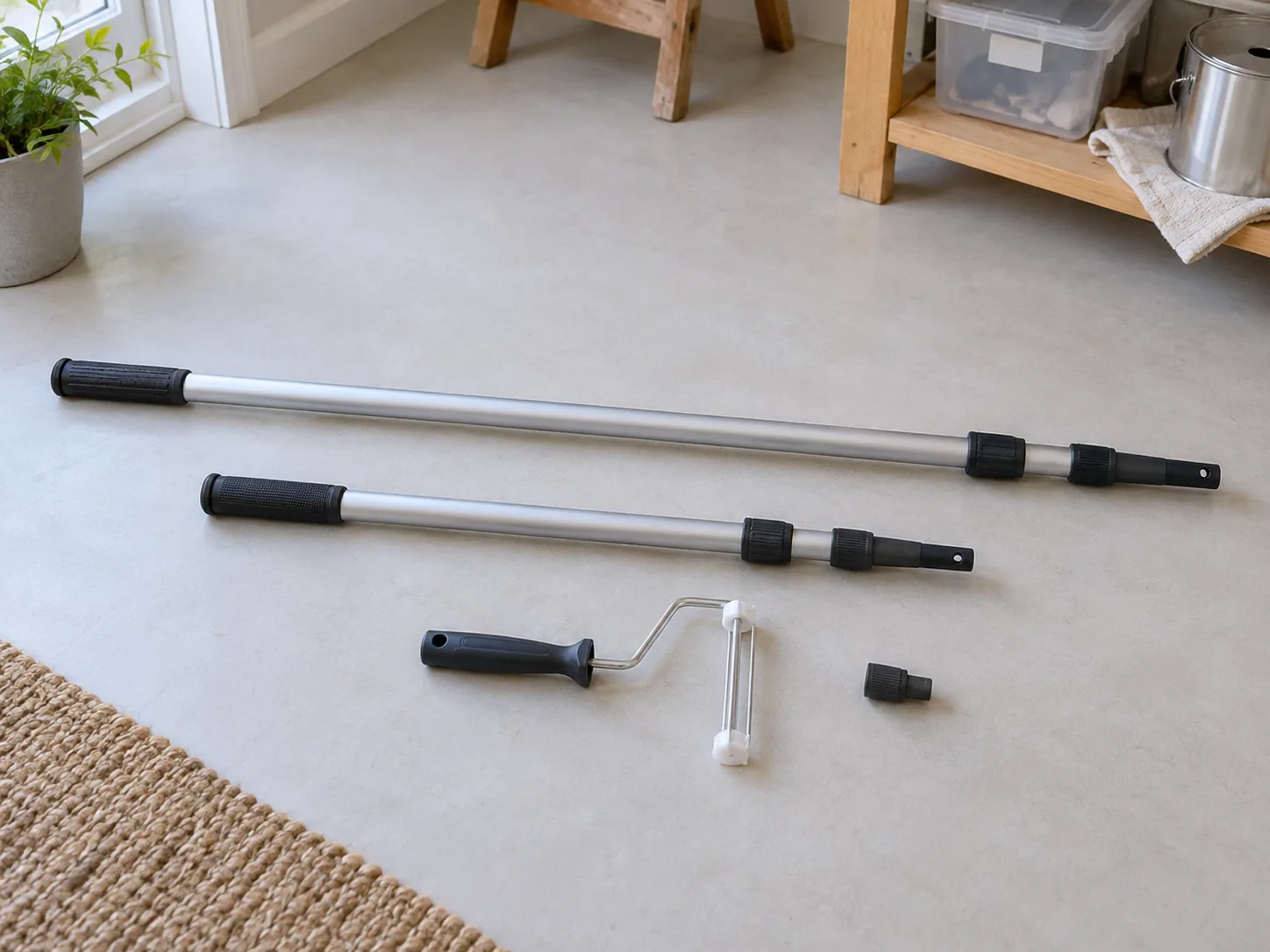
Sherlock GT compatibility concerns the connection between a painting tool's handle and the extension pole beneath it. A pole's length describes a different feature. Wooster's GT range uses a quick-click connection and includes a conversion tip for standard threaded tools. You can then distinguish two connection routes when choosing equipment: an appropriate tool connecting to the GT system, or an appropriate threaded tool used with the intended conversion tip.
The selected offers describe a Wooster R092 pole extending from six to twelve feet and an R097 two-pack whose poles extend from one to two feet. Both belong to the GT range. Their different lengths do not create different connection systems. This guide explains the documented interface and the accessory names that can otherwise look interchangeable. Use the instructions applicable to the actual pole and tool for attachment, adjustment and operation.
Identify the extension pole connection type first
Start with the tool handle you intend to extend. Find its model and the manufacturer's statement about extension-pole compatibility. Record whether that statement identifies Sherlock GT, a standard threaded connection or another system. The tool's working width does not answer that question. A roller may have a nine-inch cage while the relevant pole connection sits at the opposite end of its handle.
The extension pole connection type should therefore have its own place in your shopping note. Put the tool model beside the pole model, then name any adapter between them. This gives a supplier a specific proposed combination to address. A note containing only “Wooster roller and long pole” leaves out the connection that determines which additional item, if any, belongs in the purchase.
Wooster's current catalogue provides actual examples of tools with a stated relationship to the GT system. Its Sherlock R017 frame section expressly identifies compatibility with Sherlock GT and standard threaded extension poles. The statement names both systems; it does not tell you that every painting tool bearing the Wooster name has the same handle. Look for the corresponding information for the particular tool you own.
What the two selected GT offers share
The Wooster Sherlock GT R092 six-to-twelve-foot pole description identifies a bayonet Grip Tip, a release lever and a hexagonal aluminium inner pole within a fiberglass outer section. Its connection claim concerns compatible Wooster tools held at that tip. Keep the model R092 with the offered length so the seller can identify the item you are considering.
The Wooster Sherlock GT R097 one-to-two-foot two-pack describes the same kind of bayonet connection and lever release. The offer supplies two poles, each with the stated length range. It is not a set of two pieces that combine into one longer pole. If two people need separate poles, keep the actual pack contents distinct from the length of either individual item.
Wooster's GT page lists R092 at six to twelve feet and R097 at one to two feet within the same range. Its shared description identifies a quick-click tool connection and an included standard threaded tool conversion tip. Read those as range information alongside the retail offers. When confirming the order, ask that the supplied item and included tip correspond to the exact model and package you selected.
The threaded tool conversion tip has a particular job
A threaded tool conversion tip connects the threaded-tool route to the GT system. Wooster's catalogue describes its GT conversion tips as making a threaded tool Quik-Clik compatible and working with Sherlock GT poles. The accessory exists because the tool-side connection can differ from the pole's bayonet connection. It is useful to name that difference before choosing an extra part.
Consider an existing tool whose applicable information identifies a standard threaded extension connection. The relevant question is whether that actual tool is covered by the conversion-tip arrangement. Give the seller the tool reference along with the GT pole reference. If the tool instead has documented direct GT compatibility, establish which connection its instructions describe before adding an adapter simply because the pole package includes one.
The words standard threaded do not provide a numeric pitch or a complete list of other manufacturers' handles. This guide supplies neither. Keep the stated relationship at its documented scope and obtain the answer for an unidentified tool before ordering around it. That is especially useful for a shared cupboard containing tools from several different ranges, where a familiar brand name can outlast the packaging that identified the handle.
Do not confuse an adapter with a replacement pole tip
Wooster's catalogue separates GT conversion tips, catalogue number FR042, from a GT bayonet replacement tip assembly, FR068. The conversion tip addresses the threaded-tool connection. The replacement assembly is listed among pole maintenance parts. They have different jobs despite both descriptions containing the word tip. When requesting a spare, use the part reference and the job you need it to perform.
A missing conversion accessory and damage to the pole's own tip are therefore different purchasing situations. In the first, you need the appropriate accessory for the proposed tool connection. In the second, identify the pole and obtain the applicable maintenance guidance before selecting a replacement component. The catalogue's parts list does not itself supply a repair procedure, and this guide provides no disassembly sequence.
The same catalogue distinguishes its GT maintenance kit, FR955, from the Sherlock threaded-pole kit, FR950. Those names make the pole family relevant when looking for maintenance supplies. A familiar Sherlock label is not enough to choose between the two. Preserve the GT designation and the actual pole model on the enquiry so the response concerns the system you own.
Tool release and length adjustment are separate features
The selected GT descriptions discuss the tool-release lever, while Wooster's range page separately says the pole extends and locks in place. One feature concerns the attached tool; the other concerns the pole's adjustable length. When describing a problem or asking about instructions, say which relationship you mean. A question about the tool coming off is different from a question about retaining an extension setting.
Likewise, the hexagonal inner-pole description concerns the pole's construction. It should not be used as the answer to a handle-connection question. Keep a mechanical feature attached to the part it describes. You can then read the product information without treating every anti-twist statement as permission to connect an unidentified tool or as evidence that your own assembled equipment has been checked.
For a parts enquiry, the catalogue makes that distinction visible in its names. FR066 is the pole lock lever, while FR067 is the Sherlock GT tip lever. Asking only for a replacement lever leaves those two functions unresolved. Describe which part needs attention and give the actual pole model when seeking the applicable guidance. A colour, photograph or approximate shape may help explain the question, but the answer should identify the intended component and its role before you order it.
Keep any maintenance answer with the particular pole it covers. A household may retain both a threaded Sherlock pole and a GT pole after replacing a roller frame. Write the complete system name on the equipment record rather than shortening both entries to the family name. That lets the next person distinguish a tool adapter request from a pole-component request without guessing which previous purchase you meant. If the supplier cannot identify the item from the record, resolve that identity before choosing a maintenance kit or individual part.
Choose the length after identifying the connection
R097 and R092 offer substantially different stored and extended lengths. Think about the actual space where you will keep the pole, transport it and carry out the intended task under its instructions. A compact pole and a longer pole can share a compatible connection while presenting different practical handling and storage questions. Choose the range for that task after establishing the interface you need.
The printed pole length is not a statement of a safe working height. It does not include your tool, your position or the conditions where the work would take place. This guide supplies no overhead-work arrangement, load rating or permission to use a painting pole for another task. Obtain the relevant operating information for your actual setup rather than turning a length comparison into an improvised reach plan.
A household inventory can record the model and range on separate lines: R097, one to two feet, or R092, six to twelve feet. Add the connection system and the accessory information beside them. That helps someone selecting equipment distinguish the pole that fits the planned space from the question of which handle it accepts. The same GT designation does not erase those different physical lengths.
Keep the offer quantity separate from catalogue packaging
The R097 retail offer explicitly describes a two-pack. Wooster's catalogue also has case-quantity columns, which describe its own listed packaging levels. Do not substitute a catalogue case count for the selected retail pack. Confirm what the actual offer supplies, including the applicable conversion tip, so your equipment plan reflects the order rather than a number copied from a different column.
For equipment already in a cupboard, identify the pole you have before buying an accessory for another one. Retain its model information and any supplied instructions with the purchase record. A loose tip found nearby needs its own identification; sharing a drawer with a GT pole does not identify the part. Match the accessory's reference to the documented job before relying on it in the proposed combination.
Use each compatibility answer for the interface it covers
The paint roller cover compatibility guide addresses the relationship between a cover and the frame carrying it. That relationship sits above the handle connection discussed here. You may have a documented pole connection while the cover's core remains unidentified, or a confirmed cover pairing while the handle still needs checking. Record both answers if both interfaces are part of your purchase.
The backdrop support compatibility guide also keeps length and attachment as separate questions. Compare the roles of those specifications: a dimension describes the support's extent, while a connection describes how another item is held. Its frame, load and attachment details supply no approval for using a painting pole to carry a backdrop or any other unrelated object.
Before ordering, finish the record with the actual tool, the selected GT pole and any intended conversion accessory. Include photographs of the existing model label and accessory packaging when those references are available. Confirm the offer's contents and keep the applicable instructions for those items. If a supplier proposes a different part, check its identity and stated role before replacing the one in your note. You then have a specific documented combination to follow when the equipment arrives.