Product Compatibility & Accessories
Backdrop stand compatibility: match fabric to its support
Check backdrop width, attachment and supported weight against a telescoping crossbar kit or fixed square arch before choosing accessories.
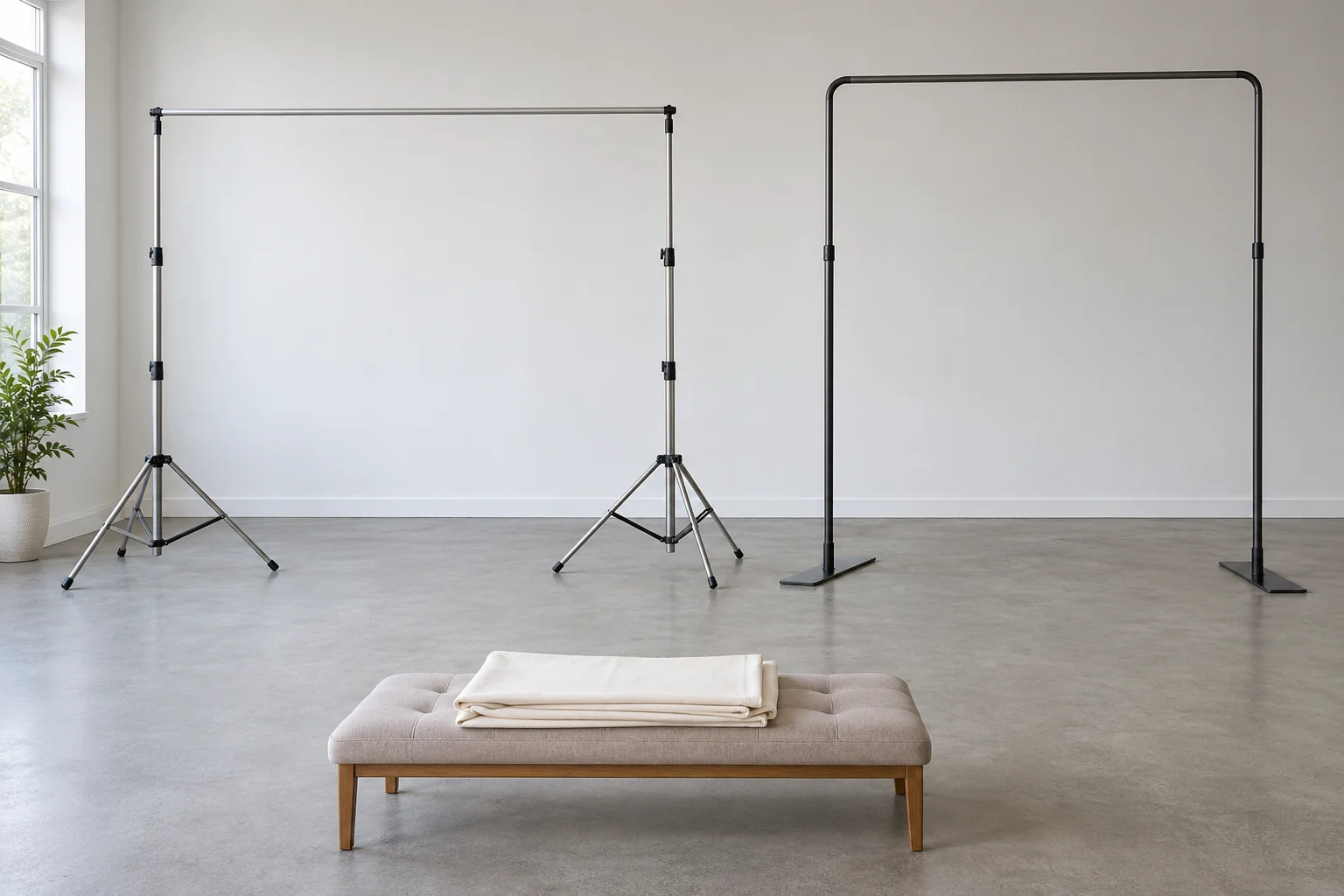
Backdrop stand compatibility starts with the background you want to support and the exact stand you are considering. A photograph showing fabric behind a subject does not identify its attachment, weight or dimensions. Find those requirements in the actual background information before deciding whether a particular frame can support it.
The two actual offers here describe different support arrangements: a NOBRAND telescoping crossbar kit and a NOBRAND square event arch. Their stated dimensions help you ask specific questions. They do not establish that a particular cloth, roll, decoration or mounting accessory belongs on either structure. This guide is a purchasing compatibility check; follow the actual equipment instructions for assembly and use.
Identify the background and the support as separate items
Begin with the background's own description. A loose fabric sheet, a backdrop with a sewn pocket and a paper roll present different attachment questions. The word backdrop alone does not identify which one you own. Keep its actual product name and any applicable instructions available while looking at the proposed support.
Then identify the support. A kit containing uprights and a crossbar is a different offer from a rectangular event frame. Neither name by itself tells you which fasteners, pockets, clips or roll fittings are permitted. Ask about the actual combination, including any extra accessory you intend to use between the background and the support.
A useful enquiry names both products in one sentence. For example, you can ask whether an identified fabric background with its documented attachment is supported by the exact stand offer. Leave an unknown dimension or missing weight visible in that enquiry. A general reply about wedding photography may leave the physical combination unanswered.
Backdrop width and support range
The NOBRAND retractable photo and video backdrop stand kit states a telescoping crossbar range of 5.3–10 feet. Its title says 10x10FT, while the body specifically describes that crossbar adjustment. Do not turn the title into a verified height-adjustment range that the description does not give.
For backdrop width and support, compare the background's documented width with the applicable support arrangement. A printed overall dimension may describe the full material, including an edge that will not appear in the picture. Ask which dimension needs to span the support and which belongs to the hanging drop. Write width and height beside their respective measurements when comparing the background and frame.
Consider a hypothetical background described as eight feet wide and six feet high. Eight feet lies numerically inside the selected crossbar's stated range. That observation answers one arithmetic question. The actual attachment, permitted load and applicable instructions still need to address the combination before you call it compatible.
Now consider a hypothetical background only four feet wide. Its width falls below the stated 5.3-foot minimum crossbar length. That difference does not supply an improvised attachment method or prove the entire purchase unusable. It gives you a precise question about how that particular background is intended to be supported, which the offer has not answered here.
Read the square arch in its stated orientation
The NOBRAND square backdrop stand offer describes its frame as seven feet tall and five feet wide, with a support base. Keep those orientations together. Reversing the numbers would change the opening you are planning around. The description gives no matching five-kilogram load rating for this frame.
Its description proposes flowers, balloons, props and other decoration, and says two arches can be joined. Those statements leave the actual connection method and permitted loading unanswered here. They do not supply a joint specification or an approval for joining it to the separate telescoping kit. Ask for instructions covering the exact proposed arrangement.
A fixed rectangular outline can suit a scene whose composition calls for that shape. That visual preference remains separate from whether the material and attachments are supported. A buyer may prefer the frame's proportions and still need to resolve a particular hanging arrangement before ordering it.
If someone has already sketched a wider display using two frames, retain that sketch as a proposal. Identify both exact units and the intended connection when asking for confirmation. An illustration of a larger opening cannot establish its structural suitability or the room needed around its bases.
Backdrop attachment requirements need their own answer
For backdrop attachment requirements, ask what the background provides and what the support accepts. A pocket needs an applicable bar arrangement. A separate clamp needs an appropriate gripping arrangement. Neither interface can be confirmed simply by observing that a product photograph contains a dark horizontal line behind the material.
The telescoping kit lists two nominal 4.5-inch plastic clamps, two empty nylon sandbags and a carry bag. The clamp size does not identify its jaw opening or certify it for every fabric and bar. The empty bags do not establish an approved filling amount or a complete stability arrangement for a particular location.
If the background requires an accessory that the selected kit does not identify, ask whether it is included or must be obtained separately. Give the accessory's actual designation if you have it. A seller answering that clamps are supplied has not necessarily answered a question about a particular sewn sleeve or roll fitting.
Keep extra decorations in the same enquiry when they affect the proposed combination. A fabric-only question and a question involving fabric plus several other objects describe different arrangements. Confirmation of the simpler proposal should stay attached to that proposal. Obtain an answer covering the full intended use before making a broader compatibility claim.
Keep the stated load with the actual kit
The crossbar kit's description states a payload up to five kilograms, also written as eleven pounds. Treat those as the offer's paired approximate units for one claim. Do not combine them into two separate allowances, and do not transfer the figure to the square arch because the products appear in the same category.
Identify the weight of the full proposed supported arrangement from reliable product information. If a material's weight is missing, ask for it. A lightweight-looking fabric or a small decorative item can remain unquantified. An adjective in a listing does not supply the number needed for a load comparison.
The stated payload also does not answer every configuration question. Ask which instructions and conditions apply to the rating for the exact stand. A numerical match between a load and a headline figure should not become permission for an unexamined arrangement, outdoor exposure or overhead equipment. This guide supplies no such installation plan.
A compatibility enquiry can therefore remain open even when the width looks suitable. Use the missing specification to decide which question must be answered before this purchase. You can request the missing load or attachment detail, choose another documented arrangement, or postpone the purchase. There is no requirement to settle a physical uncertainty by hanging the items as an experiment.
Check the room around the proposed background
Plan the visible background separately from the space occupied by its support. A photograph's crop can hide feet, uprights and the area behind the cloth. The frame's advertised width does not establish that the whole assembly fits the room or leaves enough space for the people using it.
Use the support's applicable dimensions and instructions to assess the actual location. If the feet's required space is not supplied, ask for it. Keep doorways, access to the subject and ordinary movement through the room in the planning question. Include the complete support arrangement when assessing whether the proposed location has sufficient room.
For a small product photograph, consider whether the entire proposed background needs to appear in the image. For a group portrait, the intended people occupy a different composition. These are framing choices you can discuss before choosing equipment. Neither choice changes the stand's physical requirements or establishes a new permitted load.
Do not infer outdoor suitability from an event photograph or the word wedding. Ask about the actual location and intended use under the manufacturer's instructions. The two selected descriptions do not provide a wind rating or a complete outdoor installation procedure. Keep that unanswered condition visible if it matters to the planned event.
Decide which missing detail changes the purchase
Suppose you already own a background and want to retain it. Put its actual requirements first when asking about the new support. Buying a frame that suits a photograph in an advertisement can leave the original background without a confirmed attachment. Ask the seller to address the item you own, including any feature its instructions require.
If you are selecting the background and support together, request information for both exact offers. A package photograph may show objects used to illustrate a scene that are sold separately. Establish the actual supplied contents before assuming the cloth, extra clips or decorations will arrive with the frame. Keep any separately required item in the purchasing decision.
A buyer replacing a missing component has a narrower question. Identify the existing support's actual model and the missing part before choosing a new crossbar, connector or clamp. A component from another set should remain unconfirmed until applicable compatibility information addresses it. The two complete support offers discussed here do not supply a shared spare-parts specification.
Choose the next enquiry according to that purchase: retaining a background, selecting a complete combination or replacing an identified part. The seller can then address the actual background, complete combination or replacement component you need. If the response addresses a different arrangement, bring the question back to the exact items you intend to use.
Use scene planning after identifying the physical questions
The holiday display planning guide explores how a pair of figures and an illuminated background can compete for attention. It is useful for deciding what a viewer should notice first. Its decorative scene proposal supplies no mounting approval for either support described here.
Make a simple drawing of your intended subject and background, then mark the physical questions still unanswered. You might know the desired colour and visible width while still lacking an attachment specification. Keep the visual intention in the sketch and the missing equipment information beside it. The drawing can then guide the intended composition while the actual equipment questions remain open.
The lens hood compatibility guide similarly keeps an accessory and its exact target identifiable. Its Sony and Fujifilm hood information belongs to those optical accessories. The useful habit here is naming the actual parts of a proposed combination, including any additional component, before accepting a general compatibility answer.
Finish the enquiry with the background's documented dimensions, attachment and weight alongside the exact support offer. Include the intended location and additional accessories where they affect the question. Backdrop stand compatibility is established only as far as the applicable information addresses that combination. Keep any remaining dimension, connection or operating condition unresolved until it receives a specific answer.
Conceptual backdrop stand compatibility cover with separate generic empty support frames and folded fabric; no exact models or verified attachment or load result is shown.