Cleaning & Vacuums
Floor squeegee budget: compare the complete order
Plan the order around the floor tool you need, resolving supplied parts and any handle reuse before comparing complete purchase options.
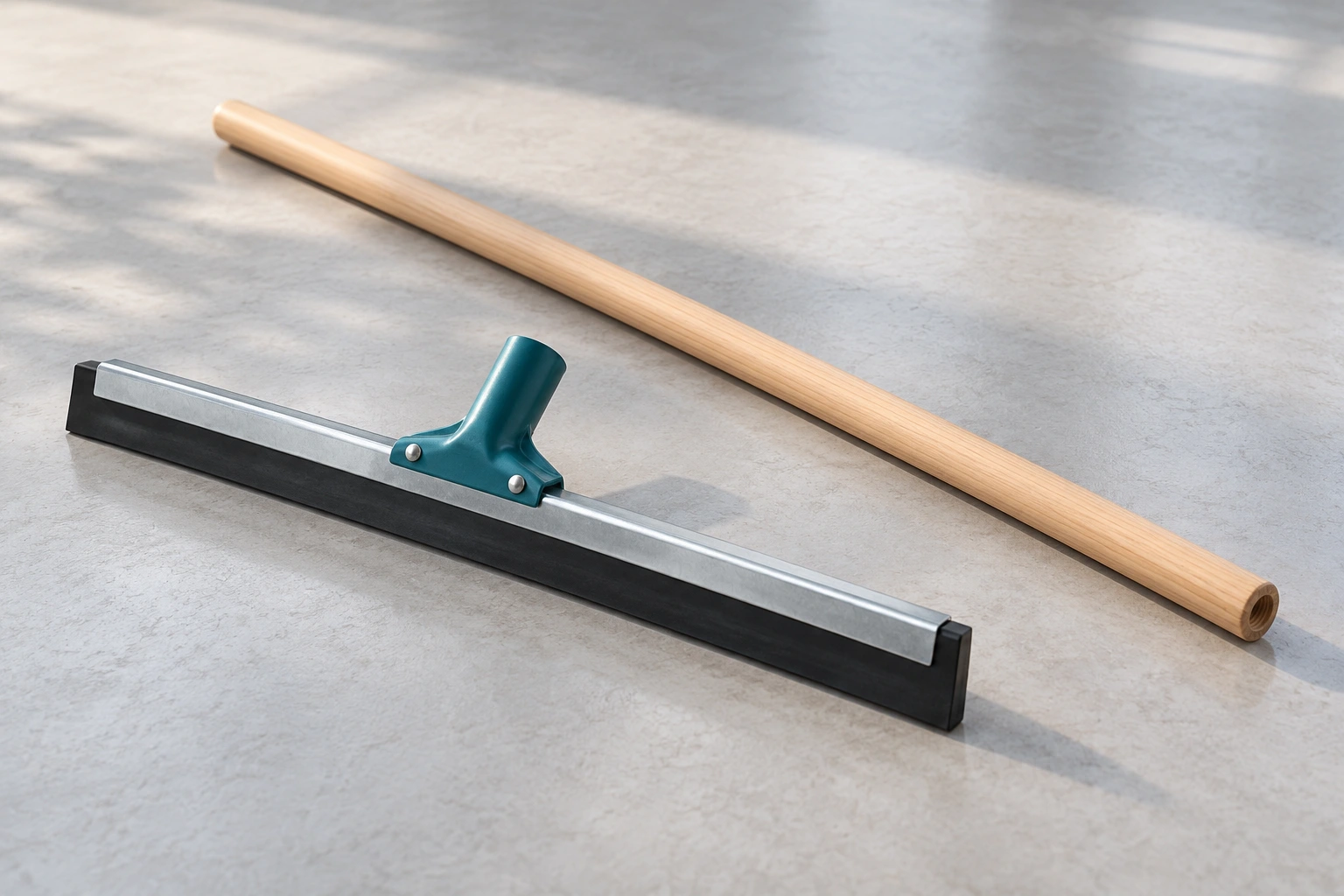
A Floor squeegee budget should describe the order you actually need, including any handle or other required component still to be confirmed. A head that interests you is a starting point for that decision. Before comparing purchase options, decide whether you are replacing one identified part of an existing setup or buying a new tool arrangement. Those buyers can need different orders even when they begin on the same product page.
Read the two head accounts literally
The Tough Guy 48LZ33 offer describes a yellow, straight rubber floor squeegee, 23-39/64 inches wide. Its single gallery image shows the wiping head and socket. A long handle is not pictured; that observation does not establish the supplied contents.
The Unger HW750 offer names a 30-inch floor squeegee. Its image shows a red wiping blade, metal frame and socket. Confirm the actual ordering unit and supplied components. Neither a pictured socket nor a familiar-looking handle is a compatibility specification.
Unger’s European red WaterWand page opens on HW550, links HW750 information and lists compatible handle products. Its US WaterWand table identifies HW750 with a different UPC from the selected offer. Keep those regional accounts separate. A maker’s “can be used with” list is not a packing list, and a range page does not settle an individual retail order. Obtain the matching product identity and component answer for the purchase you intend to make, rather than assuming that a shared model reference resolves every detail.
Start with the missing part of your own setup
If you already own equipment, begin with the object you intend to retain. Find its actual identification and any applicable instructions before describing it as reusable in the new order. Your purchase question can be precise: can this identified component remain in the proposed arrangement, and what exact item would complete it? Leave that answer open until the relevant supplier or matching documentation establishes it. This guide gives no method for trying an uncertain connection.
Keep a photographed or remembered resemblance out of the confirmed reuse decision. You may have a handle in a cupboard and still lack the information needed to choose a new head for it. Describe it as an item to identify, rather than a completed part of the proposed purchase. That distinction keeps your comparison honest without requiring you to throw the old item away or buy its replacement immediately.
Imagine a fictional buyer, Mara, who wants to retain a handle she already owns. She first asks for an answer tied to that handle’s identity and the proposed head. If she receives only a reply about another version, her reuse option remains unresolved. She can keep looking for the matching information while leaving the purchase unplaced. This is an invented ordering situation, not a compatibility test or a report of money saved.
A new setup needs its own complete option
A buyer starting without equipment has a different question. Ask for the complete proposed configuration and the actual items in the order that would supply it. Any required component should have an identifiable place in that answer. If someone recommends another item, ask whether it is required for the proposed configuration or merely an optional addition. An unexplained accessory name should not silently become part of a budget.
Now imagine another fictional buyer, Ivo, starting from nothing. His complete option cannot assume ownership of Mara’s handle. He asks what the proposed purchase includes and what, if anything, must be ordered separately. The resulting description can differ from hers without either buyer being mistaken. They are making different purchasing decisions. Neither scenario establishes that reusing equipment is cheaper, or that a complete new arrangement is better value.
Keep the new-setup option available even if you hope to reuse an existing part. It gives you a concrete alternative if the reuse question cannot be resolved. Conversely, do not add a replacement handle to the reuse option simply because you have begun assembling a cart. Wait for the component decision. This keeps an unanswered fit question from becoming an assumed purchase in either direction.
Compare the same intended purchase
Once the components are identified, describe each complete option in a sentence. State what you would buy and what confirmed existing equipment, if any, the plan relies on. Read the sentence as though someone else will place the order. They should be able to distinguish the proposed goods from the items already owned and from the questions still awaiting an answer. A product name alone may not convey that distinction.
Use the actual current order information when you are ready to compare the options. Include any separately required components in the option that needs them. Review the checkout conditions relevant to that purchase, rather than filling a missing detail with an amount remembered from an unrelated order. This article quotes no current prices, supplies no financial calculation and establishes no saving for either selected offer.
Do not give an incomplete option a financial advantage by treating its unresolved component as free. Equally, do not invent an expense merely because the answer is unknown. Keep that option visibly incomplete until the real information is available. You can still compare what has been established, but the unresolved item may prevent a complete purchase decision. Waiting for one precise answer can be a reasonable outcome.
Keep a different task out of the comparison
A complete component list does not establish that the arrangement suits your intended floor-care task. Settle that question through the relevant product and surface information. This guide does not provide a cleaning method, chemical recommendation, safety certification or performance comparison. Keep the intended use identifiable while seeking that information; the purchasing exercise cannot replace the instructions applicable to the actual equipment and surface.
The narrow pane-edge squeegee guide owns a separate access question on reachable glass: which part of a head or handle is obstructed by the opening. Its glass-clearance method is not a floor-tool selection procedure. The useful boundary here is that an order can have all its named parts while suitability for a particular task remains unanswered.
Avoid adding a second tool to the proposed order merely to make an unresolved task disappear from the discussion. First state which job the first arrangement is intended to serve. If another job genuinely needs a separate choice, compare that choice on its own information. A purchase can be deliberately limited to one task. It need not become a speculative replacement for everything already available.
Do not turn an optional spare into an automatic saving
An extra component deserves its own reason for being in the order. Ask what future event it is intended to address and whether the actual product supports that replacement. A general wish to avoid another order does not establish that a particular spare will be usable when needed.
If you are considering a spare, keep its decision separate from the equipment needed for the first complete setup. You may decide that an identified spare is useful; you may leave it out while obtaining more information. Neither choice proves a financial saving by itself. Do not compare an option containing discretionary extras with a basic option and attribute the difference solely to the main tool.
The squeegee streaks guide separates a mark following the wiping edge from a patch remaining on glass, and keeps inspection distinct from a replacement decision. It supplies no diagnosis or replacement approval for these floor heads. Retain that boundary when considering an extra part: a possible future problem is not an established reason to order an unidentified remedy.
Check what the complete plan relies on
Consider whether a handle you hope to retain will actually be available for the intended arrangement. In an original planning example, a buyer has identified an existing handle but intends to leave it with another tool needed at the same time. The proposed new order should reflect that intention. Describing an owned item as available for reuse is a purchasing choice about the actual setup, not merely a statement that the item exists somewhere in storage.
The buyer could reconsider the intended arrangement, obtain a confirmed separate component or leave the purchase undecided. This example supplies no instruction to detach a part, swap components during a task or disregard the equipment’s directions. Its purpose is to identify a hidden assumption in the purchase plan before comparing orders. Keep the answer tied to the equipment you intend to have available, rather than counting an existing possession as a completed solution to every proposed need.
If a complete option involves items from separate offers, check the actual availability and delivery information for each proposed order. Do not assume that a complete plan means all its goods will arrive together. If the timing matters to your decision, ask the relevant seller to clarify the current information. This article establishes no availability or delivery date. A component that remains unconfirmed should stay visibly unresolved when you decide whether the proposed purchase meets your need.
Read the completed order back before committing
Before placing an order, return to the option you selected. Check that any change of variant or recommended component is reflected in the actual goods being ordered. If the proposal changed while you sought clarification, read the revised version as a whole. An earlier answer about one configuration should not silently approve another. Retain the relevant product references with the answer that actually resolved the component question.
In Mara’s fictional situation, a confirmed reuse answer would let her evaluate the corresponding order. If the answer remains unclear, she can continue the enquiry or consider the separately confirmed new-setup option. Ivo can assess his complete proposal without borrowing assumptions from her equipment. These examples leave the purchase decision with each buyer. They supply no observed outcome, promised delivery or financial result.
On receipt, compare the supplied identity and contents with the confirmed order before treating the purchase question as settled. Follow the seller’s actual process for a discrepancy. This guide reports no delivery or unboxing of either offer and supplies no return entitlement. If the contents differ from what was confirmed, retain the original order and describe the difference rather than assuming what the replacement order must contain.
Your next step should follow the answer you still need. It might be identifying the handle you hoped to retain, obtaining the exact supplied contents or comparing two now-complete orders using their current transaction information. A floor squeegee budget can remain unfinished while a component question is open. Name that question plainly so the eventual purchase reflects the setup you actually decided to obtain.
Read the conditions of the separate purchase
If you plan to purchase an item on republeq.com, check the particular offer and current checkout before ordering. This guide does not establish that any cryptocurrency payment option is available. If USDT is offered for the intended order, verify the requested asset, network, amount, receiving destination and order reference with the responsible service before authorizing a transfer. Review the actual product identity, selected variant, quantity, delivery details, total charge and applicable terms. Use the confirmed order details when checking the payment instructions. Confirm any fee, conversion term or exchange rate from the current transaction information. Determine the applicable cancellation, return and refund process, including how a refund would be handled for the selected payment method. Keep the relevant instructions and transaction records, with dates and confirmed references. If essential instructions change, ask the responsible service to confirm the change against the exact order. An acknowledgement should identify the order and the agreed details; it does not replace checking whether the selected product is the one you intended to buy. If payment or order status remains uncertain, reconcile that status before considering another transfer. Do not treat an unresolved transaction as evidence that nothing happened. This article supplies no wallet address, transfer guarantee, recovery procedure or assessment of a counterparty. A product enquiry does not authorize a payment or resolve an uncertain order. If support provides an answer, retain the exact question and response so a later reviewer can understand what was confirmed. Decide whether to proceed only when the conditions of the particular transaction are clear, and retain the confirmed transaction information with the exact order.