Home & Living
Floating glass shelf length and bracket fit: compare two sizes
Measure the wall and display objects, then verify the included clips and wall fasteners before choosing a glass shelf length.
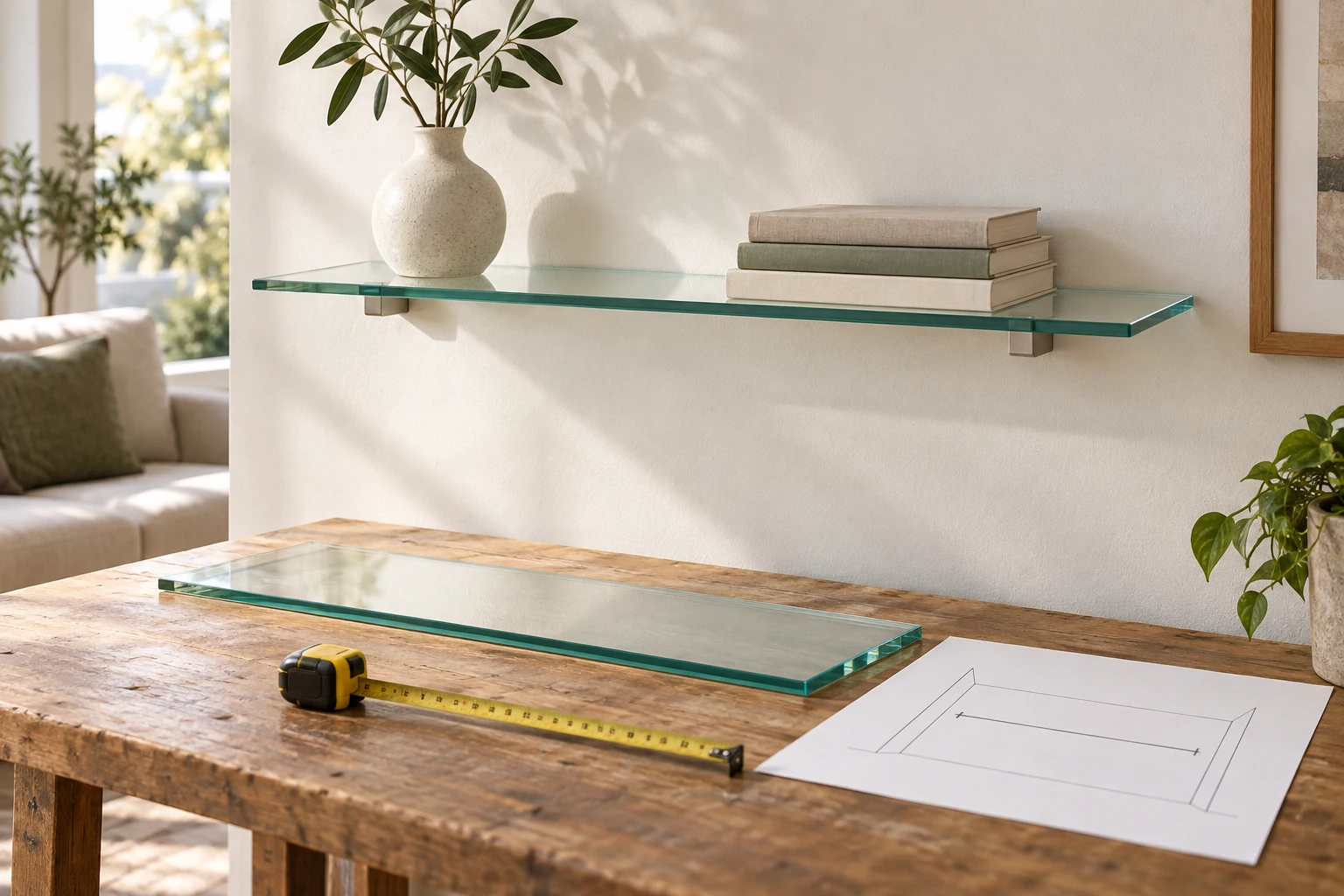
Floating glass shelf length and bracket fit are two checks on the same purchase. A shelf can fit the measured wall span and still lack a confirmed way to fasten its clips to the wall you have. Begin with the clear width, the items you want to display, and the wall construction. Then read the selected shelf's exact dimensions and included parts. A product photo shows a finished display; it does not establish that the mounting points or fasteners suit your wall.
Two current 6-by-33-inch Peacock glass shelf and 6-by-36-inch Peacock glass shelf listings offer a useful comparison. Each describes a clear tempered-glass shelf 3/8 inch thick with two Peacock shelf clips included. Each also gives a recommended capacity up to 55 pounds. The difference stated in their names is three inches of length. The pages do not, by themselves, tell you what fastener or anchor is right for a particular wall or whether your proposed installation will achieve that recommendation.
Measure the real opening
Measure between the actual obstacles where the shelf would go: trim, window casing, cabinet sides, door swing, and any nearby outlet or switch. Take the width at the intended shelf height, because an uneven wall or angled corner can change the usable span. Write down that measured width separately from the nominal shelf length. A 36-inch board does not belong in a 35-inch opening simply because it would look centered in a photograph.
Compare the 33-inch and 36-inch options against the opening and the clearance you want at each end. Three inches can affect whether a shelf clears a casing or whether an end projects into a path. If the opening is broad enough for both, mark their endpoints with removable tape and stand back. The shorter one may leave more visible wall; the longer one may give the displayed objects more lateral room. Neither visual effect establishes mounting compatibility.
The listed depth is six inches for both examples. Mark that projection from the wall as well as the length. A shelf above a work surface must not interfere with normal use below; one beside a door must not be struck when it opens. Check the full path of people and furniture around it. If a glass edge will sit where someone could brush it, reconsider the location even if the nominal measurements fit.
Separate included clips from wall fasteners
The current listings say two Peacock shelf clips are included with each shelf. That identifies one component of the mounting system. It does not identify the wall material in your room, the fastener type, the hole spacing, or the installation method needed there. Before ordering, locate the maker's current instructions for the exact shelf and clips. Confirm which fasteners come in the package and which, if any, must be selected for your wall.
Drywall, masonry, tile, and wood-backed walls require different mounting decisions. The product descriptions captured here do not specify a universal anchor. Find out what lies behind the chosen points, including possible utilities, and use the maker's wall-specific instructions. If you cannot establish a suitable fixing method, do not treat the presence of two clips as proof that the shelf is ready to install. Ask the seller or a qualified installer about the exact configuration before drilling.
A published TV wall-mount compatibility guide treats screen interface, mount, and wall as separate fit questions. A glass shelf has a different load and hardware system, but the same habit of checking interfaces is useful. Here the questions are glass-to-clip, clip-to-fastener, and fastener-to-wall. This article owns that shelf-specific decision; it does not borrow the TV mount's hardware ratings or installation method.
Do not substitute a different clip just because it looks similar in a catalog photo. The glass thickness, edge shape, and specified support method all matter. These listings say the shelves are 3/8-inch tempered glass and include two particular clips. A replacement clip would need its own compatibility evidence for that glass and for the wall. If a piece is missing or damaged, identify the correct part with the seller instead of improvising a fitting.
Read the capacity as a recommendation with conditions
Both product descriptions state a recommended weight capacity up to 55 pounds. That is a listing claim for the product, not a promise that every wall, anchor, and installation can safely carry that load. The actual supported load depends on the installed system and the maker's instructions. The pages captured here do not supply a wall-specific test for your room. Plan with a conservative intended display and obtain the correct mounting guidance before relying on the stated number.
Consider how weight will be arranged, not merely its total. A single heavy object near an unsupported-looking end is different from several light objects spaced across the shelf. The captured listings do not provide a load-distribution diagram, so do not infer one from the first gallery photograph. Follow the shelf and clip instructions for placement and loading. If your intended objects are heavy or valuable, ask for the exact installation and capacity information before buying.
Include the weight of containers as well as their contents. A vase full of water, several books, or a collection can weigh more than its empty display form suggests. Weigh or estimate the actual objects with an appropriate scale if the decision depends on capacity, and leave room for an object to be moved or replaced later. Do not use an unverified calculation to set an anchor rating. The wall connection needs its own verified specification.
The first gallery images for these two sizes show a clear glass shelf with a flower vase and books. They communicate a display use and visible clip positions, but they do not document a load test, the wall substrate, or the exact distance between fasteners. Nor can they reliably distinguish the three-inch length difference without a scale reference. Use the itemized dimensions and installation documentation for those decisions.
Match the shelf to the objects
Six inches of listed depth may suit some small display pieces and leave others too close to the edge. Measure the base of the widest object and consider the space needed to place and remove it without knocking another item. A tall piece may fit on the glass yet conflict with an overhead cabinet or picture frame. Measure height from the proposed shelf surface to the obstruction above it.
A decorative bookend may help keep books upright, but it brings its own dimensions and weight. The published small-shelf bookend guide focuses on choosing a bookend and leaving room for the books. On glass, confirm that any object placed on the surface will sit stably and will not damage it under the maker's care guidance. This guide keeps its focus on the shelf's physical fit and mounting chain rather than recommending a particular bookend.
Do not place objects where an accidental bump is likely. A shelf in a narrow hallway, immediately behind a door, or above a child's regular activity area deserves closer scrutiny than the same shelf on a quiet display wall. The product descriptions do not resolve that room-level risk. Choose the location around normal movement first, then decide whether the 33-inch or 36-inch board makes sense there.
Check the product that will arrive
When selecting between these two listings, save the exact name, length, depth, glass thickness, and included clip description. A cart line that says only “Peacock shelf” would not be enough to resolve the three-inch distinction later. Confirm the selected product and any options in the cart before ordering. If a listing image or description conflicts with the selected size, ask the seller to identify the current variant.
Inspect the delivered shelf and clips before mounting. Look for damage, missing components, and a mismatch with the ordered length. Glass edges and corners deserve careful handling. Follow the manufacturer's unpacking and installation instructions; do not install damaged glass. Keep the packaging until you can confirm the parts and the seller's procedure for a discrepancy. The product pages describe expert packaging, but that does not replace an inspection after delivery.
Make a placement sketch before drilling. Mark the wall span, shelf endpoints, obstacles, and the clip locations required by the current instructions. Check level and the intended display height. The sketch is for checking fit, not for inventing a bracket spacing: use the maker's specified arrangement and wall fasteners. If the approved mounting points land where the wall cannot support them, pause the project or choose another location or product.
Keep the installed shelf within its use
After installation, check that the glass sits properly in both clips and follows the maker's fastening directions. Do a cautious visual inspection before adding objects. If the shelf rocks, a clip loosens, or the wall shows movement, remove the load and seek the correct repair. Do not test the recommended limit by piling objects onto an uncertain installation.
Place lighter items first and keep the display within the maker's instructions. Recheck the attachment when items are changed or during normal cleaning. Glass needs cleaning methods appropriate to its finish and hardware; avoid using a cleaner or force that the maker excludes. Keep the visible shelf edge clear enough that objects cannot be pushed off while someone dusts or reaches past them.
The two Peacock listings are close alternatives in size, not evidence that either one fits every wall. Both identify two clips and 3/8-inch tempered glass, and both repeat the same recommended capacity wording. The 33-inch option may fit where the 36-inch one will not; the longer board may be useful where the opening and mounting arrangement permit it. The correct choice still depends on the measured location and verified installation details.
Make the compatibility decision in order
For floating glass shelf length and bracket fit, begin with the usable wall span and six-inch projection. Compare the 33-inch and 36-inch endpoints in the room, then verify the exact included clips, glass thickness, fasteners, wall material, and maker's placement instructions. Finally, check the size and weight of the objects you intend to display. A positive answer at one step does not fill a missing answer at another.
Either listing can be a starting point for a small wall display, provided the exact selected shelf and mounting system fit the site. The captured pages establish the stated dimensions, two included clips, and a qualified recommended capacity; they do not establish a safe wall connection for your home. Make that connection explicit before purchase or installation, and keep the display within the complete system's instructions.