Home & Living
First-year photo display: choose a visible milestone sequence
Choose a visible first-year keepsake by deciding whether five flexible photo panels or twelve pre-numbered monthly spaces suit the moments you want to share.
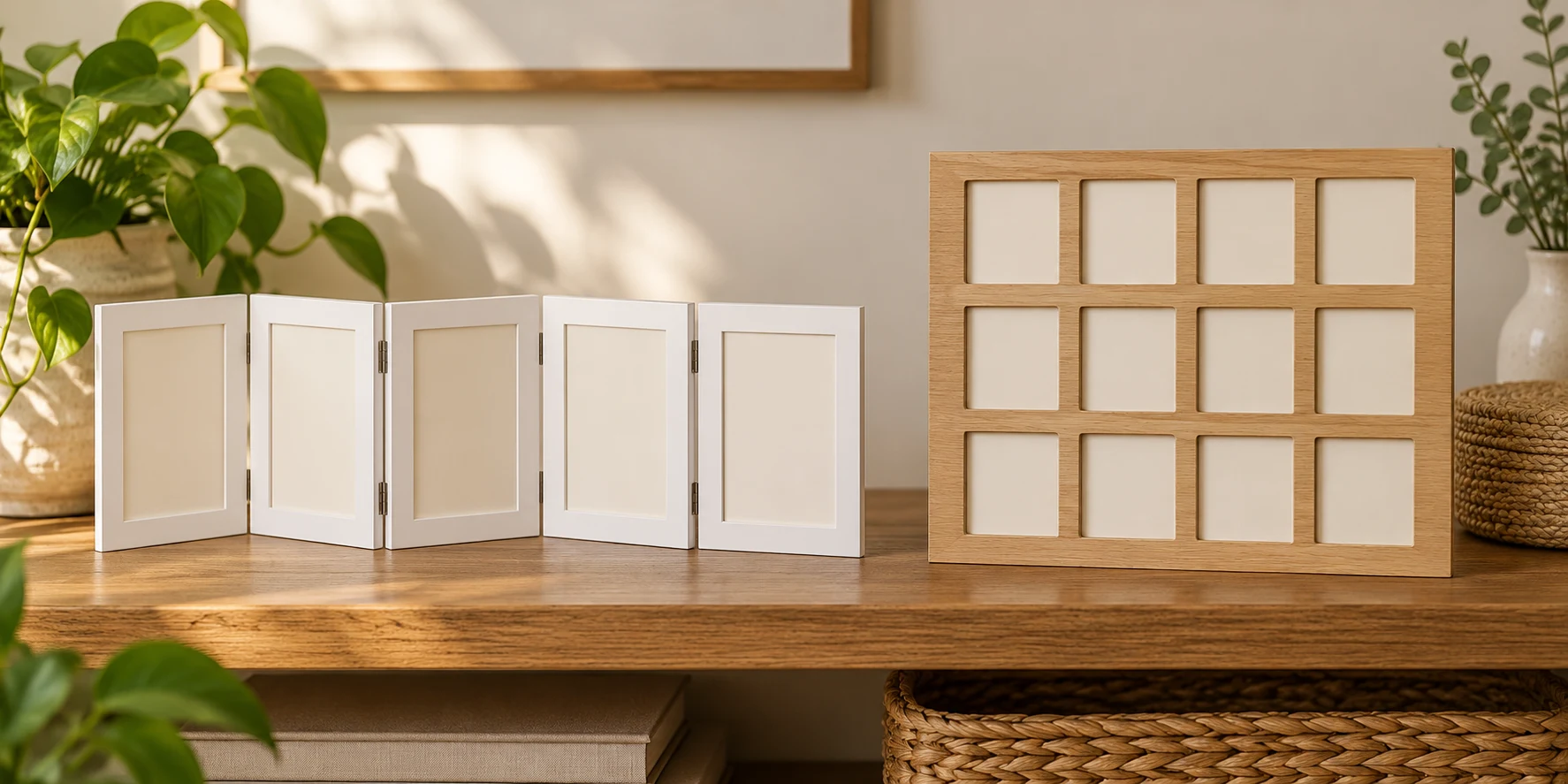
A first-year photo display puts a small selection of moments where people can see them in ordinary life. The decision is how many moments should remain visible at once and how fixed their order should be. A folding frame can hold a shorter, changeable run. A board with numbered spaces asks for a longer, predefined sequence. Neither format can decide which memories a family wants to share.
The two selected products illustrate those structures. One is a five-section folding photo frame described for sonogram pictures. The other is a first-year board with twelve numbered openings. Their listings and galleries show how the formats are presented, while the example photographs in those images remain staging. This guide does not assume those photographs are supplied with either item or that any household has a particular set of pictures ready.
Start with the moments you would actually show
Imagine a shelf where a visitor might pause for a minute. Would you rather show a few chosen moments from an event, or a regular month-by-month run? The question is about the display someone sees, not about how many photographs exist on a phone. A five-panel frame can leave some images out of sight. A board with twelve labeled openings can make the idea of a year immediately visible even before every space is filled.
Write a short list of pictures you would feel comfortable displaying. It might include a gathering, a quiet day at home and a picture of the people who helped. Those are invented examples of selection, not milestones a child is supposed to reach. A blank space is also a valid choice. The display does not owe a public explanation for a photograph a family does not have or does not want to share.
Think about the audience. A keepsake on a private shelf and one placed near a busy entrance invite different viewers. When a photograph includes other people, consider whether they would welcome that setting. When a picture carries medical or intimate context, the family may prefer a more private location or a different image. These are personal choices; the physical number of frame openings does not settle them.
Read the folding frame as a flexible format
The selected five-section folding photo frame is listed as an unbranded MDF wood frame with connected sections. Its description says each section measures 6.8 by 4.7 inches and holds a standard 4-by-3-inch ultrasound photo. It also says the sections can be partly folded when fewer photographs are displayed. Those are the seller's stated specifications, not measurements made here.
The whole gallery shows the same light-colored hinged frame opened in different ways, including staged family pictures and sonogram examples. A size graphic, a close view of the hinges and an installation graphic provide context for the listed format. They do not prove how a particular print will sit once inserted, nor do they establish what photographs arrive in the package. Read any current contents description before assuming pictures are included.
Five connected panels give a household room to choose a short sequence without naming every month. A fictional family might display one early image, two ordinary days, a family gathering and a later portrait. That example has no required chronology or medical interpretation. If only three images feel right, a partly folded arrangement is described by the seller; check the actual frame's stable position in the intended place before relying on that setup.
A folding format also changes the viewer's path. Panels can make a gentle arc, so the first and last photographs may be seen from different angles. Try the empty frame in the intended spot before deciding which image belongs at either end. A narrow shelf, a nearby lamp or a passing sleeve can affect what remains visible and secure. Those conditions are specific to the household, not a promise from a gallery photograph.
Read the numbered board as a fixed format
The My First Year photo board is described as a wooden and acrylic display with twelve spaces labeled one through twelve. The listing says it is 17 inches tall and 12 inches wide, half an inch thick, and intended for 2-by-3-inch monthly pictures. Its gallery shows the same arched board in a staged room, empty and filled with sample baby photographs. Those sample photographs are illustration, not a verified package inventory.
The numbered spaces invite a month-by-month presentation. That structure may suit someone who already likes selecting one image for each month. It can also make a family feel pressured to fill every opening, although nothing about the object requires a new photograph on a schedule. If the rigid labels do not fit the memories you want to share, let that be part of the decision before choosing the board.
Look carefully at the listing's installation and comparison graphics. They show an assembly idea and make promotional claims about thickness and protection. The captured material is not an independent durability test or a guarantee against fading. If those properties matter, examine the current seller account and the physical product when received. For this article, the supported comparison is the visible layout: twelve fixed openings on one board against five connected frame sections.
The board is a fixed visual unit. Its listed outside dimensions can help you plan a place to see it, but they do not give the exact amount of free space needed around other objects. Measure your shelf and allow room to move the display without catching its edge. The actual print openings need their own check against the photographs you intend to use. Do not confuse the 17-by-12-inch board size with a 2-by-3-inch image slot.
Keep story editing separate from choosing a display
A photo album can carry a longer story with room for context on each page. The family photo album story-sequence guide helps a reader choose and order pictures so someone else can follow that story. A visible frame asks a narrower question: which few pictures should meet the eye in the room today? The rest can stay in an album, folder or private collection without making the display incomplete.
Try a paper rehearsal before buying or printing. Draw five boxes in a loose line and twelve boxes in three rows. Write a one-word reminder in each box for a photograph you have and want to use. Leave unknown spaces blank. Look at each sheet from the distance where the display would sit. This exercise tests your preference for a short flexible view or a fixed monthly grid; it makes no claim about product quality.
If the five-box sheet feels crowded, reduce the selection. If the twelve-box sheet is mostly empty, ask whether that openness feels hopeful or obligatory. The answer can change as more photographs become available. A family may also decide that neither format belongs in the room right now. Buying a display is optional; preserving the photographs and sharing them thoughtfully can happen without one.
Place it where the format can be seen safely
Before settling on a shelf, set aside the exact space each format would use. The folding frame's width depends on how far its sections are opened, so the listing's per-section size does not provide one universal opened footprint. The fixed board has a stated outside size, but the amount of clear space needed around it depends on neighboring objects and the way it is supported. These are ordinary placement checks, not a new specification for either item.
A frame that leans needs a different diagnosis from a frame whose photographs were selected poorly. The tabletop frame leaning guide checks the surface, lower edge and easel support of a separate kind of frame. It does not certify the hinge position or stability of the folding product here. If a display will be within reach of children or near an edge, keep placement conservative and follow the actual product instructions.
Pay attention to glare and viewing height. A picture hidden by a tall plant or facing a strong light may be difficult to see, even if the object fits the shelf. Test the intended spot with a blank sheet held at about the display's height. The test tells you what a viewer in that room can see; it does not establish a frame's acrylic performance or protect any print from long-term exposure.
Make the choice with a small, honest inventory
Before ordering, list the number of pictures you are ready to show, their orientation and approximate print sizes, and the surface where the object would sit. Keep a separate note for any picture that needs a private conversation before display. Check the current product account for openings, assembly and package contents. A staged gallery can explain a format, but it cannot promise that your own photographs are ready or that the supplied item matches every visual example exactly.
The choice can remain modest. A five-panel arrangement may show one family's favorite few moments. A twelve-opening board may suit a household that wants a visible year of monthly photographs. Another household may choose neither because the pictures are still being gathered. Treat the two selected products as examples of distinct display structures, not a ranking of how a family should remember its first year.
Check the live order separately
A finished plan for photographs is not a current purchase receipt. The exact item, variant, availability, delivery and final charge belong to the live basket and checkout. The two product pages named here are source accounts for layout and stated dimensions. Their photographs do not confirm an order, package contents or what a later checkout will show.
If republeq.com presents a cryptocurrency payment route such as USDT at checkout, confirm the current order and receiving instructions in the actual checkout before sending funds. A product page may name accepted payment methods, but that alone does not establish an active option for the basket in front of you. Match the asset and network that the live instructions specify, and verify the destination address carefully. A transfer to the wrong network or address may be difficult or impossible to recover. Keep a record of the exact order identifier, requested amount, asset, network, wallet transaction reference and the merchant status shown at that moment. If a wallet reports a submission while the merchant page stays uncertain, reconcile those two records before another transfer; a second attempt can create a duplicate payment. Current tax, shipping, return terms, conversion and network fees require their own review. This article has not calculated a crypto price or observed a completed transaction. Payment confirmation also cannot tell you whether a five-panel frame will sit securely on your shelf, whether twelve photo openings suit your collection, or whether sample photographs come with an item. Keep the picture selection and the live checkout as separate records. If you later need to ask the seller about an order, the exact product identity and saved transaction details make the question easier to trace. None of this process is a recommendation to use crypto or a guarantee of payment acceptance; it is a way to avoid treating an uncertain transfer as if it were a fresh unpaid basket.
Choose the visible format only after looking at the pictures you would actually share. A short folding sequence and a numbered year board ask for different kinds of commitment. The useful result is a display that leaves room for the family's real photographs, including the ones it decides to keep private.