Home Decor & Table Settings
Make a family recipe photo series with a repeated detail
Connect new recipe-card photographs with a chosen textile detail.
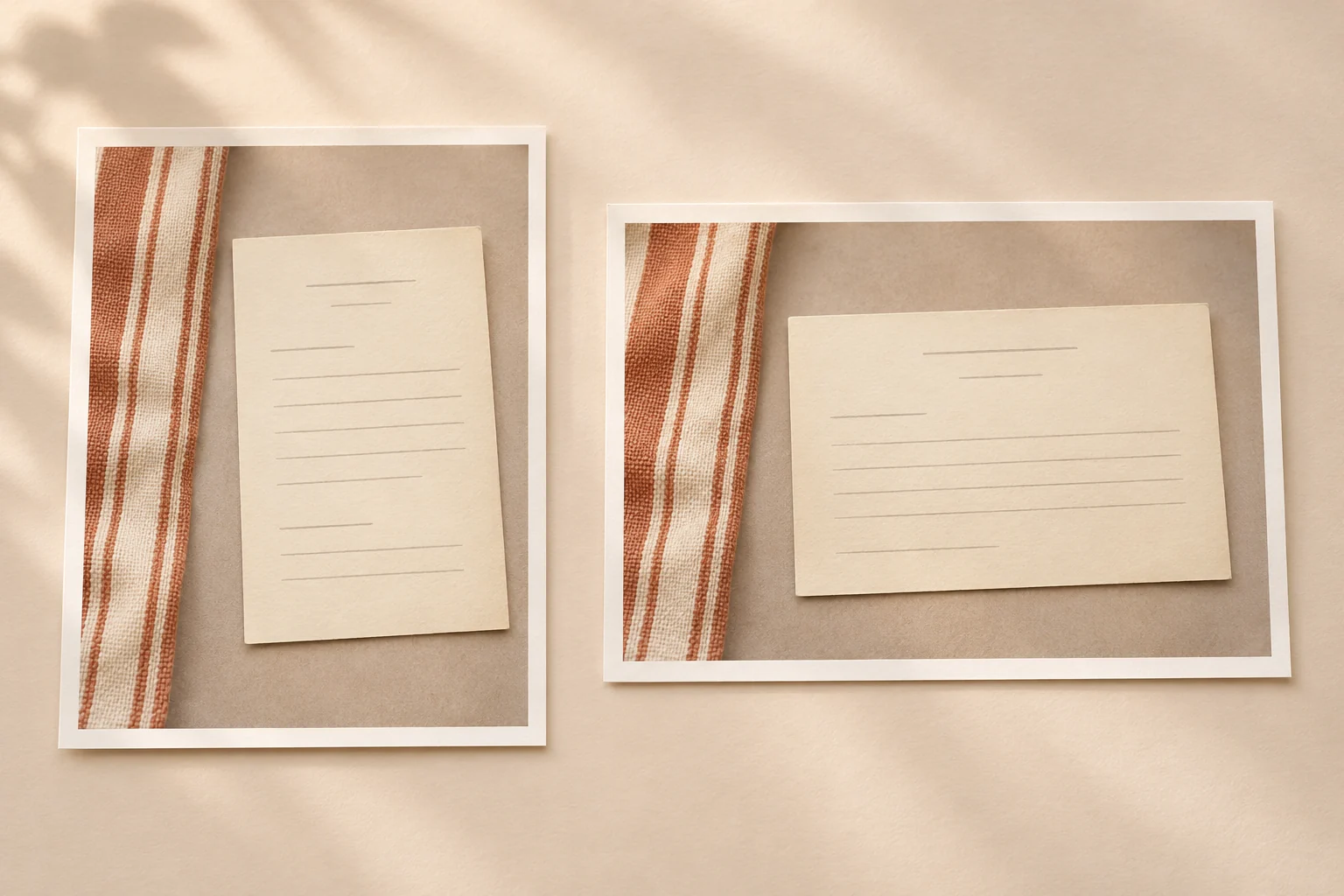
Make a family recipe photo series by letting a small cloth detail return beside different cards. The photographs can belong together without every card sitting in the same position or every picture pretending to come from one old kitchen. Choose a textile detail you enjoy seeing, then give each card enough space to remain the subject. The connection is something you are making now, and you can describe it that way when sharing the pictures.
This is an original creative project for new photographs of recipe cards you are comfortable using. It supplies no recipe, cooking method or transcription procedure. A card can be the subject even when you are not preparing its dish. Keep any private text out of the shared version unless its owner agrees to include it. You can begin with your own invented card while deciding what to photograph later.
Choose what belongs in this new series
Give the project a modest boundary that interests you. You might want a picture of each card you have been given permission to include, or a few photographs about how you revisit a small collection. These are invitations to make your own project. There is no requirement to represent an entire family, finish a cookbook or obtain a card from every household before you start.
Pick the cloth detail for its role in these new pictures. Perhaps you want a stripe near one edge, a small part of a border, or a plain corner that you recognize from photograph to photograph. Name the choice in an ordinary sentence. That sentence can guide the project without becoming a claim that every viewer will attach the same feeling to the colour or pattern.
Keep a newly chosen textile separate from any historical meaning you cannot support. You may love how a border looks beside a card without knowing where the recipe was first written. A present-day styling choice does not have to become an inherited object to deserve a place in your pictures. If the cloth has its own known story, you can decide separately whether that story belongs with the series.
Keep a small cloth detail in each picture
Begin with a card or a stand-in that you can handle and photograph appropriately. Choose where the repeated detail will appear in this first picture. You might leave a narrow part of the textile near a corner or let its border sit beside the card. Use what you already have if it suits the idea. No purchase is needed to decide whether you enjoy making this kind of series.
Look at the picture you actually made before planning the next one. Can you find the chosen detail, and does the card still have the place you wanted it to have? These are questions about your own image. They do not require a comparison of competing fabrics or a prediction of how a retail textile will photograph. Keep the image you want to continue from, including any ordinary imperfection you like.
For the next card, bring back the chosen detail while allowing the rest of the arrangement to belong to that subject. A short card could sit differently from a long one. A folded note might deserve a view that leaves its form apparent without forcing it flat for this project. Follow the handling arrangements appropriate to the actual item; a preferred composition is no reason to alter something valuable or fragile.
Read the actual table-linen references separately
The unbranded runner reference identifies SKU18219052731 and UPC762292171430 with one default variant. Its gallery shows navy stripes on white, while its colour field says White. Matching napkins, tableware, flowers and food are staged references, not confirmed supplied extras. Material, care and photographic performance are not authenticated here.
The Violet Linen SAPPHIRE IV-5 reference names a Beige 60-by-105-inch tablecloth and UPC616418302195. Its actual Beige and White variants have separate SKUs, 15168552 and 15168577. Both colours appear in the gallery; those pictures do not establish two included cloths. Keep the selected option explicit. No fit, care or photographic result is reported.
These references can prompt an interest in a stripe or a border without becoming the materials list for your project. Choose the actual cloth you intend to use and make your own pictures. A staged retail scene is not a photograph of your card, and a product description cannot establish the personal meaning you want a repeated detail to have.
Let each card have its own arrangement
Once you have a first picture, decide how closely you want the next one to resemble it. You can keep the repeated detail near the same edge while changing the card’s position, or let the detail move to a different part of the frame. Pick the relationship you enjoy. The project does not need every object locked into a rigid template.
A picture of a card’s front and a picture that includes its folded form can belong to the same series without explaining a fictional event between them. You are making separate views of subjects you chose. Avoid adding a staged change merely to make the pair look as if something happened. If you want to invent a story instead, label that as a different creative project.
Keep other objects optional. A familiar empty dish might belong to the story you personally want to tell, but you can also leave the card by itself. This guide gives no food-contact or serving instruction for a textile. Do not add a plate, utensil or ingredient solely because a retail photograph includes one. You can make a photograph about a recipe without recreating the seller’s table.
Look at the pictures together when you have more than one. Decide whether the recurring detail is still a choice you want to keep. You may prefer a small visible fragment to a broad field of pattern. That preference belongs to this series. It does not prove that one cloth is universally quieter, more attractive or better for photographs than another.
Keep new styling separate from family history
If you share a picture, describe what you know about its subject without making the cloth carry an unsupported story. You can say that you photographed a permitted card using a border chosen for the series. You do not need to name an ancestor’s kitchen, an old occasion or an inherited table setting unless that information is actually known and appropriate to share.
Someone may recognize the handwriting and want to add a memory. Let that person decide whether their recollection should travel with the picture. Keep a recollection attributed as such instead of quietly treating it as a fact established by the photograph. The project can welcome an additional story while leaving the picture’s newly arranged setting clear.
Use an invented or substitute card when the writing on the original should remain private. Describe the substitute truthfully. A generic handwritten-looking card in a conceptual illustration is not evidence of a particular family’s recipe. The cover for this article uses that kind of illustration to show a repeated border beside different cards; it records no family collection or completed photography session.
Follow an explicitly invented project choice
Imagine Tessa making a small personal series with cards she is allowed to photograph. She likes a rust-coloured stripe in a cloth she has chosen for the pictures. Tessa, her cards and this project are invented. The example reports no order, physical trial, relative’s handwriting or actual photographs of either linked textile.
For her first imaginary picture, Tessa leaves the stripe beside a tall card. For the next, she chooses a wider card and keeps a smaller part of the same stripe visible. She likes that the pictures share a detail without requiring both cards to fill the same shape. She does not add a dish or a flower to repeat the retail examples.
When Tessa describes the series, she calls the cloth part of her new arrangement. She leaves the cards’ imagined origins unspecified. If she later makes another picture with a different cloth, she can decide whether it belongs to this series or another project. The choice need not become a verdict that the earlier picture was wrong or that the whole series must be remade.
Suppose Tessa wants to show a friend the unfinished set. She can identify which pictures exist and which card she might photograph next. She does not need a finished image for every possible subject before sharing the work in progress. Nor does she need to make up a missing photograph to give the project a satisfying ending.
Leave transcription and albums with their own guides
The family-recipe transcription guide concerns copying visible wording, retaining uncertain text and checking the copy with another reader. Photographing a card for this creative series does not complete that wording check or turn an incomplete recipe into cooking instructions.
The family photo-album sequence guide addresses selecting existing photographs, ordering a story, adding context and planning album pages. This project makes new pictures connected by a chosen textile detail. It does not require an album, a chronology or a decision about the rest of a stored collection.
Finish with the pictures actually made
You can stop with a small set you enjoy. Keep the pictures with a brief note about the detail you chose and any description you want to retain. If you continue later, that note can remind you what you liked about the project. It need not prescribe the position of every future card or promise that the room and cloth will always look identical.
If you decide to consider a textile or another item on republeq.com, review the exact current offer and checkout for that order. A preference for cryptocurrency does not establish that new supplies are needed or that a particular payment method is available. If you prefer USDT, first confirm that the actual transaction offers it. Obtain the applicable asset, network, amount and receiving destination from the responsible service for that specific order. Do not copy instructions from another purchase, a product image or an unrelated message. Check the seller, selected item, variant, supplied package, delivery details, displayed total and terms. Leave any unclear field unresolved while you seek clarification. Review an applicable fee or conversion term from the current transaction instead of inserting an estimate. Keep the real order reference and the instructions that were confirmed. If an acknowledgement arrives, retain what it actually confirms instead of treating it as proof that a textile will suit the proposed project. If payment status becomes uncertain, reconcile that status before considering another transfer; uncertainty does not establish that nothing happened. This article supplies no wallet address, transfer guarantee or recovery procedure. A completed payment cannot authenticate an uncertain material or establish a photographic result. You can leave an order unplaced while a relevant product question is answered. If somebody orders on your behalf, provide the exact selected reference and any remaining limitation, so an unresolved supply assumption is not carried silently into the transaction. Retain the confirmed transaction information with the actual order, and keep a later product enquiry attached to the item that was selected.
Return to the pictures themselves when deciding whether to continue. Keep the repeated cloth detail as a present-day choice and the recipe card pictures as photographs of the subjects you actually used. The next card can wait until you want to make its picture and have an appropriate way to include it.
A repeated cloth detail connects these new pictures.