How-To Guides & Tutorials
How to transcribe a family recipe with a second reader
Transcribe a family recipe with a second reader: preserve unclear words, check each line and keep remembered additions separate from the original text.
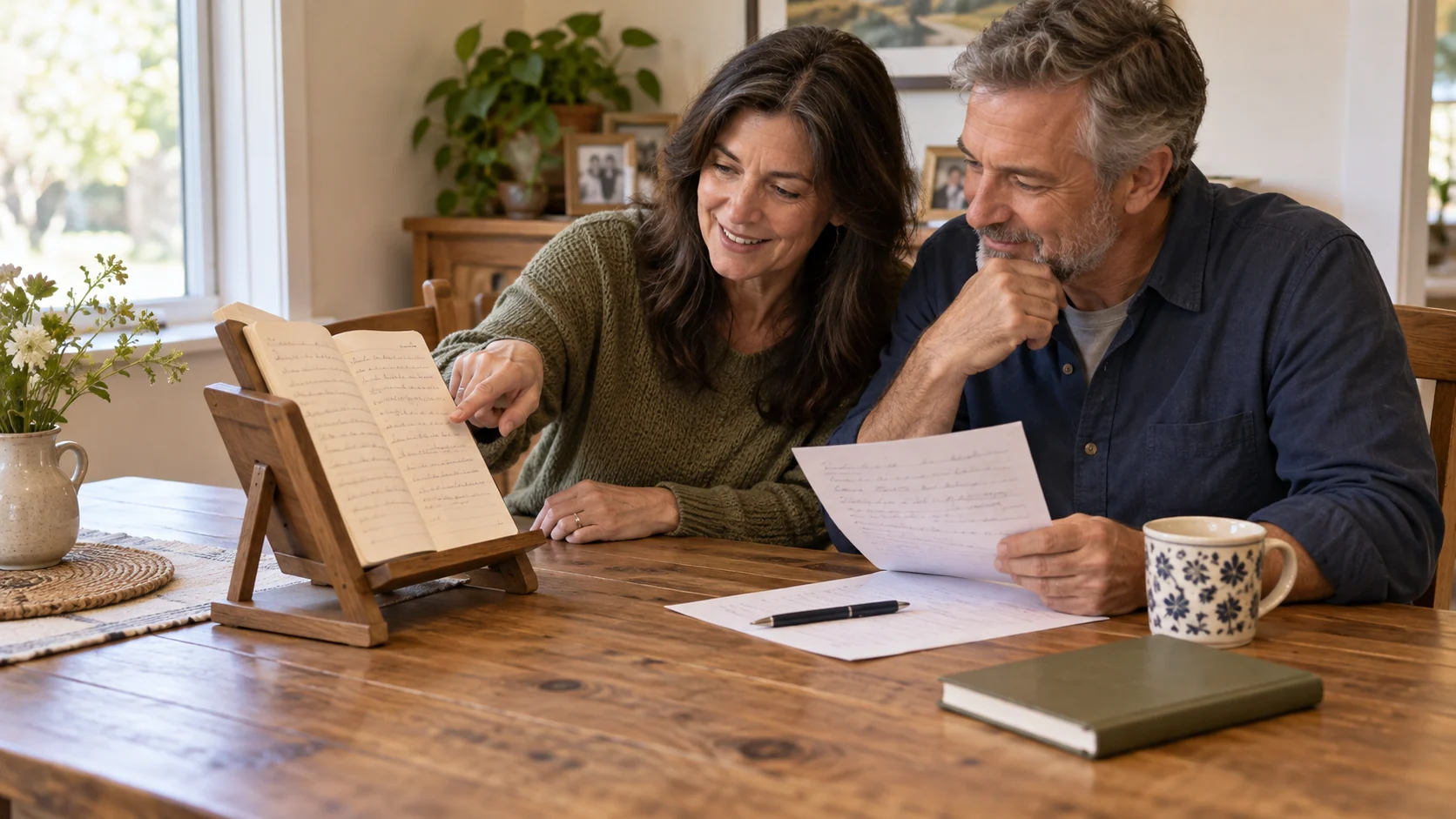
To transcribe a family recipe with another reader, agree to copy what you can read and mark the parts you cannot. A notebook page may mix ingredients, abbreviated instructions and comments added years later. You will finish with text your partner can compare with the page, including the unresolved words. Cooking from the result is a separate decision; this tutorial does not supply a tested recipe, ingredient substitutions or a way to repair missing cooking instructions.
Choose one short recipe for the first session. One person can make the initial copy while the other reads the source, then you can exchange roles for the check. A cookbook holder is an optional purchase if a suitable one will help keep the source in view. You can complete the wording review without buying one. Agree with the owner how the notebook or loose page may be handled before arranging the work.
First, identify the exact page you are copying
Write the source title or a description that the owner recognizes beside the new text. If the recipe has a page number, retain it. If several similar versions exist, identify the particular one you have been asked to copy before starting. A recipe written in a grandparent’s notebook and a later typed version may differ. Keep those versions distinguishable so a reader can tell which words came from which source.
Look over the complete page together. Notice where the recipe begins and ends, whether another instruction continues on the reverse, and whether marginal words seem to belong to it. Ask the owner about anything that would otherwise force you to guess the boundary. A nearby shopping note might be unrelated. Until you know, record its location separately instead of quietly adding it to the ingredients.
For the first copy, choose a plain arrangement you can check: a title followed by the source’s ingredient lines and then its instructions. Preserve the order for now. If the source runs everything together, leave yourself a note describing that arrangement. Check the wording before moving lines into a different layout.
Copy a small passage before changing the layout
Begin with the first ingredient line and copy the visible words and quantities. Keep the original unit wording, even when it looks old-fashioned or abbreviated. Do not convert it to a preferred unit while you are still establishing the text. Keep any proposed conversion outside this first copy. If an abbreviation needs explanation, place the proposed explanation in a separate note until you have an applicable answer.
Copy the instructions in short sections so your partner can locate the same place. After a sentence or a short group of lines, pause and name where you have reached. This makes it easier to notice a line repeated by accident or a phrase skipped when the handwriting becomes difficult. It also lets the reader ask for another look without interrupting a long stretch of typing.
Keep additions separate from the copied words. The owner might remember that the writer used a particular bowl or prepared the recipe for a certain gathering. That recollection can be useful alongside the transcription, with the speaker’s name if they want it identified. It should remain a recollection rather than silently becoming a sentence the original author wrote. Ask permission before including a personal story in a copy intended for others.
Keeping uncertain recipe wording visible
Agree on a simple marker for a word you cannot read, and explain that marker beside the text. You might use a bracketed note saying “word unclear” with a reference to the source line. Explain the marker on the copy so recipients will recognize it. Avoid typing a plausible word without a marker merely because it would make the sentence sound complete.
For keeping uncertain recipe wording visible, distinguish an unreadable word from a word that is plainly missing. If a line ends after “add,” your copy can show that the source stops there. If ink is present but you cannot make out its letters, describe that uncertainty. The distinction helps someone who later examines the page know what question remains. Neither situation can be resolved by borrowing an instruction from a different family recipe.
Numbers deserve the same treatment. A faint digit, an unclear fraction or an uncertain unit can change the apparent meaning of an ingredient line. Keep the uncertainty explicit and ask the owner whether another reliable version exists. Do not choose a familiar quantity because it seems reasonable. If the needed detail remains unresolved, the result is an incomplete transcription and should be described that way.
The Epson DS-530 II and CZUR ET MAX document guide distinguishes loose-page feeding from overhead capture of a bound book. Its text-recognition discussion also calls for checking recognized words. That matters if your recipe is in a bound notebook or arrives as an editable scan: keep the physical form and the accuracy of the words as separate questions. A scanner’s book-capture feature does not establish that a particular volume fits either cookbook holder here.
Checking a recipe transcription line by line
Once the first copy is complete, exchange roles. The person who typed can follow the source while the other reads the new text aloud. Pause at each ingredient and instruction rather than racing through the page. Say the written unit and number as they appear. A partner who recognizes the recipe may otherwise read the familiar version from memory and miss an error on the page.
During checking a recipe transcription line by line, compare the beginning and ending of each line as well as the middle. Look for short connecting words and any note that changes where an instruction applies. If the source repeats an ingredient in a later instruction, retain the repetition while checking it. Do not remove it just because a cleaner-looking version would mention the ingredient only once.
When the two texts disagree, return to the particular mark or phrase. You can correct a copying error when the source is clear. When it remains ambiguous, keep the uncertainty marker and record any competing readings as possibilities. If you settle on a possible reading, label it as a proposal until the source supports it. A later reader should still be able to tell what was observed and what was proposed.
A cookbook holder needs its own fit check
The GZHJMY cast iron cookbook stand has a floral cutout and a protective powder finish in its description. The listing gives overall dimensions of 10.8 inches by 4.7 inches deep by 9 inches, with a 2.5-inch gap between panels. It states a book-size range from 8.3 by 11.7 inches to 9 by 12.8 inches and excludes oversized items. Keep those source-stated measurements with this exact offer.
Check how the holder would support the actual binding and pages. Ask about the intended book before choosing the holder for a valued notebook. The description names six screws, two spare screws, a screwdriver and instructions as included assembly items. This tutorial supplies no assembly or fastening procedure. Its claims of stability and a wobble-free hold are listing claims, with no trial of your book provided here.
The SJJ wood recipe and cookbook holder describes an adjustable-angle book rest, a chalkboard, a measurement chart and a hangable handle. It also names a weighted base and removable metal rods for supporting tablets or phones. The description does not give measured book capacity or overall dimensions. Obtain those details for the actual source you want to view instead of treating its broad compatibility wording as a fit result.
The SJJ chart is not an authority for changing the recipe during transcription. Its presence does not establish the chart’s content or validate a conversion for an uncertain handwritten unit. The description’s neck-strain and support claims likewise do not establish a health outcome or a tested position for you. Both selected offers appear under Restored Tools, which leaves the actual condition and supplied contents to confirm for the order.
The Brother ADS-1350W and DS-740D paper-scanning guide warns that background cleanup can remove a pale pencil note. If the recipe copy you received looks unusually clean, compare it with the original before deciding an annotation was absent. Compare the actual marks; the guide supplies no handling instructions for this treasured page. Its scanner specifications do not supply a handling method for your source.
Decide what the checked copy will contain
After the wording check, ask the owner which accompanying notes should travel with the copy. The transcription can have its source reference, the checking date and an explanation of the uncertainty marker. A recollection can follow in its own paragraph. If someone wants a reformatted version with more space between instructions, make that as a separate presentation of the checked text and compare it again after moving the lines.
For example, a source might place an ingredient beside a later instruction in the margin. Your checked copy can keep that location explained. Moving it into a neat ingredient list may be convenient, but record the move and make sure the owner agrees with the reading. This is a hypothetical example of a layout decision, not a missing step to add to the recipe in front of you.
If you are considering an equipment purchase
If you are looking at either cookbook holder through republeq.com and would prefer crypto such as USDT for the purchase, first confirm the selected offer and the payment methods actually available at checkout. A guide mentioning USDT does not establish acceptance for an order. Read the options presented for that specific purchase and any applicable conditions before selecting a method you understand. If crypto is not offered, keep it out of the purchase plan. Resolve the holder questions independently: the GZHJMY description gives dimensions and a stated book-size range, while the SJJ description leaves its measurements open. Neither a payment preference nor the word cookbook establishes that your source can be supported appropriately. Ask about the actual condition because both offers are grouped under Restored Tools, and confirm the package contents and applicable return terms. An answer about one offer should remain with that offer if you later change the selection. Consider whether you want the holder for other reading after this one transcription; a single shared session can proceed without a new purchase. Keep the invitation based on the source and the second reader’s availability so an unresolved order does not hold up the wording review. If a delivery date matters, check the actual estimate rather than assuming the item will arrive before you meet. A purchase confirmation belongs with the equipment records. The checked transcription should still identify its source and preserve any unresolved words. Paying by USDT, by another available method or making no purchase changes none of those reading questions. Return to the page together and finish the portion that can be copied accurately, leaving the remaining uncertainty visible for the owner.
Read the copy once as its next reader would
Give the finished text a final pass without filling its gaps aloud. Can your partner identify the source, find each uncertainty marker and distinguish a later recollection from the copied instructions? If an explanatory note depends on something only the two of you remember, add the missing context with the owner’s agreement. Keep an incomplete recipe clearly described as incomplete when sharing it.
Let the owner review the checked copy and decide who may receive it. A later correction can name the word that changed and its source, so recipients can distinguish the earlier reading from the resolved one. Return the notebook or page according to the arrangement you made at the start. If you copy another recipe later, carry over the explanation of your uncertainty marker.
Conceptual editorial cover for two people who want to transcribe a family recipe, with a whole generic wooden cookbook holder; no exact retail model is shown.