Furniture & Home Organization
craft shelf basket display for a relaxed weekend project
A small shelf can keep one creative project inviting without filling the work table; measure, choose a few materials and refresh it as the hobby changes.
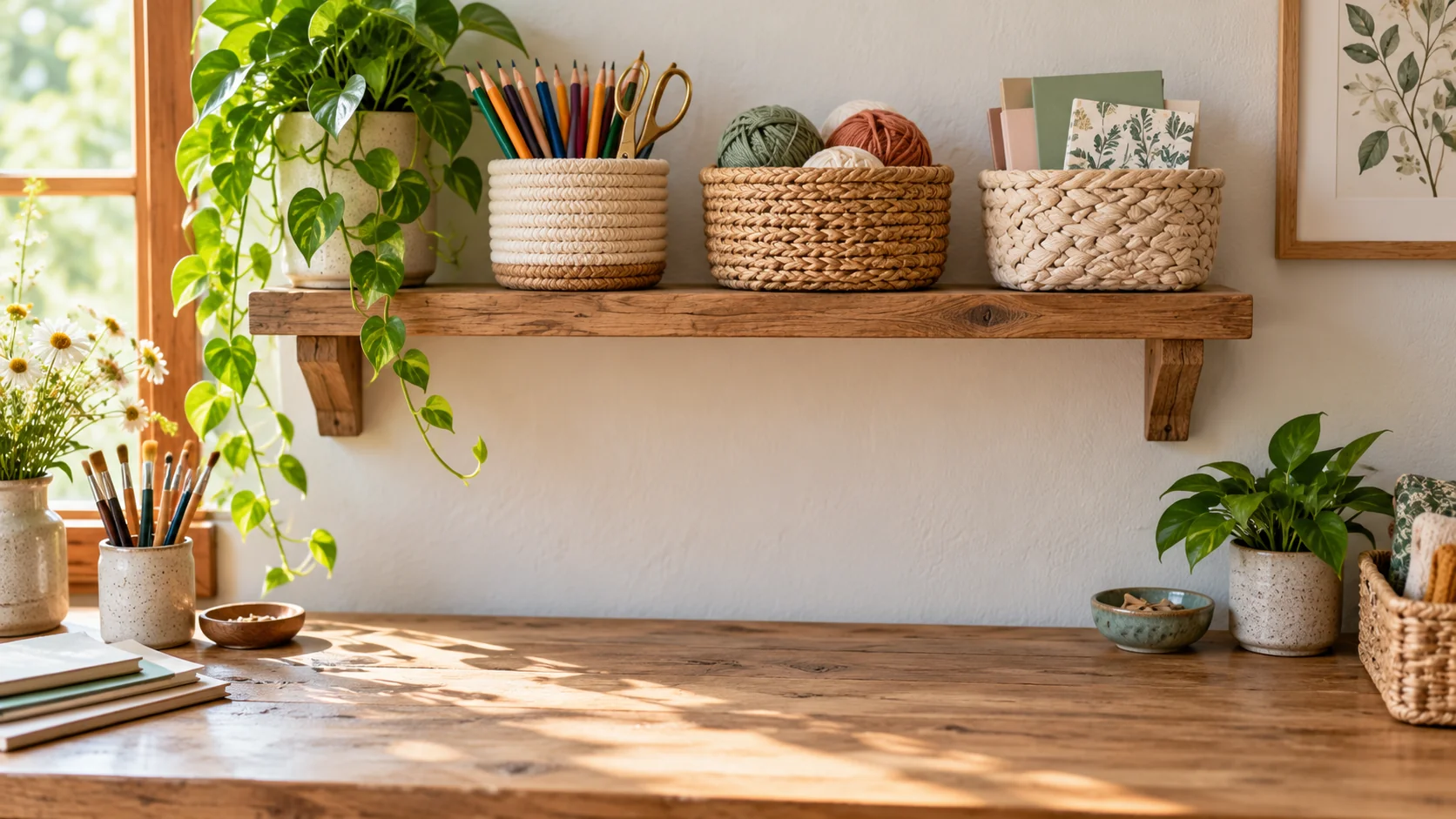
A craft project is easier to return to when its next few materials are visible, but a whole room of supplies on display can crowd the place where you make things. A craft shelf basket display offers a modest middle ground: one shelf holds a chosen set of colors, tools, or works in progress while the table remains open. The idea is to make a personal weekend project easy to pick up again. The arrangement should fit your actual shelf and hobby, and it can change when the project changes.
Two captured basket sets provide different visual starting points. The QIHE woven basket set is described as three cotton-rope baskets with a honey and off-white look. The three-piece paper-rope basket set describes small rectangular baskets with lids and a natural decorative style. Those listings suggest textures and shapes, not a guaranteed fit on your shelf. Check real dimensions, contents, and the shelf's own limits before selecting any container for a display.
Start with the project you want to revisit
Choose one project you expect to touch this weekend: a sketchbook, a few embroidery stitches, paper collage, or another small activity that suits your own space. Set its current materials on the table and remove items that belong to a different project. This is not a request to inventory every art supply in the home. A shelf display works best when it gives a clear hint about one next action, such as choosing a thread color or opening a notebook.
Pick a small group that looks inviting and is easy to return. A few colored pencils, two skeins of yarn, or a folder of cut paper may be enough. Keep sharp or delicate tools in suitable storage under their own instructions rather than treating an open decorative basket as a universal holder. If another person shares the room, consider what should stay out of reach or out of sight. The display can still feel welcoming without exposing every tool.
Decide what should remain visible and what belongs in a covered basket. A color palette or the current book may be pleasant to see; a tangle of spare supplies may be easier to use when contained. The aim is a small signal that the project is waiting, not a showroom arrangement you must preserve. Leave one clear place on the table where the actual making can happen. If reaching for a basket requires moving half the display, simplify it.
The open-door craft afternoon guide considers how other people can join a craft gathering without pressure. This shelf idea is for your own project and your own return to it. It does not plan a social invitation, seating, or shared materials. If you do host others, handle that separate decision with the linked guide rather than expanding one personal shelf into an event station.
Before choosing a basket, use what you already own for a quick trial. A box or tray can show whether a grouped set of pencils or yarn feels handy on the shelf. Place it where you would naturally reach during the project, then sit at the table and look up. If the shelf is too high or the container blocks light, the arrangement may be more decorative than useful. Change the position before looking for a new container.
Let the shelf and baskets set the scale
Measure the usable shelf width and depth, including any bracket or raised edge that reduces space. Note the vertical clearance above it if another shelf or frame is nearby. A basket's published outside dimensions are only one part of the question. You also need room to grasp it without catching the edge or disturbing another object. Confirm the shelf's own capacity and intended use from its maker; a woven basket's appearance tells you nothing about what the shelf can support.
The QIHE listing describes a three-piece cotton-rope set and gives an overall measurement, while the second listing describes three small paper-rope baskets with lids. Neither description establishes the usable interior size of every basket for your particular tools. A lidded basket may need extra overhead space to open. Try a simple paper footprint on the shelf and compare it with the actual container before assuming the photograph shows the right scale.
Use texture and shape to serve the project rather than turning them into a theme you must maintain. A light woven basket can visually soften a shelf near wood or paper, and a rectangular shape may sit neatly beside a book. Those are styling choices, not performance claims about durability or care. If fibers, paint, or wet materials are involved, follow the item's own storage guidance. Neither listing used here proves water resistance or suitability for messy materials.
Arrange the basket group with a little breathing room. Three containers lined edge to edge can make a small shelf feel full before the project even starts. Try one basket for current tools, one for a small reserve, and leave an open area for a notebook or piece in progress. The roles can change with your craft. You do not need to fill every basket in a set, and an empty place on the shelf can make the chosen materials easier to notice.
Keep the heavier or awkward materials in a location approved for them. Do not rely on a decorative woven basket to carry a load its maker has not specified, or on a wall shelf whose rating you have not confirmed. The attractive photo on a product page cannot substitute for the actual shelf construction in your room. If you cannot establish a suitable placement, use a tabletop arrangement or another supported storage location.
Think about color in a way that helps you begin. You might leave a few related yarn tones in view, or place the papers for one collage in a shallow container. The visible group can remind you of the project without becoming a commitment to finish it on a schedule. If the colors clash with the room, that is a personal preference, not a defect in the supplies. Move a basket or change the visible selection until the shelf feels calm to you.
Make the display useful at the table
Take the working basket to the table for a short session. Can you lift it without spilling contents, and can you put materials back without sorting through unrelated objects? The point of the shelf is to make the next session easier to start, not to move clutter from one surface to another. If the container is too deep for small pieces, use a suitable inner tray only after checking its actual dimensions and the materials' storage needs.
Keep a notebook or project card beside the baskets if it helps you remember the next step. A simple line such as “choose the blue thread” is enough. Avoid turning the shelf into a task board for every unfinished idea. A visual cue works when it is specific and manageable. If the project pauses for several weeks, change the cue rather than letting an old note make the shelf feel like a list of obligations.
The evening living-room basket reset guide handles a broader routine for returning items to their places. This article keeps one project near a work surface. Its baskets are selected for a chosen craft session, not for collecting everything left in a room at night. If the living area needs a general reset, use that separate routine. The small shelf can stay focused on the personal project.
Leave the table clear when a session ends. Return current tools to their basket and decide whether the work itself should stay visible or be protected elsewhere. Wet paint, unfinished glue, sharp blades, and delicate fibers may need handling that this general display cannot supply. Follow the material and tool instructions. A beautiful arrangement is not useful if it damages the project or makes the next session harder to begin.
Invite the shelf to change with the project. When sketching turns into sewing, keep the container that still fits and replace the visible materials. The basket set is a flexible frame, not a permanent classification system. You can also remove one container when the project becomes simpler. This keeps the display from gradually becoming overflow storage for every abandoned idea, while preserving a clear space for work.
Know when the idea is working
After a weekend, ask whether the shelf helped you return to the project and whether the table stayed usable. You need no productivity score. Notice the ordinary moments: you found the pencil you wanted, returned the thread without a hunt, or had enough room to open the notebook. If you kept moving baskets out of the way, the arrangement may need fewer containers or a different location. A small successful display should feel easy to use.
If the shelf looks appealing but its baskets are awkward to reach, revise the placement. A basket on a lower, supported surface may be more useful than one at eye level. If the items do not fit, choose containers from actual measurements rather than judging by a seller's styled photograph. The QIHE and paper-rope sets are examples of material and form; they do not settle fit for your own shelf, tools, or reach.
If the project no longer interests you, clear the display without treating that as a failure. The baskets can hold another suitable small set of materials or return to general storage under their maker's guidance. The shelf should reflect what you want to make now, not a promise about a hobby you must keep. Preserve any unfinished work appropriately before changing the scene, especially pieces that could bend, dry, or collect dust.
For a final craft shelf basket display, keep a few facts together: the shelf's measured usable space and approved capacity, each chosen basket's actual dimensions, the materials assigned to it, and the next small action for the project. Let texture and color make the corner inviting while the table remains ready for work. When the project changes, the arrangement can change with it. That freedom is part of what makes a small shelf pleasant. If a basket has no clear role after several sessions, take it away and see whether the remaining group serves the project better. A photograph can capture an arrangement you liked without requiring you to keep every object in that exact position.