Sewing & Crafts
Cracked wax seal before mailing: check the wax and envelope
Assess a damaged finished wax seal through material, attachment, protection and mailpiece questions, with maker claims and native stock limits kept visible.
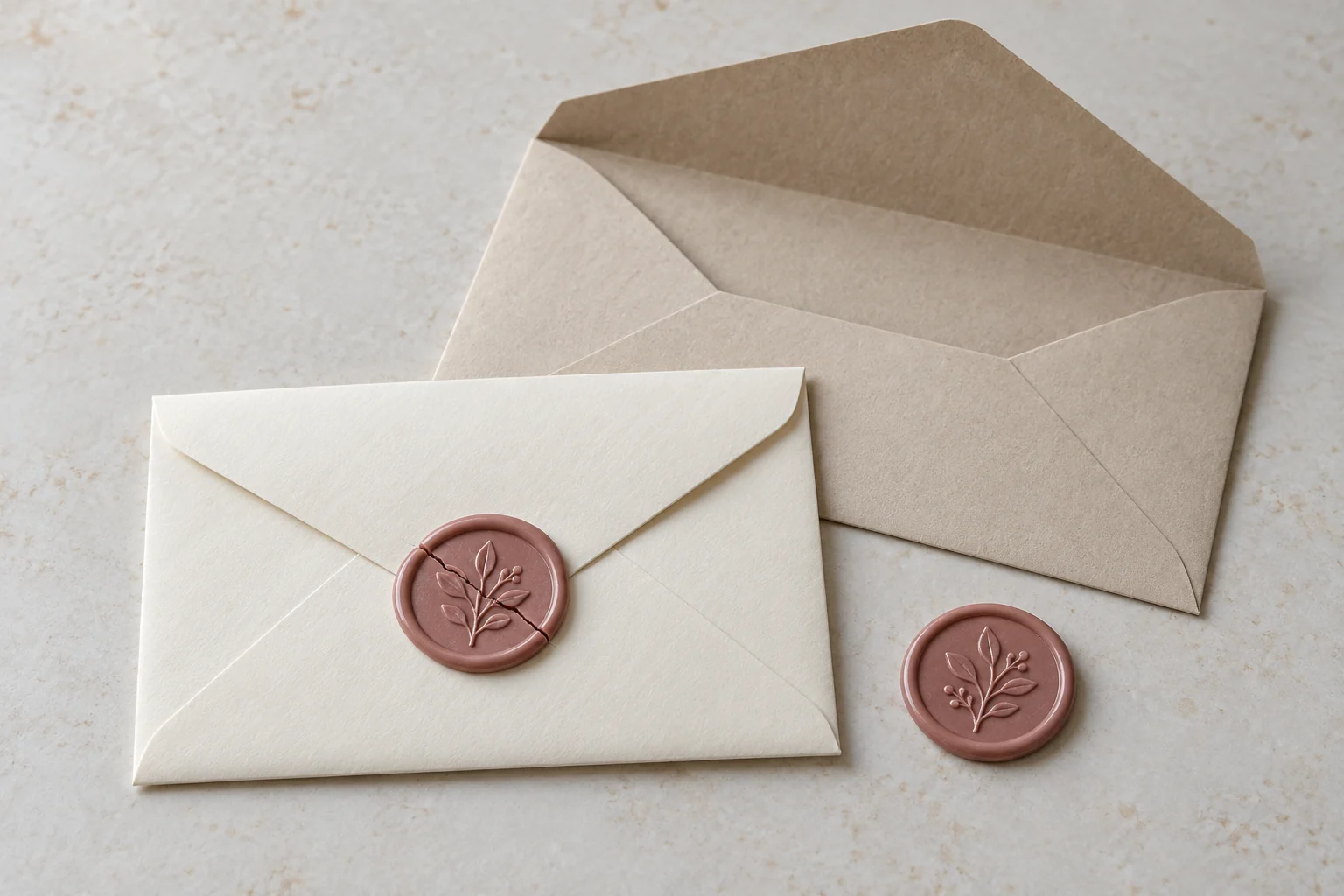
Finding a cracked wax seal before mailing raises two separate questions: what condition is the decoration in now, and what will the finished envelope need before dispatch? Begin with the piece in front of you. A visible crack does not, by itself, identify a wax recipe or prove what caused the damage. This guide concerns a finished decoration and the decision about sending it, rather than melting wax or releasing a stamp during an impression.
Keep your intended result clear. You may want a neatly presented invitation, a decorative note for hand delivery or an envelope that will enter a postal system. Those are proposed uses for your own project. Decide which one applies before treating a supplier’s general word, such as “mailable,” as the answer to every question about the finished item.
Name the visible finished condition
Imagine three unfinished dispatch decisions on a craft table. On the first envelope, a line crosses the raised wax while the decoration remains attached. Beside the second is a whole loose seal, with no visible fracture through its design. The third has an attached seal whose surface looks rubbed. These are fictional observations, not results from testing either selected offer. Keep each description narrow enough that another person can recognise the condition you mean.
The first piece gives you a fracture question. The second gives you an attachment question. The third may be a presentation question about the surface you can see. Calling all three “broken wax” would hide the choice you need to make. Equally, naming a condition does not establish its cause. Nothing in this imagined comparison shows which material was used, how it was applied or what happened to it afterward.
Choose what you would accept for this particular project. A mark you like on a personal keepsake may be a finish you do not want on a formal invitation. That is your presentation decision, not a test of the wax. Keep the piece aside while you obtain any material or mailing answer that matters before dispatch.
Keep the wax stock’s written identity visible
The Recollections 56672 Pink sealing-wax offer identifies UPC 197220214482 and describes six packs with four sticks per pack, for twenty-four total. It says the wax is made from beeswax and paraffin and can be used with separately sold wax stamps. These are the native record’s claims. They do not independently establish flexibility, a complete formulation, suitability for a particular carrier or the contents of a delivered shipment.
All three original gallery images show groups of three rectangular sticks with white wick protrusions, in black, green and pink variants. The visible wicks are integral to the sealing-wax stock, not separate supplied candles or a heating tool. The pictured groups do not replace the written order quantity or authenticate that the selected Pink order arrives as shown. No melting, flame or temperature procedure is supplied here. The pictures contain no printed maker, model or package identity label to cross-check the catalog. The Recollections name and product code remain written identity information.
Identify the stamp set without assigning it a wax recipe
The Rockrok vintage alphabet wax-stamp set is titled as twenty-six stamp heads and one wooden handle. Its single original image shows the letter-head assortment and a wood-toned handle with a small threaded connector. The heads, handle and connector are craft-stamp components. The image supplies no separate wax, candle, heater, envelope or storage case, and it does not show a tested finished seal from this set.
The native description uses both “none Removable” and removable-head wording. Retain that inconsistency when asking for the actual assembly instructions; do not infer a thread standard or another maker’s fit. Wood and brass remain the record’s material descriptions, without independent authentication. Its marketing language about protecting private information is not evidence of document security or tamper protection. For this article, the set is a decorative tool, separate from the consumable wax you must identify. Rockrok is the catalog brand; no maker label is visible in the photo. Ornamental letters on the head faces identify pictured designs, not the manufacturer.
Separate a wax formulation from its stick or bead shape
LetterSeals’ mailing-wax guide distinguishes traditional decorative wax from flexible formulations intended for mailing. It describes traditional wax as prone to cracking and flexible wax as designed to bend rather than crack under handling. Treat that as the supplier’s material guidance, not a diagnosis of your unexamined seal. The guide also says bead durability depends on the formulation: a bead or stick shape alone does not answer which type you have.
For the fictional fractured piece, the useful enquiry is therefore about the exact wax, not simply whether it began as a bead or stick. Obtain the maker’s intended use and applicable directions for that product. LetterSeals also cautions that postal machines can smear or remove even wax described as mailable. A material claim can help you choose supplies while leaving the actual envelope and its handling questions open. A supplier’s material explanation remains attached to the products it actually identifies. Its material categories concern the wax recipe. Words describing colour, finish or delivery format are different information to retain when asking about the product.
Keep a maker’s blend and intended surface together
Artisaire Studio’s wax information describes its own proprietary blend of waxes, pigments and a flexibility additive. It distinguishes Artisan Blend, intended for flat applications, from HiFlex Blend, intended for curved-surface applications. It also describes its own seals as mailable. These are claims about Artisaire’s products and applications, not a recipe for evaluating every decorative wax or proof about a different supplier’s stock.
If a project involves a curved package rather than a flat envelope, that distinction gives you a specific question to ask your own supplier: which application does the exact wax support? Do not borrow only the word flexible and discard the product and surface it belongs to. A product described by another supplier does not acquire either Artisaire blend through appearance or a familiar colour. Artisaire says its formula is proprietary and declines further detail. A short ingredient description from elsewhere cannot reconstruct that formula or identify an equivalent product.
Treat protection and attachment as different questions
Kustom Haus’ mailing guide says sorting machinery can scuff a wax seal and suggests an outer envelope when the presentation needs additional protection. It also distinguishes wax applied directly to an envelope from a self-adhesive finished seal, noting that adhesive edges can lift. These are its published handling observations and recommendations. They do not establish the cause of damage already visible on your piece or guarantee that every protected seal arrives intact. The same page calls flexible wax unbreakable. Keep that strong wording within the supplier’s guidance, rather than treating it as an independently verified promise for an unknown wax.
Return to the fictional examples with that boundary in mind. A rubbed surface, a whole loose piece and a fracture are different starting conditions. Resolve the existing condition before assuming that an added wrapper has repaired it. If you choose an outer envelope, the complete new arrangement becomes the item to assess for dispatch. Keep the actual attachment method with the supplier’s instructions instead of combining several makers’ application suggestions into a new recipe.
Consider the finished decoration, not only the stamp face
Stamptitude’s wax-seal FAQ gives a typical example in which the finished wax seal is wider than the stamp face, including its outer edge. That example is a reason to distinguish the engraved face from the complete decoration. It is not a formula for another maker’s heads or an independently measured dimension for your envelope. Use the actual finished piece when considering its space and presentation, rather than substituting a stamp title or a photograph’s apparent size.
The same FAQ describes ready-made seals as a peel-and-stick option, distinct from making impressions yourself. If you consider that alternative, obtain the application directions for the actual product you select. Choosing a ready-made decoration is a new project choice, not evidence that the wax or stamp you already used is defective. It also leaves the finished mailing arrangement subject to the carrier’s requirements. Stamptitude describes ready-made seals as useful for larger invitation projects when time is limited. That convenience is a project choice, not a measurement of adhesion or postal acceptability.
Check the complete envelope under the carrier’s criteria
For USPS letter mail, Domestic Mail Manual 101 sections 1.1 and 1.2 address the complete piece’s physical standards and nonmachinable characteristics. The listed criteria include certain closure devices, uneven thickness, excessive rigidity and address orientation. The captured passage refers to clasps, strings, buttons or similar closures; it does not explicitly name wax seals. Do not turn a supplier’s “mailable” label into a definite USPS classification for an envelope that has not been assessed. These standards also consider the piece’s dimensions, thickness and weight. An attractive seal, small stamp face or flexible-wax claim cannot supply those measurements.
Present the finished arrangement, including any outer envelope, when obtaining the appropriate carrier answer. The wax decoration is only one part of that object. Confirm the current requirements for the service you intend to use without assuming a particular postage charge, hand-cancellation result or delivery outcome. This article provides no home rigidity test or instruction to bend a finished piece under a specified force. A material choice and a carrier classification answer different practical questions.
Keep nearby paper methods separate
The published paper-mask stamping tutorial is a foreground-first exercise for overlapping inked images on spare paper. It may help with a different decorative design choice. Its paper mask and printing sequence supply no wax-fracture repair or mailing classification.
The published guide to opening an envelope while preserving its contents concerns ordinary received mail and the actual opener’s applicable method. It addresses access to contents, rather than preparing a wax-decorated envelope for dispatch. Keep those tasks separate.
Choose a next action for this piece
Look again at the finished decoration and the result you want to send. Can you name the visible condition without adding a guessed cause? Can you identify the actual wax and any application question still unanswered? Decide which answer you need next, rather than repeating a stamping session because the remaining invitations are waiting. The number of unfinished cards does not settle a material question.
You can keep a marked piece for a purpose you choose, select another decorative treatment or leave dispatch undecided while obtaining the relevant answer. Those are choices about this project, not evidence of a successful repair. Finish with a clear distinction between what you have observed, what the exact supplier has established and what the carrier has determined about the finished item. That gives the next decision a usable basis without inventing certainty.
Review the actual order before a cryptocurrency payment
If the project leads to an order through republeq.com, identify the goods you intend to receive before choosing a payment method. USDT and other cryptocurrency references in a catalog do not establish the choices available for every transaction. Begin with the actual basket and its current instructions. A sealing-wax stock order and a stamp-head assortment are different purchases, even when both appear in photographs of the same kind of stationery project. Resolve any quantity, selected variant or supplied-part question that affects your decision before authorizing payment. If another person will place the order, share the exact offer reference and the clarification you obtained, rather than only a picture of a finished decorative seal. That person should be able to connect the intended payment with the goods they have agreed to buy. Read the methods and conditions supplied for that transaction. If USDT is offered, follow the asset and network information actually presented, and obtain clarification through the merchant’s published process when an instruction is incomplete. Do not substitute details remembered from another order. Keep the order record and payment confirmation together after proceeding so the transaction can be identified if a question arises. If the payment status is uncertain, establish its status before deciding whether another transaction is needed. This article provides no wallet address, fee quotation, token conversion or delivery promise. A payment record cannot authenticate a wax formulation, prove the contents of an uninspected shipment or determine the postal classification of a future envelope. Those remain separate questions about the goods and the finished item. You can leave a purchase undecided while an answer is pending and choose an available payment method only after the actual order is understood.