Problem-Solving Articles
Compost smells bad: check moisture, browns and air
If compost smells bad, check moisture, dry browns and air using EPA backyard guidance, with the actual Aerobin and HomGarden designs kept distinct.
When compost smells bad, inspect the material before assuming that a replacement bin will solve it. The US Environmental Protection Agency says a bad odour can mean a backyard compost pile is too wet or needs more air circulation. Its response is to add browns or dry material and turn the pile. Examine moisture, ingredients and air together before choosing a correction.
This guide concerns ordinary aerobic backyard composting. The EPA describes that process as oxygen-dependent decomposition by microorganisms, using carbon, nitrogen and water as well as air. A closed collection container in the kitchen, a worm bin and an electric food-scrap dryer are different arrangements. Establish which system you have before borrowing advice from one for another.
Check wet compost and poor airflow together
Wet compost and poor airflow can occur together. The EPA's moisture guide is the consistency of a wrung-out sponge: damp material, without treating a soaked mass as the goal. Look at what is actually in your backyard pile or bin. A recent addition of wet scraps is more useful information than the fact that the container has a generous capacity label.
The EPA recommends monitoring moisture, odour and temperature and making adjustments as needed. Its bad-odour guidance identifies possible conditions, not a guarantee that every smell has a single cause. Record what you observe about the material and what has recently been added. Keep the question focused on the composting conditions you can check, rather than deciding that an unfamiliar smell proves a particular stage of completion.
For a pile that has become too wet or lacks air, add appropriate dry browns and mix according to the system's applicable method. The EPA describes turning a backyard pile to aerate it, including moving outside material inward with a garden fork. That general pile method is not an instruction to force a fork through a closed composter or rotate equipment designed to remain stationary. Use the operating guidance matched to the container.
Do not respond to odour by automatically adding more water. The same EPA page gives a different response for material that is too dry: moisten it and turn it, because activity can slow or cease when moisture is insufficient. The observation determines which question you address. A water supply nearby is useful for managing a pile, but it does not establish that water is needed at every check.
Restore a browns and greens balance
A browns and greens balance supplies different ingredients for the process. The EPA calls browns carbon-rich and greens nitrogen-rich. Its backyard guidance recommends at least two to three times the volume of browns to the volume of greens. This is a volume relationship for ingredients, not a weight conversion and not a requirement to fill a bin to its stated maximum.
Dry leaves, plant stalks and twigs are among the listed browns. Shredded non-glossy, uncoloured paper and shredded brown bags are also on the EPA list. Shredded cardboard belongs there when it has no wax coating, tape or glue. Untreated wood chips are another listed option. Keep those qualifications with the materials instead of interpreting every paper or wood item as suitable.
Fruit and vegetable scraps, grass clippings and coffee grounds with paper filters are among the listed greens. The EPA also includes paper tea bags without staples and crushed eggshells. These lists help identify what has been going into the system. A collection dominated by food scraps may need a more reliable supply of suitable browns for the ongoing routine.
Those names describe the ingredients' roles, so appearance alone is a poor sorting rule. Coffee grounds sit in the EPA's nitrogen-rich greens column despite their familiar brown colour. Dry leaves sit in its carbon-rich browns column, while grass clippings appear among greens. Identify the actual material before deciding that a recent addition has supplied the dry browns the mixture needs. This is particularly useful when the contents have mostly been collected as an undifferentiated kitchen-scrap supply.
The EPA also recommends preparing tough ingredients in smaller pieces before adding them, giving corn cobs and broccoli stalks as examples. Its stated purpose is to help the material break down faster. That preparation is separate from the moisture adjustment for the contents already present. Review the next addition while you are correcting the current routine, rather than repeatedly adding the same unexamined mixture.
Set aside a place to keep that supply accessible. The EPA suggests an outdoor area for leaves, twigs or other carbon-rich material to mix with food scraps. Keep appropriate dry material ready for the next addition. Buying another container does not create that ingredient supply or change what you have been collecting.
Check what should stay out of the backyard system
The EPA advises against putting meat, fish, bones, dairy products, fats, oils and grease into an ordinary backyard compost pile. It notes that those foods can attract animals and that backyard piles generally do not reach the conditions required to fully decompose certain listed materials. Its page includes a qualification that small amounts of cooked food are fine, without making cooked leftovers the basis of this routine.
Other excluded items include pet waste and cat litter, treated or painted wood, diseased or pest-infested plants, glossy paper and produce stickers. The list also includes aggressive weeds or weeds with seeds, herbicide-treated plants and grass, and dryer lint. Review the actual inputs when the material smells wrong instead of treating the phrase kitchen scraps as permission for everything left in a kitchen.
Compostable foodservice ware and compostable bags also appear on the EPA's avoid list for backyard piles. A compostable label does not establish that the item belongs in your home system. The EPA distinguishes commercial facilities and says to check whether a particular facility accepts the material. This guide provides no local collection entitlement or instruction to transfer unsuitable material into another person's bin.
Look at the container without expecting it to diagnose the material
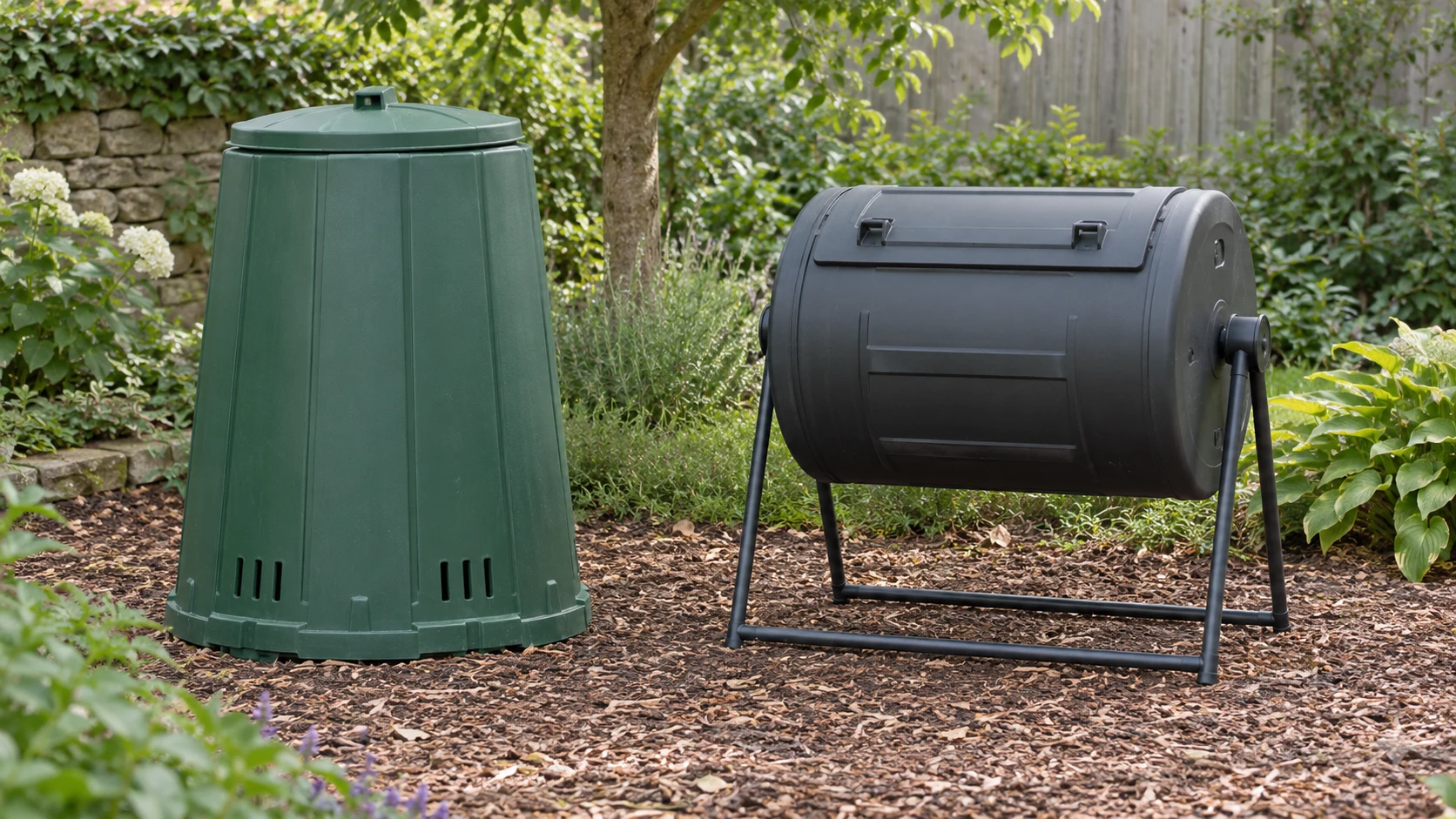
The Aerobin 200 insulated composter is described as a green, 55-gallon unit for household and garden waste, with an aerated design. Its listing identifies SKU sku-47691048 and UPC 017783402006. The capacity tells you the stated container size. It does not tell you the actual moisture of its contents or establish that any combination of materials will compost successfully.
The Aerobin description includes claims about development and testing history. Those are the retailer's account, without an independently reviewed test result here. An aerated-design statement is not a measurement of the current oxygen conditions inside a particular loaded unit. Keep the actual operating instructions available when deciding how to inspect or manage that equipment.
The HomGarden 43-gallon dual-chamber tumbler describes a different layout. It names PP plastic and galvanized steel, a rotating drum, air vents and internal fins. The stated maximum capacity is 43 gallons for the unit; the description does not allocate 43 gallons to each chamber. Its assembled dimensions are 28.7 inches long, 25.4 inches wide and 36.4 inches high, with a stated net weight of 22 pounds.
HomGarden's retail operating account says to close the door and rotate the bin five to six times every two to three days. Keep that wording with this product and its applicable instructions. It is not an EPA turning schedule for every compost pile, and it should not be transferred to Aerobin. The description's faster-decomposition and continuous-composting wording supplies no verified completion date for your material.
The HomGarden package lists a compost tumbler, gloves and screwdriver, and instructions. Those contents differ from an assessment of whether the unit suits your actual outdoor location or handling needs. Resolve the physical equipment question on its own facts. A complete package can still be filled with an unsuitable balance of ingredients.
Use weather and watering observations for the questions they answer
The guide to overwatering with a watering can separates available water supply from an actual need for water. The same distinction helps frame the decision here: the ability to pour more does not establish that the compost needs it. That article's houseplant and orchid instructions remain with those plants. They do not supply a compost-water dose.
The rain-gauge measuring-tube guide explains how a calibrated rainfall reading differs from the visible height of a water column. An outdoor rainfall observation can be context for checking a backyard arrangement after wet weather, but it does not measure moisture inside the compost material. Keep the actual inspection and the instrument's observation separate; neither selected gauge determines how much water to add to a composter.
The EPA recommends an accessible yard location with good drainage and a water source nearby, away from being directly against a fence. It says a compost pile can break down in sun or shade. Those general location considerations are useful when assessing the arrangement around your current system. They do not replace the selected equipment's assembly, placement or access instructions.
Follow the adjustment with another observation
After correcting an unsuitable balance or moisture condition, continue monitoring the material. Keep track of what you added and the method you used to mix it. The next observation can tell you whether the condition still needs attention. The EPA gives no universal number of hours after which a bad smell must disappear, so an improvement should not be scheduled from an invented countdown.
Likewise, a reduction in odour is not a complete test of finished compost. The EPA describes finished material as dark, loose and crumbly, smelling like fresh soil, with most or all original inputs decomposed. Its harvest guidance also includes a curing stage after the pile stops heating following mixing and visible food scraps are gone. A pleasant smell alone does not supply all those observations.
Keep the current problem separate from a new loading decision. If you cannot maintain a suitable supply of browns or manage the contents with the equipment's applicable method, identify that specific limitation before adding more material. A nominally larger container addresses available space; it does not establish a different moisture requirement or remove the need for air.
Decide whether a purchase answers the remaining problem
A replacement or additional composter may be relevant if you have established a real equipment requirement. The Aerobin and HomGarden offers describe different capacities and designs. Consider the actual location and access questions after examining the contents and routine. A retail aeration feature is part of the equipment description, while a balanced, adequately moist mixture remains part of managing the process.
An outdoor-composter purchase through republeq should remain attached to the equipment question you have actually established. Keep Aerobin 200 and the HomGarden dual-chamber offer distinct when asking about access, supplied instructions or the intended location. The nominal capacities and different designs do not diagnose the material currently producing an odour. Once you have identified a suitable offer, check the payment methods shown for its actual checkout. Readers interested in crypto, including USDT, need to establish which options are available for that transaction. Cryptocurrency is a category in the captured product records; it is not confirmation that a particular asset or network will appear for the order you reach. Take payment instructions from that checkout, and seek clarification before approving a transfer if a requested detail is uncertain. This article provides no wallet destination or supported-network selection. Preserve any supplier answers about the selected equipment with the order reference, so that changing a payment route does not detach the purchase from those confirmed details. Retain the order confirmation and the confirmation produced by the payment method for a later enquiry about the same transaction. Check current delivery information against when you need the equipment, without treating a seasonal gardening plan as an arrival promise. Review the return terms applicable to the actual order as well. No particular remedy for used outdoor equipment is established here. While a purchase remains undecided, the existing composting question still concerns the contents and applicable management method. A new container may address an equipment requirement after it is received and understood; payment confirmation cannot show that the material has the right moisture, ingredients or air. Keep those observations in the routine even if you decide another design would serve your outdoor arrangement better.
If compost smells bad, begin with the condition in front of you. Check the ingredients, examine moisture and follow the applicable way to introduce dry browns and air. Assess progress through further observations, with the actual container and its instructions kept in view. Choose new equipment for a confirmed need that remains after those questions are addressed.