Home & Living
Christmas stocking condition check before the mantel goes up
Check stored Christmas stockings for visible wear and confirm the actual care label before display, cleaning or replacement decisions.
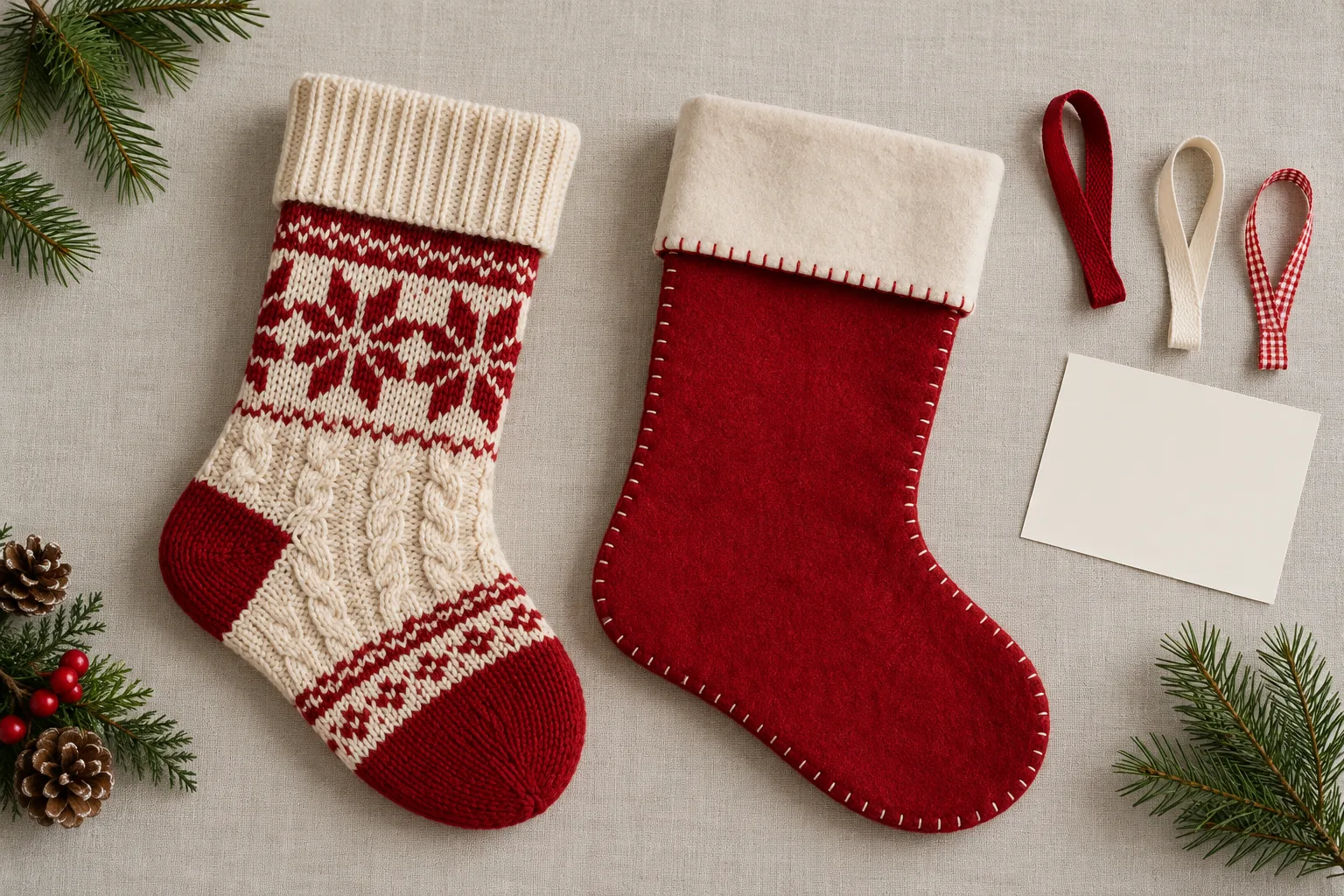
A stored stocking can look ready while its hanging loop has pulled loose or a seam has opened near the toe. Give the pieces you already own a few minutes on a table before you decorate. The Christmas stocking condition check here is a way to decide what you can use as it is, what needs an item-specific care or repair decision, and what you would rather replace. It does not assume a photographed new set will wear better than your old one.
Bring out the whole group, including the pieces you expect to leave in storage. Lay each stocking flat and keep any name tag or note with its owner. You are looking at actual fabric and stitching, not the way a listing arranges stockings around gifts. A brief written note helps when a problem appears again next year. It also keeps a single damaged loop from turning into a vague decision to replace every stocking.
Start with the stocking you have
Make one clear space on a table and work through the stockings one at a time. Place the first piece with its opening facing you. Look at the front, back and inside rim. If there is a detachable tag, set it beside that stocking rather than assuming the tag is part of the fabric. Do the same with any ribbon or added decoration. A seller’s styled picture may show a gift, a name label, a hook and greenery in the same frame; those items are not automatically included with a stocking.
Record what you can actually see. “Loop stitching loose at one end” is more useful than “bad stocking.” Note a stain without guessing whether it will wash out. If a stocking has been folded tightly, let it lie flat before judging a crease as permanent. You can make a reuse decision after this first pass, or place an uncertain item aside for a closer look. Nothing in a product photograph can answer what happened to the stocking in your own storage box.
Look at the hanging loop and its attachment
Find the loop or tie intended to hang the stocking. Check where it meets the cuff or body. Look for a split seam, a loose knot or thread that has drawn through the fabric. Gently hold the empty stocking by the loop to see whether the attachment stays in place. Do not turn this into a loaded strength test. A loop that holds an empty stocking in your hand has not been proven suitable for gifts or for a particular hook.
If the loop is missing or partly detached, put that stocking in a separate group. Decide whether you can obtain item-specific repair guidance or need a different stocking for display. Do not hide a damaged loop behind greenery and then fill the stocking. The related guide on stocking stand compatibility with loops and hooks owns the question of whether a chosen stand and stocking fit together. This check is narrower: it asks whether the loop on a stocking you already own appears intact before you consider hanging it anywhere.
Inspect the body without inventing a fabric rating
Run your eyes along the side seam and toe, then turn the stocking over. On a knitted piece, look for a snag or a loose strand that has changed the shape. On felt, look for a cut, tear or separation near an edge. A mark near the cuff may matter more to you because it remains visible when the stocking hangs. A mark inside may still warrant a note, especially if you plan to put anything in the stocking. These are observations about your particular item, not claims about how knit and felt products generally age.
Check trim separately. A decorative bead, tassel or applique that has come loose is a different issue from a hole in the stocking body. Do not pull on an uncertain ornament to prove it is attached. Keep small loose pieces away from the place where you are sorting the stockings, and follow the actual item’s instructions if it came with any. If there is no label or product guidance, record the uncertainty. The inspection can still tell you which piece needs attention before you decorate.
Keep care instructions tied to the actual item
Find the care label on each stocking before choosing a cleaning method. The label for a new replacement listing does not tell you how to clean an older stocking from another maker. If you cannot find a label, do not assume a knit piece is machine washable or that a felt piece can be spot cleaned with a particular solution. Note what material the item appears to use, but treat that as a clue for finding its instructions, not as a washing command.
When instructions are unclear, a cautious next step is to ask the seller or maker of that exact item, if you can identify one. If you cannot, you can defer cleaning rather than use a guess that might change the fabric or attached trim. A visible mark does not prove a stocking is unusable; neither does a successful wipe on a hidden area establish that every decoration will tolerate the same treatment. Keep the decision specific to the stocking and to the care information you can verify.
Separate the three decisions
Give each stocking a simple outcome: ready to display empty, set aside for a care or repair decision, or replace. You do not need to finish every decision at once. A stocking with intact fabric and loop may still need a name tag you want to add later. A piece with a loose seam may be worth keeping if you can get a suitable repair, but do not count it as ready while that question is open. A missing label is a reason to avoid unverified cleaning advice, not a reason to discard the item automatically.
Keep the outcomes on a card with the storage box. Write the observation beside the stocking’s identity so you can find it again. If you decide to shop, take a photograph or measurement of what you are replacing and keep your display space in mind. The stocking dimension guide explains why a diagonal alone cannot establish a stocking’s width and height. Here, size remains a detail to verify from the actual offer and the space you have; the main decision is whether the old stocking passes your condition check.
Read replacement listings as offers, not predictions
Two current listings illustrate why a replacement search needs another close read. The six-piece knit Christmas stocking set describes an 18-inch festive knit group. Its product gallery shows six red, ivory and green stockings on a mantel, with example name tags and filler objects. The page does not establish that those tags or objects are included. The listing describes acrylic fabric, but it does not give care instructions for a stocking you already own or prove how long the new set will last in your home.
The red felt Christmas stocking offer currently names a 48-piece pack and describes a white cuff with gold trim. Its gallery shows a repeated red stocking. The old URL contains “12pcs,” which conflicts with the current product title. Use the current offer page and confirm the quantity at purchase time; do not treat the URL as a pack-count promise. The felt construction and the knit construction are different visible examples. Neither listing supplies a durability ranking or an instruction for cleaning your existing stockings.
Check the photograph’s limits
In the knit listing photograph, stockings hang beneath a decorated mantel with names and gifts visible. That tells you how the seller chose to stage the image. It does not establish the hanging hardware, included labels or filled capacity of the set. In the felt listing image, one large stocking sits beside rows of smaller depictions of the same design. That arrangement helps you recognize the product type, but the product title and current offer terms are still where pack contents must be checked.
A replacement photograph cannot diagnose the wear on a stocking in your box. It also cannot establish whether your mantel, stand or hook will support a filled item. If you need to settle a hanging fit question, use the actual mounting and loop measurements for your setup. If the concern is a torn seam or a lost care label, keep that as a separate question. This distinction keeps a seasonal shopping page from doing the work of an inspection it cannot perform.
Make the display decision after the condition pass
Once the questionable pieces are set aside, put the ready ones in the place you intend to use. Leave them empty for this dry look. You can see whether the group still serves the people and space you planned for without assuming every stocking has to be replaced as a set. Do not use the dry display to infer a load rating or to cover up a loop problem. If the arrangement needs a new piece, choose one only after you know which role is missing.
Name assignment and visual order are their own decisions. A separate name-assignment plan handles the recipient roster. This condition check stops sooner. Its outcome is an honest inventory of which stored pieces are ready, which need attention and which have become replacement candidates. A person can use that inventory before deciding colors, names or contents.
Leave a useful note for next season
When the holiday ends, keep the inspection card with the stockings. Record any loop or seam that changed during display, and note where an item-specific care instruction can be found. If you chose not to clean an unlabeled piece, say so. A short record saves you from treating the same uncertainty as a new mystery when you reopen the box. Avoid writing “safe to hang” as a permanent certification; the next inspection should look at the actual item again.
If several stockings went into one box, attach a small note to the group that needs follow-up. A note can say which cuff lost a stitch, which piece has a spot you have not treated, and which care label you still need to read. Keep the note away from the fabric if its adhesive might leave a mark. When you take the set out next season, repeat the quick visual pass even if you wrote that every piece was ready this year. Storage and handling happened between those two checks, and the old note describes only what you saw at the time.
The useful result is modest. You know which stockings you examined, what you saw and what still needs a decision. If every existing piece is ready, there is no reason for this guide to send you shopping. If one needs replacement, the two native listings are examples to check carefully, including their current contents and material statements. Start with your own stocking and its real care label next time too.