Sewing & Crafts
Plan canvas thumbnail rotation before choosing the final orientation
An original paper exercise distinguishes rotating an entire composition from turning an internal L shape inside an unchanged border.
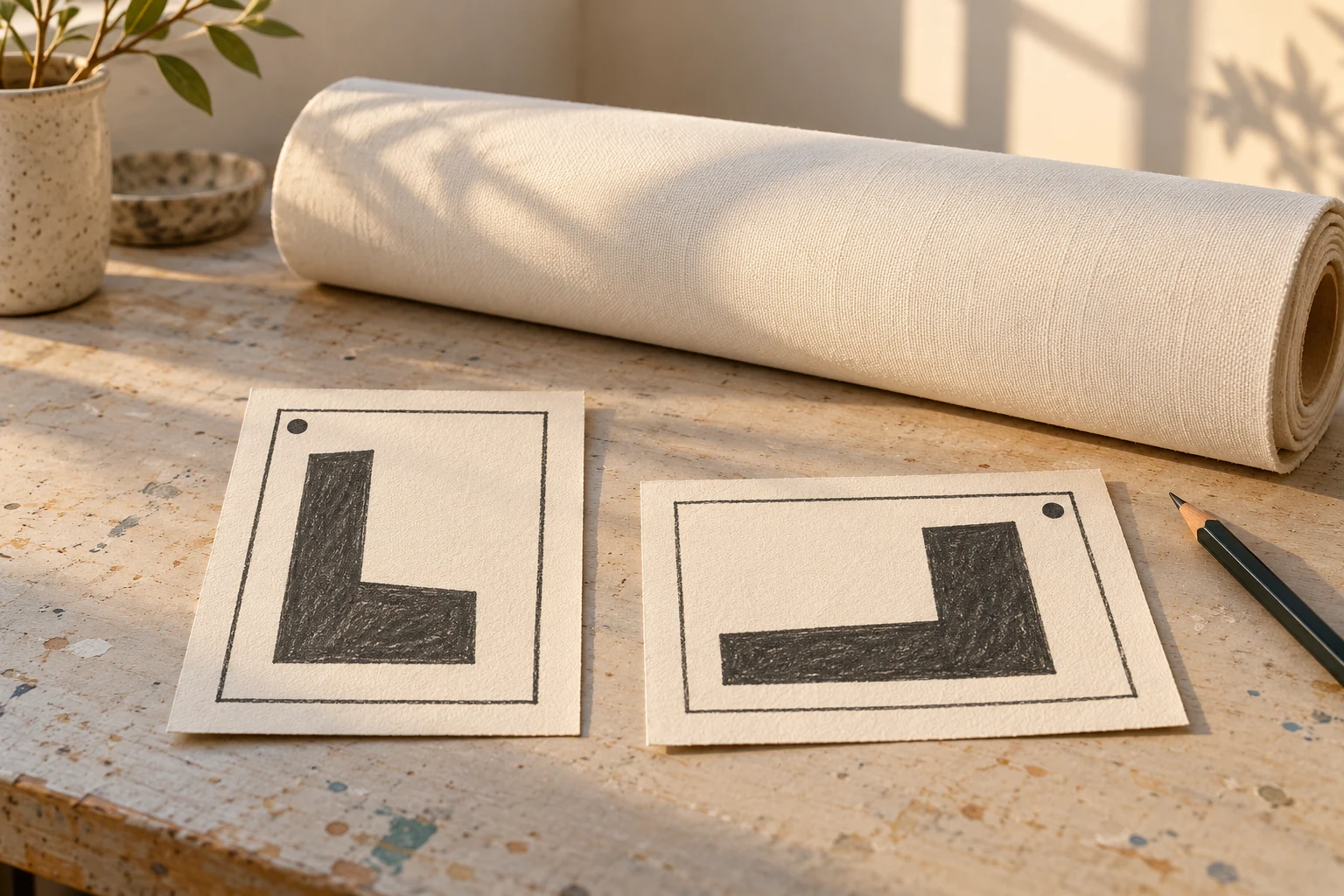
Canvas thumbnail rotation can mean two different changes. You might turn the whole composition, including its boundary, or turn a shape while leaving that boundary fixed. A small paper exercise makes those choices visible before you select a final orientation. Keep the paper study separate from the actual canvas: no cutting, stretching, priming or painting instructions follow from this exercise.
Use an invented abstract motif rather than a finished artwork you are trying to reproduce. An uneven L shape is enough because its two arms make a change in direction easy to discuss. The aim is to identify the change you intended. This guide promises no improvement in drawing skill, composition quality or the behavior of a particular painting surface.
Start with one border and one asymmetric shape
On an ordinary piece of paper, draw a rectangle with one side longer than the adjacent side. This is your thumbnail boundary, not a measured retail canvas. Place a simple L shape somewhere inside it. Let one arm be noticeably longer than the other. Keep the drawing plain enough that you can describe both the shape and its position without interpreting a detailed picture.
Choose a corner of the rectangular border and put a small dot there. The dot belongs to the border in this exercise. It is a reference for recognizing which corner you began with when the page turns. It supplies no dimension or product specification. Keep the dot visually separate from the L shape so the two do not become one combined motif.
Before changing anything, describe the first sketch in your own words. For example, you could say that the longer border side is upright, the dot is at the upper left and the longer arm of the L points down. Use the sketch actually in front of you. These phrases are an example of a record, not an instruction to make every study identical.
Give the starting sketch a name such as original paper study. A name lets you refer to that version after making alternatives. You do not need a numbered drawing system or a precise diagram. The important point is that the unchanged reference remains available. If you redraw it differently every time, you will no longer be comparing one starting idea with its two transformations.
Turn the whole page for the first alternative
Leave the border, dot and L exactly as drawn, then turn the paper through a quarter turn. The whole drawing moves with the page. Look at where the long border side now sits and where the dot moved. Look at the L as well. This alternative changes the orientation of the entire arrangement relative to the way you are viewing it.
Do not redraw the L during this first change. If you redraw it while also turning the page, you introduce another decision and lose the simple comparison. Keep your hands away from any actual art supplies while doing the paper study. The alternative here is only a changed view of the same sketch, without a claim that a canvas has been physically prepared.
Describe the turned version using the same kinds of words as before. Name the border orientation, the dot corner and the direction of the longer L arm. You can set a fresh note beside the page while leaving the drawing untouched. The note records what you see after the whole-page turn and gives you something concrete to compare with the next alternative.
Return the page to its starting position before continuing. Check the original note and the dot rather than relying on your memory of which way you turned it. Restoring the starting view keeps the second experiment attached to the same reference. It also prevents a quarter turn followed by another quarter turn from being mistaken for two different kinds of change.
Keep the border fixed for the second alternative
Make a separate paper thumbnail with the same intended border orientation and corner-dot position as your original. Treat it as a planning sketch, not a precision copy. This time, draw the L facing a quarter turn from its original direction while keeping the boundary upright in the same way. The border reference stays fixed; the internal motif is the part you change.
Keep the motif comfortably inside the border for this simple exercise. You are choosing an arrangement, rather than testing an actual canvas dimension or how much cloth a project requires. If the first attempt at the thumbnail would place part of the L outside the rectangle, redraw the conceptual study with room to compare the versions. No physical material has to be cut to answer this question.
Read the corner dot before describing the new L. The dot should still identify the same border corner as in the original view. Then describe the longer arm of the shape. This order helps you distinguish an internal turn from accidentally rotating the page again. You can check the reference without making a judgment about which arrangement looks more attractive.
You now have a starting sketch, a whole-page turned view and a motif-only alternative. Keep their descriptions separate. The two changed versions may both contain an L pointing in a new direction, yet their borders and corner references can differ. Naming only the direction of the shape would leave out the part of the comparison that the exercise was designed to reveal.
Follow a fictional designer through the choice
Imagine Tessa is planning an abstract canvas composition using this paper exercise. Her original thumbnail has an upright rectangle and an L leaning toward one corner. She says turn it sideways. That phrase is ambiguous in her own notes. She has not yet decided whether she means the whole arrangement or only the internal shape. No real painting or retail product is being tested.
Tessa first turns the whole original sheet through a quarter turn and notes that the rectangular border is now horizontal. The corner dot moves with it. She then restores the sheet and makes the separate motif-only sketch with the border still upright. Both alternatives are available for her to inspect. She does not call them the same version simply because both involved a turn.
In this fictional case, Tessa chooses to keep the upright boundary while changing the L inside it. She writes fixed upright border, turned motif beside the selected thumbnail. That sentence records her own design preference. It does not establish a general rule that upright compositions are better, or that someone else should choose the same relationship between shape and boundary.
She saves the whole-page alternative as an unselected idea instead of replacing its label with the selected version’s wording. If she returns to the study later, she can see which choice was actually made. Retaining an alternative can be useful without treating it as a second instruction for the same final composition. One current note should identify the version she intends to develop.
Suppose another person sees only Tessa’s phrase turn it sideways. She can show both thumbnails and point to the chosen one. The drawings make the ambiguous wording visible rather than requiring a long argument over what sideways meant. This is a communication result from the invented example, not evidence that a product, technique or software tool has produced a finished artwork.
Keep the blank surface offers at their actual level
The Creative Mark Spectrum cotton canvas roll offer describes a primed cotton painting surface in roll form. Its gallery shows a roll with a white face and exposed fabric backing. Those observations identify the supply discussed here, without verifying its measurements, layer count, texture result or an appropriate preparation procedure for your intended project.
The Yes multi-media cotton canvas pads offer describes primed cotton canvas sheets in pads. Its gallery shows a Yes-branded pad, while the catalog brand field is Jerry’s Artarama. Keep those identities as presented. This guide establishes no brand relationship, complete delivered pack inventory or universal approval for every medium mentioned in the seller’s description.
Neither supply description decides what Tessa meant by turning her composition. A blank surface can be relevant to a later art project while the orientation choice remains a separate design decision. Do the paper exercise with ordinary paper already available if you wish. Buying one of the linked offers is unnecessary for distinguishing a whole-boundary turn from an internal motif turn.
When moving from a paper idea to an actual project, obtain the instructions and specifications applicable to the real surface and materials. The conceptual rectangle here has no scale, mounting method or measured edge depth. It cannot establish how much canvas you need or how to prepare it. Keep those practical questions open until the relevant information is available for the project you actually choose.
Separate construction and decoration from rotation
The canvas panel versus stretched canvas guide distinguishes supporting construction from surface preparation. Those physical questions remain separate from this thumbnail exercise. Choosing a direction for an L inside a paper rectangle supplies no answer about a hardboard core, stretcher bars or ground. Read the actual construction account when that is the decision you need to make.
The holiday card edge plan decides where an intended decorative treatment belongs. That is another boundary question, with its own scope. This exercise changes the relationship between a motif and a fixed or turning border; it does not select an edge treatment, scissors or a holiday design. Keep each planning note attached to the choice it describes.
You can also leave the motif unchanged and choose a different picture altogether. That would be a new design decision, rather than one of the two rotations compared here. If you do that, preserve the original sketch and identify the replacement idea separately. The exercise remains useful as a record of what you considered without requiring every later change to be called a rotation.
Save the selected relationship in ordinary words
Read your final note as someone seeing the thumbnails for the first time. Does it identify whether the whole composition turns, or whether the motif turns inside an unchanged border? Can you point to the corresponding drawing? If the wording is still vague, use the existing sketches to name the intended relationship. There is no need to invent a technical term for your own design preference.
Keep the selected thumbnail with the note and retain the starting reference. If you change the orientation later, add a new dated note rather than pretending the earlier choice was always the same. This preserves the actual development of the idea. A design record can change honestly while remaining clear about what each version was intended to show.
Canvas thumbnail rotation becomes a concrete choice when the border reference stays visible. A quarter turn of the whole page carries the boundary and motif together. A motif-only turn leaves the boundary fixed while the internal shape changes. Use the paper studies to decide which relationship you mean, then carry that chosen version into the separate practical planning for your actual art project.
Keep payment with the identified supply purchase
If you consider cryptocurrency for a canvas supply purchase, begin with the exact offer you intend to order. The captured republeq.com product page names USDT, USDC and BTC in its checkout message. That message does not decide the artist’s preferred orientation or establish that a particular abstract design comes with the selected kit. Keep those design questions separate from payment. A willingness to pay cannot turn your proposed thumbnail into another person’s request. Nor can an available payment method prove that a kit supplies everything an eventual project requires. Before ordering, retain the current design preference and the exact product information you have actually established. Leave unresolved details open rather than filling them from a photograph. Read the terms and instructions presented for the actual transaction. This guide provides no wallet address, transfer procedure, network selection, exchange rate or fee estimate. If a necessary payment detail is unclear, seek clarification through the responsible transaction interface or provider. An incomplete purchase decision can remain undecided while you obtain the information needed. If someone else is ordering supplies, give them the exact offer and the scope of the purchase. Make clear whether the intended canvas is a supply kit or a completed object you plan to make. Those are different proposals, even when both concern the same creative occasion. Ask them to bring a changed offer back for consideration before treating it as the agreed choice. After an authorized purchase, preserve its confirmation and any payment record supplied. Keep those records with the offer actually purchased. They document a transaction without proving artist approval, template contents, finished quality or project completion. Return to the design note when choosing what to make. The artist’s request remains the relevant reference for the orientation, while the transaction record retains its separate meaning for that purchase.
A canvas thumbnail rotation study sets two paper L-shape compositions beside an idle blank canvas roll while border and motif orientation are compared.