Educational & Explainer Articles
Canvas panel vs stretched canvas: support and ground
Understand canvas supports, acrylic-gesso preparation and stated sizes using actual Raphael panels and Arteza stretched canvases, without a quality ranking.
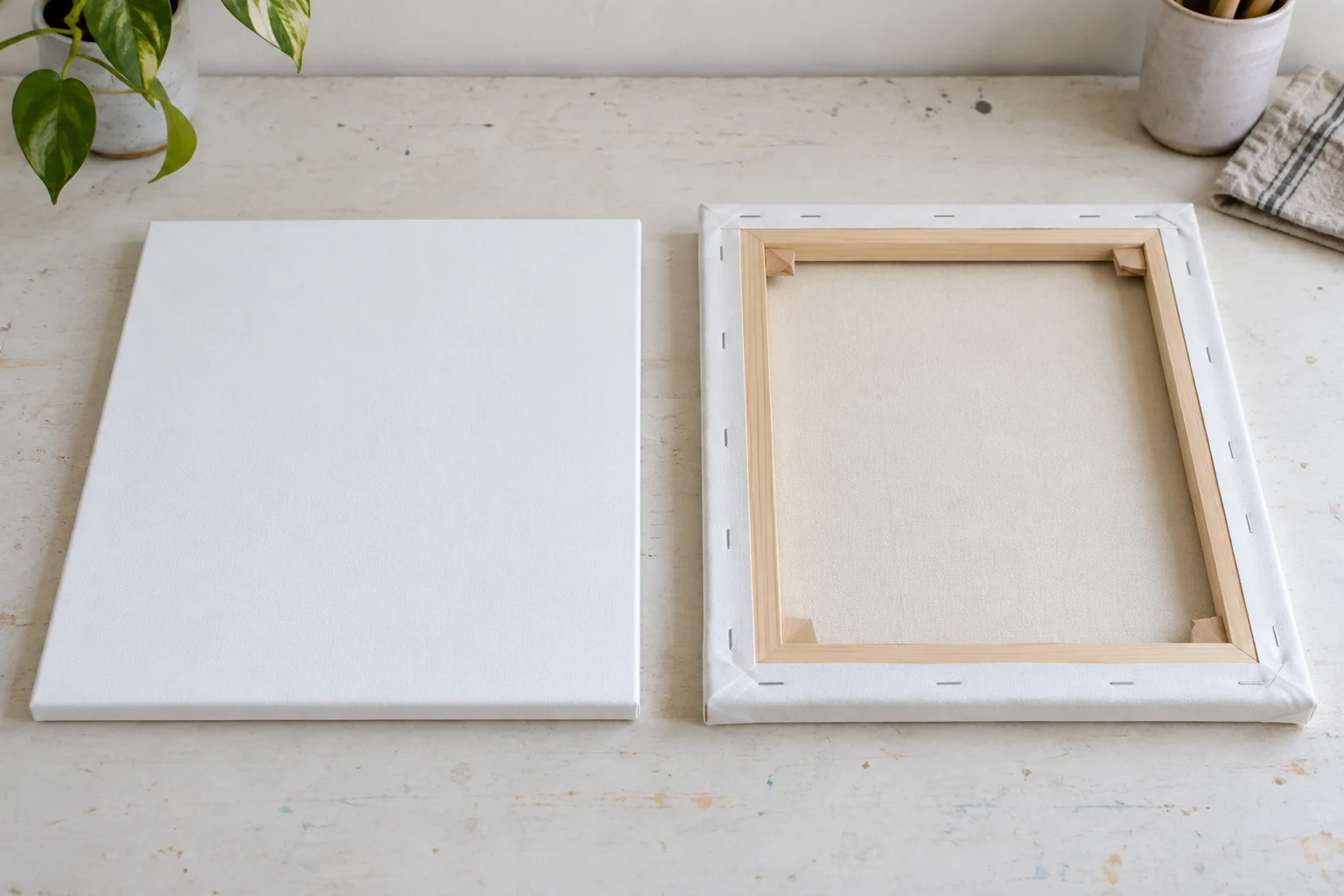
Canvas panel vs stretched canvas is a question about construction before it becomes a preference for a painting surface. Two offers can both name cotton and acrylic gesso while describing different supports. Find both the support construction and the surface preparation in the description. Then keep the stated size, quantity and medium claims attached to the particular product.
The examples here are Raphael mounted canvas panels and an Arteza stretched-canvas pack. Their descriptions give enough information to distinguish the named constructions. They do not provide a matched painting trial, long-term preservation result or reason to rank one above the other for every artist. Begin with the kind of project and physical format you actually want.
Canvas support and ground describe different parts
For canvas support and ground, London's National Gallery provides useful definitions. A support is the object or material on which a painting is executed. A ground is a layer used to prepare that support for painting. Its glossary also explains that the ground's colour and tone can affect the paint layers above it. These terms identify different parts of an account of a painting.
In a product description, look for the material and construction on one hand and the stated preparation on the other. Cotton, hardboard and pine bars name materials in the selected offers. Acrylic gesso names their stated surface preparation. An acrylic-gesso label does not identify whether the cotton is mounted on hardboard or stretched on bars.
These glossary definitions identify no Raphael or Arteza formulation or tested retail result. Use them to understand the labels you are reading. A conservation glossary about paintings also does not supply an application recipe for a new canvas. This article gives no priming, stretching or paint-application sequence.
Read the Raphael panel through its named layers
The Raphael Pannelli Telati mounted canvas-panel offer describes sixteen white nine-by-twelve-inch boards. Each is stated to be 3.2 millimetres thick, with one hundred percent cotton canvas and a non-directional hardboard core. The surface is described as acid-free and primed with acrylic gesso, with a uniform textured tooth. UPC 194447024481 identifies the offer.
Describe the Raphael offer as cotton canvas mounted on the named hardboard core. The cotton wording does not erase the named core. Likewise, the board description does not mean that the stated painting surface is simply uncovered hardboard. The supplied account describes mounted canvas on that backing, with a prepared surface above it.
The 3.2-millimetre statement belongs to the board account. It is not a measured gesso thickness or a paint-layer specification. If a project depends on the complete item's thickness, confirm what the supplier means by that figure and the applicable tolerance. No physical sample was measured for this article.
Read the Arteza offer as stretched cotton on bars
The Arteza ARTZ-8058 stretched-canvas offer describes two white thirty-by-forty-inch canvases. It names cotton stretched and stapled onto pinewood bars and says the surface is pre-coated with eight ounces of acid-free acrylic gesso. SKU sku-408775311 and UPC 851309007852 identify this actual listing.
The named structure differs from Raphael's mounted cotton and hardboard core. Retain that difference even though both descriptions mention cotton and acrylic gesso. A shared fibre label does not identify the complete supporting construction. Ask about the actual product when a rear structure, depth or display requirement matters to your project.
The Arteza account does not supply every measurement of its bars or the complete item's depth. Thirty by forty inches gives the stated surface format, without completing those other dimensions. A photograph showing an edge would not establish a missing measured depth. Obtain the relevant specification before planning around it.
Primed canvas product descriptions leave their own questions
For primed canvas product descriptions, begin with the preparation each offer actually names. Both selected accounts identify acrylic gesso. That is a common disclosed material, without evidence here of an identical formulation, application or finished surface. Keep the two products' preparation statements separate when asking about a particular painting medium.
The Arteza description uses an eight-ounce quantity without explaining its basis here. Do not turn it into canvas-cloth weight, a dry coating thickness or a number of gesso layers. Those would be different specifications. Ask what the stated quantity describes if it is important to your selection.
Raphael's description names a uniform textured tooth but gives no numerical texture scale. Arteza's supplied account does not give a matching texture measurement. You can identify what each listing says without declaring one smoother, rougher or better for a detail you have not tested on either actual surface.
Keep the medium lists as the sellers' claims
Raphael's description names acrylics, oils, alkyds, collage, mixed media, impasto and built-up compositions. Arteza's names oil paint, watercolour, acrylic, tempera and gouache. These are the respective supplied suitability lists. Their different wording does not establish a common test or show what result your chosen materials will produce on either item.
If you intend to use a particular medium, ask for the information applicable to the exact surface and materials. A broad word such as mixed media does not identify every adhesive, layer or combination someone might propose. Name the medium or combination you intend to use when asking about that surface.
A medium missing from one short list should also remain a question. Do not declare it prohibited solely because another offer mentions it more explicitly. This comparison describes the disclosures available, without adding an unlisted approval or rejection. Follow the applicable product and material instructions for the actual work.
Acid-free wording is not a complete preservation account
Both descriptions use acid-free language in their preparation accounts. Keep the wording attached to what each says about its surface or gesso. It does not by itself identify the composition and behaviour of every material in the finished painting you might make.
If preservation is important to a project, ask about the actual support, ground and intended materials together. A product's brief claim does not supply a tested lifespan for an unknown combination. This article provides no conservation treatment, storage climate specification or guarantee that a finished work will remain unchanged.
Keep material identity separate from a claim of superior quality. Cotton, hardboard and pine are useful facts about these offers. They do not establish a universal ranking, and a higher-sounding preparation phrase cannot replace the missing information for your intended work. Choose from the requirements you can actually identify.
Size and package count answer separate buying questions
The Raphael offer's nine-by-twelve-inch format and the Arteza offer's thirty-by-forty-inch format are different physical starting points. Decide which scale of work you want before treating either package as the relevant supply. This article gives no formula for enlarging a drawing or transferring a composition between the two sizes.
Likewise, sixteen panels and two stretched canvases are inventories, without a price or quality ranking here. More individual items might suit several separate studies if that is your actual plan. A project calling for one larger surface asks a different question.
Consider where the unpainted supplies and intended work will be kept, using dimensions actually confirmed for the items. Surface format alone does not identify a packaged stack's depth or a storage system's internal opening. Ask for the relevant measurement instead of assuming that a number of panels will fit because their face dimensions sound familiar.
Keep display framing separate from the support
A shop's use of the word canvas also needs the product's actual purpose. A listing for a completed printed artwork would describe a different purchase from an unpainted artist's supply. Read what is offered before using a common material name as the whole category. The selected products here describe prepared surfaces intended for making work, without a finished composition supplied.
Likewise, a white colour field identifies the stated colour of these offers. It is not the subject of a painting or a promise about the colours you will produce. The National Gallery's ground definition gives colour a role in the layered painting account, but it does not predict how your particular paint will look on either retail surface.
If you are selecting a support for a composition already planned, keep that actual composition and intended materials in the discussion. Ask about the identified preparation rather than choosing from an unrelated finished-art photograph. A printed image of a painting can help you describe a visual aim while supplying no missing formulation or medium instruction for the blank surface.
The bars named in the Arteza construction are part of that product's support account. Do not treat them as a separately identified decorative frame. Raphael's panel description likewise supplies no external display-frame approval. If framing is part of your project, identify the actual finished work and the relevant frame requirements separately.
Ask what a quoted measurement concerns when discussing that later pairing. The face dimensions of a canvas and an external frame's overall dimensions would answer different questions. No mounting, fastening or framing procedure is supplied here. A confirmed surface format can remain useful while an unconfirmed display arrangement stays open.
Use another art activity for the project choice
If you are buying for another person, ask which construction, size and preparation they requested. Their preferred format may be more specific than the word canvas on a gift list. Choose the support and format the recipient actually wants.
The sketchbook soundtrack afternoon guide begins with one ordinary object someone wants to draw. Its optional NOBRAND-listed speaker examples concern listening arrangements, without supplying any canvas specification. The relevant choice here is the subject and kind of session you want before selecting a support. You can explore a composition in materials already available to you while a canvas purchase remains undecided.
If you want several versions of one subject, identify that purpose. If you want one larger work, name that instead. Neither plan needs a promise that one support will improve your artistic skill. Choose the actual scale and materials you want to investigate, then obtain the missing product information.
Read each label for the physical part it names
The paint-roller cover compatibility guide distinguishes length, nap, core and frame shank instead of treating every dimension as an attachment answer. Apply the same reading habit here: board thickness, surface format and an undefined gesso quantity name different things. The roller guide's Wooster and Sherwin-Williams disclosures supply no painting-surface or medium approval for these canvases.
When asking about either selected offer, include the actual product reference and the specification you need. An answer about another size or construction should stay with that item. If you change your selection, check whether the earlier reply still identifies the surface and support you would receive.
For canvas panel vs stretched canvas, keep the named construction beside the stated preparation. Raphael's cotton and hardboard panel and Arteza's cotton on pine bars remain distinct offers despite shared gesso wording. Leave an unknown formulation, dimension or medium result open until the applicable information answers it.
Conceptual canvas panel vs stretched canvas cover with complete generic blank panel and separate stretched support; no exact retail models, measured thickness, primer layers or painting result is shown.