Lifestyle & Inspiration
A sketchbook soundtrack afternoon for one familiar object
Plan a sketchbook soundtrack afternoon around one familiar object, with optional Select 4 Go or G2000 speaker features kept separate from the drawing.
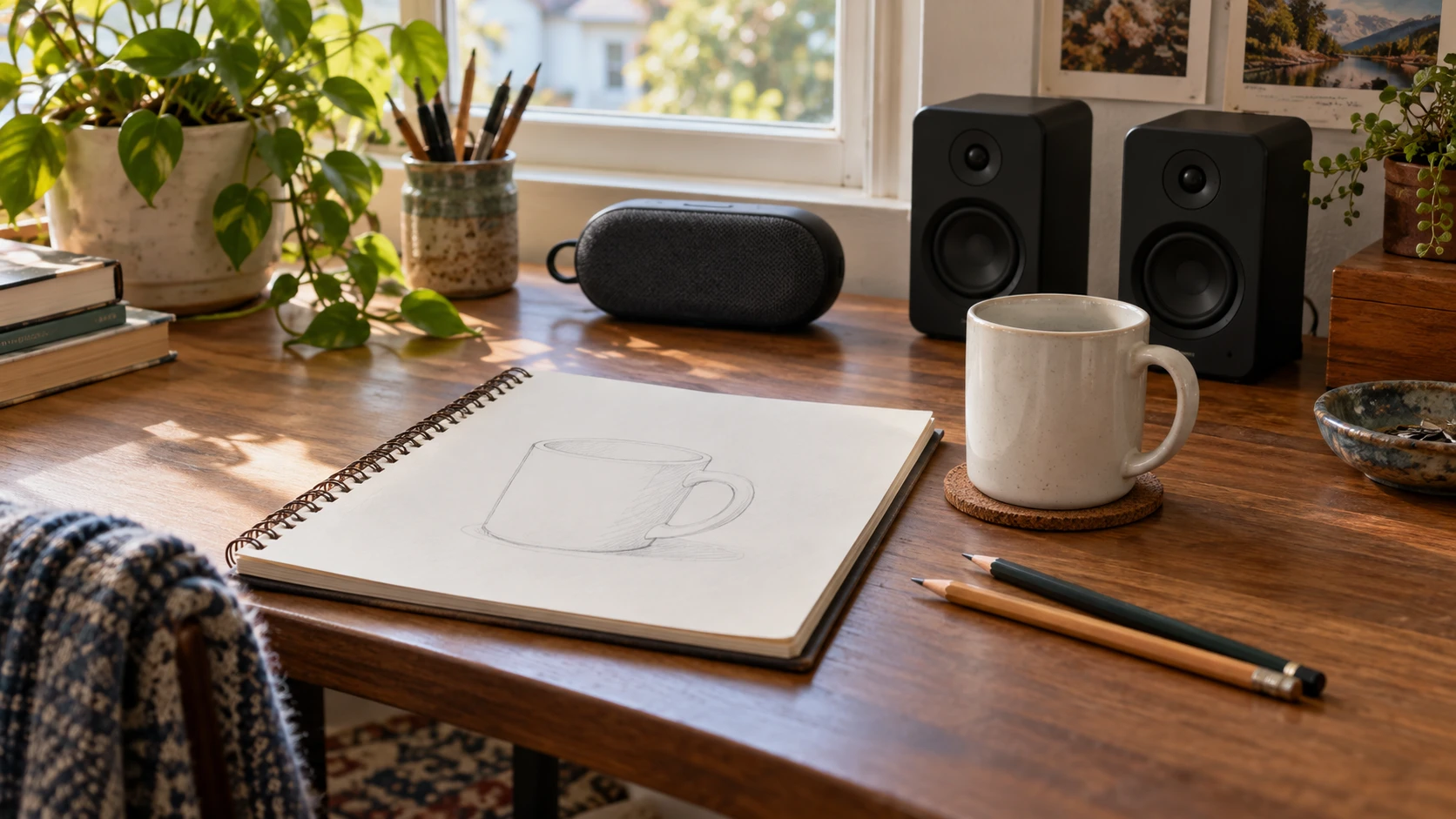
A sketchbook soundtrack afternoon gives a familiar object and a little music a place in the weekend. Pick something you can look at for a while: a worn shoe, a small bowl, the keys beside the door. Set out the drawing materials you already enjoy and choose music you would like in the background. The afternoon can end with one page, a few unfinished attempts or a subject you want to revisit.
You do not need to turn the drawing into a gift or share it afterward. Let the object be ordinary enough that choosing it does not consume the visit with your sketchbook. Keep the subject manageable enough for the personal hobby session you want. It promises no improvement in concentration, artistic skill or mood from music, and buying a speaker is optional.
Choosing one familiar object to draw
Look around the room for something you have seen many times but rarely chosen as a subject. A mug can carry a memory without needing a caption, while a bunch of keys gives you several small shapes to notice. Choose the thing that makes you want to put pencil to paper today. Leave the others for another page if choosing a whole still life would hold up the first drawing.
For choosing one familiar object to draw, consider whether you want the afternoon to feel like returning to something known or looking closely at something overlooked. An old shoe might invite a story about where it has been. A plain container might interest you mainly through its outline. Choose either reason without setting a standard the finished drawing has to meet.
Use an object you are allowed to move and place it where you can comfortably see it. If the choice belongs to someone else, ask before borrowing it. A valued or delicate item can remain where its owner wants it; choose another subject if moving it would complicate the afternoon. Keep the invitation to yourself small enough that a practical obstacle does not become the entire project.
Give the soundtrack a modest role
Choose a familiar album or a short selection you already have access to. You might prefer music with words, an instrumental piece or the ordinary sound of the room. Make the choice for the experience you want rather than a promise that a particular genre improves drawing. If the music asks for more attention than you want to give it, pause it or choose silence.
The soundtrack can have a personal connection to the object, though it need not. You might draw a travel mug while hearing music you remember from a journey, or sketch a kitchen object with a record you enjoy on weekends. You can name that association in your own words. There is no need to explain a recording's history or invent a story about the person who made the object.
Leave room for the drawing to outlast the selected music. An album ending can be a chance to look at the page, continue quietly or decide that you are finished. It does not have to become a deadline. If you are still choosing a line or noticing another detail, let the decision follow the page rather than rushing to finish before a final track.
Make room for several versions of the same subject
One page might hold a small first drawing with another beside it. You can return to the same object after a pause and choose a different part to emphasize. A first attempt might be mainly an outline; another might include a mark, a scuff or the shadow you found interesting. These are possibilities for your own session, not a prescribed drawing exercise or a promise of a better second attempt.
If a drawing stops where you do not know what to add, leave it there for a while. Put a few words beside it about what caught your attention, or begin another version elsewhere on the page. A note such as “the bent key” can remind you why that little part interested you. The note belongs to the sketchbook and can stay as informal as the drawing.
Keep the object and the page available for a later look if that suits your home. On another afternoon, you may want to draw it again or choose something entirely different. The earlier page can remain an account of that session without being corrected into the new one. If the subject needs to go back into use, return it and let the unfinished drawing stand on its own.
Let the page carry an ordinary association
A drawing can sit beside a sentence about why the object was there. You might remember the shoe from a walk or know which cupboard the bowl came from. Write the association in your own words if you want it on the page. It can remain a passing note, without becoming a complete story about the object or the person who owned it.
If you do not know its history, choose a detail you can see instead. The edge of a handle or a mark on a surface can give the page a personal focus without an invented explanation. You can also leave the page entirely visual. Decide which version you would like to come across when opening the sketchbook again.
A portable speaker offer for an existing music source
The Select 4 Go portable Bluetooth speaker offer has Anker wording in its title and description while its catalog brand is NOBRAND. Its description names Bluetooth, a lightweight body and an included strap. For an indoor sketchbook afternoon, the concrete attraction is a portable speaker to investigate with the music source you already intend to use. Confirm the actual offer identity if the difference in brand wording matters to the order.
The description claims 5W output and up to 20 hours of playback on one charge. It does not give a shared test with the G2000 speakers below or the conditions behind that runtime. Keep the maximum-duration wording when thinking about the offer. A single afternoon's plan does not establish how long a particular unit will play at your chosen settings.
The same source describes IP67 protection, floating and two-unit True Wireless Stereo pairing. Those features do not need to define this indoor hobby session. The description's pairing procedure concerns that product, and this article gives no control or pairing instructions. A two-unit feature also does not establish that two speakers arrive in this selected order.
A desktop-speaker offer with several stated inputs
The G2000 multimedia speaker offer is titled NOBRAND Computer Accessories G2000, SKU 18662672031, and its description calls it Black Edifier G2000 multimedia speakers. Keep the catalog's NOBRAND identity visible alongside that descriptive wording. The description names Bluetooth, a USB sound card and 3.5mm AUX, giving several connection paths to investigate for an existing desk source.
Its source names Game, Music and Movie EQ presets, 12 RGB lighting effects and 32W output. These are listed features rather than evidence about how your drawing afternoon will sound or look. A Music label does not prescribe the setting you will enjoy, and a larger output number does not supply a listening-quality ranking against the portable speaker. There is no matched room test here.
If your music already comes from a computer at the drawing desk, the stated USB sound-card and AUX options give you specific questions about that source. For a phone, the listed Bluetooth option is a different starting point. The description lists several device categories, but it does not establish every model, cable or configuration. Use the actual source's information before making a purchase depend on a proposed connection.
Keep the listening arrangement in the background
The W-KING D8 and DinDin listening-place guide asks readers to choose the listening place and source before comparing speaker features. That supports a practical choice for this afternoon: use the music arrangement that serves the room where you want to draw. Its outdoor ratings, battery claims and input inventories belong to those other speakers and do not fill either selected offer's missing details.
A small hobby session can begin with the arrangement you already know. If choosing equipment would consume the available afternoon, leave that shopping question for later and start the page with silence or your existing music setup. You can decide afterward whether another speaker would serve future sessions. The drawing need not wait for a comparison to be finished.
The Lithe Audio and Edifier room-listening guide distinguishes a dry-room bookshelf arrangement from an installed bathroom-audio project and asks whether the intended source can feed the chosen speaker. For the sketchbook plan, keep the room and source you actually use together. That guide does not provide the G2000's power arrangement, the Select 4 Go's controls or an installation method for either offer here.
Consider the other people using the room as you choose the session. You might have the space to yourself, or someone else may want to read or work nearby. Agree on whether music belongs in that shared afternoon. No product description can decide that preference for your household, and the listed output figures do not establish sound isolation or a particular listening level in the room.
A sketchbook afternoon with room to stop
For a sketchbook afternoon with room to stop, choose an ending that follows what you made. You might leave the book open to the page you want to revisit or close it when the object returns to its usual place. A finished outline, a page of possibilities and a few words about an awkward detail are all possible results. You do not have to make them look alike.
If you want to show someone the page later, tell them what interested you about the subject rather than presenting it as a test of skill. They might notice a detail you had not named or recognize the object from another setting. Sharing can remain optional. You can also keep the page to yourself and use the next afternoon for something unrelated.
Before another session, look at what you actually wanted more of. It might be a second view of the same object, a different music choice or simply more time with the sketchbook. Choose the next session around that preference. The portable and desktop speaker offers give different stated features to investigate if equipment becomes part of that decision; neither is required for one familiar object and an afternoon page.