Sewing & Crafts
Make a holiday card edge plan before choosing scissors
A holiday card edge plan records where decoration belongs before selecting scissors, while unresolved package contents remain separate purchasing questions.
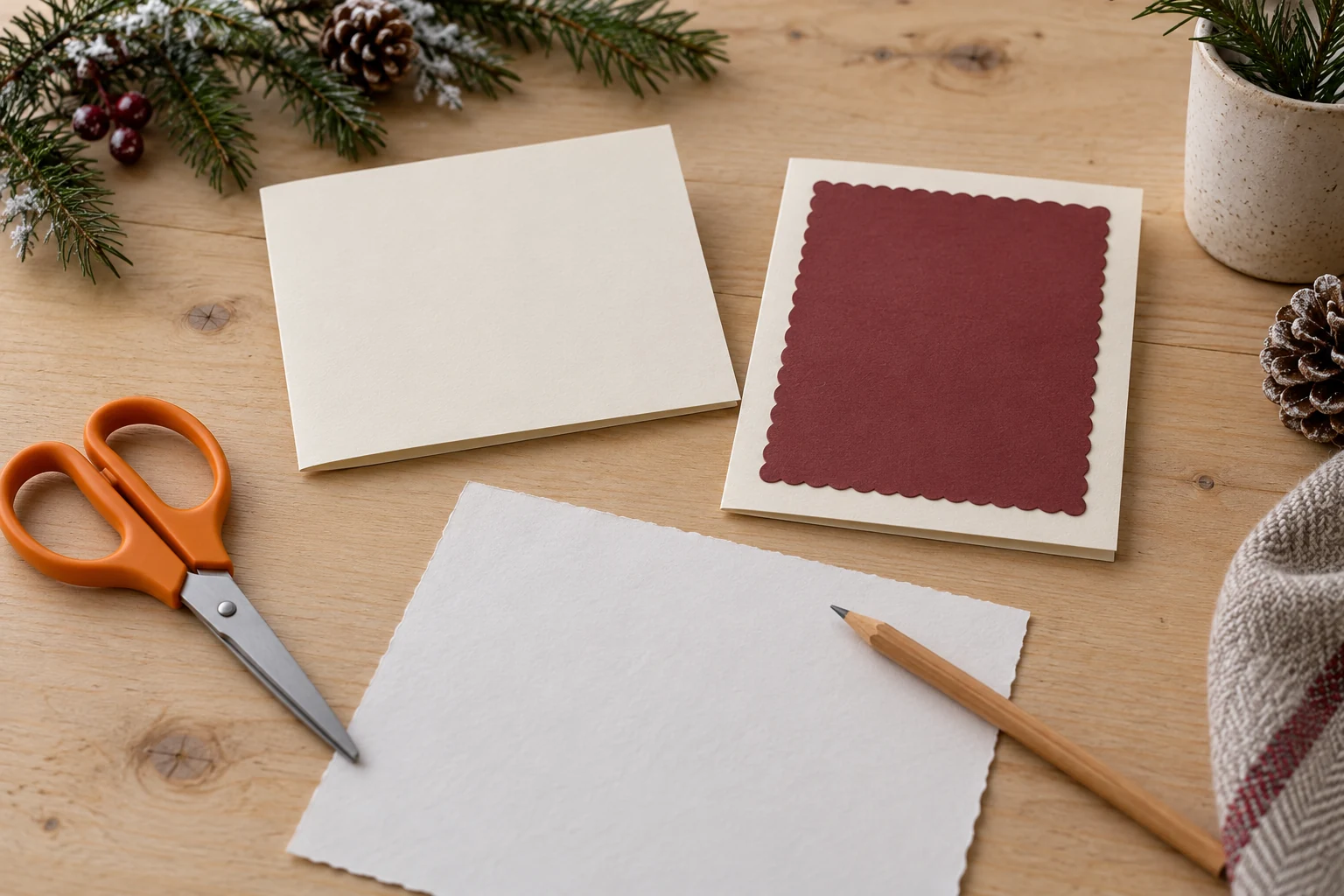
A holiday card edge plan starts with the intended card, before a scissors set becomes the answer. Decide whether the visible outside boundary should be plain, decorated or left undecided. Then consider any separate decorative panel and small interior detail. Those are different design choices, even when they appear on the same card. A seasonal idea can stay simple without requiring every edge to carry the same pattern.
The Fiskars four-piece craft scissors and edgers offer describes paper edgers for decorative edges on handmade cards, scrapbook pages and collages. Its gallery shows large straight scissors, small detail scissors and two decorative edgers. This illustrates different tool roles within one offer. It does not establish the result on your chosen card stock or supply measurements for every pictured tool.
The Fiskars crafting scissors two-piece set offer names eight-inch and five-inch Microtip scissors. Its title says five pack and its gallery repeats five large-and-small pairs, while the description’s included-items statement describes one two-piece set. Ask what the order supplies rather than treating the picture as an inventory confirmation. Neither offer determines which edge treatment belongs on your holiday card.
Name the seasonal design decision
Write one sentence about the card you intend to make. For example, a fictional sender, Mina, wants a winter thank-you card with a quiet outside outline and one playful decorative panel. This sentence gives the proposed decoration a location. It is more useful than a shopping note that says festive scissors, because several tools could look festive in a photograph without serving the particular boundary Mina wants to change.
The sentence should identify a visible feature rather than a mood alone. Elegant, cheerful and handmade can mean different things to different people. A plain outside rectangle with a patterned inset is a design someone else can discuss. They can ask whether the inset belongs on the front or inside. That question moves the idea forward without assuming a tool, a cutting method or a material result.
Keep the occasion as context. A seasonal greeting, a thank-you after a holiday meal and a personal note to someone who does not celebrate that holiday need not share a decoration. Choose a visual intention appropriate to the recipient and your message. This article does not supply a universal seasonal symbol or require the card to display one. An undecorated edge remains an available design choice.
Separate the outside boundary from the panel
Draw a rough card outline on a planning sheet, or describe it in words if drawing is inconvenient. Label the outside boundary separately from any front panel. The sketch represents your intention; it is not a cutting template. A plain outer edge and a decorative inner panel can coexist. Marking the two separately prevents a discussion of one from silently changing the other.
A panel might frame a short greeting, leave a border of the underlying card visible or carry a decorative shape. Before discussing tools, decide which of those jobs matters. You do not need to settle precise dimensions in this design note. You do need to know whether the proposed decorative edge belongs to the whole card or to a separate element within its face.
Use an explicit undecided label where the design is open. If the front panel might be omitted, retain that option. Otherwise, a shopping conversation can make an optional detail feel compulsory simply because an edger set includes several patterns. The offer should be considered after the intended decoration has a purpose. Owning more patterns does not create a reason to put all of them on one card.
Give small details their own question
A small interior detail has a different location from the card perimeter. It may be part of a motif, a separate decorative element or something you decide to omit. Write that intention separately instead of using detailed edge as a catchall phrase. A person reading your note should be able to tell whether you mean a decorative outline around the card or a small feature within its design.
The first selected offer distinguishes detail scissors from paper edgers in its description. That source distinction can help keep your enquiry specific, but it supplies no promise that either tool will produce your intended result on an untested material. Describe the actual proposed task when requesting information. Do not translate detail into a guarantee about every small shape or decorative into a guaranteed finish.
If you have no small interior feature in mind, leave that part of the plan empty. A tidy list of possible tool roles is not a requirement to invent three tasks. One card might call for a plain boundary and no inset at all. Another may use only a decorative panel. The plan is useful when it reveals the few decisions that actually belong to the proposed card.
Work through a conflicting holiday card brief
Suppose Mina shares her idea with fictional collaborator Arun. Mina says she wants a restrained outside border; Arun hears holiday decoration and proposes a patterned outside edge. Both suggestions concern the same card, but they express different designs. Listing the tool before resolving that disagreement would hide the conflict. Put the proposals beside the outside-boundary label and choose which intention the current card will follow.
Mina explains that the playful element belongs on a separate front panel. Arun agrees to keep the outer boundary plain and discuss a patterned panel instead. Their note now has two settled intentions: plain perimeter and decorative panel. A third note, small interior feature undecided, remains open. This is an invented design conversation, without a claim that a particular scissors set has already produced the proposed card.
Now imagine Arun suggests removing the panel and decorating the whole outside edge to save a design decision. That is a changed proposal. Discuss it as such, because it changes the visual intention Mina described. The number of available scissors does not resolve the disagreement. They can accept the new design, retain the original or stop while they consider it. The record should reflect the choice they make.
For a later recipient, Mina may prefer the alternate version. Keep that as a separate card intention rather than treating it as a correction to the first. Seasonal consistency can come from a shared idea without requiring identical boundaries. Distinguishing the designs lets someone discuss a tool enquiry for each without assuming the first recipient’s card has changed along with the second.
Consider two written briefs for the same occasion. One says patterned outside, no separate panel, interior detail undecided. The other says plain outside, patterned panel, no interior detail. They may use similar seasonal colors, but they ask different things of the visible boundaries. Combining the briefs into one sentence about festive edges would lose that distinction. If collaborators prefer different versions, keep both labelled until they agree which version applies to the current card. They can compare the appearance they intend without buying both tool proposals or claiming either result has been tested. Once they choose, retain the other brief only as an alternative for another design discussion. A discarded alternative should not silently return as an extra requirement when the offer is selected.
Compare actual offers against the agreed roles
Bring the design note back to the selected references. The four-piece offer presents decorative edgers alongside straight and detail scissors. The other offer identifies all-purpose and Microtip scissors, with the unresolved order-count wording already noted. Keep those source statements separate from your design intentions. A seller’s description is information for an enquiry, without proof that a finished card will match your sketch.
Ask a question about the role you need. If the agreed design calls for a decorative panel boundary, state that location and identify the proposed material when contacting the responsible seller or manufacturer. This guide does not establish material compatibility, usable edge patterns or performance. Retain any unanswered condition before treating an attractive product image as sufficient purchasing information. A similar-looking result in a photograph cannot answer every question about your proposal.
Do not count photographed items as an answer to what the selected order includes. For the second offer, keep the five-pack title, repeated gallery and single-set contents wording together in the enquiry. Ask how many two-piece sets are supplied by that exact listing. A reply about the size of one pair would leave that quantity question unanswered. Save the actual answer with the offer it concerns.
A seller’s clarification about contents also cannot settle the card design. Mina and Arun still choose whether the outside boundary remains plain. Conversely, agreeing to a decorative panel cannot settle the package quantity. Keep each answer beside its own question. This lets the design discussion continue while the order remains undecided, without pretending either conversation has resolved the other. An unanswered enquiry is still useful if its exact uncertainty is visible.
Carry the design into the writing stage
Once the visual intention is settled, consider where the personal note will go. Leave that as a writing-layout decision rather than assuming a decorated border guarantees a useful message area. The holiday card writing station guide addresses recipient batches and movement from unwritten to written to finished cards with their envelopes. Its stage-tracking task follows this edge-design decision; it does not choose the perimeter treatment.
Keep any later writing change visible in the design discussion. A longer intended note may lead you to reconsider a decorative panel, but it does not automatically require a different scissors set. Decide whether the design itself should change before restarting a product enquiry. This avoids turning every adjustment to a personal message into another purchase question. The design note should make the relevant choice clear to the people discussing it.
A gift and its card can share a seasonal theme while retaining separate practical decisions. The holiday gift ribbon bow placement guide concerns the bow, recipient tag and opening route on a wrapped gift. Those choices do not establish a card’s edge treatment. Coordinate the appearance if you wish, while keeping the card’s perimeter and panel intentions identifiable on their own.
Finish with an honest edge plan
Read the design note without looking at a shopping image. Can another person identify the outside treatment, the presence or absence of a separate panel and any undecided small detail? If not, clarify the intention in ordinary words. You do not need elaborate terminology. Plain outside boundary, patterned front panel and no interior motif can be a complete brief, provided those words express the design you want.
Then read the product enquiry separately. It should name the exact offer, the proposed role and any condition still needing an answer. Keep the package-count discrepancy open until it is clarified. A complete design note and an incomplete product enquiry can exist at the same time. Recognizing that difference lets the card idea remain useful without presenting an unconfirmed offer as a settled purchase.
A holiday card edge plan is finished when its design choices are understandable, including any choice to leave decoration out. The next person should distinguish your intended look from a seller’s description and an unanswered question. Select tools after the relevant information supports your decision. The seasonal character comes from the card you intend to give, rather than the number of decorative options pictured in a set.
Keep crypto payment separate from the card design
If you consider cryptocurrency for a craft scissors purchase, begin with the exact offer discussed in your product enquiry. The captured republeq.com product page names USDT, USDC and BTC in its checkout message. That message does not confirm the number of sets supplied or choose the decorative boundary for your card. Keep either question open until you have its actual answer. A willingness to pay cannot reconcile different descriptions of the order contents. Likewise, a completed design note does not establish that any purchase has occurred. If another person proposes a substitute, read the new offer against the intended role before making a decision. A similar orange handle or familiar product name is not an answer about the changed basket. Keep the reference and any unresolved condition available to the person responsible for ordering. Ask them to bring a changed proposal back for consideration rather than assuming the first design discussion authorized it. Read the instructions and terms presented for the actual transaction. This guide provides no wallet address, network selection, transfer instructions, exchange rate or fee estimate. Obtain clarification about a missing payment detail from the responsible provider or transaction interface. Do not fill the gap from a craft photograph or an earlier shopping session. You can leave the purchase undecided while either its product question or its payment question remains unanswered. After an authorized order, retain its confirmation and any payment record supplied for that transaction. Keep those records with the exact offer purchased. They cannot prove that delivered scissors produce your intended card edge. If the delivered contents differ from the discussed proposal, preserve that difference when contacting the supplier. The design note records an intention. The transaction records a purchase. Each remains useful when its meaning stays clear. Retain unanswered questions alongside the exact purchasing reference.
A holiday card edge plan places an idle generic scissors pair beside separate plain and decorative card mockups while the intended boundary treatment is chosen.