Tools & DIY
Cabinet shelf support pins: replace a missing pin by fit
Measure an existing cabinet shelf hole and compare the pin and support shape before replacing a missing shelf support.
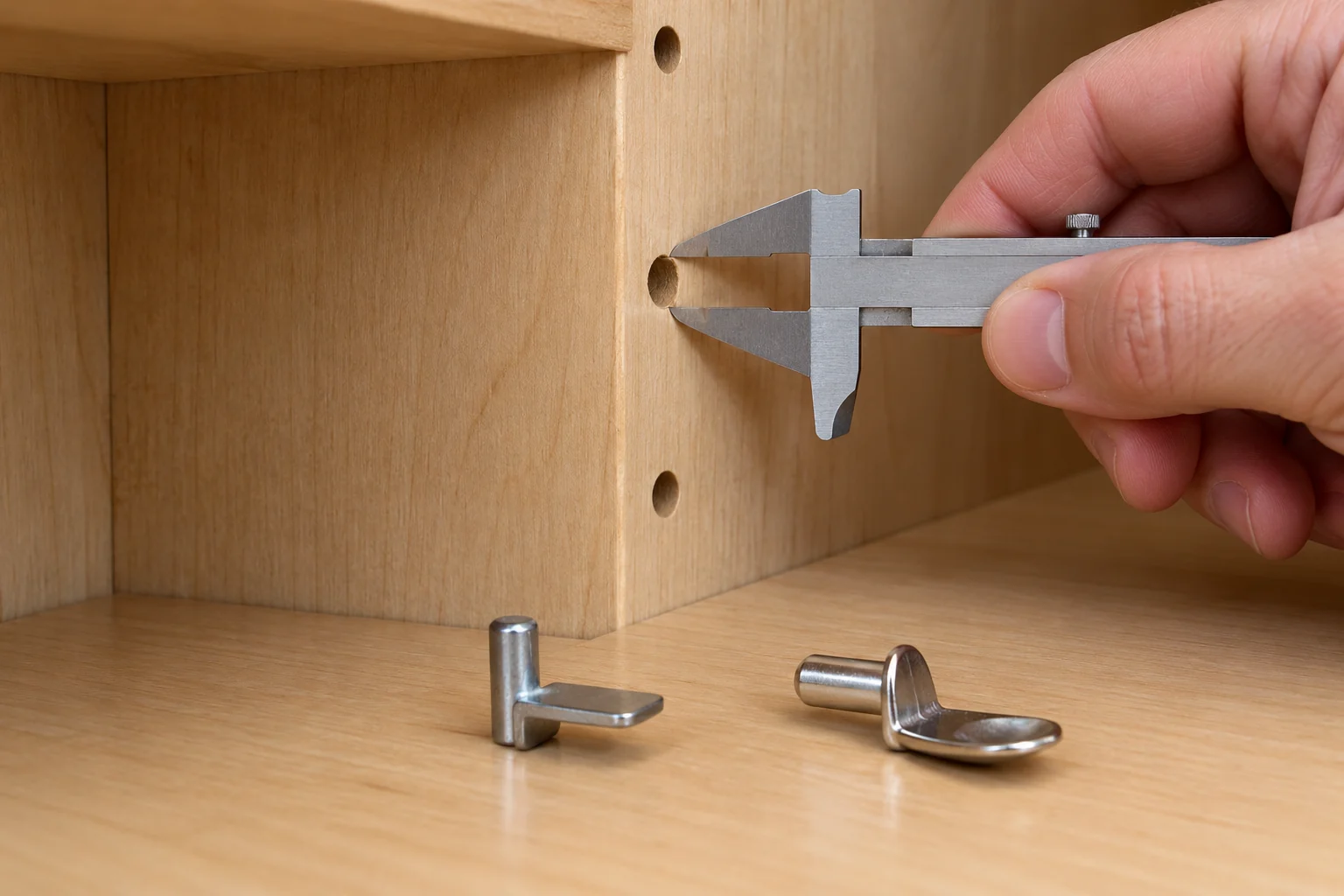
A missing shelf support can leave one corner of a cabinet shelf hanging below the others. Before buying a bag of replacement pins, take the shelf out and look at a support that still fits. The shaft that enters the cabinet and the ledge that carries the shelf both matter. Two pins can look close in a photograph and still belong in different holes.
Unload the shelf and inspect what remains
Remove the items from the shelf, then lift the shelf clear of its supports. Keep track of any pins you remove. A sound pin from the same cabinet is a better reference than a loose pin found in a drawer, especially if the cabinet has more than one shelf or was assembled from mixed parts.
Look inside each support hole. If the edge is crumbling, the hole is oval, or the pin sits loosely even when it matches the others, a new pin alone may leave the same problem. The shelf also needs a sound edge where it rests on the supports. Stop the simple replacement job if the shelf or cabinet wall is damaged; repair of that material needs its own assessment.
Check whether one support is missing or the shelf has been put back at different heights on the two sides. A pin in the wrong row can make the shelf tilt even when no part is broken. Count the positions before removing the remaining pins, and note which holes they occupy. If the shelf has an unusual cutout or a fixed front edge, mark its original orientation as well. These small notes keep the repair focused on the missing part instead of creating a new alignment problem while the cabinet is empty.
Do not treat a shelf that sits on three supports as ready for normal use just because it appears nearly level. The unsupported corner may lift or drop when you place something near it. Set the shelf aside until all of its intended supports are present. If you cannot identify a matching original pin, photograph the remaining hardware next to a ruler and check the hole itself. This record gives you a reference if a package arrives with a different head or shaft than its listing photograph suggested.
Measure the part that enters the cabinet
Measure the shaft of an original pin, or measure an undamaged hole if the original is gone. Check the unit on your ruler or caliper and record it. A listing's package count and finish will not tell you whether the shaft fits. Neither will the width of the shelf-resting ledge. The same measure-first habit helps with cabinet pull spacing against existing holes, although a pull uses two mounting holes and a shelf pin must fit its own support hole.
For example, one current 5 mm L-shaped cabinet shelf pin listing gives a 5 mm shaft size and describes a horizontal rest with a rubber sleeve. Another current Rok spoon-shaped shelf support listing calls its pin 7 mm. Those are different stated sizes. The Rok description also puts “1/4-inch” and “7mm” together as though they were the same measurement. One quarter inch is 6.35 mm, so do not use that parenthetical as proof of an exact fit. Check the selected offer and your cabinet's actual hole before ordering.
Separate three measurements on a replacement support. The shaft diameter controls whether the pin enters the hole. The shaft length tells you how much of that part can sit inside the cabinet wall. The rest length and shape describe the surface beneath the shelf. A listing may emphasize one dimension and leave the others hard to find. If the original part is available, compare all three. If it is missing, use the sound pins already holding the same shelf and check that they really match one another.
Hold the ruler square to the shaft when reading its diameter. If the scale is too coarse to distinguish nearby metric sizes, do not round a guess into an order. A caliper can help, but the result is only as useful as the part or hole you measured. Paint, debris, a bent pin, or a damaged opening can distort the comparison. Try another sound hole and another original pin if the first readings conflict. Record the measured number and unit together, such as “5 mm shaft,” instead of a bare numeral.
A hole in a thin cabinet side also gives you a reason to check the intended shaft length. A longer pin may bottom out before its rest sits against the wall, while a shorter one may not reach as far as the original. The current product pages do not establish a universal insertion depth for cabinets. Use the original pin and the cabinet maker's instructions as your reference. If you cannot verify enough of the fit, seek the correct replacement part for that cabinet rather than widening or deepening a hole to accommodate an uncertain purchase.
Check the rest against the shelf
Once you have a shaft size, compare the part the shelf will sit on. The pictured 5 mm pin has an upright back and a flat ledge. The pictured Rok pin has a spoon-shaped metal head. Each image shows the loose part clearly, but neither shows your cabinet or proves which profile will hold your particular shelf level.
Match the original support's shape as closely as you can. Notice whether a sleeve, lip, or upward projection is part of the original arrangement. Check that the shelf has space to settle onto the support without being forced against an edge. A pin that enters the hole but leaves the shelf rocking has failed the practical fit check. A floating glass shelf and bracket fit guide covers a different shelf mounting system; use that separate check if the shelf is wall mounted rather than seated on cabinet pins.
Read the two example pages for their own offer identities, not as a recommendation to substitute one size for the other. The 5 mm page names an L-shaped rest and a rubber sleeve. Its single gallery image shows that profile. The Rok page names a 7 mm spoon support, and its single image shows a different metal head. The gallery images are useful for recognizing shape; neither is a measuring scale. The 5 mm bag contains many pieces and the Rok page describes a bulk pack, but package quantity does not make either product compatible with your cabinet.
Look at the underside of the shelf where it meets each existing support. Some shelves sit on plain rests; others may use a small hole, notch, groove, or other locating feature. Match that interface to the old hardware before assuming a flat ledge will be enough. If the shelf is glass, follow the cabinet maker's required contact material and support design. The black pin listing describes a rubber sleeve, but that claim alone does not certify it for every glass shelf or cabinet. A photo of a loose pin cannot answer that installation question.
Do not rely on color alone. A silver support can have a different shaft or head from another silver support, and a black coating can hide a different rest profile. Lay an original and a candidate part side by side with their shafts aligned. Compare the point where the rest meets the cabinet wall, the width of the support under the shelf, and any feature meant to keep the shelf from sliding. If the seller has changed a variant or an image belongs to another size, verify the selected option before completing an order.
Place a complete, even set
Choose the intended height using corresponding holes on both cabinet sides. Seat the supports by hand where the maker's instructions allow, with the shelf-resting faces oriented the same way. Use a matching set at the corners the shelf requires; mixing profiles or heights can twist the shelf even when each individual pin stays in its hole.
Lower the empty shelf slowly. It should make contact with each support without needing you to press it down. Look along the front edge and gently check for rocking. If one corner does not touch, remove the shelf and inspect that pin's seating, the hole, and the shelf edge. Do not load a shelf that is perched on only some of its supports.
Take one pin out and place it back in its original sound hole as a baseline. It should sit in the orientation the cabinet used before the repair. Compare a replacement in a separate, equally sound hole while the shelf is still out. You should not need to hammer it into place or force the shelf down onto it. If it does not seat the way the original does, stop and verify the dimension and shape. A tight pin in one hole and a loose pin in another can point to inconsistent or worn holes rather than two different required pin sizes.
Keep the whole set at one intended height. Counting holes from the bottom can help, but first check that the rows on opposite sides are aligned as the cabinet maker intended. Do not assume an old shelf was level simply because it was used that way. If the cabinet has adjustable leveling feet or stands on uneven flooring, correct those cabinet-level issues separately. Shelf pins can align a shelf within sound cabinet sides; they cannot straighten a twisted case.
Test the cabinet you actually have
After the empty shelf sits evenly, return a few light items and check it again before restoring normal contents. Follow the cabinet and hardware makers' load and installation instructions. The product photographs do not establish a safe load for a particular shelf, and a seller's general strength claim cannot account for a worn cabinet hole.
When you restore the shelf, avoid pushing all the contents toward the previously unsupported corner. Spread ordinary items across the shelf and watch whether it remains seated as you place them. Then close the cabinet doors slowly. A shelf edge that touches a door, hinge, or back panel may signal that it was set at the wrong height or in the wrong orientation. Remove the shelf and check rather than shaving material or bending a pin to clear the interference.
The simple replacement is complete only if the shelf stays level in normal use and the pins remain seated. Check it again after the cabinet has been used for a while. A loose support that slowly backs out, a hole that sheds material, or a shelf that begins to rock is a reason to unload it. Replacing pins repeatedly will not restore damaged cabinet material. Record which hole is failing so a furniture repairer or cabinet maker can assess that location without having to guess where the trouble began.
Keep one correctly sized original pin with the cabinet's spare hardware if you can. Its shaft and rest shape will be useful the next time a support goes missing. If the new set loosens, the shelf tilts again, or the cabinet material moves around the holes, pause use of that shelf and address the underlying damage.