Furniture & Home Organization
Cabinet knob pack count: buy for the measured job
Count actual replacement fronts and usable existing knobs before comparing multipack quantities and current totals.
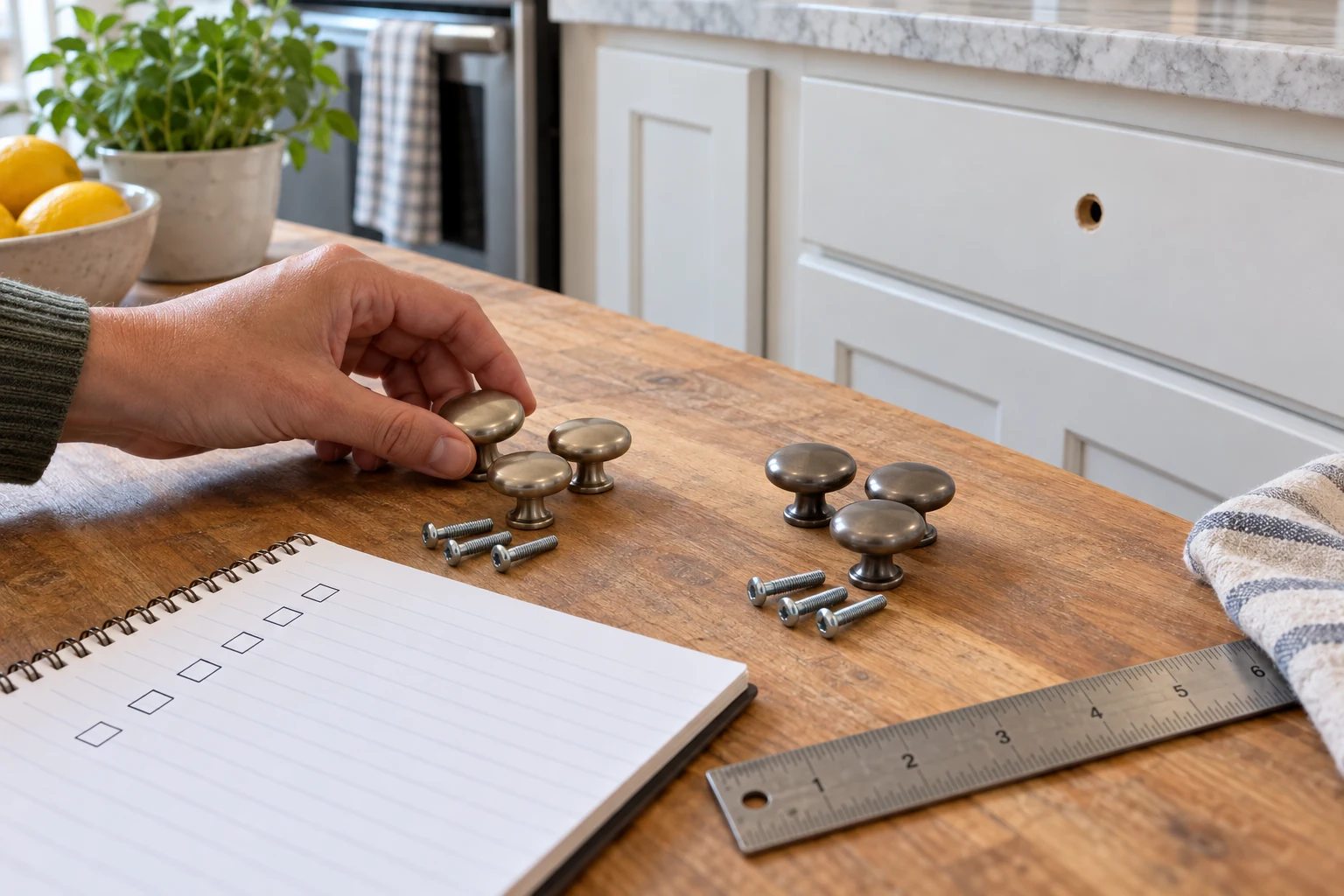
Cabinet knob pack count matters when a project needs a few matching replacements but the listings come in larger sets. Buying a pack from its headline number alone can leave extra hardware that has no planned use, while buying too few can interrupt a room halfway through. Start with the cabinet fronts you actually intend to change, the hardware already on hand and the exact parts each door needs. Then compare complete purchase quantities and current quotes. This is a way to limit an avoidable order, not a promise that one pack size is always cheaper.
Count the job before counting the packs
Walk the room with a short list. Mark each door or drawer that needs a knob, each front that already has a sound knob you intend to keep, and any front with a different kind of pull. A one-hole knob is not interchangeable with a two-hole pull simply because both open a cabinet. Record the existing hole arrangement before planning a cosmetic change. If a door is damaged or a hinge is loose, treat that separately; changing the knob does not repair the door.
Keep the required quantity tied to this project, not to every matching cabinet in the house. A kitchen may have fifteen doors, but only three missing knobs. If the goal is to restore those three, write three. If the goal is a uniform visible finish across the room, count all fronts that will actually be changed and state that broader scope. A clear scope prevents the pack quantity from silently expanding the project after shopping begins.
Take a photograph of one sound existing knob from the front and back. Note its finish, shape, projection from the door and the screw arrangement. If the old knob is loose but intact, check whether the manufacturer permits a simple tightening with the correct screw. Do not force a stripped hole or use an unknown screw that might emerge through the door face. The least new material may be no new knob at all, but only when the existing hardware is sound and the repair is appropriate.
Separate usable stock from wishful stock
Open the household hardware box and count only pieces that can plausibly serve this project. A knob in a different finish, a pull with two mounting holes, or a knob missing its required screw is not automatically a complete replacement. Put matching candidates in one tray and unresolved pieces in another. If you cannot verify the model, screw fit or condition, do not subtract that piece from the shopping count yet.
Use a simple worksheet: planned fronts to change, usable complete knob sets on hand, and remaining complete sets needed. For example, if six fronts will change and two matching knobs with suitable screws are already in the drawer, four complete sets remain to source. The numbers are a planning example, not a claim about a real cabinet. Recheck the count after inspecting each front. A drawer may use a longer screw because its face is thicker than a door, and one hardware packet may not cover every panel thickness.
Write down the exact knob you want to match before looking at multipacks. One current Republeq CHXIN listing describes a twelve-piece group of bronze-style round knobs. A separate brushed-brass cabinet knob listing describes twenty-five pieces. Their quantities are examples of how seller pack sizes can differ; their appearance and dimensions do not make the two designs interchangeable with each other or with your existing hardware.
On that second page, the visible product name describes a brushed-brass twenty-five-pack while parts of the description discuss a silver handle. The page address also carries a different pack and finish phrase. Treat those conflicts as questions for the seller about the selected item rather than choosing whichever phrase supports your plan. Save the exact selected option and ask for a consistent pack count and finish before ordering. An ambiguous listing cannot be made reliable by precise arithmetic on an uncertain quantity. This is another reason to distinguish a product-page example from an accepted match for a specific kitchen.
Check the product form and the screw
For each candidate listing, confirm that it is a single-hole knob rather than a two-hole pull, a decorative plate or a sample photograph of a whole cabinet. Read the actual package quantity and selected variant. A thumbnail may show one knob even when the purchase is a pack. A title may name an overall size without specifying the screw length or the door thickness it can serve. Do not let “twenty-five pack” stand in for a fit check.
The public cabinet pull hole-spacing guide owns the two-hole pull measurement. A one-hole knob has a different first question: where is the existing hole, what is the panel thickness, and does the supplied fastener suit that assembly? A mismatch in screw length can leave a knob loose or damage the front. Consult the exact hardware instructions or a qualified installer before altering holes or substituting fasteners.
Check whether the pack includes one screw per knob, multiple screw lengths, or no suitable fastener for the panel you have. Do not assume a seller's “universal” wording covers every cabinet. If a listing does not answer the question, keep the screw requirement unresolved until you can confirm it. A pack that appears to cover the knob count may still require a separately appropriate fastener, changing the purchase decision.
Finish can matter in a partial replacement. A bronze-style knob from one maker may look different beside older bronze hardware under kitchen light. Compare an actual sample or a clear return policy when visual matching is essential. A photograph on a screen can be affected by lighting and display color. If the room will be changed as a complete set, exact match to the old knob may matter less, but that is a different project scope with a different count.
Compare complete quantities, not headline pack sizes
Once fit is credible, list each available pack size and calculate how many packs would cover the remaining complete sets needed. If the project needs four knobs, a twelve-pack leaves eight extras; a twenty-five-pack leaves twenty-one. That arithmetic does not establish which offer costs less. Ask for current total prices, delivery, any required screws and the seller's return terms before calling one option cheaper. A smaller pack could cost more in total than a larger one, or the reverse.
Also consider whether unused knobs have a real future assignment. “Maybe someday” is not the same as a planned matching repair. A household with several identical cabinets may reasonably keep a few spares if the exact model could disappear; another may prefer a smaller current order. Put that choice on the worksheet rather than letting a low unit price decide it without context. The value of a spare depends on actual compatibility and storage, not just the number printed on a package.
If the seller offers a single knob or a sample, compare it as a separate option with its current all-in cost and the chance it answers a genuine uncertainty. The public cabinet hardware sample-cost guide owns the expected-cost calculation for paying to test a sample before a full order. This article's narrower job is counting complete usable knob sets for a known project. Do not claim that a sample, multipack or repair is cheaper without actual quotes and fit evidence.
A purchase can also be split into phases. If the first room has four fronts and the second room may be remodeled later, decide whether both are truly in scope now. Count the first room as a complete current job; put the second room on a separate future line until its cabinet fronts and chosen finish are settled. That prevents a speculative renovation from inflating today's pack count. If a supplier has a minimum order or a finish may be discontinued, those are real factors to record with current evidence, but neither is a reason to pretend an unmeasured future front already needs a knob.
Use a small decision table
Draw four columns: option, complete compatible sets received, total current outlay and unused sets after this project. Add a fifth column for unresolved fit questions. A listing that is missing screw information should not be marked “compatible” simply because its quantity is attractive. If a pack cannot be returned after opening and visual match is uncertain, that uncertainty belongs in the table too. The table is useful even without exact prices yet because it shows which questions need answers.
For a six-front project with two verified existing knobs, the remaining need is four. If a ten-pack and a twenty-five-pack are the only suitable offers, both cover the job, but their unused counts differ. Insert real quotes only when you have them for the exact selected variants. Compare total amount you would spend to finish the same four-front remainder, including any necessary matching screws. Do not compare a ten-pack's unit price with a twenty-five-pack's total price; put like-for-like totals beside each other.
If the first candidate's finish or dimensions differ from the installed knobs, revise the compatibility column before doing more arithmetic. A pack that cannot serve the current fronts has zero usable sets for this job, regardless of how many pieces it contains. A short pause for one actual measurement is often more valuable than calculating several hypothetical pack combinations around the wrong part.
Place the order from the measured need
Before checkout, read the selected variant, pack count, hardware included, dimensions and return terms one last time. Save a copy of the current listing and your worksheet. If the ordered quantity differs from the project count because you intentionally want spares, write that down. If a piece is already on hand, label it with the set instead of accidentally ordering its replacement again. The goal is an order that answers a defined need.
When the hardware arrives, count the pieces and check one against the actual cabinet before opening or installing every package, within the seller's terms. Do not drill new holes merely to make a mistaken order usable. If the fit is wrong, preserve the exact order identity and use the appropriate return or support path. If it fits, keep any real spares labeled with the model and screw type. Next time one knob goes missing, that label may save another uncertain search.
The result is a purchase decision grounded in complete usable sets, not in a multipack headline. Count the fronts, verify existing stock, confirm a knob and fastener fit, and compare current total offers for the same finished job. That process can prevent unnecessary extras, but the actual savings are only knowable from current prices and the hardware that truly fits.