Furniture & Home Organization
Cabinet door rebounds after hinge replacement: isolate the cause
Use the rebound angle, door contact and exact hinge model to distinguish obstruction, fit and closing-function issues.
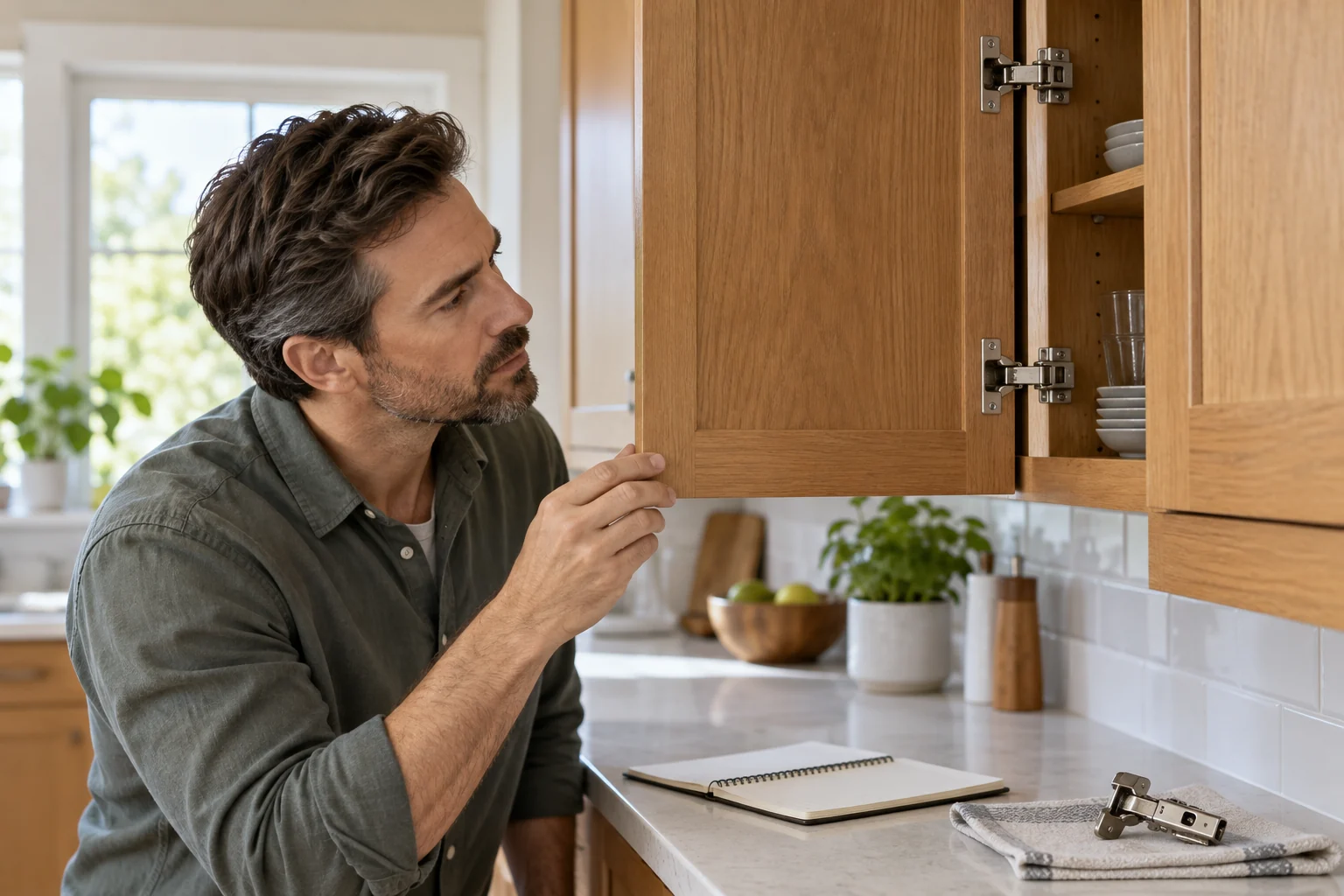
A cabinet door that springs open a little after a hinge change has not told you which part is wrong. The new hinge may not match the original door geometry, the door may be touching the frame or something inside the cabinet, or a catch may no longer meet the door. Cabinet door rebounds after hinge replacement is a problem to observe before adjusting screws. Support the door, note exactly where it stops, and keep the old hardware and installation instructions nearby. Repeatedly forcing it closed can damage the door edge or loosen the mounting points without revealing the cause.
Describe the rebound precisely
Open the door to a comfortable position and close it gently under normal hand control. Does it stop short and push back at the same angle each time? Does it reach the cabinet front, touch a neighboring door, and then drift open? Does the rebound happen only when a soft-close mechanism engages? Record what you can see without pressing hard on the door. The point of this first pass is to distinguish a physical collision from a closing-function issue.
Look at the gap around the door while it is partly closed. If the top or bottom edge rubs, the door may be misaligned. The public guide on a crooked door after hinge adjustment owns that geometry problem. This article focuses on a door that returns open after a hinge change. Alignment can be one cause, but it should be supported by an observed edge contact, not assumed from the rebound alone.
Check whether the door was behaving normally before the hardware changed. If it did, save that history. Note whether all hinges were replaced at once, whether one old hinge remains, and whether a latch, magnet, bumper, or door closer was also changed. Do not treat the hinge as the only possible variable when several parts were touched. A simple before-and-after list gives the next diagnostic action a starting point.
Verify the delivered hinge and original geometry
The current large-angle concealed hinge listing uses “self closing” in its title but also describes a non-damping, manually assisted closing mechanism. Those phrases should not be turned into a promise that every door will pull shut on its own. The page describes a particular full-cover, frameless application and dimensions. The actual delivered hinge and maker instructions must be checked against the door and cabinet, especially when a rebound appears after installation.
A second Grass TEC hinge listing describes a 1/2-inch overlay, 108-degree opening, press-in drilling pattern and soft-closing design. That is a different hinge role and geometry from the broad 180-degree listing. A title saying “cabinet hinge” does not make these two direct substitutes. A wrong overlay or mounting pattern may place the door where it meets the cabinet at the wrong point.
The public guide on replacement hinge fit for an existing door owns the pre-purchase matching decision. Use its principle here: verify the original cup, plate, overlay, screw-hole pattern and door type against the delivered part. Do not enlarge a cup hole, shift a plate, or force a press-in hinge into an incompatible pattern merely to make the door close. If the part itself is wrong, adjustment may mask the mismatch briefly while stressing the cabinet.
Look for contact before touching adjustments
With the door supported, slowly bring it toward closed and watch the first point of contact. A shelf item may project into the path. A newly fitted bumper may be too thick. A neighboring door may overlap the edge. The cabinet frame or face may meet the door earlier than before because the replacement hinge holds it at a different offset. Remove a loose stored item if that is clearly the obstruction; do not remove structural parts or shave the door based on a guess.
A thin removable paper strip can help identify a contact point when used without trapping fingers or forcing the door: place it at a suspected edge, close gently, and see whether it is held. The strip is an observation aid, not a measure of hinge force. If the door must be pushed hard to trap the paper, stop. Photograph a visible rub mark or uneven gap instead. A new mark near one corner suggests alignment; a uniform contact along an edge suggests a different geometry issue.
Check the hinge side too. A plate can sit proud if a screw is not fully seated, a mounting surface is damaged, or a wrong part was installed. Do not drive a longer screw into an unknown cabinet wall to make it flush. Support the door and consult the hinge instructions or a qualified cabinet installer. An unstable mounting plate is a support issue, not merely a closing feel problem.
Separate closing action from obstruction
If the door moves freely until the final part of its travel and then gently returns, ask whether its closing feature is being used within its intended geometry. Some soft-close designs slow motion; some self-closing designs pull toward the frame; some hinges require a separate catch. The two current native pages use different language and mechanisms. The exact model manual, not a category name, should explain what closing behavior to expect.
If the door remains open at many angles, that may be normal for its hinge rather than a fault. A household that previously relied on a magnetic catch or spring action may perceive the new behavior as rebound. Identify the old mechanism and any separate catch before blaming the hinge. If a catch no longer aligns because the door sits in a new position, that is a fit and alignment question. Do not add an improvised magnet or stronger latch to overpower a door that is colliding with the frame.
If a soft-close arm or damper appears damaged, do not disassemble it to test an internal spring. Check the maker's troubleshooting and warranty process for the exact hinge. The visible difference between a slow closing door and a door being pushed open is useful evidence for the supplier. Record a short video from a safe position if needed, without placing a hand in the hinge pinch area.
Use adjustments only with a known baseline
Many concealed hinges have adjustment screws, but their effects vary by model. Before changing one, identify the exact hinge and read its instructions. Mark the current position or count turns only if the maker's method supports that. Change one prescribed adjustment at a time while the door is supported, then test gently. Randomly turning several screws can erase the baseline and make a later qualified repair harder.
Do not use adjustment range to compensate for an incompatible hinge. If the cup diameter, overlay, mounting plate or press-in pattern does not match the cabinet, the correct answer is to resolve the part selection. The guide to replacement fit provides the separate matching framework. Likewise, if a wooden mounting area is stripped or split, an alignment screw cannot restore its holding strength. Keep the cause attached to the right part of the assembly.
On paired doors, inspect both during a gentle close. One door may seem to rebound because its edge touches the other. The gap may change after a hinge replacement even when both individual doors swing freely. Make sure neither door is carrying the other's load or scraping the finish. If the door is large, heavy or awkward to support, get help rather than working alone with a partly detached hinge.
Know when the fault belongs elsewhere
Cabinet contents can move after a drawer or shelf has been loaded. A pan handle, stored board, shelf pin or cable may project into the closing path. If the door contacts that item first, the hinge may be working as designed. Move the obstruction and observe again. Avoid trimming the cabinet or door before checking the ordinary contents, especially if the rebound happens only when the cabinet is full.
A house can also shift, or a cabinet can settle or become loose. If several doors begin to misalign together, a single replacement hinge may not explain the change. Check for obvious cabinet movement or damage and seek appropriate help. This article does not prescribe structural repair. The useful distinction is whether one recently changed door behaves differently from its neighbors or whether the whole cabinet is out of position.
If the door starts to close but reopens only when a kitchen appliance is running or another door shuts, do not assume air pressure is the cause. Verify the latch, hinge, collision points and cabinet stability first. A light door can move for several reasons. An observation that happens in one routine is a clue, not a complete diagnosis. Preserve the exact situation for a technician if safe checks do not identify it.
Make the handoff specific if a technician or supplier takes over. Note the exact angle where the door stops, whether there is a visible contact mark, and whether the rebound began with the hinge change or later. Include the old and new model numbers and a clear photo of each mounting plate. A report that says only “door will not close” may lead to another round of guesses. The short record lets the next person test the actual competing explanations without forcing the door repeatedly.
Choose the next action from the observed cause
When the replacement hinge differs from the required cup, overlay or plate, stop adjusting and confirm the correct part with the supplier. When one corner visibly rubs, use the exact hinge's adjustment directions or a cabinet installer. When a bumper or stored item blocks the final travel, resolve that obstruction without damaging the door. When a damper or closer behaves unexpectedly despite correct fit, use the maker's service route. These are separate remedies for separate observations.
Keep the old hinge, new package, model number, cabinet measurements and a short note of what changed. If a replacement is needed, check the selected variant rather than buying another package with the same broad title. A failed hinge swap can become expensive if holes are repeatedly enlarged or the door is forced. A pause for exact fit evidence is faster than repairing damaged cabinet material later.
After a verified correction, close the door gently several times and look for stable gaps, no rubbing, and the expected final closing behavior. Recheck after normal use. If the same rebound returns, preserve that observation and revisit the diagnosis instead of repeating an unchanged adjustment. A cabinet door rebounds after hinge replacement because something about the path, fit or closing action differs; the durable fix follows the observed difference, not the assumption that every new hinge should behave like the old one.