Furniture & Home Organization
Cabinet hinge replacement fit: match the existing door
Measure the old hinge and cabinet before choosing a replacement; compare two distinct hinge geometries as examples.
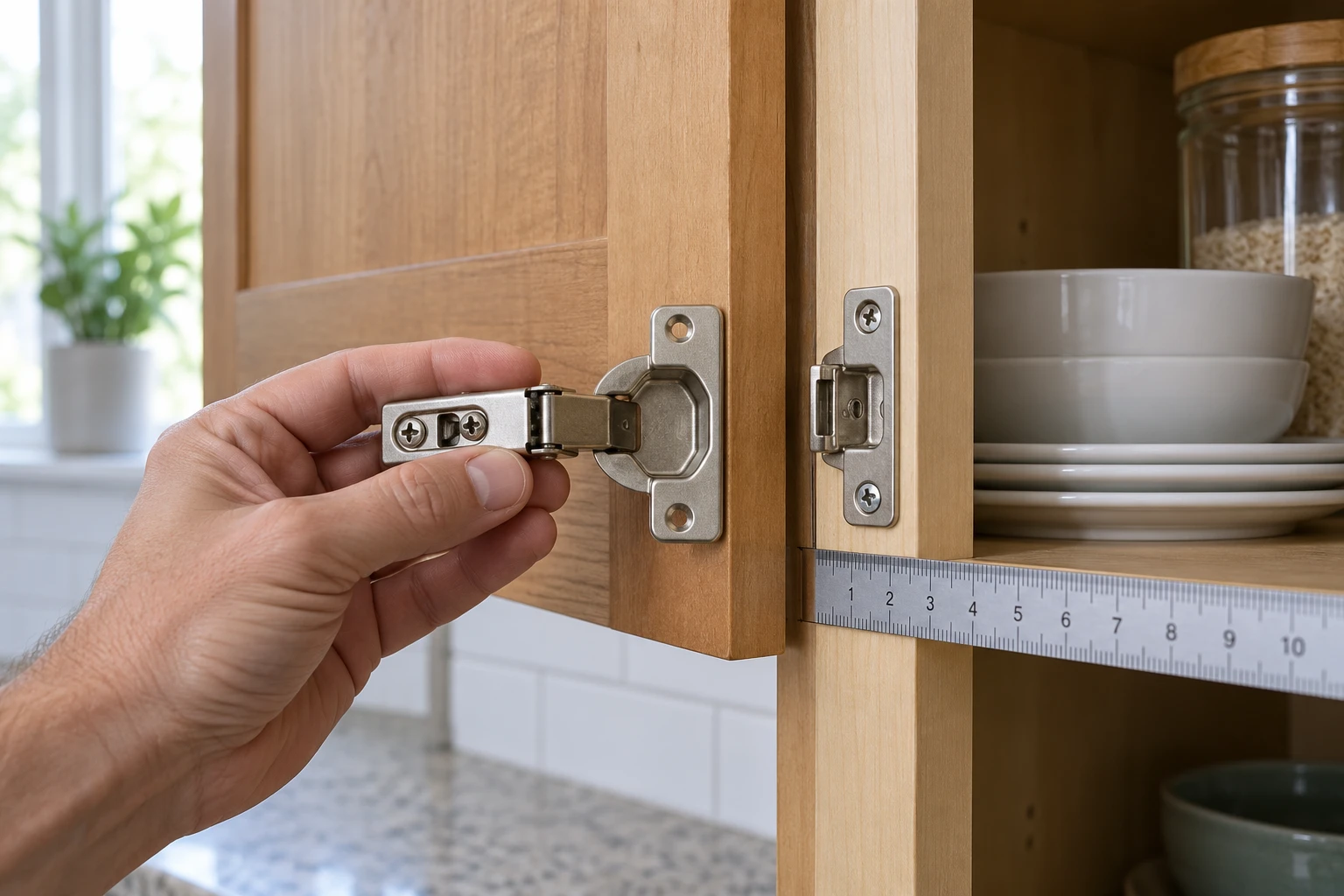
Cabinet hinge replacement fit is a measurement problem before it is a shopping problem. A hinge that looks close in a product photo may put the door in a different position, use a different cup pattern or require a different cabinet frame. Keep one working hinge or the failed part beside you while you identify the cabinet, door, mounting points and opening clearance. The aim is to select a compatible part for the existing cabinet without treating a shared word such as “concealed” as a fit specification.
Start with the cabinet and the door
Open the door and look at the cabinet side where the hinge mounts. Is there a face frame at the front, or does the cabinet box side run directly to the opening? Is the hinge on a single door, a pair of doors or a corner arrangement? These observations matter because a listing may limit its hinge to one construction. Do not remove every hinge to take a measurement. Photograph the installed positions first and support the door if any part is loose.
Record the door's actual position when it closes. It may cover the edge of the cabinet opening, meet another door or sit partly inside a frame. The amount of cover is commonly described as overlay. Use a ruler and a repeatable reference edge; avoid guessing from the visible gap alone. If an existing hinge is still functional on another door of the same cabinet, compare its markings and mounting pattern as a clue, then verify that the doors truly share the same configuration.
Count hinges on the door and note where they sit. A new hinge can match dimensions yet still leave a door unsupported if the package does not contain the number needed for that specific installation. Check the existing screw condition and mounting plate before buying. A loose plate or damaged hole is a different problem from a worn hinge mechanism. Do not expect a new hinge to repair split wood or an enlarged mounting hole by itself.
If the door is crooked, examine the current hinge and its adjustment first. The public cabinet-door adjustment guide owns the diagnostic for a door that remains misaligned after adjustment, including hinge-cup and overlay checks. This article owns a narrower purchasing decision: identifying a compatible replacement only after the part that needs replacing is known.
Measure the parts that have to meet
Concealed cabinet hinges often have a round cup seated in a bored hole in the door. Measure the cup diameter and depth of the existing recess if the door uses one. Then measure the screw-hole spacing from center to center rather than from the outer edges of the screws. A stated cup diameter alone cannot establish that the hinge's mounting holes, arm and plate will match. Take a photo with a ruler in the frame and write the numbers down.
Inspect the cabinet-side mounting plate. Note whether the hinge arm clips on, slides on or screws directly to the plate. A replacement hinge arm may require a particular plate, and a plate sold with another hinge can use a different hole pattern. If you cannot identify the connection, keep the existing hinge assembled until the new part's instructions are available. A catalog image taken from above may hide the underside geometry that decides whether two pieces connect.
Check the door's opening path. A cabinet against a wall, beside an appliance or near a neighboring door may need a particular opening angle and clearance. A hinge advertised with a large angle is not automatically better. It can move the door into an obstacle or require a door construction you do not have. Measure the clearance with the existing door and compare the replacement's actual installation requirements.
Do not confuse door thickness, cup depth and overlay. Door thickness is the material available for a cup and screws. Cup depth is how far the bored pocket reaches into that material. Overlay is where the closed door sits relative to the cabinet opening. These three dimensions answer different fit questions; one cannot stand in for another. When any number is uncertain, take a fresh measurement rather than rounding it to a familiar hinge size.
Read listings as exact examples
A current Republeq four-piece 180-degree concealed hinge set describes a frameless, full-cover application and lists a 35 mm cup with 48 mm cup-screw spacing. Its page uses several closing terms, so the durable facts for this comparison are its stated physical role and dimensions, not an assumed closing feel. It is an example of a specific geometry, not evidence that every concealed hinge works on a frameless cabinet or that it matches your existing holes.
Another Grass TEC hinge listing names a 1/2-inch overlay, a 108-degree opening and a 42 mm drilling pattern. It is offered as a ten-pack with press-in dowels in the listing. Those details show why “cabinet hinge” is too broad a shopping filter. The stated overlay, hole pattern, mounting type, opening angle and package quantity all differ from the four-piece example. Do not combine dimensions from the two pages into a fictional universal replacement.
Read the full current page for the exact model and option you intend to buy. Seller descriptions can contain broad language alongside useful measurements. Treat any statement about “all cabinets,” effortless installation or durability as a claim to verify against your own cabinet and the manufacturer's instructions. Confirm what comes in the package, whether mounting plates or screws are included, and whether the listing's stated configuration applies to your door.
Compare the old and candidate hinge directly
Lay out a small fit sheet with five rows: cabinet construction, closed-door overlay, cup and screw pattern, cabinet-side plate connection, and opening clearance. Enter the existing measurements in one column and the proposed hinge's documented requirements in another. A blank value is a question to resolve. It is not a match. This makes a product decision visible without turning a cabinet door into an experiment with multiple returned parts.
When an exact model number is stamped on the old hinge, search it and confirm the complete replacement designation. A family name may include several overlays, arm shapes or plate heights. If only a partial marking is visible, photograph both sides after safe removal of one hinge and ask the manufacturer or seller to identify the specific replacement. Avoid calling a hinge compatible because the finish and cup diameter happen to look alike.
Check the mounting surface before you order. Loose fasteners, stripped wood, a cracked door edge or a distorted plate can affect fit and safe operation. This guide is about matching a replacement hinge, not prescribing a wood repair. If the substrate cannot hold the existing hardware, pause the swap and choose a repair appropriate to that cabinet before relying on a new hinge. Do not conceal a damaged mounting point behind a different plate without knowing whether the material can support it.
A sample or one exact replacement may be easier to evaluate than buying a large pack, provided it is available and return terms allow inspection. The package size is a purchasing factor, not a compatibility fact. Compare total required quantity only after one hinge's geometry and movement are confirmed. If every door in a run is different, do not assume that the sample for one is a sample for all.
Keep the adjacent hardware decisions separate
The front of a cabinet door has its own handle or pull. The public cabinet-handle replacement guide covers matching a handle to the existing front and holes. Its measurements do not select a hinge, and a hinge purchase does not automatically justify changing the handle. Keeping the two decisions separate avoids drilling or replacing a sound visible part while resolving a concealed one.
Similarly, an adjustment attempt and a replacement decision should not be merged. If the old hinge still holds the door and merely needs a documented adjustment, identify that first. If the hinge is broken, bent or has an unusable connection, record the specific failed part. The distinction makes it easier to ask for the right item and to explain to a repair professional what has already been checked.
When a candidate hinge arrives, compare it with the old one before removing the door. Verify the part number, cup, screw pattern, arm, plate and included hardware. Read the installation instructions for the exact model. If the geometry differs, do not force old screws into new holes or enlarge the door cup merely to make a purchase work. Return to the fit sheet and resolve the mismatch.
Install only after the match is supported
Support the door while removing hardware so its weight does not tear a remaining hinge or mounting hole. Keep the old hinge and screws organized until the replacement has been test-fitted. Follow the manufacturer's fastening sequence and hardware directions for the cabinet material. If the product requires new drilling, check the door thickness and hole location carefully; a cut made in the wrong place cannot be undone by adjusting the hinge.
After installation, open and close the door gently. Check that the edge clears the cabinet and nearby objects, the door stays supported, and the latch or catch works as before. Confirm the closed overlay and gaps against the fit sheet. Adjust only within the new hinge's documented range. If it binds, shifts or leaves the door unsupported, stop and recheck the model and mounting rather than using force.
Keep the product model, measurements and one clear installation photo with the household notes. That small record will help when another hinge on the same cabinet needs attention. The useful outcome is a door that fits and moves correctly with a documented compatible part; a product title containing “cabinet hinge” is only the start of that decision.
Resolve unknowns before buying a pack
A precise replacement may be unavailable from the first seller you check. That does not make the closest-looking pack a good substitute. Use the old hinge's markings and your fit sheet to ask a specific question: “Does this exact model use a 35 mm cup, my measured screw spacing and this cabinet-side plate?” A seller can answer a concrete compatibility question more reliably than “Will it fit my cabinet?” Save the answer with the product page and date, since listings change.
Review return conditions before removing packaging. Many hardware listings group variants under similar names, and an unopened part is easier to compare and return than one modified to fit. If a candidate requires drilling, a new plate or a different door position, count those changes as part of the project. They may be acceptable with a documented plan, but they are not invisible substitutes for the existing hinge.
If you cannot establish cabinet construction, overlay or plate connection with reasonable confidence, leave the door safely supported and seek the model documentation or a qualified installer. That is a practical boundary, not a reason to guess. The measurements and photos you have gathered still shorten the next step by showing exactly what must be matched.