Lighting
bedside lamp switch reach: place a pull-chain or rotary lamp
A practical from-bed control check for a pull-chain or rotary-switch bedside lamp, including stable base and cord placement.
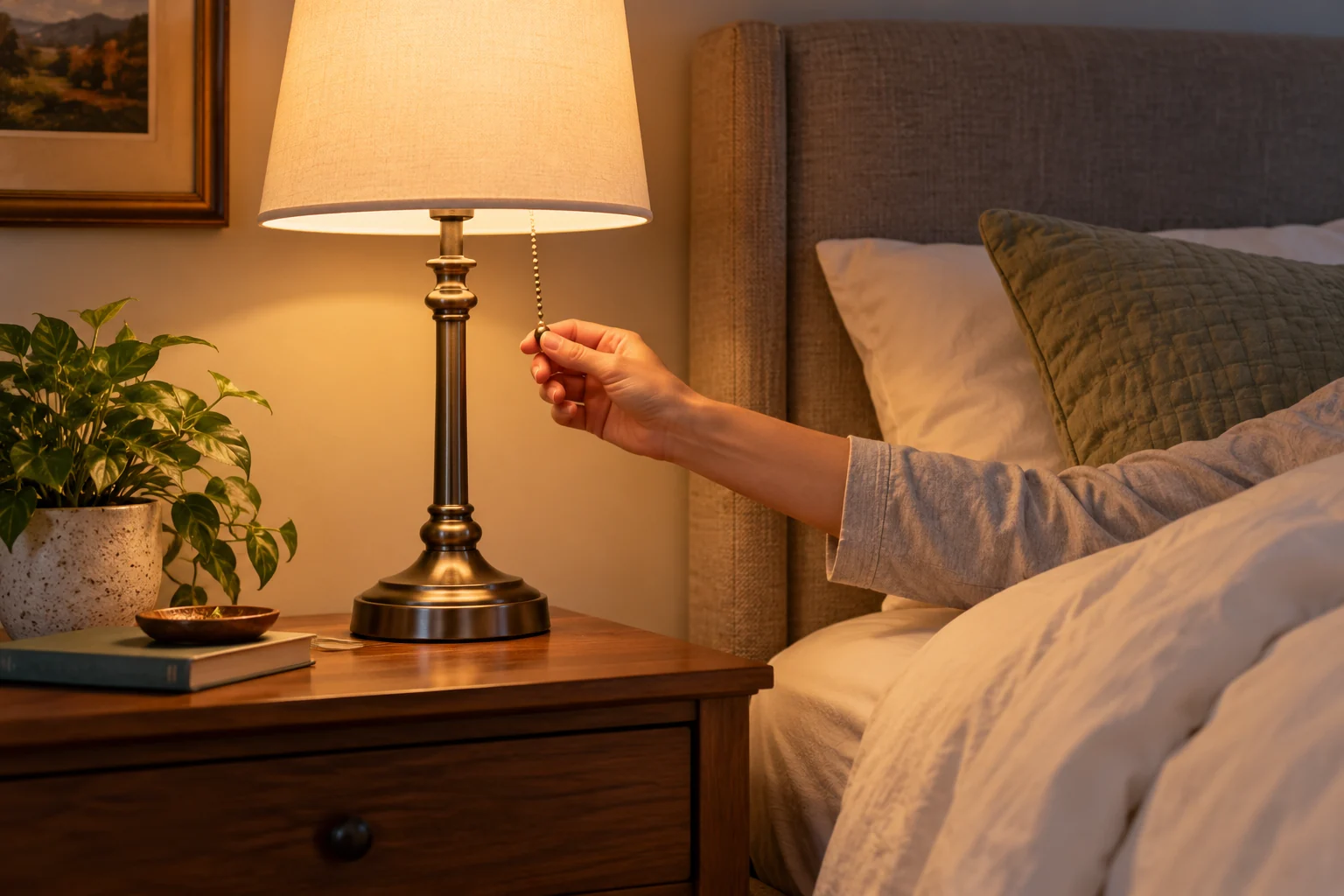
A bedside lamp can fit on a nightstand and still be awkward to turn off. The control might sit beyond the hand's normal reach once the shade, a book, and a glass of water are in place. Start with the place where you actually lie or sit, then test the switch with the complete lamp in its intended position. This guide uses two listed table lamps to show the check: a SLFS pull-chain bedside lamp and an AURAVISTA rotary-switch lamp set. Their listings identify different controls. Neither listing can tell you whether its switch is reachable beside your bed.
Start at the pillow, then measure the top
Sit or lie in the position from which you usually turn off the light. Reach toward the nightstand without shifting your weight to the edge of the bed. Note the area your hand can comfortably touch. A switch that falls within that area is a better starting point than a lamp chosen from its overall height alone. Repeat the reach with your other hand if the lamp may move to the opposite side of the bed. Someone sharing the bed may have a different reach, so make the check from the position that person will use as well.
Measure the usable flat top of the nightstand, not its widest decorative edge. Leave the space used by a phone, water glass, book, or other regular item. Check whether a raised lip, drawer pull, wall trim, or headboard narrows the place where the base can rest. A base should sit wholly on the stable surface. If its edge projects past the top or a cord must hold it in place, choose another location or lamp. The listing's dimensions can help rule out an obvious mismatch, but they do not replace a placement check with the complete lamp.
Mark a likely base position with a sheet of paper cut to the listed footprint if you do not have the lamp yet. This is only a planning aid: it cannot account for the exact shade overhang, cord exit, or reach to a control. Check the actual assembled lamp before relying on the position. On a narrow surface, your hand needs a clear path to the switch after the shade is mounted and the ordinary bedside items return.
Find the control on the assembled lamp
The SLFS listing describes a pull chain used to turn the lamp on or off and change its light settings. Look for where the chain hangs when the lamp is assembled. Its end may fall closer to the bed than the center of the base, but the precise location depends on how the lamp and shade are positioned. Do not assume that a long-looking chain in a listing photograph will reach your hand. Try a gentle pull from your normal position. The motion should not require you to tug the shade, lean across the base, or pull the lamp toward you.
The AURAVISTA listing describes a rotary switch for on/off and brightness adjustment. Identify the switch on the actual unit before deciding which side of the nightstand suits it. A rotary control requires room for your fingers to grasp and turn it; a spot your fingertip can barely touch may still be difficult to use. Place each lamp of the two-lamp set separately if you intend to use both. One convenient position does not establish that the other bedside setup works. The listing does not specify the reach from either side of your particular bed.
Turn each control while the lamp is stationary on the chosen surface. Watch whether your hand brushes the shade or a nearby object. Then put your usual bedside items back and try again. A clear switch on an empty nightstand may be hidden behind a phone dock or book in daily use. If access changes when the shade is installed, judge the complete assembly. Keep your hand away from a hot bulb or shade, and follow the lamp maker's instructions for the included or compatible bulb.
Do a dry placement before committing to a side
Set the complete lamp on the proposed spot with the power off while arranging the top. Check that the base rests flat and the shade clears the wall, headboard, and anything you open or close nearby. Sit back in the normal position and trace the hand path to the switch. If you must twist your torso, lift your shoulder off the pillow, or reach around the shade, move the lamp a little closer only if the base remains fully supported. Do not trade an awkward reach for an unstable lamp.
Next, imagine the nightstand during an ordinary evening. Put the book, glasses, phone, and water where they usually go. Reach for the switch with the room lit, so you can see any obstacle. Then repeat the action in dimmer conditions if it is safe to do so. This is a practical reach check, not a standardized accessibility measurement. People with limited grip or shoulder motion should use the motion that is comfortable for them and consider a control they can operate reliably without straining.
If the pull chain swings into other items, change the lamp's position or the arrangement of those items. If the rotary switch ends up against the wall or behind the shade, rotate or move the lamp only as its design and cord allow. Do not modify the switch or pull on the cord to improve access. A different control style or a different nightstand position may be the simpler choice. Keep the lamp upright and use it according to its own instructions throughout the test.
Check the cord and any charging ports separately
Both listings mention USB ports, but this article's decision is about reaching the lamp control. The SLFS description lists USB-A and USB-C ports. The AURAVISTA listing also mentions base USB ports. Those details do not establish that a particular device, cable, or charging load is compatible. Inspect the actual port labels and manufacturer instructions before using them. If USB labels are the main question, the desk-lamp USB port guide covers that separate decision.
Check where the power cord leaves the base and where it can reach an appropriate outlet under the manufacturer's guidance. A lamp should not depend on a taut cord to hold its position. Keep the cord out of the path of drawers, bed movement, and routine foot traffic. Do not infer cord length or electrical ratings from photographs. Read the exact maker documentation and the markings on the lamp you receive. If the cord route forces the lamp to the far edge of the nightstand, redo the switch-reach test at that real position.
Charging cables can change how crowded the top becomes. Set any cable in its normal place and reach for the switch again. Do not run a cable across the control path simply because the lamp has ports. A lamp with a convenient chain or knob may still be a poor fit for a crowded surface. If the base footprint is the problem at a work surface, the small-desk lamp footprint guide examines that distinct desk arrangement.
Choose by the motion you can repeat
A pull chain and a rotary switch ask for different hand motions. With a chain, you need to find the hanging end and make a controlled pull. With a rotary switch, you need enough room to grasp and turn the control. Try the motion several times from the resting position you normally use. Notice whether the lamp shifts, whether the shade gets in the way, and whether your hand collides with other objects. A control that works once while you are leaning forward may not be convenient at the end of the day.
The SLFS lamp is a single listed lamp; the AURAVISTA offer is listed as a two-lamp set. The set format could suit two sides of a bed, but each side needs its own placement and cord check. Do not assume two nightstands have the same width or that both sleepers reach in the same direction. Compare the actual assembled units, because listing images can hide the position of a switch behind a shade or from a particular camera angle. Seller claims about light comfort are not a substitute for testing the control and reading the product instructions.
Make the decision in this order: a stable base position, a workable cord route, and a switch motion you can repeat from bed. If the lamp passes only when you remove the items that normally live on the nightstand, the arrangement needs to change. Try moving the everyday items first; if the clear path disappears again in use, find another spot or lamp. A larger table may help, but its drawer, trim, and outlet location still matter.
When the first position fails
Move the lamp within the fully supported part of the top and run the same reach check. A small change in base position can put a chain or knob in the hand's natural path. Recheck shade clearance and the cord every time you move it. If a wall-side switch is blocked, see whether the lamp can be oriented differently without violating the maker's instructions. Do not turn a lamp so its cord bends sharply against a wall or forces the base to sit unevenly.
If the chain can be touched only by stretching, or the rotary switch can be turned only while the lamp rocks, stop that placement trial. Choose another stable location or a lamp with a control better suited to the bed and nightstand. Do not extend, alter, or improvise the lamp's electrical parts as a reach fix. The practical result you want is ordinary use without moving the lamp, leaning over an edge, or disturbing its cord.
Before settling on the arrangement, ask someone else to watch the lamp while you operate it from bed. They can see whether the base slides or the shade brushes the wall, details that may be hard to notice from the pillow. If you are testing alone, turn on the room light and look at the base after each attempt. Repeat the check after moving any bedside item that regularly changes position.
Keep the measurements and the successful control position if you shop for another lamp. Note the usable top depth and width, the distance from the resting hand to the near edge, and where the outlet sits. Those observations are more useful for this bedside decision than a generic label such as "nightstand lamp." Verify the final choice with the complete lamp in place, following its instructions. The last test should use the nightstand as it is normally arranged, because that is where the switch will have to work.