Garden Care & Watering
Set autumn perennial markers before the bed dies back
Mark known perennial locations while plants remain visible, with readable labels, coating-specific writing guidance and checks from the normal garden path.
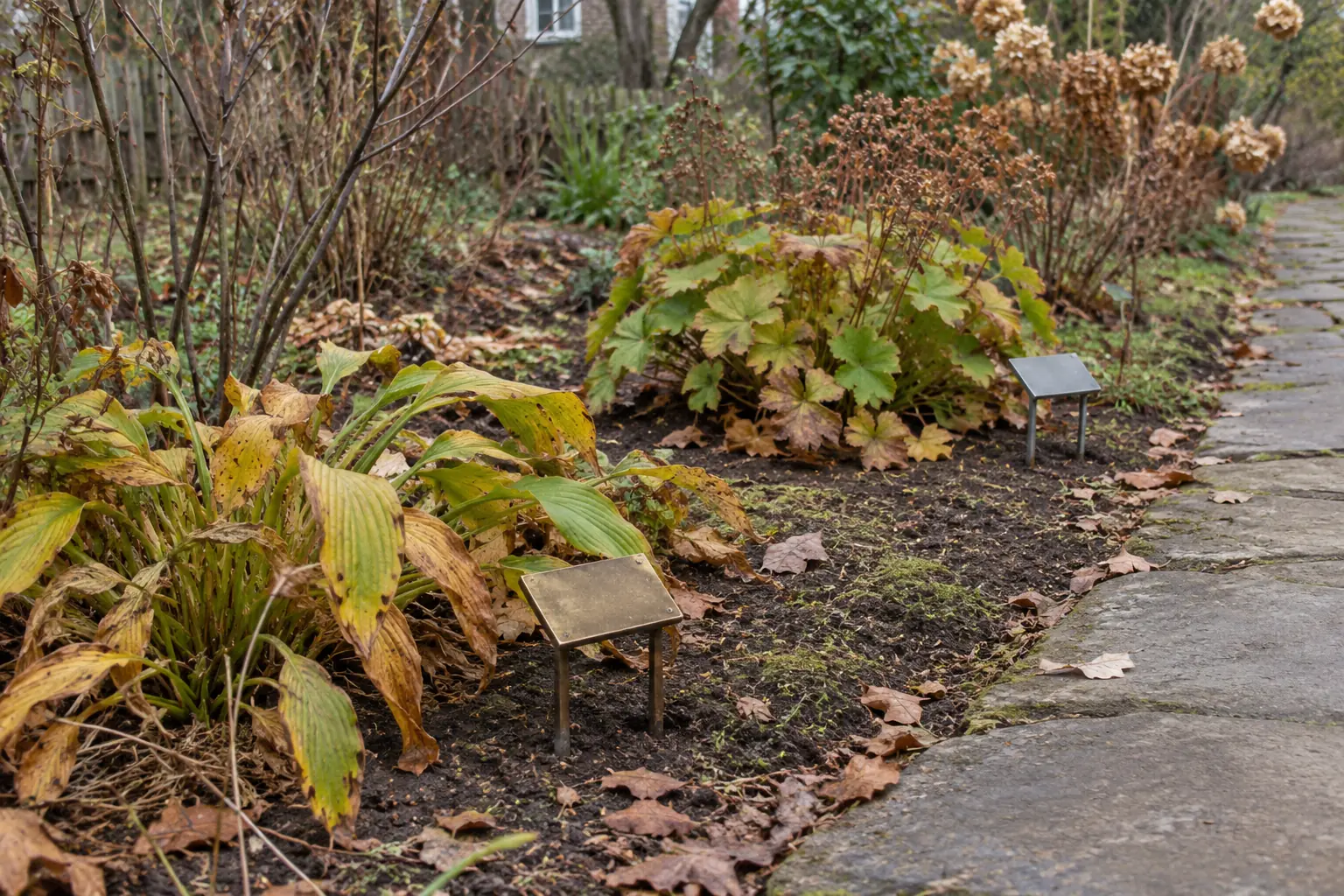
Set autumn perennial markers while the clumps are visible
Place autumn perennial markers beside known clumps while you can still connect each plant with its patch of ground. Penn State Extension’s Lancaster fall tips recommend marking visible perennials or mapping their locations before the season ends. That early walk gives you a chance to recognize occupied ground after foliage disappears.
Begin with the plants already identified in your border. Look from the path and decide which locations would become hard to recognize without their leaves. Give those places attention while the connection remains easy to see. A useful marker stays associated with the plant it represents.
Make this a seasonal observation round. Walk the actual border, look at the remaining growth and choose the places you need to recognize later.
Marking dormant perennial locations before winter work
For marking dormant perennial locations, consider how people enter and work around the bed. NC State Extension’s Pender County October guidance recommends putting markers out before perennials die back so gardeners know where to avoid stepping or digging during winter. The useful question concerns the ground a helper might otherwise approach as an open space.
Stand where that person would usually arrive. Can you connect the marker with one particular clump from there? If several plants meet at the edge, look carefully before settling its position. A marker between two clumps can leave the intended location ambiguous. Explain which plant it belongs beside while both remain visible.
Show anyone sharing the work what the markers mean in this border. A short conversation at the path can establish that a seemingly quiet patch remains occupied. Keep future digging decisions with the person responsible for the garden. This seasonal marking round gives that discussion a visible reference when the leaves have faded.
Keep the position available beyond the physical tag
Oregon State University Extension’s fall-planting advice recommends flags for herbaceous perennials that die back in winter and suggests a garden map to track plant locations. Those are two ways to preserve a location you can presently observe. Choose a record that you can recognize again when the bed changes its appearance.
For a small border, you might sketch the clumps beside an existing path and describe which side you viewed. Keep the plant names you already know with their positions. Use a stable feature that will remain when seasonal foliage disappears. A loose pot that you intend to move would need its changed position reflected in the record.
The same OSU advice cautions about plant tags girdling growing stems. Keep that concern in mind when choosing an attachment method. The selected retail examples here are ground-inserted labels. A label placed beside a clump still needs a location that respects the living plant and leaves its association understandable from the path.
Place the marker without changing the plant’s space
The University of Maine’s Signs of the Seasons field guide describes marking individual herbaceous perennials beside the plant so observers can find the same individual on later visits. Its guidance also warns that a broad stake beside a small plant could cause shade or root damage. That caution matters when choosing where a household garden marker will stand.
Look at the plant and the proposed marker together. Consider the size of the face, the support below it and the space needed to put it in place. Work from the actual growing area and the product’s directions. Pause if the intended position would require disturbing a crown or pushing through growth you cannot see clearly.
The Maine program asks observers to replace markers as weathering makes them unreadable. Include a later look in your own seasonal routine. A tag that remains physically present may still need attention if its lettering fades. Check both the location relationship and the writing when you next inspect the border.
Give easily overlooked plants an early place in the round
Cornell Cooperative Extension’s Orleans fall checklist describes labeling perennials the writer might forget the following season. The examples include marking where Hibiscus grows as it dies back and noting a very small hosta. These observations offer a useful prompt for your walk through a familiar garden. Think about the plants that become least obvious when their seasonal display ends.
Choose your priorities from what is actually growing there. A clump with substantial remaining stems may be easy to recognize today, while a smaller neighbor may soon be hard to find. Look at each plant’s location and your experience of seeing it return. Keep the observations specific enough that another person can understand why the marker stands there.
A manageable first round can cover the places that are easiest to overlook. Return to the rest of the bed as needed while its plants remain recognizable. Keep the list tied to the border you have observed, with each selected location checked against its own marker before you finish.
Reading plant labels in winter starts with clear lettering
For reading plant labels in winter, think about the person approaching from the path. The Royal Horticultural Society’s school-garden label activity asks pupils to plan lettering on paper and make it bold and clear. You can apply that readability question when deciding how much wording to put on an actual marker face.
Try the intended name on paper before marking the product. Consider whether the available face accommodates it comfortably and whether you can recognize it from your usual viewing position. A long name may need a considered layout. Keep the wording connected with the known plant while choosing a presentation that remains readable.
The RHS activity gives construction methods for its wooden signs. The two metal retail offers have their own marking information, including a coating restriction on the gray version. Read those instructions before choosing an ink or making a mark. Prepare the wording first, then use a method suited to the actual label surface you intend to put beside the plant.
Keep the location through the spring return
OSU Extension’s Central Oregon winter-care guidance describes herbaceous perennials losing leaves, dying back and entering dormancy as the season cools. It also notes that plants wake at different times in spring. A location marker remains useful across that change, when one clump may show growth while another still looks quiet.
Look for the connection between the marker and the remembered planting location as the bed changes. If the tag has fallen or shifted, use the location record and visible plant evidence before repositioning it. Keep an uncertain placement visible as a question for the garden’s owner. A tidy row of labels is useful only when each one still refers to the intended place.
Use appropriate advice for any separate concern about the plant’s condition. The seasonal record can tell you where you expected a perennial to grow and what you observed on a date. Keep those observations available when seeking help with an unexpectedly slow return or another change you notice in the border.
Read each metal plant-label offer as its own account
The Unbranded 1217F0-04-1015 plant-label account states 100 tags and two markers, with copper and stainless-steel construction and an approximately 2.5-by-seven-eighths-inch writing area. Its sole photograph shows labels beside potted plants. The package quantity and supplied pens come from the written description. The lifestyle image provides no independent count of the delivery.
The Unbranded gray 50-pack account describes galvanized-iron markers with a slightly sloped 3.5-by-1.2-inch label area and 10.6-inch overall height. It specifies an oil-based pen or printed label and cautions against scratching or engraving the coating because exposed metal can rust. Its size diagram labels a plastic-coated face and galvanized-iron support. Follow the actual surface guidance when preparing the wording. Neither offer establishes a tested lifetime for your writing in a particular winter garden.
Compare the stated writing area with the name you intend to use. Keep the instructions for each surface with that product, especially when different labels stand together in the same garden bed.
Keep neighboring garden tasks with their own decisions
The guide to a missing plant label deals with recovering a container’s name from retained records and keeping uncertain matches visible. If a plant’s name is already unresolved, preserve that question while marking the location you can observe. A blank label gives you somewhere to write a supported answer once you have one.
The annual-flower deadheading guide addresses choosing which finished blooms to remove and following their stems to a suitable cut. Before any separate flower task, establish which plant and purpose the gardener means. A seasonal marker can help someone find a known clump without supplying its pruning instructions.
Finish the autumn walk from the path. Look at the marked locations as someone returning later would see them. Keep the names, the visible associations and the location record together, with any unanswered plant or care question available for a separate discussion.
A helper can return to the location discussion whenever a separate task raises a new question. Keep the visible marker associated with its known clump while obtaining the advice needed for that particular job.
Keep a possible marker order tied to the confirmed goods
If you choose to order through republeq.com, retain the exact offer with the questions you need answered before payment. Decide which goods you intend to receive and keep any clarification with that item’s reference. You can prepare a garden task while leaving an uncertain purchase unfinished. A planned autumn afternoon gives you a reason to read the delivery information carefully. Use the dates and terms actually offered for the intended destination when deciding whether the order fits your plans. If you prefer crypto, including USDT, inspect the payment methods presented for the actual basket before taking any transfer step. Read the instructions for the selected method and establish which details belong to that particular request. Keep questions about an asset, a network or a receiving instruction open until the payment route supplies a clear answer. A personal preference for USDT supplies no missing transaction detail. Save the order information together with the payment record so a later enquiry concerns the same goods and request. If the payment status remains unclear, use the route’s reconciliation process before considering another action. Read the current delivery and return terms while you can still decide whether to proceed. Any change to the goods or the payment request deserves its own check against what you now intend to authorize. After delivery, compare the received contents with the order record and raise a discrepancy through the applicable process. Keep the information supplied with the goods available for the person preparing them. A purchase remains one part of arranging the seasonal work. The garden’s observed locations and the names already established there can stay recorded while an order question is resolved. Keep copies accessible to the person who will receive the parcel or follow up on the request. When someone else helps with an enquiry, share the relevant item reference and the question you still need answered.