Garden Care & Watering
Autumn leaf cleanup: decide what belongs at the rake and at the bag
Use a small autumn leaf cleanup station to keep raking, pickup and bagging distinct, and verify whether a listing supplies a rake head or a full set of tools.
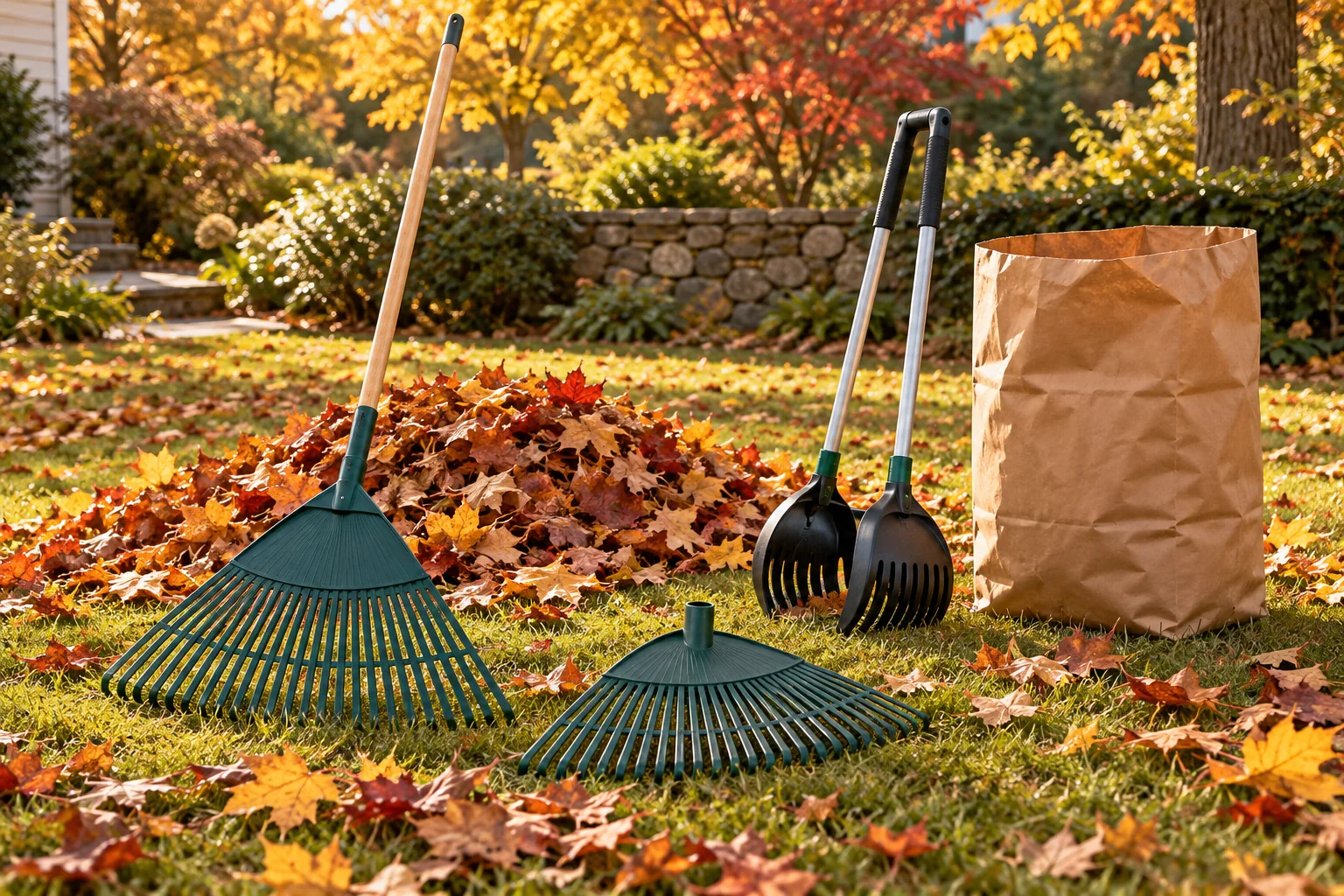
Fallen leaves can turn a yard task into a series of half-finished piles. One pass moves them together; the next lifts them; a third moves them to a bag or another permitted collection point. For Autumn leaf cleanup, give those jobs separate places before starting. A pile left in the walking path has to be moved again, and a bag placed too far away makes each transfer longer.
The product listings here show why it matters to check the complete offer. The WORGEOUS three-piece rake listing shows three rake heads in its gallery. A photograph shows a handle being used, but the image set does not establish that a handle is included with those three heads. The Wellsay leaf collection set is pictured with a long-handled rake, a leaf grabber, gloves and a large yard bag. Check the current offer and delivered contents before planning the work around either set.
Place the leaf gathering station at the edge of the work
Before carrying the tools out, decide where the collected material will go. A municipal yard-waste bag, an approved collection container and a home compost system call for different handoffs. Check local rules for what can go into each one; some programs separate leaves from branches or require a particular bag. The rake can bring material together, but the final container determines where the gathering point should sit. Place that container on firm ground where it can be filled without a long reach.
Look at the space that needs clearing. A narrow strip by steps may be easier to work with a small rake head, while an open patch may call for a full-length rake. That is a planning observation, not proof that either listed product fits every space. The WORGEOUS offer should be checked for a matching handle before it is assigned a job. The Wellsay kit shows a long-handled rake and other collection pieces, so its components can be considered together once the delivered contents have been confirmed.
Choose a starting point where leaves have collected and where a bag can stand without blocking a gate, path or doorway. Keep an open spot beside it for the rake. That small leaf gathering station lets you return each tool to the same place instead of leaving it under a new pile. If the yard has more than one separate area, move the station when you change areas rather than dragging loose leaves across a cleared path.
Check the weather and the ground before deciding how much to tackle. Leaves that are wet or stuck in turf may need smaller passes than dry leaves on a hard surface. Do not assume a product gallery proves a rake can handle every surface shown in a promotional picture. Follow the actual tool instructions and avoid pulling a rake across a surface it may scratch or damage.
Keep raking and pickup as two actions
Begin with a small trial patch. Rake a short line of leaves toward the collection point, stop, and see how much can be picked up without scattering it. That test tells you whether the pile should be narrower or closer to the bag. It also shows whether the tool catches on roots, edging or uneven paving. Move to a different tool or shorten the stroke if the head does not pass cleanly over the surface.
When the leaves are dry and light, a small pile may spread as soon as it is lifted. Move the bag or container closer before enlarging the pile. Damp leaves can clump together, but they can also make a bag heavy well before it looks full. Judge the pickup step by how you can carry the load, following the bag's instructions and local collection rules. These checks matter more than the capacity printed in a product title.
Keep the rake outside the pile while using a grabber or your other pickup method. A rake left underneath collected leaves can be hard to see and easy to step on. Set its head on open ground with the tines away from the walking route. If another person is helping, give one person the raking pass and the other the pickup step only when they have separate standing room. Leave enough distance that a rake stroke does not cross the other person's hands or bag.
First draw a manageable amount of loose material toward one collection point. Then stop raking and pick it up. Trying to hold a bag open while moving a rake often scatters the edge of the pile. A grabber or two handheld scoops may help with pickup, but their usefulness depends on the size of the pile, the user's reach and the surface beneath it. Set the bag beside an accessible pile so the pickup step has a short path.
The published leaf raking path guide focuses on the route around planting beds. This article stays with the handoff from rake to pickup and bag, especially when a seasonal job is broken into short sessions. Keep delicate plants and their surrounding soil in view when you choose where to place a pile.
Check a rake head versus collection kit before buying
Read the product title, description and gallery as separate pieces of evidence. A picture of a rake in use may illustrate the tool's intended role without listing every supplied part. For the WORGEOUS three-piece offer, the gallery establishes three fan-shaped heads; a separate contents check is needed for any handle. For the Wellsay offer, the gallery shows a full collection arrangement. Confirm the listed components, the number supplied and any assembly instructions with the current seller before treating the photograph as the final package inventory.
Think through the connection between parts. A detachable head needs a handle that fits its attachment point and remains secure in use. A tool kit may include a rake that has to be assembled. The catalog images do not prove a fit between components from different products. Keep the original instructions and packaging until the parts have been checked. If a handle or fitting is absent, resolve the exact missing part with the seller before the seasonal task begins.
Storage changes the choice too. Several unattached heads need a place where their tines will not catch on a sleeve or bag. A full kit needs room for its rake, pickup pieces and collection bag. Measure the space you have, including the route for taking the tool outside. A tool that fits on a shelf but cannot be lifted out without moving other items may be inconvenient during a short cleanup session.
A rake head versus collection kit decision starts with the tools already in the shed. A replacement head may be useful when a compatible handle is already available; a complete kit may supply more of the pickup setup at once. The WORGEOUS gallery shows several fan-shaped rake heads. Its listing needs a direct contents and handle-fit check before a shopper counts on a ready-to-use rake. The Wellsay gallery shows more components, but a photograph alone cannot confirm the exact dimensions, durability or contents of the delivered package.
Lay out the tools you already own. If a sound rake and bags are available, another kit may add little to the task. If the rake head is worn or the pickup step takes most of the time, identify that specific gap before choosing an offer. Check how the head attaches, whether the supplied or existing handle fits, and whether the bag can stand in the space where you intend to work. Do not infer compatibility from a similar-looking connection in a photo.
Finish one section before moving the station
It helps to set a stop point before beginning. One bed edge, one small lawn patch or one side of a path is easier to finish than a yard-wide raking pass that leaves several open piles. The point is to complete the raking and pickup handoff in that section. If daylight or time runs out, the collected material is already in its intended place, and the remaining leaves still mark the area to do next.
Make a separate decision about material caught among plants. A rake can pull on stems, mulch or shallow roots when used too close to them. Hand pickup may be better for a small amount there, subject to safe reach and the plant's needs. The published route guide covers how to move around planting beds. Here, the question is whether material has been gathered into a pile that can be lifted without disturbing the nearby area.
As the bag or container gets fuller, place it upright again before each transfer. Loose leaves around its opening can fall back onto a cleared patch. If a collection bag tips or a handle strains, pause and reduce the load. Do not shake a bag over a path to make more room. Close and move it according to its instructions and the local collection method, then set a fresh container at the same pickup point if more sections remain.
Work a section small enough to rake and collect in one session. Leave a clear passage from pile to bag. As a bag fills, check its handling instructions and your local yard-waste rules before closing or moving it. If composting is permitted and planned, the published fall garden compost-bin guide addresses bin size and placement; this article covers getting leaves from the rake into the collection point. A large printed capacity does not tell you what weight is safe or comfortable to carry. Stop before a heavy bag becomes difficult to lift, and use a suitable method for moving it.
After the section is clear, look for loose leaves caught under shrubs, steps or furniture. Do not pull plants or use a metal rake against delicate surfaces just to make every corner look finished. Move the station to the next section only when the first pile is collected. That makes progress visible and prevents an unfinished heap from being mistaken for an area that still needs raking.
At the end, clean and store each tool according to its instructions. Empty or secure any reusable collection bag as appropriate, and put detachable rake heads where they will not be mistaken for a complete tool. Keep the detachable heads with their compatible handle, if there is one. Store the collection tools together so the next session can begin where this one ended.
A final walk around the completed section can catch the practical leftovers: a loose rake head, a glove, a small heap behind the bag or an open gate. Put each loose component back with the tool it belongs to. If the cleanup is spread over several days, note which section is finished and which one still needs a pickup pass. That prevents the next session from starting with another scattered pile.