Garden Care & Watering
Fall garden cleanup compost bins: plan size and placement
Use a real fall cleanup session and a measured site plan to compare two outdoor compost-bin sizes without relying on capacity alone.
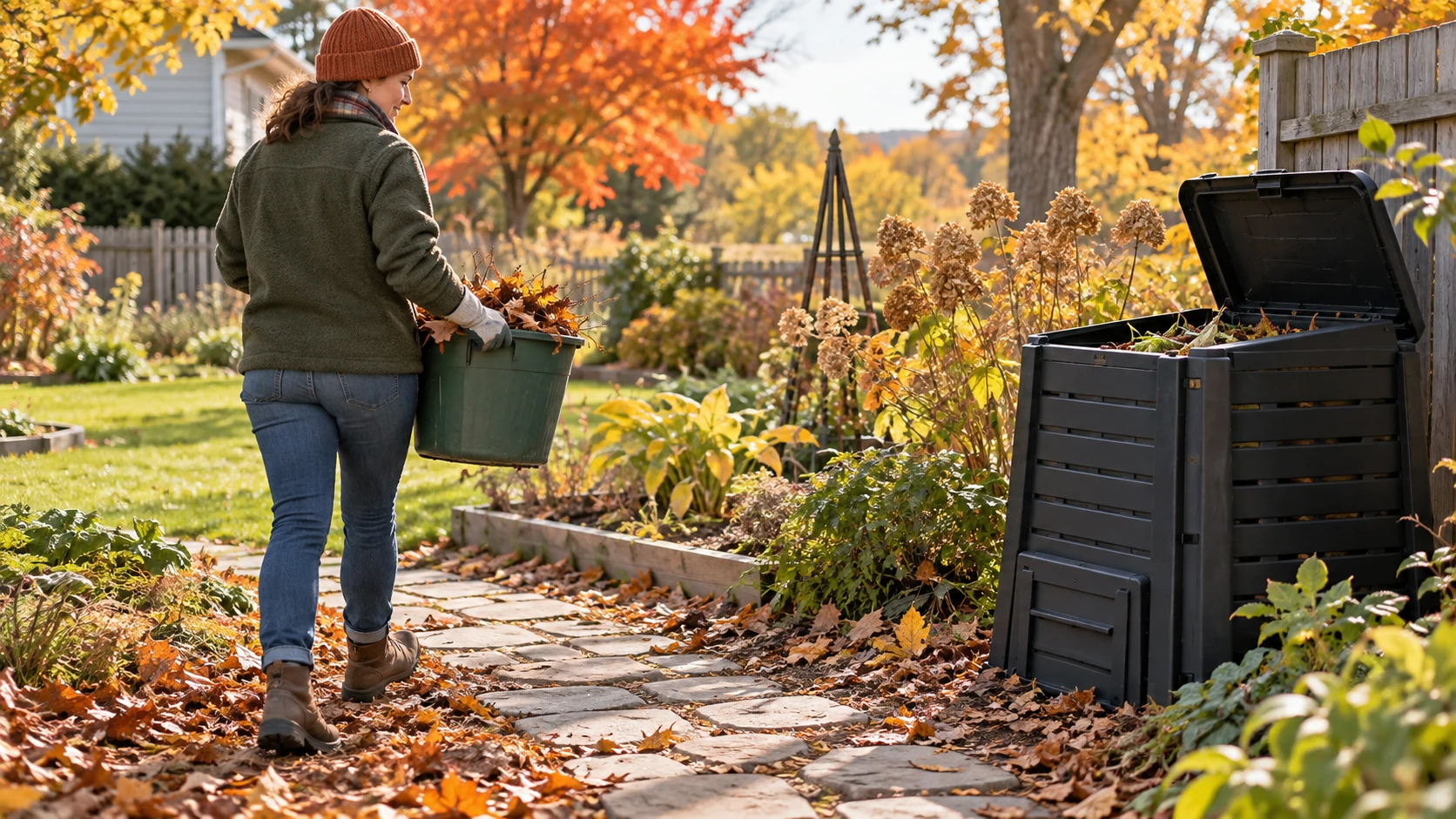
Fall garden cleanup compost bins are easier to choose when you know what will actually arrive at the bin. A few bags of leaves from a small bed create a different storage problem from repeated collections across a large yard. Before comparing capacities, mark the places where you gather material, where a bin could stand, and how you would carry each load between them. The bin needs a workable place in that routine. A large capacity printed on a product page will not help if the route to the bin is awkward after every cleanup session.
Two current listings show the range without settling the decision for you. The Wubio 80-gallon garden bin is described as a black outdoor plastic bin with a lid. The STAWAY 137.1-gallon grey composter set has a larger stated capacity and a different, square form. Those figures are listing capacities, not a promise about how much of your particular fall debris will fit in one session. Use them to frame a space and handling comparison, then check the exact offer before ordering.
Begin with one real cleanup session
Walk the yard or garden after a typical round of seasonal work. Note the beds you clear, the paths you sweep, and any piles that usually wait for another day. Record the number and size of containers you already use to collect that material. This gives you a practical scale for the project without pretending that every leaf or stem packs the same way. If you cannot estimate a whole season, observe one weekend and write down what remains afterward. A single measured routine is more useful than a vague guess about the entire yard.
Keep material that you do not intend to place in this bin out of the count. Your local collection rules, the material itself, or your own maintenance plan may send some loads elsewhere. Separate those loads in your notes rather than including every bag from the garden. This article is about selecting a collection and composting container, not declaring which particular plants or kitchen scraps belong in a compost mix. For that decision, use local guidance and the bin maker's instructions for the exact model you buy.
Write down how often you expect to empty a garden cart or bucket into the composter. If you gather material in short visits, a bin close to the beds may be more convenient than a larger one at the far edge of the property. If you collect a large load at once, check whether the opening and position make it practical to transfer that load. Either way, stand at the proposed location with your collection container. Imagine carrying it there when the yard is wet, a gate is closed, or outdoor tools are already stored nearby.
Compare the stated capacity with the space you can give it
The Wubio page calls its model an 80-gallon outdoor bin. Its first product image shows a black, upright container with a top lid and a lower opening. The STAWAY listing calls its grey set 137.1 gallons, and its first image shows a broad, square container with a closed top. A larger number could reduce the number of loads waiting outside the bin, but it also asks for a different footprint. Neither listing's gallon figure tells you the clear space required around the container for loading or removing material.
Measure the intended spot on the ground, then allow room for the way you will approach it. Check how a lid or access panel moves, where you will stand with a collection bucket, and whether a nearby fence or bed limits your reach. The product images help you identify the general form; use the current product dimensions or maker instructions to verify exact clearances. Do not scale a photograph by eye. A bin that technically fits between two objects can still be irritating to load or service when the opening faces the wrong way.
Think about what happens after the first placement. If you expect to move the bin later, ask whether the assembled form suits that plan. If it will remain in one place, check that the ground is level enough for the maker's installation directions and that the route to it stays open through the season. A large bin may be sensible for a broad yard when it can stay close to the main collection area. A smaller one may fit a narrow garden corner better even when it calls for more careful staging of material.
Capacity is only one part of a useful comparison. Record the volume stated for each exact listing alongside its current dimensions, opening arrangement, assembly requirements, and the spot you measured. Leave a field blank when the listing does not give a reliable answer. That blank is a prompt to check the package or ask the seller, not permission to fill it with a typical specification from a different model. Keeping the comparison tied to exact items prevents a convenient feature from one photograph or variant becoming an unsupported claim about another.
Plan the route from leaves to the bin
Fall cleanup often starts with gathering material, and that work has its own equipment decision. The published garden rake guide compares tools for leaf gathering and soil levelling. Choose a gathering method for your beds and surfaces separately from the bin. Then try the route from the collection point to the proposed composter location. A rake can bring leaves together; it does not make a distant or obstructed bin easier to reach with a full container.
If you use a powered blower for part of the cleanup, keep tool maintenance separate from the bin choice as well. The published cordless leaf blower troubleshooting guide addresses a tool that does not start. It is a useful adjacent reference when a cleanup routine depends on that equipment. For the composter decision, focus on the point at which gathered material needs somewhere to go. Consider a temporary collection container if several work areas feed the same bin.
Test that route with an ordinary load before treating the site as final. Carry a bucket or yard bag from the furthest work area, pass through the usual gate, and approach the spot where you would open the bin. This simple walk reveals steps, narrow turns, and storage conflicts that a capacity comparison cannot. It also shows whether family members or other gardeners can use the arrangement without being told a complicated procedure. If the trip feels inconvenient once, it will probably be skipped when cleanup becomes repetitive.
Read product claims as claims about exact offers
The captured Wubio description says its black polypropylene bin uses recycled material, has a secure lid, and is intended for outdoor garden composting. It also makes claims about managing moisture and shortening composting time. Treat those as statements from that product listing. The captured page does not measure how quickly your own mix will change, and this guide does not promise a particular result. If those material or performance claims matter to a purchase, confirm the exact SKU and current maker information before relying on them.
The STAWAY page describes a square matte-grey plastic composter set with UV-resistant material and a 137.1-gallon stated capacity. It mentions use in a garden, utility room, or garage. That range of suggested locations does not establish that every location suits your actual material or building. Match the eventual location to the model instructions and your local requirements. For a fall yard cleanup plan, concentrate first on the outdoor site you measured, its access route, and the assembly or cleaning steps you are willing to handle.
Images are helpful for identifying the general container shape, but they do not replace the full listing. The Wubio first gallery image visibly depicts an 80-gallon black bin; the STAWAY first gallery depicts a grey, square bin. Neither image alone establishes a precise wall thickness, opening dimension, or included accessory. Read the exact purchase option and its specifications before assuming the photographed arrangement is what will arrive. Save the SKU and current listing details with your notes if several people are comparing products at different times.
Do not treat the two capacity numbers as a quality ranking. A larger container does not automatically solve a poor location or an awkward loading routine, while a smaller one can be entirely adequate for a modest collection plan. The listings also do not provide a controlled durability comparison. If longevity or material composition is central to your decision, look for model-specific maker documents and warranty terms. This guide can help you ask those questions; the captured product pages alone cannot answer every one.
Make a small site plan before ordering
Draw the garden or yard on a sheet of paper and mark the proposed bin, collection areas, gates, and places where tools or furniture already stand. A rough sketch is enough. Add the measured footprint once you verify product dimensions, and draw an approach path wide enough for the container you use to carry material. Try a second possible site if the first path crosses a frequently used walkway or needs you to move other equipment. This exercise costs little time and can keep a new bin from ending up unused behind a shed.
List who will load the bin and who will handle later maintenance. The people may be different. If one person collects material and another handles the composter, both should be able to reach the openings described for the exact model. Put assembly and cleaning tasks in the plan too. The STAWAY listing says its plastic surface can be wiped with a damp cloth; the Wubio page describes easy assembly. Those are listing descriptions, so verify the current instructions rather than treating either phrase as proof of effortless upkeep.
Keep the first version of the plan modest. Mark a place to hold collected material if the bin is temporarily full, and decide how you will keep the approach clear when other fall equipment is out. Check the spot in daylight and again at the time you usually work. A route that looks open on a quiet morning may cross a parking area, hose, or stored garden tools later. The goal is a location you can use repeatedly without making every cleanup session depend on rearranging the yard.
Finally, decide what to check on the live offer: exact capacity, dimensions, included parts, lid and access configuration, assembly instructions, and the selected variant. Compare those fields with your measured spot and your observed cleanup load. If one model leaves an essential question unanswered, pause that purchase decision until you can resolve it. You can still finish the yard plan now. A clear record of what you gather, where the bin would stand, and how you would use it makes the eventual choice much easier to defend and maintain through the season.