Home & Living
8x10 picture frame cost: one accent or a four-frame wall set
A practical budget for one decorative 8×10 frame versus four matching wall frames, based on the pictures and places ready now.
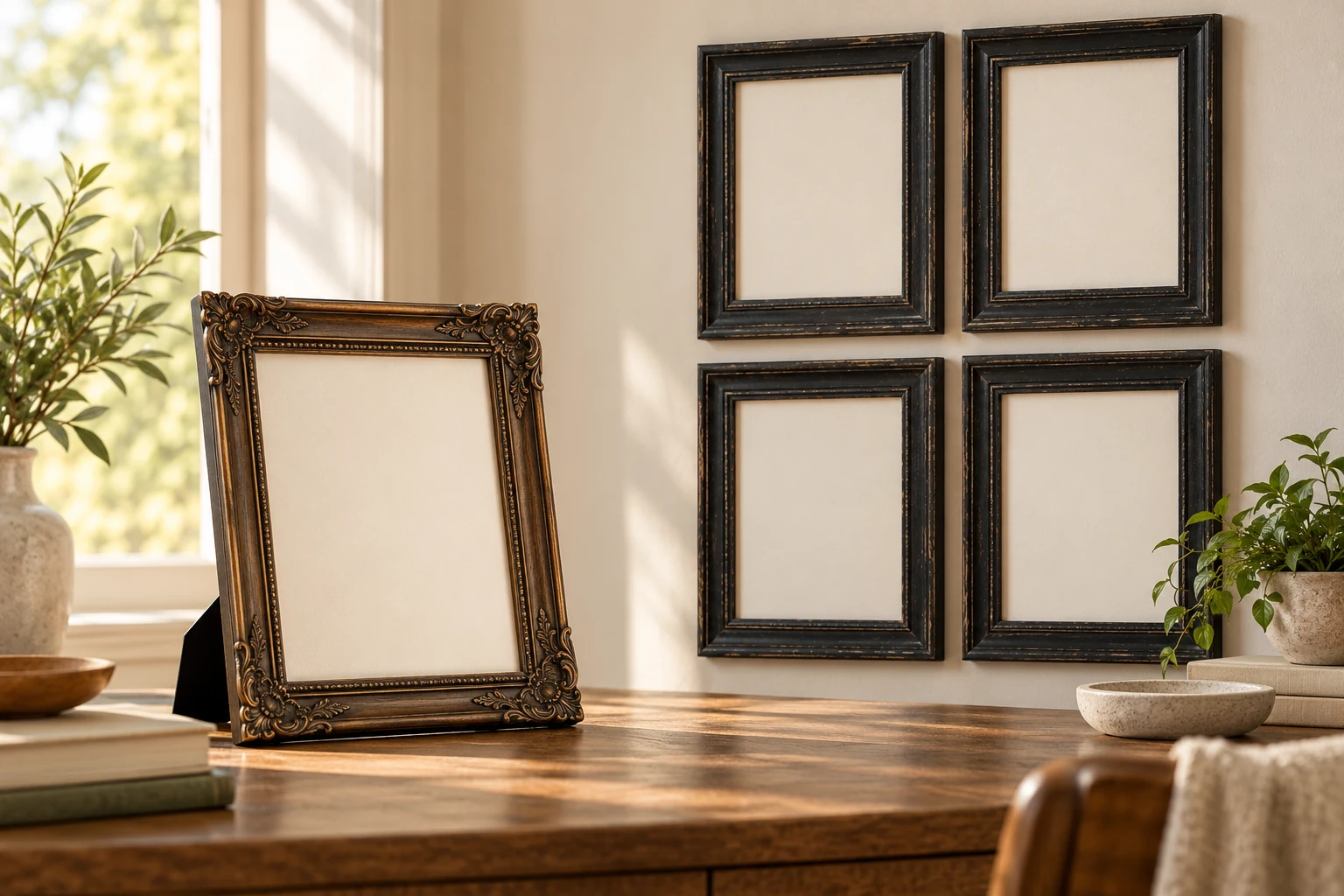
An 8×10 photograph can call for one prominent frame or a repeated set. The purchase looks simple until a cart holds a decorative single frame beside a multipack. Those offers solve different display plans, so a cost comparison needs a count and a destination before it needs a sale price. This guide builds a small picture frame budget around the actual number of photographs, their placement, and the work of hanging or rearranging them. It uses two current listings as examples while leaving the final checkout arithmetic to the prices shown when you buy.
Count display places before frames
Walk through the room with the photographs you intend to display. Give each photograph a tentative place: a desk, a shelf, a hallway wall, or a cluster over a cabinet. Write down which places are ready now and which are only ideas. A four-frame purchase can look economical per opening, but three unused frames are not a saving if the plan needs one frame. A single decorative frame can be the right purchase when one image will anchor a small surface.
Use a paper rectangle roughly the size of each intended frame to test the arrangement. Place it against a shelf or wall and step back to see whether the group has enough breathing room. This is a layout exercise, not a product measurement or a promise about how either frame will fit. The relevant dimensions come from the current listing and the actual frame in your hands. Check where doors open, where cords pass, and where a tabletop stand would rest before deciding that every proposed spot is usable.
Make a simple count with three columns: photographs ready, display places ready, and frames needed today. If five prints exist but only one wall position is prepared, the immediate need is one frame. If four photographs already belong together on a clear wall, a set may save the effort of selecting separate finishes. Keep a separate note for future photographs. Treating a hoped-for gallery as a current requirement is how a seemingly low unit cost turns into stored inventory.
Read the two offers as different bundles
The SKYSONIC 8×10 bronze picture frame listing describes one ornate resin frame with a glass front and velvet backing. It says the frame has a tabletop easel and a wall hook, with horizontal or vertical display. That flexibility matters when the planned picture might move between a desk and a wall. The floral bronze look is a strong visual choice, so imagine it beside the other objects in the room before treating it as a neutral frame. The listing gives overall dimensions, but you should still check the current product page and physical unit for your placement.
The ArtToFrames 8×10 distressed black picture frame offer describes a four-pack of wood frames. Each is described as fitting an 8×10 photo or poster, with regular glass and a sawtooth hanger for wall mounting. The listing gives a finished outer size of 9.5 by 11.5 inches for each frame. This is a wall grouping candidate, not four tabletop stands: the source description does not promise easels. A gallery image uses a mat for visualization, so the budget should not assume mats arrive in the box. Confirm current contents before ordering if matting is essential.
The two listings therefore differ in quantity, appearance, and described placement hardware. Their current prices are only one input to the decision. Do not divide a multipack price by four and call it a bargain until all four frames have jobs. Likewise, do not compare one decorative frame with four plain frames as if the count were equal. Decide whether the display calls for a single accent, a repeated series, or a mix. Then compare the cost of satisfying that exact plan with the hardware each offer actually describes.
Build an honest per-display calculation
Write the current checkout total for each option, including any shipping or tax shown for your order. For the single frame, the immediate frame cost is the total paid for one useful display place. For the four-pack, divide the total by four only if four useful positions are ready. If two positions are ready, divide by two to see the effective cost of the photographs you can display now, and label the other two frames as spare stock. This is a planning calculation, not a prediction of resale value.
There is another sensible way to use a multipack: stage the wall over time. If two photographs are ready and two are expected soon, note the specific pictures and dates rather than a vague intention to fill the space eventually. Keep the unused frames protected and together so they can become part of the planned display. If those future images never materialize, the unit-cost argument has changed. Revisit the budget with what is actually hanging rather than what the original spreadsheet imagined.
Include small accessories as separate lines. You may need suitable wall fasteners, printing, or a different surface arrangement. Neither listing establishes what fastener is appropriate for your wall or what a local print shop will charge. Check the wall material and the frame instructions, and choose hardware accordingly. If a mat is part of the desired look, price that separately unless the current offer explicitly includes it. Keeping extras visible prevents a lower frame price from hiding a more expensive completed display.
Time can also have a cost, but avoid assigning it a invented numeric value. A ready four-piece wall plan may be worth buying together if it means one coherent shopping decision. A single frame may take less setup when one photograph simply belongs on a desk. The right comparison is the work each real plan asks of you: measuring, preparing prints, hanging, cleaning glass, and changing images later. Do not pay for convenience that the listing has not actually promised.
Separate decorative value from quantity
A decorative bronze frame may be intended as part of the room rather than a quiet border around a photograph. If the photo is small in the overall space, a visually prominent frame can give it a deliberate place. That is a taste decision, not a measurable saving. Test it next to the shelf color, lamp, and other objects you already own. If it competes with the picture, a simpler frame may be the more satisfying purchase even if the ornate one looked appealing by itself online.
A repeated black set can make several pictures read as a group. Decide whether they should share orientation and spacing before you buy. Four identical openings can also expose differences among prints: one portrait crop may not sit happily beside three landscapes. Try a floor layout or paper templates first. The ArtToFrames offer describes the same nominal photo size for all four frames; it does not solve the editing choice for you. A set saves a matching decision only when matching is what the gallery needs.
If you need both a standout photograph and a small series, calculate them as two display tasks. A single accent plus a separate group can be intentional. Avoid adding the four-pack just because the unit price looks low when the room has space only for an accent. The savings test is whether the purchase reduces the cost of a finished arrangement you wanted anyway. It is not whether the number after a division sign looks small.
Check opening size and visible image area
An 8×10 label refers to the print size a frame is meant to hold, not necessarily to every pixel that will remain visible through the front. A frame lip can cover a little of the edge. If important text, a face, or a signature sits near the border, inspect the actual opening or ask for exact visible-area measurements before committing to a crop. The separate guide to why a photo frame hides part of a picture explains that fit question in more detail. This budget guide uses the result: a print needing a new crop or reprint belongs in the total cost.
Bring the photograph or a copy to the measurement step. Mark any area you cannot afford to lose behind the frame edge. If the image is digital, preview a safer crop before paying to print. Do not assume a pictured mat is included with a frame, and do not assume a mat will expose the whole original print. Ask what is supplied and measure the opening that will actually be used. One careful test can prevent buying a frame that makes the important part of the photograph disappear.
When comparing a single frame with a four-pack, repeat the fit check for each intended photograph. Four 8×10 prints can have four different edge problems. The pack count does not make the cropping work disappear. If one image needs a different format or a wide mat, it may belong in a separate frame. Remove it from the pack calculation rather than forcing it into the group to justify the purchase. The goal is four useful displays, not four occupied openings at any cost.
Plan the return decision before opening everything
Keep an order record and the packaging until you have checked quantity, condition, and basic fit. Inspect glass and frame corners carefully on arrival, following the seller's current process for reporting a problem. Do not assume a partial multipack return is permitted or that an opened set can be exchanged as a single frame. Those terms depend on the actual order and current policy. The separate picture frame return-cost guide covers the cash-versus-exchange question; use it when a real return is under consideration.
Before hanging, place the frames next to their proposed photographs and check the finish in the room's light. A distressed black finish and an ornate bronze finish are very different commitments. Online color can vary with screen and lighting, so the physical item is the useful checkpoint. If the match is wrong, decide on return or another placement before adding wall holes. This avoids treating a poor room fit as a reason to buy more accessories in an attempt to rescue the first purchase.
A return has practical costs even when a refund is possible: packing time, a trip to a carrier, and a period without a finished display. Do not convert those into invented fees. Read the current policy for the exact order and keep the numbers you can verify. If one frame from a set is damaged, document the condition before changing the rest. A clear record helps you ask the right question without assuming what remedy the seller will provide.
Make the final shopping decision
Choose the single bronze frame when one photograph needs a deliberate tabletop or wall accent and its decorative look belongs in the room. Choose the four-pack when four wall positions and four suitable photographs are ready, and the repeated black finish is the arrangement you want. If only two or three positions are real, compare the full pack total against buying the exact number of frames needed now. Leave room for shipping, printing, suitable hardware, and any separately purchased mat.
Save a short note with the final count, placement, current checkout totals, and any missing accessory. After the frames are installed, look at what you actually used. That record will make the next photo display purchase easier: it tells you whether a spare frame proved useful or remained in a closet. The cheapest completed display is the one that fits the photographs and the room without buying openings that never get filled.