Home & Living
Winter indoor laundry ventilation before placing a rack
Read the home ventilation guidance and identify unresolved moisture or building questions before assigning indoor laundry a winter location.
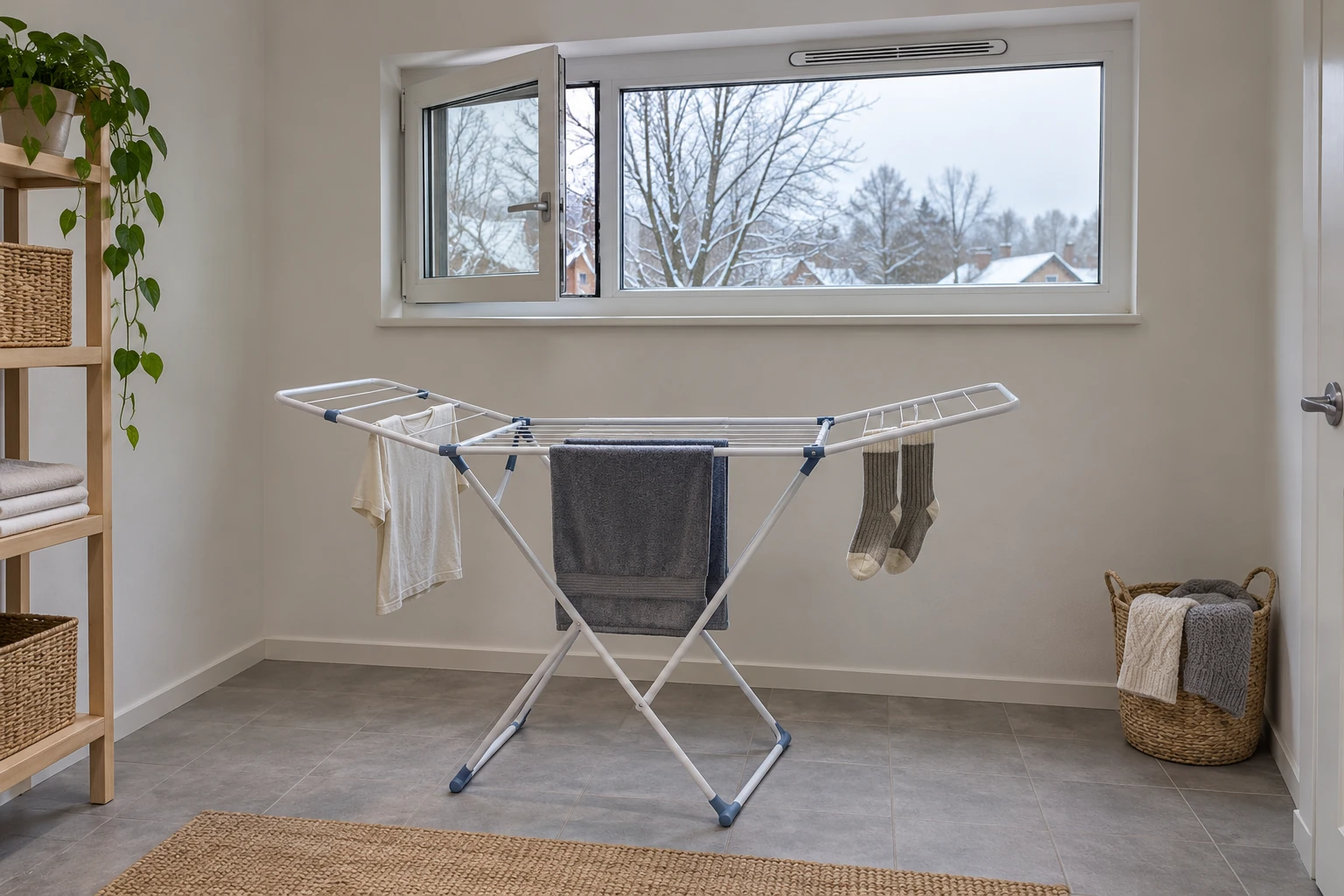
Give the winter room an air question
Winter indoor laundry ventilation deserves attention before a drying rack takes its place for the colder months. A room can have enough floor space while leaving the moisture question unanswered. Energy Saving Trust describes ventilation as controlled movement that replaces indoor air with fresh outdoor air. Its guidance identifies indoor rack drying as an occasion for increased ventilation and says ventilation remains important in winter.
Start with the actual home and its existing arrangement. The same guidance explains that advice about opening windows and using vents may differ where a mechanical system already supplies and extracts air continuously. Read that system's instructions or ask its installer. Do not turn a seasonal room change into an improvised ventilation design. The rack's shape cannot establish the air exchange in the room or a drying time for the washing.
Laundry room ventilation instructions come first
The government's Existing home ventilation guide applies to England and explains why ordinary activities add moisture indoors. It identifies winter's cold surfaces as part of the condensation concern. Importantly, the guide says it does not replace the manufacturer's instructions for a ventilation system. Keep the actual laundry room ventilation instructions available when deciding how the proposed location will be used.
Identify what is already present. A window vent, an extractor and a whole-house mechanical system describe different arrangements. The government guide calls for trickle vents to remain open and unblocked, including in winter, and for mechanical-system filters to receive the care specified by their maker. This article supplies no filter interval or instruction to alter an installed system.
The guide also discusses leaving internal doors open where possible for cross-ventilation. Read that as general home guidance in its stated context. It is not a reason to discard laundry-specific advice about containing moisture in a room. Resolve the arrangement for the actual building and activity, with appropriate help where its instructions are unclear. A drawn rack footprint cannot settle that question.
Indoor clothes drying moisture needs an exit
National Energy Action's condensation leaflet gives a specific indoor-laundry arrangement. It recommends a drying rack in a room where the window can be opened slightly, with the door closed. It also advises against drying wet clothes on radiators. Those statements address laundry moisture. They should remain beside that activity, instead of becoming a rule that every internal door in every home must stay shut throughout winter.
For indoor clothes drying moisture, ask whether the proposed room has the ventilation arrangement its applicable guidance requires. A cupboard that hides the rack when visitors arrive does not answer how moisture leaves during use. Keep a proposed winter location provisional if that question remains open.
The leaflet also discusses heating, insulation and help when condensation persists. This guide sets no room temperature, window-opening duration or weekly quantity of water from laundry. Those figures would not establish conditions in your particular home. If the actual arrangement remains uncertain, seek relevant housing or ventilation advice before relying on the new position. Moving a passive rack does not repair a blocked vent or determine whether an existing fan works as intended.
Leave an unresolved building problem visible
Shelter England explains that drying clothes indoors can worsen condensation and discusses ventilation, dehumidifiers and other ways to address moisture. Its advice also says that persistent problems can require a landlord's inspection and work on the home. A household's ordinary laundry should not automatically be treated as proof that the occupants caused a building problem.
If condensation continues despite the steps already taken, keep the actual observations available for the person investigating. Describe the location and what you have noticed, without diagnosing the cause from a photograph or from the presence of washing. The relevant answer may involve the building's insulation, heating or ventilation. A different rack does not establish that those conditions have changed.
For a rented home, read the housing guidance applicable to your situation and contact the responsible landlord or housing service about unresolved conditions. This article gives no legal deadline, mould-removal recipe or assessment of someone's health. The immediate laundry-location question can remain open while an actual building concern is investigated.
Distinguish extraction from a convenient corner
BC Hydro's hang-drying guidance specifically discusses moisture and condensation from indoor laundry in fall and winter. It identifies a fan that ventilates outdoors as a way to remove moisture and suggests choosing a well-ventilated location, often near a bathroom ventilation fan in the colder months. It cautions against enclosed, unventilated places such as closets. These are room-ventilation considerations, without a certification of any particular bathroom or existing fan.
Check what the actual arrangement does rather than assuming that any device moving air provides outdoor extraction. Keep its use within the instructions supplied for that system. The presence of a grille or a fan sound cannot establish the route and performance required for your proposed location.
BC Hydro also recommends leaving space between laundry items for air to circulate and advises against placing laundry on or near heaters or radiators. Apply garment care and the exact rack's instructions alongside the room guidance. This article supplies no clearance measurement, load arrangement or heater setting. It reports no energy saving or faster-drying result for either retail example below. A folding label alone cannot answer those questions.
Ask for help where the room cannot support the plan
NICE's Indoor air quality at home guideline includes advice about avoiding indoor air-drying where possible, or improving ventilation when it cannot be avoided. It describes opening windows where possible and safe, alongside background or mechanical ventilation. That qualification matters. A suggestion to open a window should not erase an actual restriction involving security, outdoor pollution or the building's installed arrangement.
The guideline also discusses contacting a landlord about inadequate ventilation or needed repairs, and pathways for a housing assessment. Keep the enquiry attached to the actual home. Explain which room you are considering and which part of its ventilation remains unresolved. There is no need to present a passive rack purchase as a completed solution to that enquiry.
This guide uses the general housing and ventilation context, without diagnosing illness or recommending treatment. It does not design a fan installation, specify new vents or select heating equipment. If the room's conditions cannot support the proposed laundry arrangement under applicable guidance, leave that location undecided and obtain the appropriate answer. The seasonal plan can change without pretending that an unresolved room has passed an airflow or moisture-control test.
Read the two racks without borrowing their claims
The captured white winged drying rack offer shows a horizontal centre, hinged wings and end support frames. Its description and gallery disagree about the number of drying rods. That discrepancy remains unresolved. The description mentions Apexchaser while the catalog brand is Unbranded, so this article does not authenticate a maker from that wording.
The blue tripod drying rack offer identifies SKU 18579465662. Its gallery shows a central column, three radial hanger arms and three folding legs. The native size field and the gallery's height and diameter figures differ substantially. Obtain the applicable dimensions before deciding that this rack fits a real location.
These are different support geometries within the same broad clothes-rack family. Neither description establishes the ventilation of your home. Staged garments, hangers and laundry-room belongings are context, without an independently supplied bag or accessory package established here. No measured drying, stability, load, wrinkle or energy comparison is reported. Use the actual product's instructions for its eventual placement and handling.
Keep the neighboring rack questions separate
The shared laundry drying-rack routine owns room timing, household communication and access questions. Those arrangements still matter when several people use a winter laundry space. They do not establish its ventilation requirement or confirm that moisture can leave. Agreeing that a room is available answers a scheduling question while the building and system questions may still need attention.
The clothes drying rack wobble guide concerns movement at the footprint, supports and load. It supplies a separate troubleshooting discussion. A rack that appears steady has not thereby passed a room-ventilation assessment, and a ventilated room does not resolve a damaged support.
Finish the winter location decision with the actual home guidance, the system instructions and any outstanding building enquiry still identifiable. Then retain the selected rack's own placement and garment-care requirements for its use. You may already have an appropriate rack while the room question remains open. Buying another frame cannot provide a missing answer about the property, and another person's room schedule cannot provide it either.
Keep a later order with its actual payment instructions
If the room enquiry leads to a separate decision to buy a rack, identify the exact offer and the configuration being considered before payment. This guide has not inspected a live checkout at republeq.com and confirms no current crypto method for a later transaction. If that checkout presents USDT, obtain the named asset, network, receiving details, full amount and order reference from its current instructions. A token name copied from another order does not establish those details. Keep any unresolved size, contents or product-identity question attached to the proposed goods. Payment cannot choose which dimension in a conflicting listing is correct or establish that a rack fits a particular room. Ask through the merchant's confirmed channel when an essential transaction or product detail is unclear, and keep that part of the decision pending. Read the applicable delivery, cancellation, return and refund conditions, including terms associated with the selected payment method. This paragraph gives no wallet address, transfer sequence, exchange rate, fee estimate or tax advice. It records no order, payment, settlement or delivered item. Retain the merchant and payment references so a later support enquiry concerns the actual transaction. If an existing payment or order attempt has an uncertain result, reconcile it with the merchant or payment provider before starting another attempt. A missing confirmation does not establish that no action occurred. If someone else will order the rack, agree which exact goods they are considering and who will deal with a pending status question. A winter laundry deadline explains the wish for equipment, but it cannot supply missing checkout instructions or guarantee arrival. The room's ventilation enquiry can continue while shopping remains undecided. Completing a purchase would not establish that an installed fan works, resolve a building condition or approve a particular garment-care method. Keep those questions with their applicable evidence. If the existing rack already serves the eventual arrangement, the enquiry can finish without a new transaction. If the selected offer changes, review its actual identity and contents again before carrying forward the earlier purchasing note or authorizing payment for different goods.