Lifestyle & Inspiration
A shared laundry drying rack routine for a household with changing schedules
Plan a shared laundry drying rack routine around household schedules, room access and clear handoffs, keeping rack dimensions and use instructions separate.
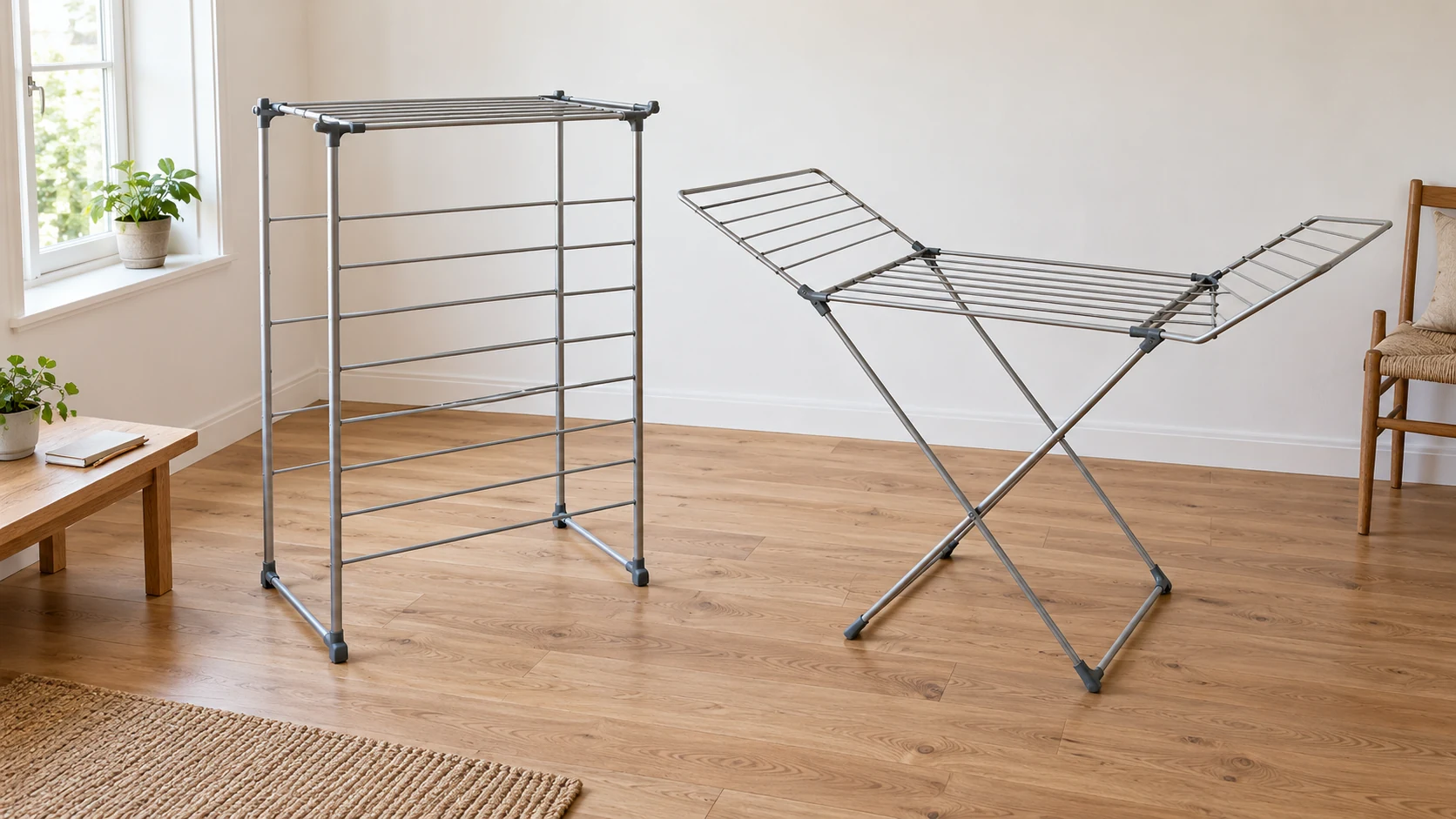
A shared laundry drying rack routine starts with the people who will use the space. One person may finish laundry before work while another needs the same room later in the day. A rack can be part of that arrangement, but its advertised dimensions do not decide whose washing comes first or when a room becomes available again. Agree on those parts of the routine before choosing another piece of equipment.
The Everyday Home and SONGMICS listings below provide two concrete rack examples for that conversation. Their size and feature accounts are different, and the SONGMICS description contains a height discrepancy that needs clarification. Use those disclosures to identify the questions your household needs answered. This is a plan for sharing a room and communicating about laundry, with no drying-time promise or instructions for assembling, loading or operating either rack.
Begin with the household's actual week
Ask each person when laundry usually enters their week and which parts of that timing can change. Keep a regular workday separate from a day when someone is home. You are looking for overlapping uses of the room, rather than trying to assign every future wash to a fixed appointment. An ordinary week can reveal a conflict that a photograph of an empty laundry room never shows.
Write down any use of the room that matters to the people sharing it. A place that serves laundry may also have another household purpose at particular times. Record the actual use and the time someone expects it to be available. Do not assume that the person who starts a wash knows about another person's plan for the same space.
Keep garment decisions with their own care information. A household schedule does not determine which clothes may go on a rack or how they should be arranged. If someone needs guidance for a particular item, leave that question separate from the room timetable. The rack descriptions do not supply a universal care instruction for everything the household washes.
Planning space around a clothes drying rack
For planning space around a clothes drying rack, describe the proposed place in the room and record the measurements you can establish. Keep the room's dimensions separate from the product's published figures. Add the route people actually use to reach the room's other functions. A rack fitting inside a drawn rectangle does not settle every access question around it.
Consider the room while it is in ordinary use. Ask whether another person can reach what they need, and identify any part of the proposed arrangement that requires more information. This guide gives no universal walking gap, safe loading arrangement or ventilation requirement. Obtain the selected product's applicable placement and use instructions before treating a proposed position as settled.
If several positions are being considered, name each one in the note. Record what remains available and what would need to change at each location. The exercise should help people explain their preferences. It does not need to end with a purchase if the existing arrangement already serves the household once the timing is clearer.
Give the Everyday Home example its own size record
The Everyday Home stainless-steel and plastic clothes drying rack lists dimensions of 45 inches long, 25.5 inches wide and 72 inches high. Its description identifies stainless-steel tubing with a chrome finish and plastic parts. Copy the size labels with those numbers so that a later conversation does not confuse length, width and height.
The listing describes a foldable rack and mentions use with shirts, pants, towels and shoes. Those are stated product features and intended-use examples. They do not establish that a particular garment should be dried in a particular way, or that your household's complete wash will fit. Its broad durability and wrinkle-related language supplies no measured result for your clothes.
The description does not give folded dimensions or a measured drying time. If the household expects the rack to be stored between uses, request the relevant storage dimensions and instructions for the actual item. Keep that question visible in the room plan. Foldable wording alone cannot confirm that the item fits a particular cupboard or can be moved while carrying laundry.
Keep the SONGMICS figures attached to their labels
The SONGMICS drying rack identified by SKU 108352090 is described as having four wings in two layers, with 33 rails and 27 clips for smaller items. Its native identity says Generic Silver Unisex, while the description also mentions Blue. Keep the actual offered identity with the feature account when asking about the version you intend to receive.
The description gives three heights for the top two wings: 44.5, 53.5 and 67.3 inches from the floor. Its product-dimension account gives 22 inches deep by 61.8 inches wide with those three heights. A separate listed-size line instead gives a height of 64.3 inches. Preserve that difference. This guide does not choose a correct figure or invent an explanation for the conflicting entries.
Ask which dimensions apply to the exact configuration relevant to your room. The stated rail and clip counts identify features, rather than a universal count of garments or a drying-time estimate. The package account names one rack. Neither the accessory counts nor the one-rack inventory certifies a household wash size, an accessible arrangement or a replacement for the supplied operating instructions.
Agree on a place for the next conversation
A shared routine needs a way for people to find the current plan. Choose a household note or another method everyone involved already uses. Record the proposed room time, the person dealing with that laundry and any question still unresolved. A note that someone will actually read is more useful than an elaborate schedule maintained by only one person.
State whether the timing is an intention or a confirmed arrangement. Someone can know when a wash is planned without knowing when its contents will be ready for the next step. Avoid writing an advertised product feature into the schedule as though it guaranteed an end time. Ask people to communicate a change when it affects another person's use of the space.
Keep the note about the shared arrangement. It need not become a record of every garment or an explanation of another person's day. Decide together which details are needed to prevent a room conflict. If a person is not part of the routine, do not assign them a task merely because they happen to be at home.
A household handoff for drying clothes
For a household handoff for drying clothes, agree on what information the next person needs. That might include who is responsible for checking the laundry and whom to contact if the room is needed. These are household decisions. Neither rack listing assigns responsibility or establishes that someone else may handle another person's garments.
Ask each person what they want to happen when their plan changes. A short message can identify the current situation and the next agreed action without pretending the laundry has reached a particular condition. Keep any garment handling within its actual care guidance and the rack's instructions. This article supplies no method for deciding that an item is dry or ready to put away.
If one person cannot finish their part of the routine at the expected time, use the agreed contact method before another person relies on the room being available. Leave an unanswered handoff visible. Silence should not become an assumed agreement to move equipment, take down garments or use another person's belongings.
Leave room for an ordinary change of plans
A household week can change even when everyone follows the plan. Someone may have a different work shift or need the shared room unexpectedly. Decide how a conflict will be discussed before it happens. The aim is a clear next conversation, rather than a schedule that claims to predict every load or guarantee the room will be empty at a certain hour.
If the proposed rack location repeatedly conflicts with another use, identify the actual conflict. It could concern access, timing or an unresolved size question. Ask about that specific issue instead of deciding that a larger rail count will solve it. Another rack may change the equipment inventory while leaving the same disagreement about the room.
Record a change to the arrangement where the people involved will see it. Keep the old size information attached to its original product if you start considering another offer. A decision about the Everyday Home example does not carry over to the wider stated SONGMICS configuration. The new item still needs its own placement and instruction account.
Keep storage plans separate from a foldable label
Both descriptions mention folding. That makes storage a relevant question, but neither brief account provides a complete folded-size drawing here. Identify where the household proposes keeping the rack between uses and obtain the information needed for that location. Do not treat a reference to storage under a bed as a measurement of your own bed space.
Agree who will be responsible for the equipment under the household's chosen routine. Any folding, carrying or storage action still needs the actual product's instructions. A plan for returning a room to another use does not supply a handling method. If those instructions do not support the proposed arrangement, retain the question and revise the plan before relying on it.
Keep the product's identity and relevant documents where the people using it can find them. If the description leaves a dimension unresolved, save the supplier's answer beside the original wording. That avoids asking a later user to decide whether the SONGMICS height difference was ever clarified or which Everyday Home dimensions the household used.
Revisit the routine through the people using it
After the household has an applicable arrangement, ask whether the communication and room timing are working for the people involved. Discuss the actual conflict or missing information, rather than expecting a new piece of equipment to make every preference disappear. A useful revision may be a clearer handoff or a different agreed time. It does not always require another purchase.
Keep the answers modest and specific. An agreed room time establishes what the household intends to do; it does not prove a drying result, lower energy use or a performance advantage for either rack. Retain the selected product's confirmed measurements and instructions as the equipment record. Keep the household's timing and responsibilities as the shared plan.
When someone joins the routine or the room changes purpose, revisit the parts affected by that change. Ask about the person's actual needs and the information they need to participate. The shared laundry drying rack routine remains useful when everyone can identify the present arrangement, the next contact and the questions that still need an answer.
The winter room checklist with Vicks and Vornado examples keeps a named two-device package separate from a decision to equip two rooms. Its Vornado tank and filter counts remain component quantities. That distinction helps with the SONGMICS account here: rails, clips and a one-rack package do not decide the household's room timetable. Agree on the actual laundry routine, then keep each quantity with its own item. No humidifier feature or operating requirement transfers to either rack.
The LiviNest and FFZ coffee-table room guide records the route people use around seats and a doorway before treating a round table as suitable for a position. That is a concrete room-use question for this laundry plan, too: record how people reach the room's other functions beside a proposed rack location. Use the actual rack dimensions and applicable instructions for the remaining placement inquiry. The coffee-table shapes, materials and dimensions do not establish a rack's required space.
A household laundry plan keeps room timing, shared responsibilities and the selected rack's actual dimensions as separate questions.