Seasonal & Holiday Content
A winter holiday draw domino game for two
Plan a winter holiday draw domino game for two with an actual double-six set, an explicit drawing convention and a clear distinction between a hand and match.
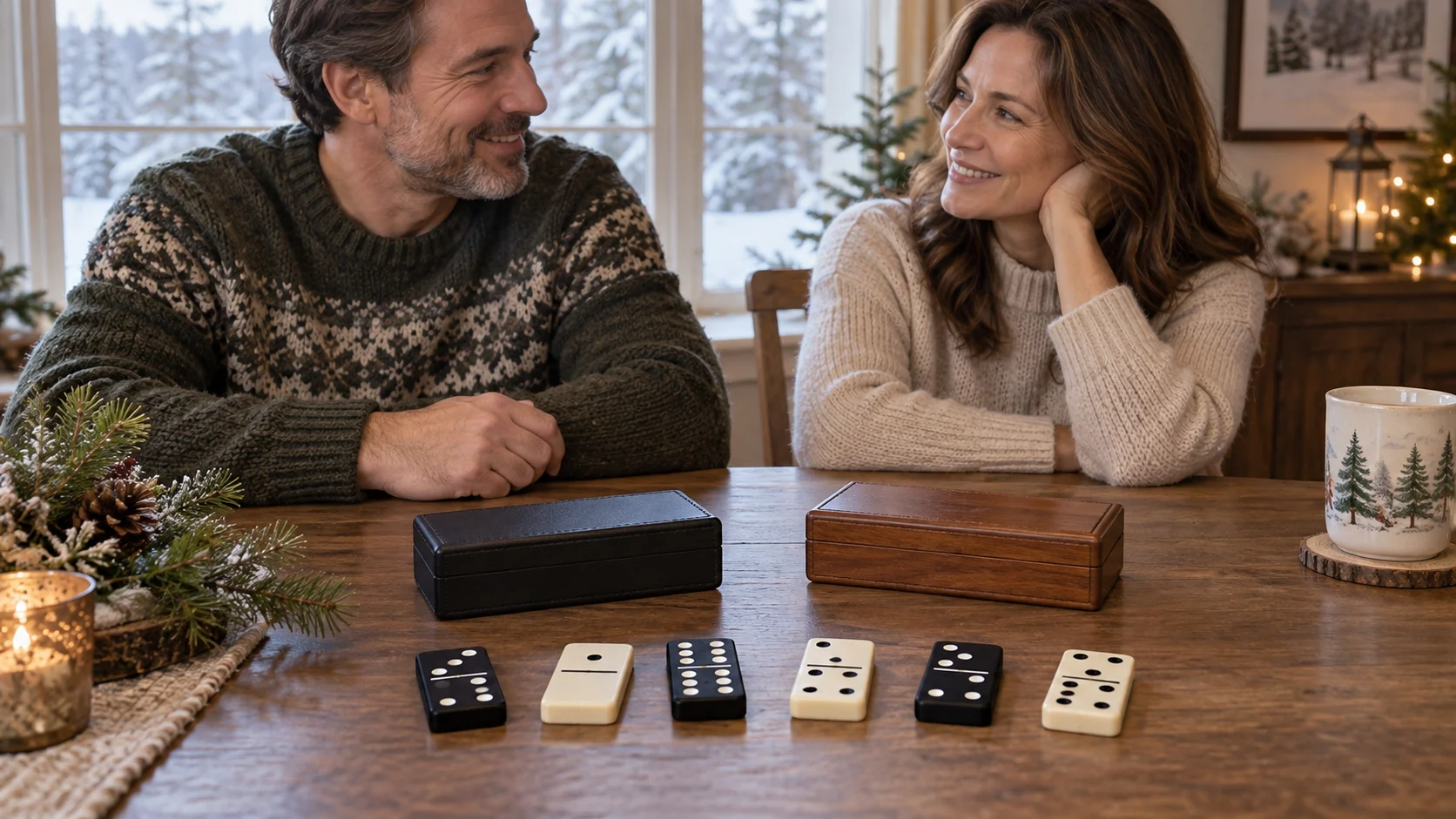
A winter holiday draw domino game can give two adults a definite activity during a shared visit. The interest is in extending a line, choosing from your own tiles and responding to the ends left by the other player. Agree how much of the visit you want to give to the game.
This plan uses the main Draw Dominoes version published by Pagat. Its particular drawing convention belongs with the explanation below. Someone remembering a different draw game should hear the selected rules before the first hand, while you can still agree which game to play.
Choose a winter moment with room for the game
Invite the other person to a two-player game at a particular point in the visit. It might follow a shared winter lunch or occupy part of an afternoon together. Describe the proposed activity plainly so the person can choose whether they want to play, rather than finding a seat assigned to them because the tiles are already out.
Keep the invitation separate from how much of the holiday is available. A person leaving soon may prefer conversation, while someone staying longer may want another hand. There is no fixed playing time supplied here. Agree what part of the visit you want to give to the game without turning that choice into a promised finish time.
If a guest knows another domino game, ask which one they remember. A name can conceal different drawing and scoring conventions. Use the opportunity to identify that difference before beginning. The conversation can make the selected version clearer without making either person defend the way their family used to play.
Establish the actual set before choosing it
The C&H Solutions Double 6 wooden domino offer gives a specific contents account. Each set contains twenty-eight dominoes, and the order contains twelve sets. The pieces are described as black with white dots. For one shared game, read the individual-set count alongside the quantity the order supplies.
Its description says the game is for two to four friends and states that it is not for children under five years old. The proposed occasion here is an adult visit. That source restriction remains part of the offer; the article supplies no assessment of suitability for a particular child or a reason to disregard it.
The dimensions are written unusually as 1,1/4 inches long, seven-eighths inch wide and one-quarter inch high. Preserve that literal length wording when asking about the actual pieces. The description supplies no measured visibility result, manufacturing tolerance or guarantee that every guest will find the markings suitable.
The Bey-Berk Jaden Domino Set offer gives only its name, All Toys & Games category, SKU 1921388949 and UPC 797140405702 in its short description. It does not state a double-six inventory, tile count, materials or dimensions. Confirm the actual supplied set before choosing it for this particular game.
For either an existing set or a proposed purchase, confirm the actual box contents against the chosen reference. The winter invitation can remain separate from that shopping decision, especially when an appropriate set is already available.
Explain the chosen version before dealing
Pagat's Draw game uses a double-six set. For two players, deal seven each and leave the rest face down as the boneyard. Draw for the lead. Play a single line by matching touching end values; doubles lie across it without opening branches. A turn must end with a play unless only two stock tiles remain and no play is possible. Draw until playing or reaching those final two; drawing is allowed even when holding a playable tile. Leave the final two undrawn. The hand ends when someone goes out or nobody can play with two left. Lowest remaining pip total wins, scoring the opponent's total minus their own; a tie scores nobody. The lead then moves left. The two-player match target is one hundred points.
Keep Pagat's selected main rules available to resolve a question. Its pages describe other variations too, so do not borrow a different rule midway through the hand because it seems more familiar. A later visit can use another agreed version, with that version explained before its own first hand.
Keeping the domino boneyard rule visible
For keeping the domino boneyard rule clear, read the stock and drawing convention in the explanation above before beginning. A familiar name alone does not settle the precise version you will use.
Someone may remember a different drawing rule. Acknowledge that memory without quietly importing it. The current hand belongs to the chosen explanation. If both people would rather use a different published version, agree to that before starting a new hand.
Keep a request for clarification ordinary. Answer a question about the stock before continuing the turn. Pause the turn while you consult the chosen reference. Avoid answering from a mixture of two remembered games simply to keep the tiles moving.
Read an open end before offering a tile
A small fictional example can make the matching idea visible before the scored hand. An exposed end showing three can meet a three end on another tile. Keep this demonstration separate from the game, then return the example pieces before the actual deal.
Ask whether the other person wants that explanation. Someone who already understands the connection may prefer to begin, while another person may find a visible example more helpful than the game's name. Explain the actual markings being used rather than claiming that a particular product's colors are easy for everyone to read.
Once play begins, give the current player room to choose. There is no need to point to their possible tile as soon as you notice it. If they ask for help, answer the question they asked and keep the hand attached to the rules you chose. An ordinary shared game does not require a running commentary on every decision.
Give the line a surface that remains available
A winter gathering can put several demands on the same table. Food, drinks, serving dishes and another person's activity may all need a place. Ask whether the intended surface can remain available during the hand. A cleared corner at the moment of the invitation may have a different purpose later.
The actual coffee-table layout and drawer-access guide separates Safavieh Flora and Mozart body dimensions from storage-access questions. That distinction is useful when a coffee table is your proposed playing surface. Its outline does not establish that normal drawer or lower-tier use can remain available around a laid-out game.
The guide provides no universal domino spacing or approved playing-surface measurement. Use the actual pieces, room and relevant furniture information for the arrangement you intend. This article gives no furniture-moving, lifting or laid-out-game transfer method. If the surface must serve another task, agree whether another place or another moment is better.
Ending a holiday domino hand
For ending a holiday domino hand, distinguish the hand's result from the match target. One completed hand does not necessarily complete the match. You can decide that the visit has room for a hand while leaving a larger match unfinished, without presenting that partial occasion as a completed one-hundred-point result.
Keep the score you can establish and describe what it concerns. If the hand was interrupted before its normal ending, say that it remained unfinished. An invitation to lunch or a guest's departure is not a new scoring rule. The visit can move on with that hand honestly left unfinished.
Discuss the next activity before beginning another hand. The person who lost the first may want another, or both may prefer to talk. Those preferences can decide how the visit continues. Neither a tile set nor a holiday plan gives the game a claim on the rest of the afternoon.
A fictional rule question can stay a friendly conversation
Imagine two adults, Leena and Omar, arranging a game during a winter visit. Omar remembers dominoes from a family gathering and expects the drawing rule he used there. Leena has brought the selected reference. Before dealing, they notice that their explanations differ. This is an invented occasion, with no actual guest experience or result behind it.
They can choose the reference they want for this hand, then explain that choice together. Omar's memory can remain part of the conversation without deciding the current game. Leena does not need to call the remembered family version wrong. The question is which published explanation the two people are choosing now.
If the difference only becomes apparent after play has begun, they can pause and identify what happened. Avoid quietly rewriting an earlier turn while pretending both people had the same rule in mind. Discuss whether to continue under an agreed explanation or leave that hand unfinished and begin afresh. Describe that choice honestly instead of presenting an improvised resolution as a rule from the reference.
A future visit might use Omar's familiar version once its full rules have been established. That gives his suggestion a place without making the current hand carry two incompatible expectations. The winter game can remain a shared choice whose details both people understand.
Let a different game keep its own rules
The actual holiday Concentration card-game guide uses Bicycle's same-rank matching rules and keeps actual card inventory separate from sparse retail packaging. Its Bicycle and Generated listing identities remain with those cards. The relevant connection is establishing the actual game materials and selected rules before inviting the group to begin.
Concentration's face-down cards, rank pairs and missed-turn pause do not describe this domino game. Keep the two activities distinct if someone suggests changing games later in the visit. Explain the next game's actual rules and establish its materials instead of carrying the current game's turn or scoring convention forward.
A change of game can also wait for another gathering. Finish the current conversation about whether to continue before presenting more equipment. Someone may want to remember the domino activity as the afternoon's shared game rather than beginning a succession of unfinished explanations.
Keep a future purchase attached to the actual offer
If the visit prompts a purchase, name the contents you want before selecting an order. C&H's twelve-set quantity is a disclosed bulk order, not a requirement for two people to play. Jaden's brief description leaves the double-six contents question unanswered. Ask about the actual item rather than treating either name as a complete specification.
Read the current delivery and return terms for the selected transaction. This article supplies no holiday arrival date, permission to evaluate a used set or guaranteed remedy. An enjoyable game with existing appropriate pieces does not establish the terms of a later order.
Leave the next winter invitation open
Ask whether the other person would enjoy another game on a later visit. They may want the same version, a different published domino game or an afternoon with no planned activity. Keep that preference as an invitation you can discuss, without a promise to finish a match or reach a particular skill level.
A winter holiday draw domino game can remain one clearly explained part of a visit. Keep the actual set, the selected stock convention and the hand's truthful outcome together. Let the people at the table decide whether the next part of the holiday is another hand or time for something else.
Conceptual winter holiday draw domino game scene with whole generic domino tiles and separate cases; no exact retail inventory, legal layout or scored result is demonstrated.