Seasonal & Holiday Content
A holiday Concentration card game with room for a pause
Bring a clearly explained Concentration card game into an adult holiday visit, using an actual suitable deck and leaving room for guests and interruptions.
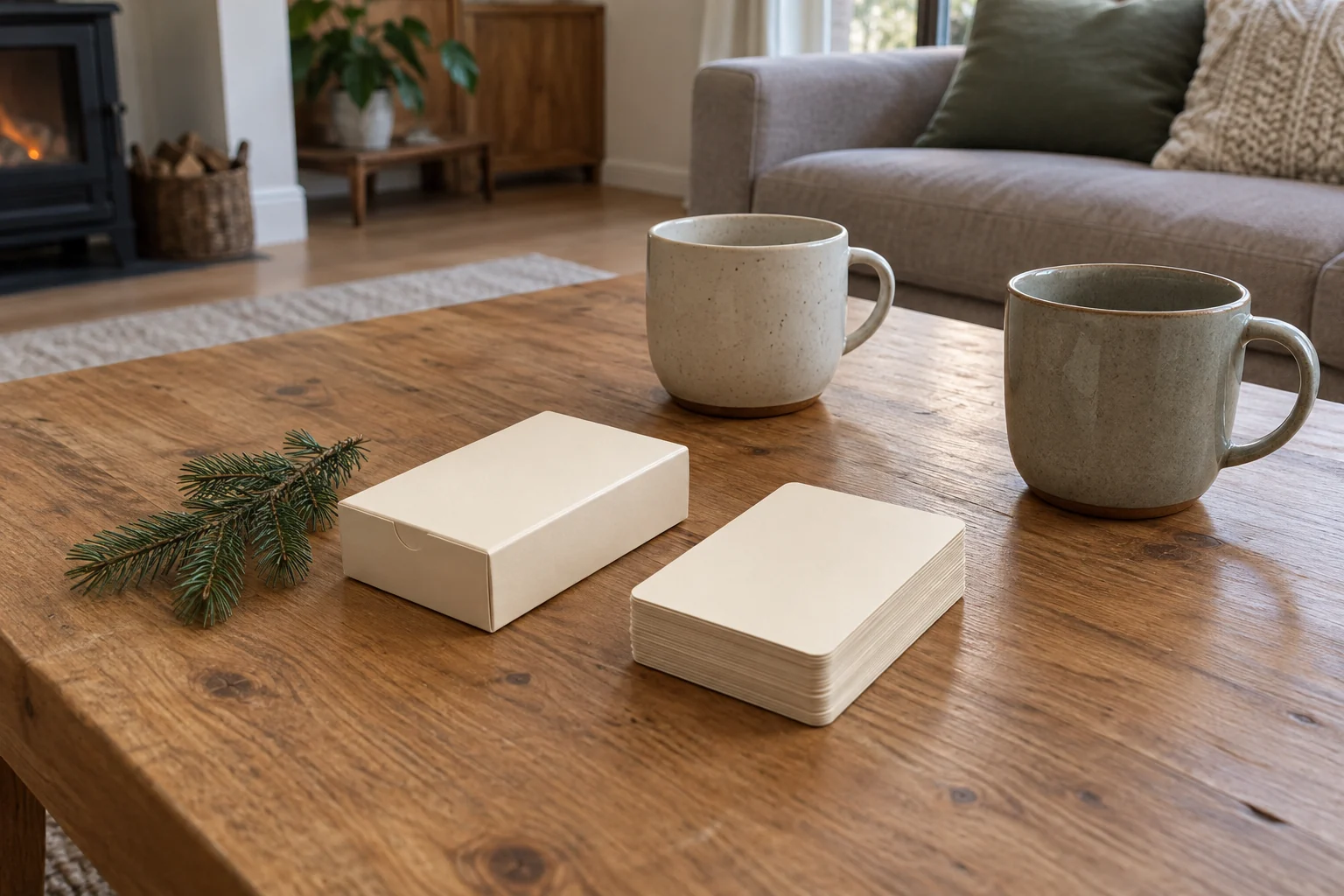
A holiday Concentration card game can give friends or relatives a small activity between the larger parts of a visit. Clear a place for the cards, invite people who want to play and choose a moment when the group can stay with the same game. The gathering does not need a new deck purchase or a promise to fill the whole evening.
This plan uses Bicycle's published Concentration rules and keeps the game separate from any claim about improving memory or other abilities. The proposed occasion is an adult holiday visit. People can play, watch or spend that part of the gathering elsewhere. Choose the invitation around the people actually present.
Choose a moment the visit can actually hold
A card game can fit after a meal or during a quiet part of a holiday afternoon, but the event's timetable should remain visible. If someone is preparing food, greeting arrivals or planning to leave soon, ask whether another moment would work better. Tell people when you propose to play and what the group intends to do.
Tell guests the name of the game before setting out a new activity for everyone. Someone may already know it under another name, while another person may want a short explanation. Describe the particular rules you are using so familiarity with a different version does not become an argument halfway through.
Leave room for someone who wants to watch the first game. They can decide later whether to play another, without being assigned a place merely because a chair is empty. Guests can choose another part of the holiday rather than joining the game.
If the group wants a longer card session, give it its own place in the visit. If it wants only one game, keep that equally clear. Neither a deck label nor a general game description gives a reliable finish time for your particular group. Avoid making the next meal or departure depend on an invented estimate.
Making room for a card game
For making room for a card game, consider the table as it is actually used during the holiday. It may still be needed for food, cups, serving dishes or another person's work. Ask whether the surface will remain available during the proposed game.
The actual coffee-table layout and drawer-access guide separates the Safavieh Flora and Mozart tables' stated body dimensions from drawer travel and lower-storage access. That distinction matters if an existing coffee table is your proposed game surface. Its headline size does not establish every usable area or leave its normal storage accessible.
Use the actual room and the actual cards to decide whether the intended arrangement is practical under their applicable information. The table examples supply no universal card spacing or certification of your surface. If the room needs that table again soon, choose another moment or location rather than assuming everyone else's use can remain suspended.
Before beginning, agree what happens if the table unexpectedly becomes needed. The group can leave a game unfinished. This article does not prescribe a way to lift, transfer or store a laid-out game while preserving it. A pause can simply lead to a later fresh game when the room is available.
Explain the published game once before starting
Bicycle's Concentration guide uses a standard 52-card pack. Shuffle and spread the cards face down without overlap. Choose a first player. They reveal two cards; equal ranks make a pair. A successful player collects that pair and continues. After a miss, leave the cards visible for at least five seconds, then turn them down in their original places. The turn passes left. Continue until every card is paired; the player with most pairs wins.
Keep the chosen rule reference available if the group needs to settle a question. Do not silently replace it with a version someone remembers differently. You can choose another version before a later game if everyone wants one, while keeping the current game attached to the explanation given at its start.
The rules provide a defined activity, not a measure of someone's general memory or intelligence. Treat an overlooked card or an unexpected result as part of this particular game. This article gives no educational, cognitive, health or age-suitability outcome from playing it.
Make the opening explanation part of welcoming guests
Before the game begins, ask whether anyone wants an example of a matching rank using the actual pack. Two queens can illustrate the rule; a queen and a king do not have the same rank. Keep any demonstration separate from the game and return the example cards to the pack before starting. It is an explanation for the people present, not a scored practice turn.
A holiday group may use different familiar names for the face cards. Agree how you will name a card when someone asks about it. Point to the actual markings rather than assuming that every guest uses the same vocabulary. This is a conversation about the particular cards on the table, without claiming that a named deck's print is readable for everyone.
Invite questions before the first game instead of treating a request for clarification as a delay to get through. Someone who last played years ago may remember a different version. Another guest may understand the rule better after seeing an example. Give the explanation that this group actually needs while leaving room for a person to decide not to play.
If you are hosting several people who already know one another, remember to include the guest who is new to the gathering. Explain the shared plan directly rather than relying on an old family joke or an abbreviated rule name. The card activity can be a way into this part of the visit without requiring the newcomer to know the group's previous holidays.
Use an actual suitable deck rather than a package assumption
A game needs the actual pack specified by its rule reference. Establish that from the cards you intend to use, whether they are already owned or part of a proposed purchase. A large order quantity cannot answer the contents of one deck. Extra or unfamiliar cards should not quietly change the selected game.
The Bicycle Blue Jumbo Faces offer is listed in Game Room as SKU 242425773 and UPC 630148397610. Its short description preserves both 2 Pack wording and twelve pks. It does not explain the relationship between those packaging labels or enumerate the cards in each supplied deck.
The Bicycle Standard offer recorded as Generated is Blue and Unisex in Game Room, SKU 863487965 and UPC 630148397627. Its description likewise preserves the source title's 2 PACK and twelve pks. Keep the actual Generated brand record visible alongside the Bicycle wording rather than treating the title as independent authenticity evidence.
These descriptions do not establish the selected order's final number of individual decks or a full card inventory. They also give no measured index size or comparison of readability. The Jumbo Faces name alone cannot guarantee that every guest will find its markings suitable. Confirm the information relevant to the actual group before choosing an offer.
One holiday game does not create a need for a bulk order. The activity can use an appropriate complete deck already available while a package question remains unresolved. If someone brings cards from home, keep that ordinary contribution separate from any promise that a new parcel will arrive before the visit.
Taking turns during a holiday visit
For taking turns during a holiday visit, make room for the current player to act without turning every choice into a table-wide instruction. Ask at the beginning whether people want a quiet game or a more conversational one. That preference can shape the occasion without changing the published game.
Some guests enjoy commentary; others prefer to concentrate on the cards in front of them. Let people describe their preference in ordinary terms. The holiday does not require everyone to fill every quiet moment, and a missed opportunity need not become a repeated joke about a person.
Keep the conversation broad enough that someone watching can still enjoy the gathering. They may want to hear how a guest's journey went or talk about another holiday plan. If that conversation becomes more interesting to the group than continuing, decide together whether the game should remain the focus.
The actual album-side listening evening guide gives guests room to explain a personal choice and lets quieter participation remain welcome. Its Victrola Harmony and Audio-Technica AT-LP70XBT equipment accounts stay separate from that social invitation. The relevant idea for this holiday is agreeing how people want to take part, without making record playback another requirement of the card game.
Let an interruption remain an interruption
Holiday visits include arrivals, calls and other things people may need to attend to. If someone steps away, acknowledge that the group has a choice to make rather than assuming the missing player no longer wants to join. Ask whether to pause, finish the shared activity for now or plan another game later.
A game left unfinished can remain unfinished. Do not describe a partial result as the completed game's outcome simply to give the visit a tidy ending. Guests can still have enjoyed the activity without an official finish. The selected rule reference remains the place to resolve an actual scoring question.
If people want to start again after a longer interruption, make that a shared decision. Someone may prefer to return to conversation, while another may enjoy another round. Leave room for both preferences rather than allowing the existence of cards on the table to decide what everyone does next.
A later arrival can watch before deciding whether to join a future game. There is no need to put them immediately into a role that changes the game already underway. Welcome them into the visit first and explain what the group chose to do.
Keep the holiday invitation separate from a purchase
If a deck purchase becomes part of the plan, identify the actual package and any unresolved contents before choosing an order. Neither retail description here gives a delivery date for your holiday gathering. Read the applicable current delivery and return terms without treating the invitation as evidence that the item will arrive in time.
Keep a supplier answer attached to the selected offer. An explanation of the Jumbo Faces package does not automatically settle the Standard listing's quantity. If the offered item changes, revisit the contents relevant to the game rather than carrying an earlier answer into another order.
Existing appropriate cards can leave the occasion independent of that shopping decision. A guest who already owns a usable pack can bring it if they want. Another person can host the room or simply join the game. Keep those different contributions welcome.
Choose the next part of the visit together
When the game ends, ask whether people want another or would prefer something else. A guest might enjoy returning to a conversation, taking a break or joining a different activity. Choose the next activity around those preferences.
If someone wants to suggest a different card game, leave time to learn its actual rules before beginning. Use the rule reference for the new game rather than carrying over this one. You can save that suggestion for another visit instead of fitting a second explanation into the remaining moments.
A holiday Concentration card game can stay a small, clearly explained part of a larger gathering. Keep the actual deck, chosen rules and people taking part together. End when the group wants to move on, with an unfinished game left honestly unfinished and any next invitation still theirs to choose.
A holiday Concentration card game needs an actual suitable deck and available shared surface; this conceptual cover uses generic unmarked card props without a retail-pack or game-layout demonstration.